Skip to content
Industrial balls & precision componentsinfo@meituoballs.com
MEITUO Balls

Find a product, application or guide.

Cooperation routes

Partnerships for Industrial Ball Projects

Start with a defined product requirement, customer segment or engineering problem and agree a reviewable first step.
Quick answer

A useful industrial ball partnership starts with a clear role, product scope and acceptance process. OEM manufacturers need controlled specifications; distributors need an agreed commercial and stock discussion; engineering projects need defined feasibility and validation gates. MEITUO Balls provides an enquiry route for each proposal, with technical scope, documents and commercial responsibilities reviewed before any commitment to supply, authorisation or project performance is agreed.

CGI concept of a ball and seat, a polymer sample in a fitted case and a plain protective box on a project table
Component, sample and handover concepts · CGI illustration
CHOOSE YOUR NEXT STEP

Find the right route for your requirement.

01

OEM manufacturers

Discuss a component tied to an equipment drawing, operating duty or approved sample. The starting point is the specification owner, acceptance test and expected demand, including any change-control requirement. Use this route when repeatability and coordination with your assembly matter more than simply adding another general product source to a purchasing list.

02

Distributors and stockists

Discuss a defined customer segment, product range and inventory approach. Provide your territory, current enquiries and the evidence your customers require, then separate a pilot purchase from any later agreement about stock, branding or authorisation. This route helps make the proposed commercial role concrete before broader cooperation terms are negotiated.

03

Engineering projects

Describe the function or failure that needs investigation, including the surrounding mechanism and the decision the next sample must support. Use this route for a drawing-based construction, a material comparison or a paired interface. Feasibility, sourcing, testing and complete-system responsibilities should be established as project gates rather than assumed from a product name.

Choose the route that matches the work you want to discuss. An equipment manufacturer, a regional stockist and an engineer developing a new contact do not need the same opening brief. Identify the products, customers and decisions involved, then establish what evidence and commercial agreement would make a first project useful. MEITUO Balls is the ball-focused brand associated with Qingdao Meituo Steel Co., Ltd.; the proposed cooperation scope should be confirmed for the particular product and transaction.

01 / IN CONTEXT

Make the cooperation proposal specific

Begin with the task the relationship should solve. An OEM may need a reviewed replacement sphere; a distributor may want to test demand for a focused material range; an engineer may need to compare two constructions. State the proposed products using a drawing or defined material family, and identify the end customer or application context that can be shared. Explain what is essential and what can remain open for review. A useful opening proposal also identifies the parties that own technical approval, customer contact and commercial decisions. That makes a first meeting or quotation request actionable without relying on a broad promise of strategic cooperation. If several product families are involved, prioritise one representative requirement before expanding the scope. Identify approval authority.

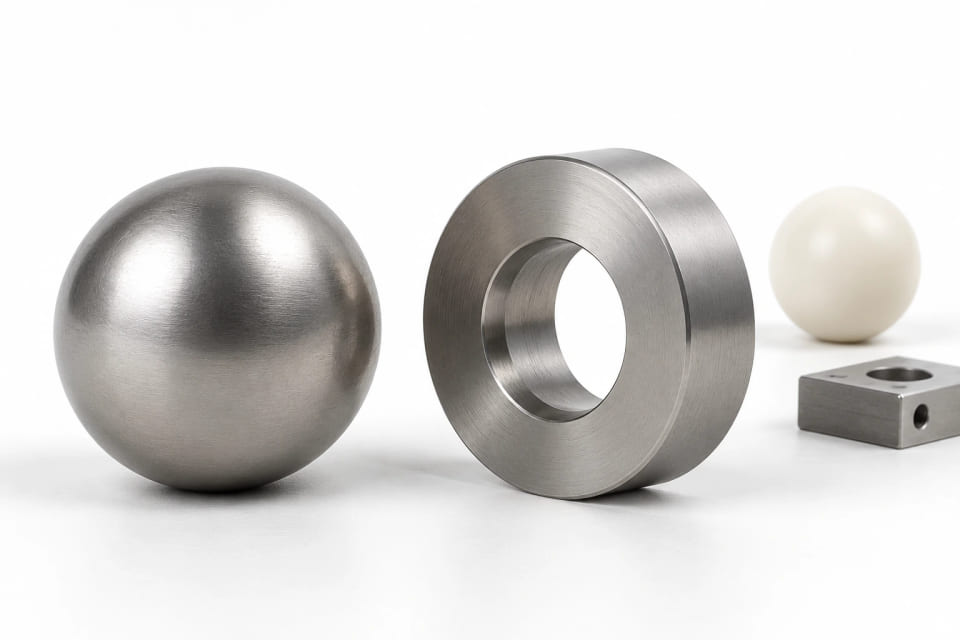
CGI concept of a steel sphere and separate annular seat beside a mounting block and polymer alternative
Define the component and mating interface before the cooperation scope · CGI concept
02 / IN CONTEXT

Agree what the first project must demonstrate

Select an acceptance result before ordering a pilot quantity. For an OEM component, this could be geometry and movement in its assembly. For a distribution proposal, it could be a documented enquiry-to-order process for an identified customer requirement. For an engineering project, it could be a sample test that decides between two materials. Keep product identity, inspection evidence and functional validation separate; each answers a different question. Discuss required documents early, especially when the customer expects a particular material grade, contact declaration or calibration deliverable. Record who reviews those documents and who approves samples. A successful first delivery should be evaluated against the agreed scope, rather than used to imply that every additional material or application is already qualified. Retain agreed conditions.

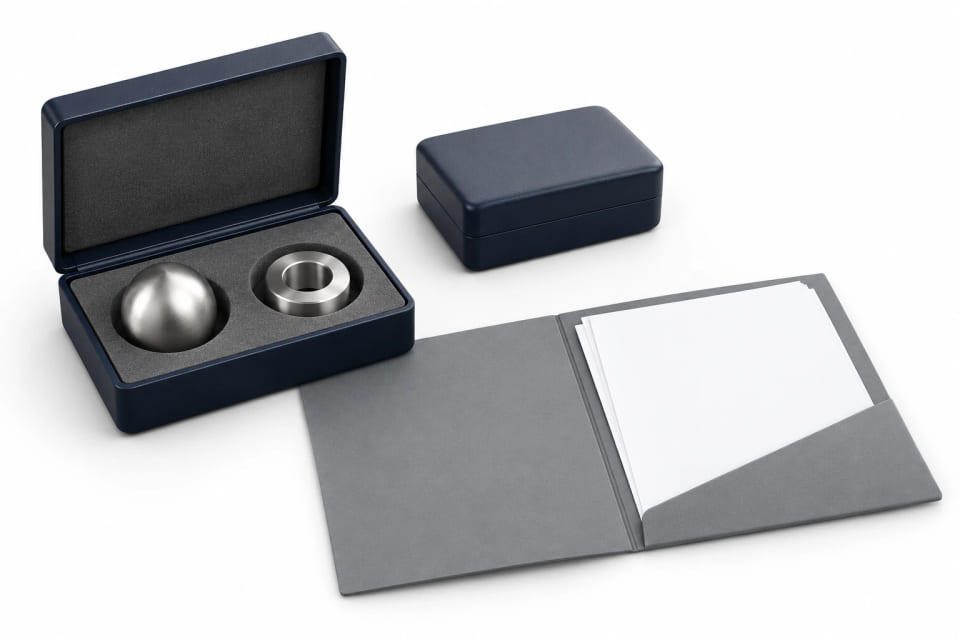
CGI concept of a representative ball-and-seat sample in a fitted case beside an empty case and blank project folder
Agree the sample and evidence needed for the first project · CGI illustration
03 / IN CONTEXT

Expand through an agreed working model

After a useful first project, review the proposed next stage against what was actually learned. Confirm the product specification, document flow, forecast and issue-reporting route before discussing recurring orders or a wider range. Inventory ownership, payment, delivery terms, branding and any territory arrangement require their own written agreement. They should not be inferred from an initial enquiry or a product listing. A distributor relationship also needs clarity about how end-customer technical requirements reach the specification reviewer. For OEM work, preserve drawing revision and sample-approval records as the scope expands. For project work, define the next decision gate and the party responsible for complete-system testing. This keeps a growing cooperation proposal practical, with commitments tied to accepted products and documented responsibilities.

A SHARED REVIEW BASIS

Choose the information that opens the right discussion

Scroll the table to compare requirements →
Choose the information that opens the right discussion
RouteUseful first inputDecision to agree
OEM componentDrawing, duty and acceptance requirement.Specification owner and sample approval.
DistributionTerritory, customer segment and proposed products.Pilot range and commercial role.
Engineering projectFunctional problem, constraints and evidence gap.Feasibility question and validation gate.
Recurring supplyAccepted specification and demand assumptions.Forecast, revision and order process.
Special documentationRequired report, declaration or calibration scope.Evidence owner and review before commitment.
WORKING SEQUENCE

Make the next conversation specific.

  1. 01

    Define the proposal

    Identify the cooperation route, products and intended customer or assembly. Share a representative requirement and the outcome you want from the first project. State any information that is still open so the review can focus on the right decisions.

  2. 02

    Review the scope

    Clarify material, geometry, documents, quantity and responsibilities. Separate mandatory acceptance from preferences, and identify any sourcing or testing question that requires evidence before quotation. Record the proposed deliverable so both parties evaluate the same technical and commercial scope.

  3. 03

    Agree a pilot

    Define the sample or initial-order basis, approval method and commercial terms before proceeding. A pilot should answer a specific question about the proposed work. Keep its acceptance separate from later discussion of recurring supply, territory, stock or broader product scope.

  4. 04

    Review the next stage

    Compare the pilot with its agreed acceptance and resolve open issues. Expand only through a reviewed specification and working model, including document flow and issue handling. Retain the approval record so further discussions build on a clear, shared basis.

PRACTICAL ANSWERS

Questions before the next step.

Which cooperation route should I choose?

Choose OEM work for a component tied to your assembly, distribution for a defined resale or stock discussion, and engineering projects for a feasibility or validation question. If the proposal overlaps, describe the primary goal and representative product. The opening review can then identify the relevant technical and commercial responsibilities.

Does an enquiry establish an authorised distributor relationship?

No. An enquiry begins a discussion. Any appointment, territory, use of branding or commercial authority needs a separate written agreement identifying scope and responsibilities. A pilot purchase should be understood through its own terms, without assuming that it grants exclusivity or representation for every product or market.

Can several materials be discussed together?

Yes, provide the product list and explain the customer or assembly requirements behind it. Prioritise a representative item so specifications and evidence can be reviewed meaningfully. Qualification of one material or diameter should not be assumed to cover another grade, construction or application without the relevant acceptance review.

What technical information is useful before a first discussion?

Provide the material or function, diameter and units, drawing or sample reference, quantity assumptions, environment and required acceptance. Add the documents your customer needs. If the design is not fixed, explain the decision being made rather than supplying an invented specification simply to complete an enquiry form.

Are stock, commissions or exclusive terms already defined?

No general programme terms are asserted here. Inventory, pricing, payment, territory and any compensation or authorisation require review and written agreement for the proposed relationship. Share the intended working model and supporting demand so the discussion can address a concrete arrangement rather than assumed standard benefits.

How do I start a proposal?

Use the review request for a representative product or email info@meituoballs.com with the cooperation route, company role and scope. Include the key drawing or requirement through the agreed communication channel. Technical feasibility, documents and commercial terms should then be reviewed before a commitment is made.

BRING YOUR REQUIREMENT

Define your first cooperation project

Share the route, product scope and result you want to establish before discussing a wider working arrangement.

Prepare an enquiry ↗