Skip to content
Industrial balls & precision componentsinfo@meituoballs.com
MEITUO Balls

Find a product, application or guide.

From Accepted Item to Order

Supply, Packaging & Order Preparation

Keep the component identity, surface condition and receiving requirements intact through the commercial handover.
Quick answer

Supply and packaging review turns an accepted component requirement into a clear commercial order basis. Define the item and revision, quantity, surface preservation, unit pack, labels and required records. Packaging should protect the condition the application needs and preserve lot identity. The output is a practical purchasing brief with explicit delivery assumptions, not an assumed stock position or a generic box description.

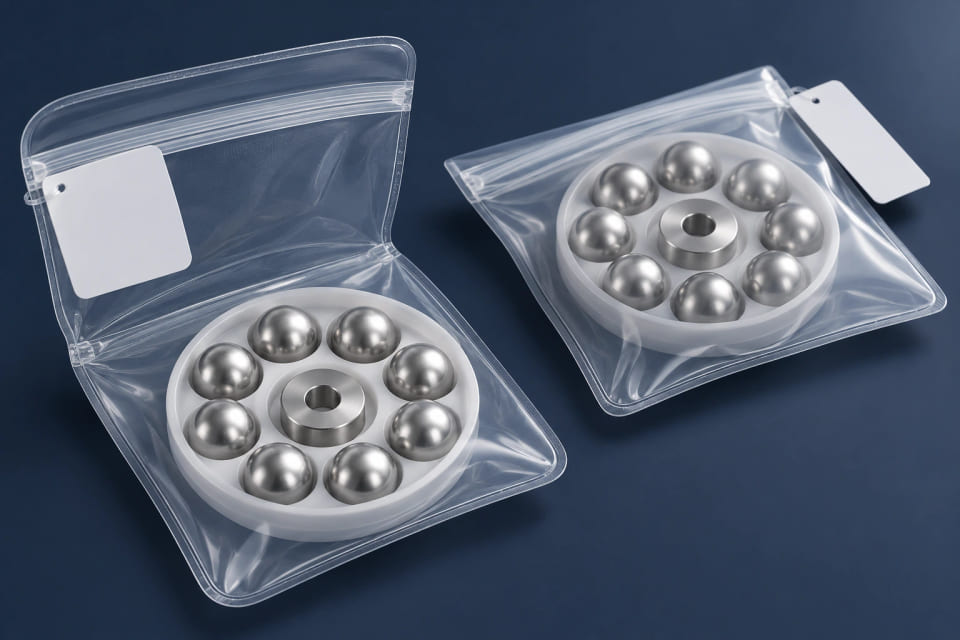
Separate cavities and a sealed sample bag protect different sphere components.
Packing should preserve the agreed component condition and identity. Conceptual CGI.
CHOOSE YOUR NEXT STEP

Find the right route for your requirement.

01

Preserve the required surface

Identify what the application needs to retain: protection from corrosion, limited contact damage, a particular residue condition or another defined surface state. A bearing-steel ball and a polymer sphere may need different considerations. The pack review should follow the accepted material and surface, not a universal packing rule.

02

Keep product and lot identity clear

Specify the item reference, drawing revision and required lot information on the relevant unit and outer packs. Connect those identifiers with material and inspection records. This is useful for mixed product orders, retained samples and repeat deliveries where a familiar appearance cannot reliably distinguish materials or accepted component versions.

03

Prepare the receiving handover

Describe the quantity basis, unit pack, handling needs and documents used at receiving. Identify the destination and buyer-named commercial requirements early. The resulting brief should let purchasing compare a complete delivery basis, while the receiving team can recognize the accepted component and the records associated with its lot.

A sample can perform correctly yet arrive differently on the next order if the pack, residue or identification changes. Explain how the component will be received, stored and introduced into the assembly or process. The commercial review then connects product acceptance with protection, handling and records. Resolve the quantity basis and packing needs alongside the technical specification so quotation comparisons refer to the same delivered item.

01 / IN CONTEXT

Choose packing around the condition that must be preserved

Start with the accepted component rather than the outer container. Carbon steel may need a preservation approach compatible with the next assembly step; an oil-free requirement changes that discussion. Sensitive finished surfaces may need protection from contact marking, while a composite or polymer part can introduce another handling concern. State the required cleanliness and allowable residue explicitly. Oil-free, clean and sterile describe different requirements and should not be used interchangeably. Explain the intended storage and unpacking context so protection does not create an unwanted downstream process. The review can then identify an appropriate packing proposal and the evidence needed for acceptance. Any specified condition should remain linked to the actual material, finish and application rather than inferred from the appearance of a sealed bag.

Individually separated steel spheres in protective trays and clear pouches.
Define protection and allowable residue for the accepted surface. CGI concept.
02 / IN CONTEXT

Make product identity and quantity easy to reconcile

Agree how the order quantity is expressed and how each pack is identified. A mass-based bulk order, counted unit pack and individually protected component create different receiving tasks. Name the item, material or approved designation, drawing revision where relevant and the batch link required by the buyer. For a mixed order, define how similar-looking products remain separate. Connect the packing list and relevant records to those identifiers without assuming that one document covers every lot. If private labels are requested, their text should match the accepted item and evidence. Preserve the distinction between a supplier lot identifier and metrological traceability of a measurement result. Both can be important, but they answer different questions and should not be substituted for each other in the receiving record.

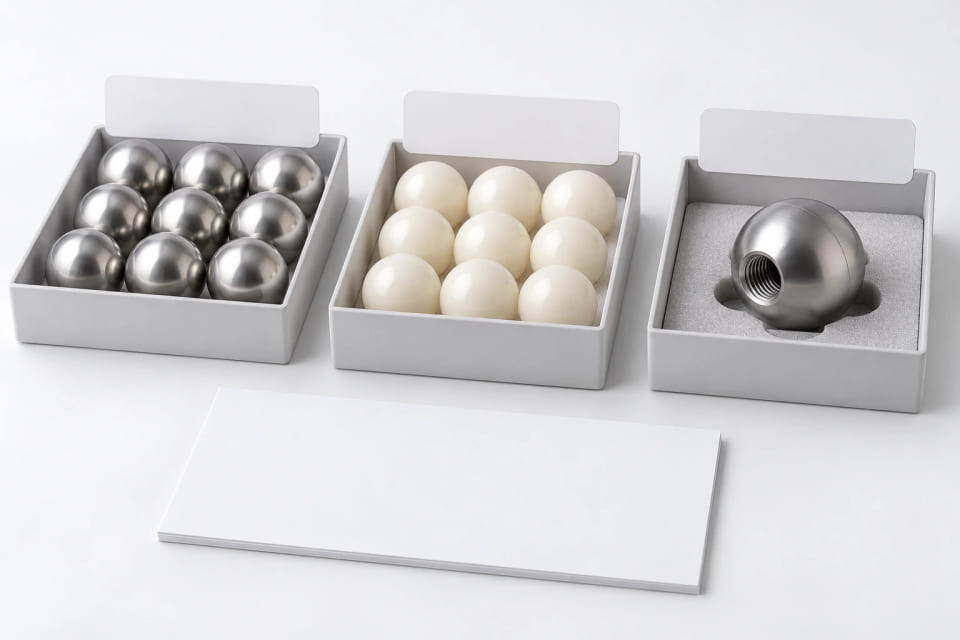
Separated component packs with blank identity tabs and a blank receiving sheet.
Keep product, pack and lot records connected. Conceptual CGI.
03 / IN CONTEXT

Put delivery assumptions beside the product requirements

State the sample and production quantities, unit-pack needs, receiving location, handling conditions and buyer-specified document scope when preparing a quotation enquiry. Describe relevant handling or storage expectations and identify any pack acceptance sample required. The review should make the proposed commercial basis explicit, including what is included and which inputs affect the quotation. Transport arrangements, order scheduling and specific commercial conditions belong to the actual project discussion; a product page does not establish them by itself. When a pack, label, finish or source changes, compare it with the accepted record and identify any renewed approval needed. This keeps a commercial change from silently altering the surface condition, identification or application preparation that the original sample and purchasing decision relied on.

A SHARED REVIEW BASIS

Define the delivered item

Scroll the table to compare requirements →
Define the delivered item
Order detailWhat to specifyReceiving question answered
Item and revisionAccepted product and drawing reference.Is this the approved component?
Quantity basisCount, mass or another agreed basis.How is quantity reconciled?
Surface preservationAllowed residue and protection need.Has the required condition been retained?
Unit packSeparation, protection and handling format.How will the part be unpacked?
Labels and lotsIdentifiers and their document linkage.Which records belong to this pack?
Commercial documentsBuyer-required scope and destination.What must accompany the order?
WORKING SEQUENCE

Make the next conversation specific.

  1. 01

    Identify the accepted component

    Provide the product reference, material, drawing revision and sample-approval basis. Include the surface and preparation requirements that matter to the application so commercial review starts from a defined item rather than a broad catalogue description.

  2. 02

    Describe receiving and handling

    Explain quantity basis, unit-pack preference, storage context and unpacking needs. Identify risks such as unwanted residue, contact marking or mixed identities, and distinguish an operational requirement from a presentation preference in the proposed packaging brief.

  3. 03

    Align labels and evidence

    Specify the required item and lot identifiers and connect them with the relevant records. Review private-label text or mixed-order separation where applicable so the package presentation accurately identifies the component and its accepted document scope.

  4. 04

    Review the commercial proposal

    Use the same product, packing and evidence basis when comparing a quotation or preparing the order. Identify changes from the accepted sample or previous delivery and resolve their approval scope before treating the new configuration as equivalent.

PRACTICAL ANSWERS

Questions before the next step.

Can one packing method be used for every ball material?

A useful pack follows the accepted surface, material and handling requirements. Different products may need different preservation or separation. Describe what must remain unchanged during storage and receiving, then evaluate the proposal against that requirement rather than assuming one bag or container suits every application.

Does oil-free packing establish a sterile component?

No. Oil-free, clean and sterile are separate descriptions. State the actual residue, cleanliness or other required acceptance and supporting evidence. A pack can preserve an agreed condition, but its appearance or seal cannot independently establish a more demanding preparation or regulated application claim.

How should similar-looking products be kept identifiable?

Use an agreed item, material or approved designation and lot link on the relevant packs and records. Define separation for mixed orders. Appearance cannot reliably distinguish every alloy or revision, so identity should remain explicit from the sample record through the delivered commercial quantity.

Is batch identification the same as measurement traceability?

No. A batch code connects a product lot with its records. Metrological traceability concerns a measurement result and its supporting reference chain. Specify each where it is needed, and do not assume that an identifiable lot automatically establishes the traceability or uncertainty of every measurement.

What information is needed for custom labels or unit packs?

Provide the accepted product identity, quantity basis, label content, unit-pack format and receiving requirements. The proposed presentation should preserve the agreed surface and match the available evidence. Identify any buyer approval needed for artwork or packing changes so appearance does not obscure a different underlying item.

Which delivery details should be included in the first enquiry?

Include sample and production quantities, quantity basis, desired unit pack, destination and the buyer's named document requirements. Add surface preservation and handling needs. Commercial arrangements can then be discussed against a concrete delivered-item brief rather than a nominal product name with undefined packing assumptions.

BRING YOUR REQUIREMENT

Define the item as it needs to arrive

Share the accepted specification, quantity basis, surface requirements and receiving needs.

Prepare an enquiry ↗