PEEK Balls
PEEK balls are polyetheretherketone spheres considered for pumps, valves and precision mechanisms where a basic plastic may not meet the combined thermal, chemical and contact requirements. The exact compound matters: unfilled and filled PEEK change mechanical and surface behaviour. Specify grade, diameter and form, working medium, temperature, contact cycle and required documents before approving PEEK for a finished component.
- Material / construction
- Polyetheretherketone; unfilled or exact filled compound specified
- Specification basis
- Drawing, diameter & acceptance
- Order basis
- Sample & production quantities
PEEK Balls: selection overview
PEEK is useful to review when several conditions must be satisfied together rather than one headline property. A polymer can remain below a published thermal limit and still deform under its particular contact load. Filled grades can alter stiffness, wear, conductivity and the surface presented to a seat. The selection should therefore connect the exact compound to the working assembly. Natural colour is a visual material concept, not proof of unfilled formulation or cleanliness. As an additional product candidate, the proposed supply route and ball-specific acceptance require review before commercial commitments.
Unfilled vs filled PEEK balls
Start with the reason for considering a filler: stiffness, wear, electrical response or another defined requirement. Review whether the filler changes fluid compatibility, contact debris or the allowable seat finish. A filled compound is not an automatic improvement for every sphere application. State the proposed formulation and resin documentation, then validate the finished surface. Where unfilled PEEK is mandatory, identify that requirement explicitly instead of relying on the ivory appearance of a sample.
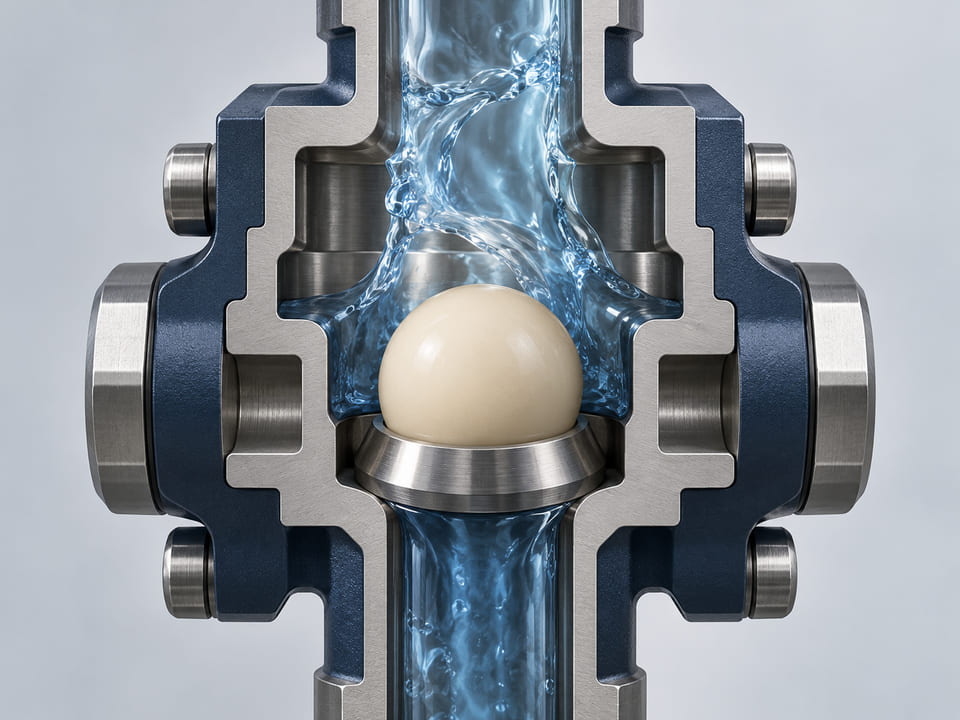
Review the temperature with load and time
Describe continuous operation, peaks, idle periods and cleaning separately. Include the contact geometry and the longest loaded dwell so material data can be interpreted in a relevant way. A thermal property from a resin specimen does not define a valve service rating. Use representative sample tests to check dimensional response, movement and leakage after the combined operating cycle, especially when PEEK is replacing a more rigid metallic or ceramic contact.
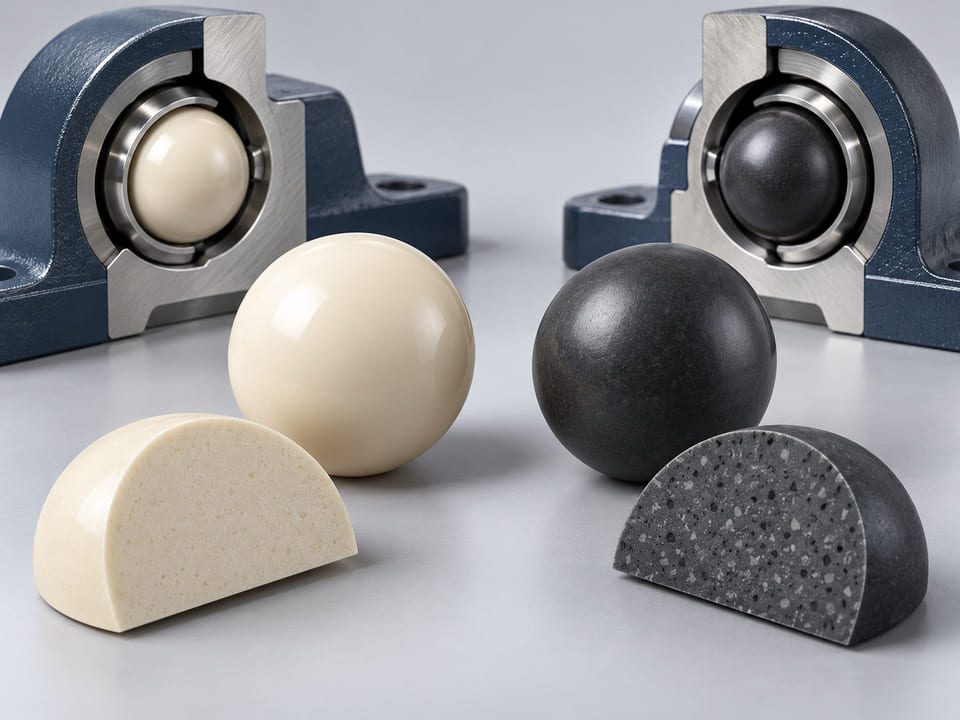
PEEK Balls specifications
Define the component using the requirements below. Include your target values and acceptance method; the quotation records the agreed material, geometry, inspection and supply scope.
| Requirement | What to specify | Why it matters |
|---|---|---|
| PEEK compound | Identify unfilled resin or exact filled formulation and documentation. | Fillers can change wear, electrical behaviour and the seat-contact surface. |
| Dimensional acceptance | Provide diameter, form and inspection conditioning requirements. | Finished-component fit needs explicit geometry rather than material-family data. |
| Thermal contact cycle | State temperature, load, contact profile and dwell time. | The combined conditions govern deformation and function. |
| Validation and documents | Define sample, leakage, wear, cleanliness and traceability requirements. | The candidate material must be approved for the intended assembly and supply route. |
Drawing and dimensional acceptance
Provide the drawing revision and nominal dimensions with units. Identify critical form, surface and fit requirements individually; a material designation alone does not define a finished component. Where an existing sample is the reference, describe wear and confirm the intended acceptance limits.
Order and inspection scope
Separate sample quantities from production demand. State the required inspection documents, lot identification, cleanliness and packaging. Any proposed substitute or change to the component specification should be reviewed before approval, with the quotation confirming the agreed scope.
Numeric performance values, when needed, must identify their material, conditions and evidence. Typical raw-material data should not be treated as guaranteed finished-component performance.
PEEK Balls applications
Start with the actual mechanism and exposure conditions. Each use below identifies the information needed for a useful technical review.
Metering pump and check-valve concepts
PEEK may be considered where the combination of fluid, temperature and contact motivates a high-performance polymer review. Validate the actual seat and closing cycle, including stationary pressure. A material comparison should be followed by functional testing because low moving mass and polymer deformation can alter a valve's behaviour relative to a metal ball.
Specialist mechanical contacts
In a mechanism requiring a non-metallic sphere, PEEK can be compared with acetal or nylon where the duty is more demanding. Identify whether the contact rolls, slides or remains loaded. Evaluate the counterface and wear debris, since the benefit of a particular compound depends on the complete contact system.
Instrument and controlled-contact components
A PEEK candidate may be useful where material identity, low mass and a defined environmental response matter. Specify the electrical, cleanliness or regulated-contact requirement rather than assuming the polymer family meets it. Filled grades in particular need review when conductivity or particle generation affects the instrument.
Compare PEEK Balls alternatives
Compare the requirement that drives the decision. A matching nominal diameter or similar appearance does not establish material or functional equivalence.
| Alternative | When to review it | Tradeoff to assess |
|---|---|---|
| POM / acetal | Compare acetal when its validated fluid, temperature and contact performance is sufficient and the extra complexity of PEEK is unnecessary. | Confirm the actual failure driver first; a lower-cost material can be appropriate when it meets the complete acceptance requirement. |
| PTFE | Review PTFE when the exact fluid and surface interaction make a fluoropolymer an important chemical-compatibility alternative. | Reassess contact deformation and creep because a chemically attractive choice can require a different seat or loading design. |
| PVDF | Compare PVDF for compatible chemical-handling duties where a different balance of fluoropolymer chemistry and mechanical behaviour is useful. | Select from the actual medium and temperature, then validate movement and leakage; neither polymer is universally superior across all fluids. |
These links open the corresponding product pages in this collection. Final selection depends on your complete specification and the agreed validation.
PEEK Balls FAQs
When should PEEK balls be considered?
Consider PEEK when a defined combination of thermal, chemical and mechanical requirements is not satisfied by a validated basic plastic. Identify the limiting condition before choosing it. The material decision should be supported by the exact compound and a finished-component test, rather than a general high-performance label.
Are filled PEEK balls better than unfilled PEEK?
Only for requirements that benefit from the selected filler and tolerate its effects. Filled grades can change stiffness, wear, electrical response and the contact surface. Define the purpose and formulation, then check fluid compatibility and the actual seat or counterface before approving the compound.
Can a published PEEK temperature limit be used for a valve?
No. Resin thermal data does not define the service rating of a ball-and-seat assembly. Pressure, contact geometry, exposure duration and cleaning all matter. Supply the full cycle and validate movement or leakage after representative combined exposure rather than relying on one material temperature value.
Can PEEK replace a stainless steel ball?
It can be assessed as a redesign option, but stiffness, mass and thermal response change. Recheck the seat and installed orientation, then validate closure, wear and dimensional stability. Matching the nominal diameter alone does not demonstrate that a polymer sphere can preserve the original metallic assembly's function.
Is natural-colour PEEK a proof of purity?
No. Colour does not establish grade, filler content, cleanliness or contact compliance. Request the exact resin and manufacturing information needed for your application. Where controlled contact or contamination matters, define the documents, cleaning, packing and validation rather than using appearance as an acceptance method.
What should a PEEK ball quotation include?
Include the compound, diameter and form requirements, quantity, medium, temperature, seat or counterface and duty cycle. Add sample acceptance and any material, traceability or cleanliness documents. The proposed production and inspection route should be reviewed against those inputs before supply conditions or commercial terms are confirmed.
Request a quotation
Turn the PEEK Balls requirements into a clear enquiry for MEITUO Balls.
- Define the material and geometry.
- Describe the application and acceptance.
- Separate sample and production demand.
The quotation confirms feasibility, supply scope, inspection documents and commercial terms. Generated illustrations are not evidence of available stock or completed validation.
Continue your material review


Engineering references and illustration notes
Material-family references support screening. The exact grade, finished geometry and application acceptance govern an actual enquiry.
CGI illustrations explain product, application or structure concepts. They are not photographs, measured micrographs, assembly drawings or inspection results.