Skip to content
Industrial balls & precision componentsinfo@meituoballs.com
MEITUO Balls

Find a product, application or guide.

Material selection / 02 product options

Grinding & Surface-Finishing Media

Define the process result first, then compare media material, shape, wear and separation.
Quick answer

Grinding and surface-finishing media are process bodies selected for a defined result, not simply by diameter or hardness. Particle grinding reduces a formulation’s size distribution; abrasive finishing removes or modifies workpiece material; burnishing uses a different contact mechanism to smooth or brighten a surface. Choose spherical or shaped media from the equipment, work, permitted contamination and trial acceptance, with the process role stated before material selection.

01 / EXPLORE

Grinding & Finishing Media: product range

Open an individual product page for material-specific considerations, applications and the details needed for a quotation.

2 product options

All product options require specification confirmation. Entries marked “Project review” additionally require a feasibility assessment; neither label confirms stock or a past supply record.

Two media charges can look similar while addressing different jobs. Spherical media may be proposed for a milling formulation or a defined surface-contact process, but the acceptance is different. Non-spherical media introduce contact and access choices together with lodging and separation questions. This guide keeps particle processing, abrasive workpiece finishing and non-abrasive burnishing distinct. It explains how to make proposals comparable through equipment, material or workpiece, target outcome and wear evidence. The review concerns the specified process; it does not assume a general heavy mining-ball range or a universal finishing recipe.

02 / SELECT

Choose by process mechanism before choosing a shape

Begin with the result that can be measured. A brighter surface, a smaller particle distribution and a removed burr are different outcomes. Use the following paths to define a trial and the evidence required. The same material name or spherical profile cannot establish suitability across unrelated mills, vibratory systems and workpiece geometries.

Swipe or scroll the comparison table →
Choose by process mechanism before choosing a shape
Process requirementMedia path to reviewWhat changes the choiceUseful acceptance
Particle-size reductionSpecified spherical grinding media.Formulation, equipment, media chemistry and distribution.Particle result, wear, contamination and breakage.
Shape-sensitive particle trialsDefined non-spherical process media.Equipment suitability and measured charge behaviour.Same particle target with a controlled comparison.
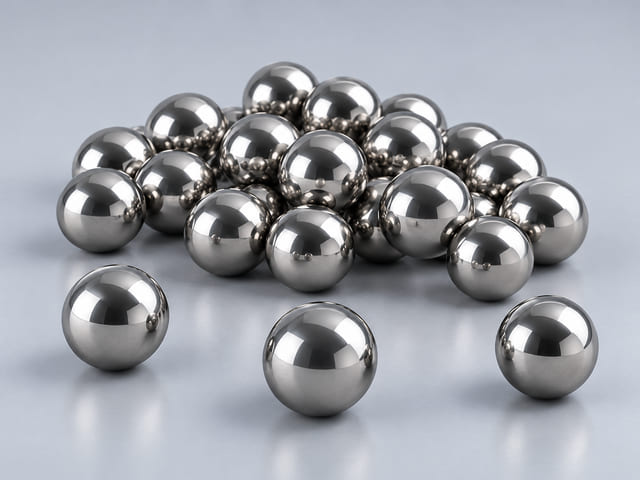
Non-abrasive surface burnishingSpecified metallic burnishing spheres.Workpiece material, contact and permitted dimensional change.Surface result without unacceptable damage or residue.
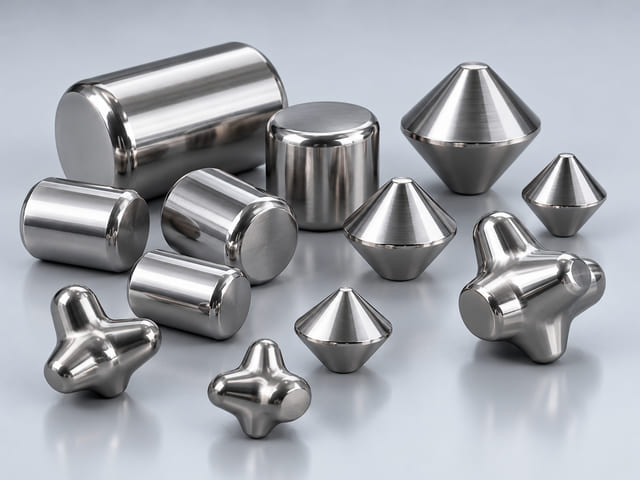
Contour or recess finishingProfiled finishing media.Access, edge treatment and lodging risk.Target features, protected surfaces and reliable removal.
Gentle finishing or polishingSpherical finishing-media review.Formulation, part geometry and separation.Defined surface quality rather than brightness alone.
Pressure-contact shape reviewSpecified metallic shapes.Contact geometry and actual process objective.Edge or surface result within the drawing limits.
01

Distinguish particle reduction from workpiece finishing

In a mill, the work is a formulation or feed whose particle result must be defined. In a finishing machine, the work is a component whose surfaces, edges and dimensions must remain within acceptance. Burnishing has a different objective again: a non-abrasive contact should not be described as if it provided the same stock removal as an abrasive medium. State which mechanism is intended before comparing spherical charges or shaped bodies. This prevents a familiar product name from hiding a different media formulation or process purpose, and makes the sample trial answer the actual purchasing question. Keep those acceptance methods separate in the trial record.

02

Select material by acceptable wear as well as process action

Media can introduce its own wear products into the formulation or onto the workpiece. Identify the restricted elements, cleanliness and acceptable contamination, then compare the proposed grade under the relevant trial. Alumina and zirconia identify material directions, but a precision ceramic component and a process bead need different specifications. Metallic media likewise require the grade and surface condition appropriate to the process. A harder or more chemically resistant material is not automatically the better charge if its wear chemistry, mass or contact creates an unacceptable outcome. Request a comparison using the same starting condition and measured acceptance. Check residues after the agreed cleaning stage as well.

03

Evaluate new, worn and separated media

Shape and distribution can change during service, affecting contact, lodging and process consistency. Define the proposed shape with dimensions rather than a name alone, and examine where it could enter or remain in a workpiece. Include separation and carryover in the trial instead of checking only the first visible finish. Record wear, breakage and surface condition so replenishment can preserve the accepted process. A bright media surface may be contaminated or glazed rather than clean, and a charge that initially works can drift. The useful control is the documented process outcome with an agreed media condition, not an invented universal replacement schedule.

03 / APPLY

Connect the material to the working application

Review the contact, environment and acceptance conditions in the assembly where the component will work.

Laboratory and formulation ball milling

Define the feed, wet or dry context, equipment requirements and target particle distribution before comparing spherical grinding media. Include permissible wear chemistry and a method for checking contamination. If another profile is proposed, test it against the same result rather than assuming a larger contact area improves every formulation. The trial should record both the processed product and media behaviour. For controlled-contact formulations, identify the exact material and documentation needs; stainless or ceramic composition alone does not establish compliance. Document that review.

Vibratory and centrifugal workpiece finishing

Start with the part drawing, incoming surface and desired edge or surface result. Profiled media may help reach a feature, while spheres may suit another contact pattern. Check protected surfaces, dimensional change, lodging and removal with representative parts. The best visible finish is insufficient if media remains trapped or a critical feature is overworked. Compare formulations and shapes through the agreed part acceptance rather than transferring a catalogue claim or another installation’s processing time. Record the agreed separation and cleaning result.

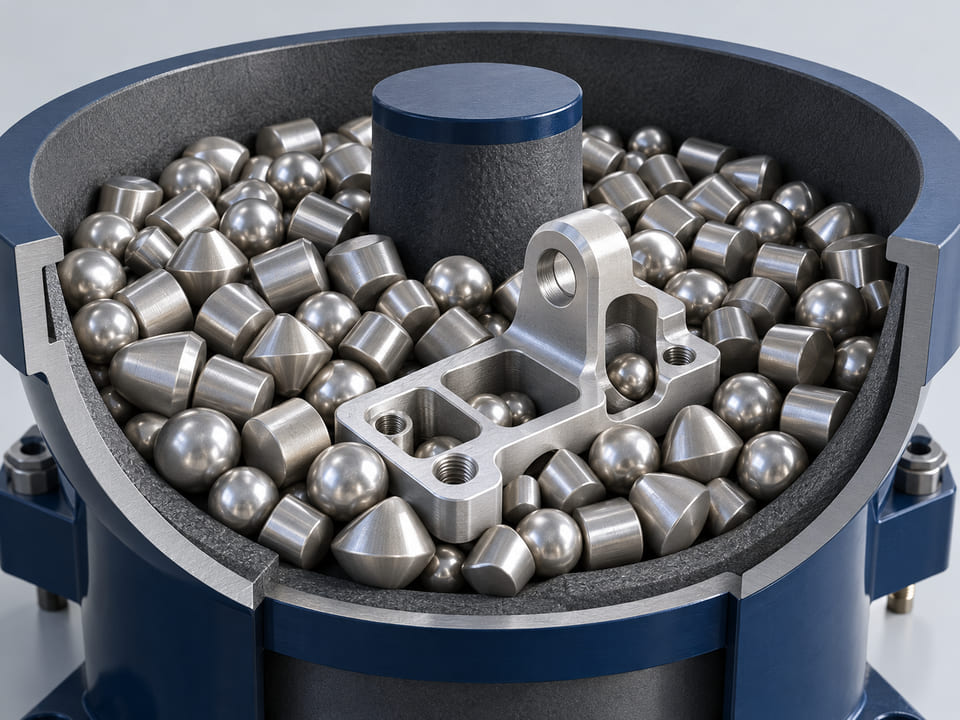
CGI illustration of Shaped Grinding Media
Shaped Grinding Media · application concept

Metal surface burnishing programmes

When the target is a specified smoothing or brightening effect, review the appropriate non-abrasive metallic burnishing media or defined shapes. Describe the workpiece, allowable change, residues and cleaning. Keep burnishing separate from abrasive removal, and assess more than gloss: the drawing, surface method and protected features remain relevant. For recurring batches, retain the accepted media identity and distribution with the trial record so replacement or replenishment does not silently change the contact process or its result. Keep approved reference parts with the process record.

04 / SPECIFY

Make the media enquiry describe the process

State the equipment and objective before requesting a media charge. Include a representative formulation or workpiece and explain how the result will be judged. Identify whether the proposal is for an initial trial, a replacement charge or recurring replenishment. These details avoid comparing prices for media intended to achieve different outcomes.

Swipe or scroll the comparison table →
Make the media enquiry describe the process
InputProvideWhy it matters
ObjectiveParticle distribution, deburring, edge result, smoothing or burnishing.Determines the mechanism being evaluated.
EquipmentMachine type, compatible media requirements and trial context.A result cannot be transferred across unrelated systems.
WorkFormulation and feed, or workpiece material and geometry.Defines contact, contamination and feature access.
Media identityMaterial grade, shape drawing and size distribution.A nominal size is not a complete charge specification.
RestrictionsWear chemistry, dimensional loss, defects and protected features.Makes unwanted process effects visible.
SeparationScreens, lodging constraints, carryover and cleaning acceptance.Media must be removed or retained appropriately.
Trial recordsStarting state, target, wear, breakage and result method.Provides a reproducible basis for comparison and replenishment.
From material name to a reviewable requirement

Feasibility, material identity, dimensions, inspection documents, quantities and supply terms are confirmed against your enquiry and quotation. Product illustrations do not establish a certified specification.

Prepare a focused enquiry →
05 / CLARIFY

Grinding & Finishing Media: common questions

Are grinding, polishing and burnishing the same operation?

No. Particle grinding, abrasive finishing and non-abrasive burnishing have different work and acceptance. Specify whether the target is particle reduction, stock removal, edge treatment or a surface-contact effect. A spherical shape or shiny appearance does not make media interchangeable between these processes, even when the nominal sizes match.

Should spherical or shaped media be tried first?

Use the equipment, process objective and work geometry to decide. Spheres provide one contact pattern; profiles offer another and may introduce access or lodging effects. A simpler shape can be preferable if it meets the target and separates reliably. Confirm the actual result with a representative comparison.

Does harder media always improve the result?

No. Hardness does not by itself establish useful contact, acceptable wear chemistry, low breakage or a successful surface. A harder medium can still produce an unsuitable process outcome. Compare the exact material and charge against the same particle, workpiece and contamination acceptance rather than selecting through a single property ranking.

How should contamination be specified?

Identify what the formulation or workpiece can accept and what must be measured after the trial. Include relevant media wear, process residues and cleaning. A broad inert or stainless description cannot define every contamination concern. The material proposal should be assessed with the real formulation or workpiece under representative conditions.

Why do media dimensions need more than one nominal size?

Distribution, shape and wear condition can affect the contact and separation of a charge. Define the actual profile and accepted distribution, including how undersize material is controlled where relevant. A single nominal diameter or a descriptive shape name can conceal differences that change the process or create lodging.

Can media lodge even when the first finish looks good?

Yes. Inspect the relevant holes, slots, recesses and retention points, then assess separation and carryover. Consider worn media as well as the new charge. A surface result does not establish that parts are free of retained bodies or that the same media profile remains suitable as it changes through use.

Are stainless or ceramic media automatically suitable for food formulations?

No. The exact material, manufacturing and cleaning route, intended contact and required documents must be reviewed. State the formulation, exposure and market requirements. A general material name or another supplier’s application cannot establish the required conformity of the proposed charge for a controlled-contact process.

What should a useful media trial report contain?

Record the starting work, equipment context, media identity and condition, target and result method. Include relevant wear, breakage, contamination, dimensional change and separation findings. This gives a practical basis for comparing proposals and recurring supply without promising a universal cycle time, recipe or improvement percentage.
Move from shortlist to specification

Tell us what the component needs to do.

Include the assembly function, material candidates, drawing or diameter, operating environment, quantities and acceptance needs. MEITUO Balls can review these details against the specific product enquiry.

info@meituoballs.com ↗

Drafts are prepared on your device. Review the message in your email app before sending.