Does custom development always require a new material?
No. The issue may be geometry, attachment, surface or the relationship between two parts. Begin with the function and existing specification. A review can clarify the necessary feature while retaining an appropriate material, rather than introduce an alloy change that does not address the actual problem.
Can a sample replace the component drawing?
A sample can provide useful context, but its approval status, wear and unknown material condition should be recorded. Critical features and acceptance still need an explicit description. The aim is to define what the new component must do, rather than reproduce uncertain details without engineering review.
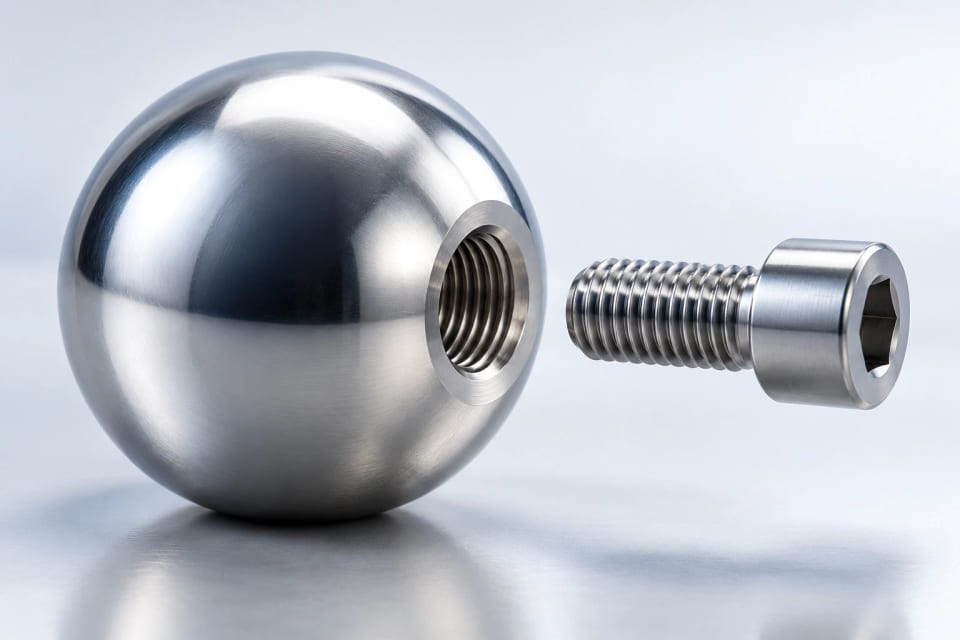
What is needed for a threaded-ball enquiry?
Provide the sphere and mating-fastener requirements, connection orientation, installation envelope and load path. Identify material, surface and the required acceptance. The complete joint needs review; an outer diameter and a broad threaded-hole label cannot establish the intended connection or its performance.
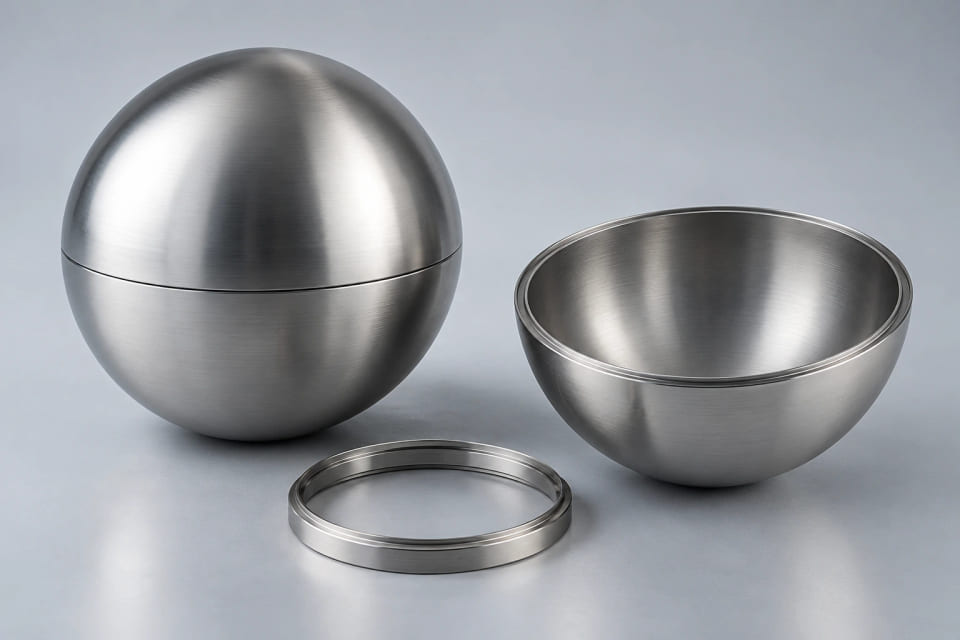
Does a hollow-sphere design automatically provide buoyancy?
No. The complete structure and liquid determine that function. Describe the intended medium, envelope, mass objective, joint and functional acceptance. Shell integrity and the assembled application need their own evaluation; a hollow appearance or material name alone cannot establish satisfactory flotation.
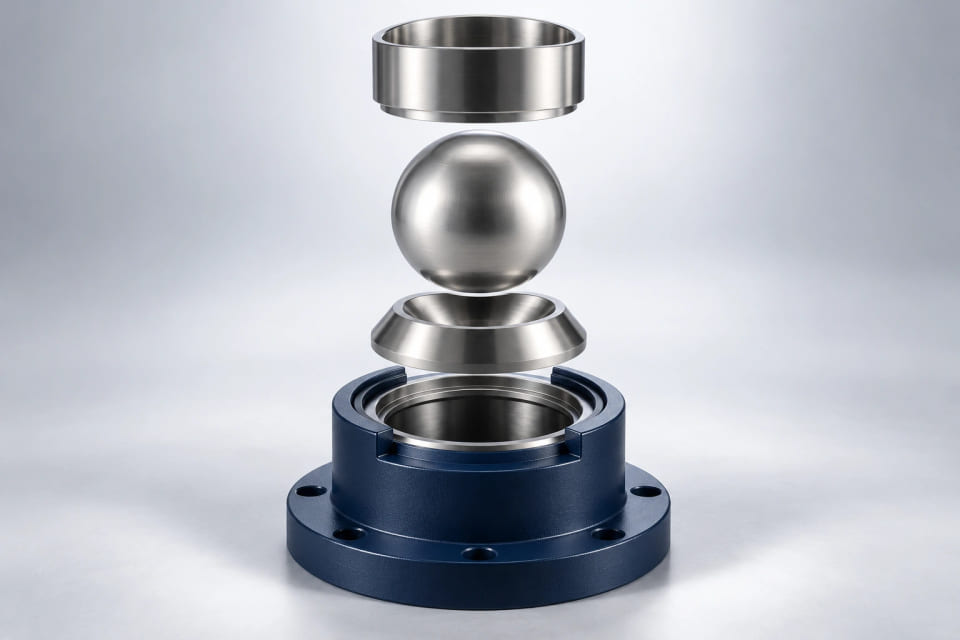
Why evaluate a ball and seat together?
Their combined geometry, materials, contact conditions and cleanliness determine closure. Loose-ball inspection answers a different question from assembled leakage or operation. Provide both components and the relevant functional conditions so the sample plan can evaluate the contact pair rather than assign a result to the sphere alone.
What happens when a design changes after sample approval?
Identify the changed feature, material or interface and compare it with the accepted record. The component owner determines which evaluation remains relevant and what must be repeated. Preserve the revision and approval basis so commercial ordering follows the current design instead of an outdated sample description.