Skip to content
Industrial balls & precision componentsinfo@meituoballs.com
MEITUO Balls

Find a product, application or guide.

OEM cooperation

Ball Components for OEM Manufacturers

Connect the ball specification to the assembly, approval record and purchasing process that depend on it.
Quick answer

An OEM ball requirement is a component specification linked to an equipment function, not just a material and diameter. Define the drawing revision, duty, mating parts, acceptance and expected demand before comparing quotations. MEITUO Balls can review the enquiry scope for samples or recurring orders, with proposed material, inspection, documentation and supply conditions confirmed for the actual component before an order or substitution is agreed.

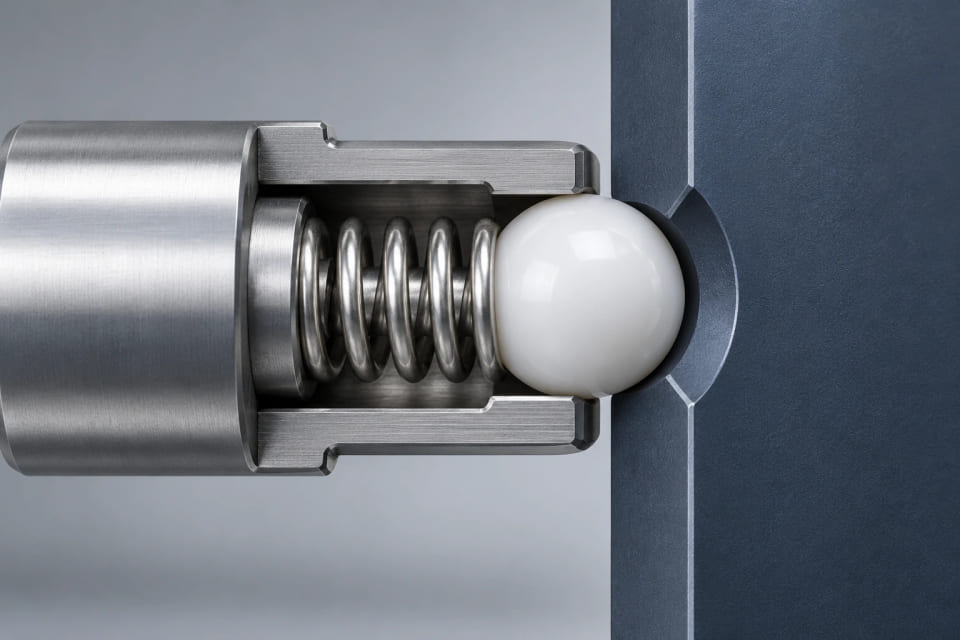
CGI cutaway of a POM sphere, spring and housing contacting a recessed indexing plate
A ball specification serves the complete OEM contact · CGI mechanism concept
CHOOSE YOUR NEXT STEP

Find the right route for your requirement.

01

Drawing-based components

Submit the drawing revision with material, diameter, form, surface and any mounting or construction features. Identify the mating seat, guide or race where it influences acceptance. This route is useful when the design is fixed and the review must establish whether the proposed component and evidence meet an existing equipment requirement.

02

Material comparisons

Describe the operating problem before choosing a replacement polymer, steel or ceramic. Include medium, temperature, contact, movement and the current limitation. A useful comparison preserves the assembly objective while making changes in mass, stiffness or exposure response visible, so the proposed material can be assessed without treating a diameter match as equivalence.

03

Samples and validation

Define what the sample must demonstrate and who can approve it. Geometry, material documents and a functional test may all be required, but they are different evidence items. Use a sample plan linked to your equipment so an attractive or dimensionally compliant sphere is not accepted before the assembly result is known.

A ball may be a small line item yet control movement, sealing, wear or the feel of an assembly. The purchasing brief should preserve the requirement that engineering has approved and identify the information still open for review. This page sets out a practical OEM enquiry and approval model: start from the function, define the component and its evidence, then connect that specification to samples, order revisions and issue reporting. Commercial and supply commitments belong to the reviewed quotation and agreement.

01 / IN CONTEXT

Keep engineering intent visible in the enquiry

Give the component identifier, drawing revision and the requirement that controls its function. For an acetal contact, resin type and loaded dwell may matter; for a valve component, the seat and leakage basis can be decisive. State mandatory material and geometry separately from preferences such as packing format. If a drawing names a proprietary grade or process, identify whether alternatives may be proposed and who can approve them. Include the environment and any required documents early, rather than adding them after sample manufacture. The reviewer should be able to distinguish the component acceptance from the finished equipment’s validation. This makes technical questions purposeful and prevents a procurement shortcut from changing an unspoken requirement in the assembly. Record the specification owner.

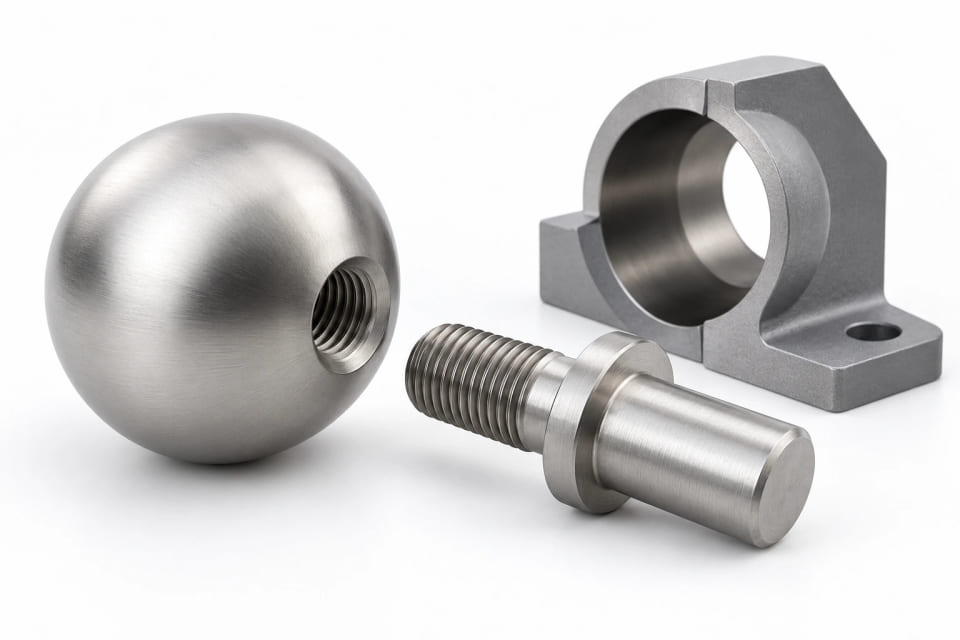
CGI concept of a tapped stainless sphere, separate matching mounting rod and support bracket
Specify the hidden interface as well as the spherical exterior · CGI concept
02 / IN CONTEXT

Make sample approval a controlled decision

Identify the sample quantity, revision, material proposal and inspection scope, then define the assembly test before the sample is ordered. Record who evaluates geometry, documents and function, and how disagreements or open items are resolved. Where conditioning or exposure changes performance, include that state in the plan; a dry polymer measurement may not represent an immersed mechanism. Preserve the accepted reference and report with the approval record. Sample acceptance should describe what passed and under which conditions, not imply that all future dimensions or related materials are qualified. If the design changes after the trial, review whether the approval remains applicable. This gives purchasing a clear basis for a subsequent quotation or order without turning a one-off sample result into an unlimited performance promise.

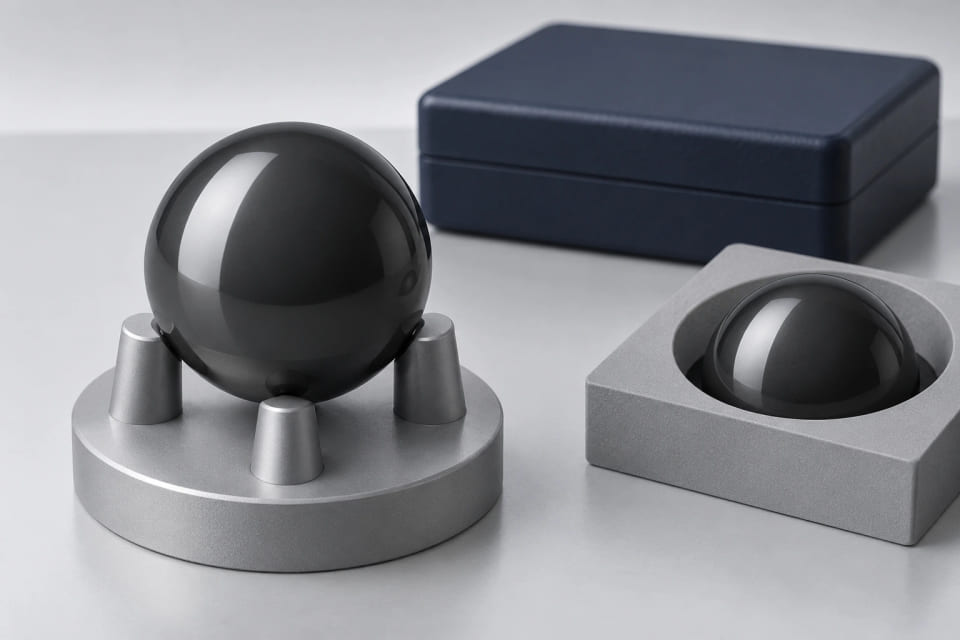
CGI concept of a ceramic sphere in a three-point cradle beside a retained representative sample
Define the sample condition and acceptance question · CGI illustration
03 / IN CONTEXT

Connect repeat orders to the approved specification

A recurring-order discussion should identify the accepted component, revision, inspection and packaging requirements, along with demand assumptions and the party authorised to approve change. Confirm whether a forecast is planning information or an order commitment under the agreement. Discuss how proposed substitutions, drawing updates or document changes will be reviewed before they affect supply. Keep purchase-order references and batch identification connected to the accepted requirement where needed. If an issue arises, provide the item, quantity affected, observed condition, inspection method and relevant assembly evidence so it can be reviewed against the agreed scope. Do not rely on a familiar product name as the only record between engineering and purchasing. A repeatable administrative process is useful only when the underlying technical acceptance remains clear.

A SHARED REVIEW BASIS

OEM inputs that prevent hidden specification changes

Scroll the table to compare requirements →
OEM inputs that prevent hidden specification changes
InputDefineReview question
Drawing controlPart number, revision and units.Which requirement is being quoted?
MaterialExact grade and permitted alternatives.Who approves a substitution?
FunctionMating parts, duty and environment.What does the assembly need to preserve?
AcceptanceGeometry, documents and functional method.What evidence authorises approval?
DemandSamples, initial order and recurring assumptions.Which quantity and terms are committed?
Change routeTechnical and purchasing decision owners.How are revisions reviewed before supply?
WORKING SEQUENCE

Make the next conversation specific.

  1. 01

    Submit the controlled requirement

    Provide the drawing revision, component function, material and demand assumptions. Include the operating conditions and acceptance method, then distinguish mandatory requirements from proposals that engineering can review. The initial brief should identify who owns technical approval and purchasing decisions.

  2. 02

    Resolve technical questions

    Review the proposed grade, geometry, inspection and documents before agreeing a sample or order. Where information is missing, identify the decision it affects rather than silently filling the gap. Record any approved alternative together with its scope and acceptance basis.

  3. 03

    Approve representative samples

    Evaluate the sample against the agreed geometry, evidence and assembly test. Record its identity, conditions, result and approval owner. Retain open items explicitly so a dimensional pass is not confused with complete equipment validation or approval of another revision.

  4. 04

    Confirm the order basis

    Connect the accepted specification and reports to the quotation and purchase order. Agree quantity, commercial terms, packing and change review for the transaction. For recurring demand, clarify forecast assumptions and the route for technical issues before treating them as a wider supply commitment.

PRACTICAL ANSWERS

Questions before the next step.

Can an OEM enquire without a finished drawing?

Yes, describe the function, surrounding assembly and decision that remains open. Provide known geometry, operating conditions and any reference sample. Distinguish confirmed requirements from assumptions so a proposed material or construction can be reviewed honestly. The resulting enquiry should not imply that an incomplete design has already been validated.

Can an alternative material be proposed against our drawing?

Only as an explicit proposal for your review. Identify whether substitution is allowed and who can approve it. The comparison should address the actual duty and acceptance, including changes in mass, contact or exposure response. A quotation or matching diameter alone should not be treated as engineering approval of the alternative.

Does dimensional sample approval qualify the equipment?

No. A component can pass size and form inspection while the assembly still needs movement, leakage, wear or another functional test. Define those requirements separately and identify the owner. Approval should record what was checked and under which conditions, rather than imply complete equipment performance from a dimensional report.

How should a drawing revision be handled?

Include the current revision in the enquiry and order, then identify how changes are reviewed. A revision may affect material, geometry, inspection or the sample approval. Confirm whether earlier evidence remains relevant before applying it to the changed component, and retain the resulting decision with the technical and purchasing records.

Are recurring capacity or lead times guaranteed by this page?

No. Quantity, production or sourcing route, inspection scope and documents require review for the actual specification. Sample timing and recurring demand should be discussed in the quotation and agreement. A forecast or product listing does not establish a reserved capacity, stock position or fixed delivery commitment.

What should an OEM technical issue report include?

Identify the part and revision, order or batch reference, affected quantity, observed condition and test method. Include relevant photographs, measurement conditions and assembly evidence. Compare the issue with the agreed acceptance rather than a new unstated limit. This provides a useful basis for review through the contact route.
BRING YOUR REQUIREMENT

Bring the component and assembly into one brief

Share the drawing revision, operating duty and acceptance needed for your OEM review.

Prepare an enquiry ↗