POM Acetal Balls
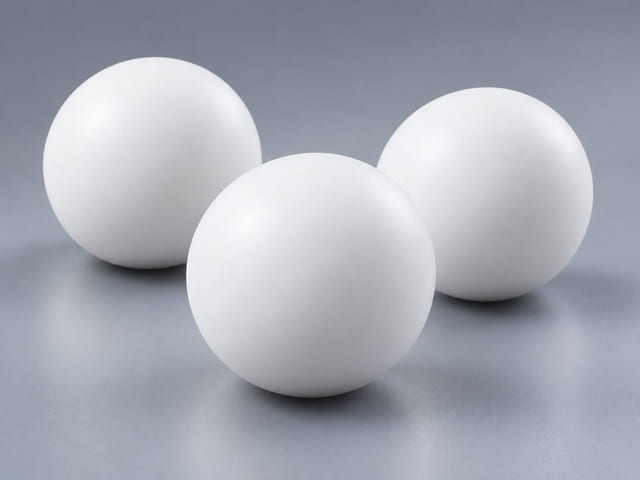
POM balls are acetal polymer spheres considered for indexing, light-duty motion and compatible fluid-control mechanisms. Their low moisture uptake and useful stiffness make them a common comparison with nylon, while the choice between copolymer and homopolymer remains grade-specific. Define POM-C or POM-H where required, diameter and form limits, contact conditions, fluid exposure and the functional acceptance test before approving a ball specification.
- Material / construction
- POM-C or POM-H acetal; named grade where required
- Specification basis
- Drawing, diameter & acceptance
- Order basis
- Sample & production quantities
POM Acetal Balls: selection overview
Acetal often enters the shortlist when a mechanism needs a repeatable polymer contact with less humidity sensitivity than nylon. That does not remove the need to control temperature, creep or fluid compatibility. POM-C and POM-H have related but different property balances and should not be hidden behind a generic trade name. Where a drawing names a proprietary material, confirm the exact grade and permitted alternatives. A generic POM sphere cannot automatically inherit the properties or documentation of a named manufacturer's resin, even if its colour and initial dimensions look similar.
POM-C vs POM-H: keep the distinction visible
Homopolymer and copolymer acetal differ in their material property balance, including mechanical and chemical behaviour. Identify which is required and why, rather than choosing from a familiar brand name. For modified compounds, state the filler or lubricant package. Approval should be tied to the actual grade document and finished-part acceptance; this is particularly useful when two quotations appear equivalent but use different resin families or claim an unspecified low-friction formulation.
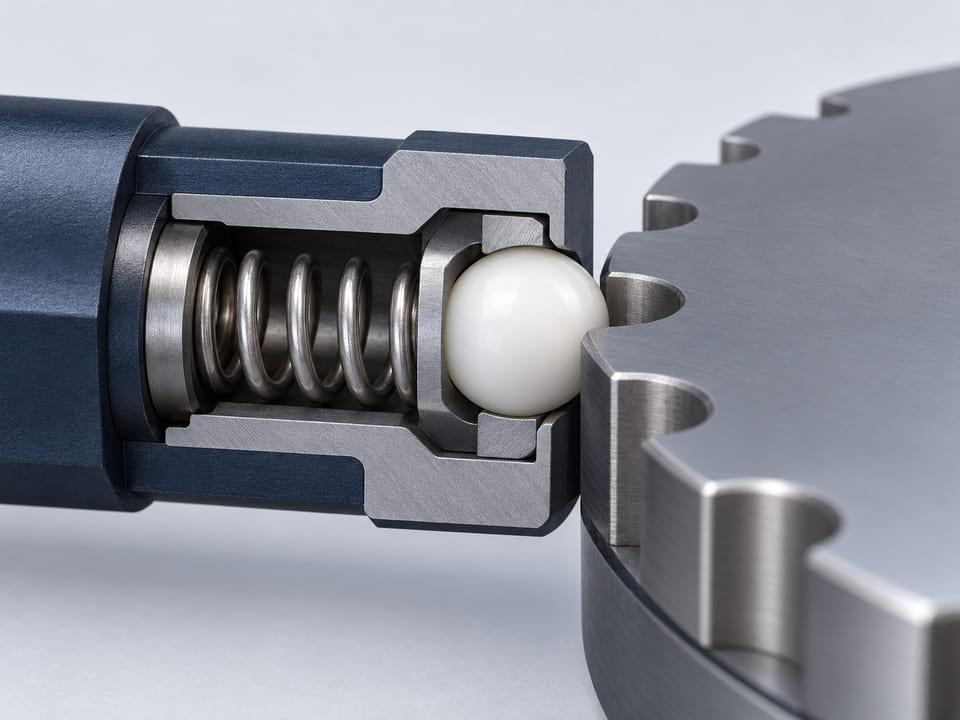
Validate the contact, dwell and movement cycle
A lightly loaded moving contact and a stationary seat under continuous pressure are different design cases. State how long the ball remains loaded, whether it slides or rolls, and how temperature changes during the cycle. Use an assembled test to check wear, sticking and recovery after dwell. A tighter diameter limit can improve fit control, but cannot by itself prevent load-dependent deformation or correct an unsuitable mating surface.
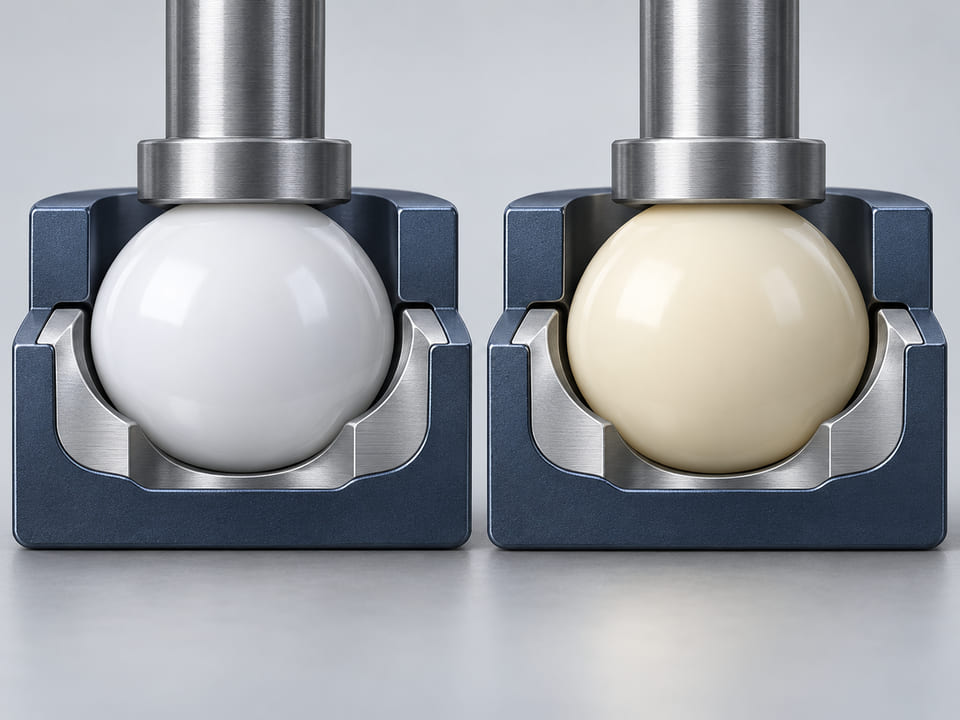
POM Acetal Balls specifications
Define the component using the requirements below. Include your target values and acceptance method; the quotation records the agreed material, geometry, inspection and supply scope.
| Requirement | What to specify | Why it matters |
|---|---|---|
| Acetal type | Identify POM-C or POM-H, grade and permitted substitutions. | A trade name or the word acetal does not uniquely define the material. |
| Fit and form | State diameter limits, roundness requirement and inspection conditions. | Repeatable movement depends on geometry within the actual mating assembly. |
| Contact cycle | Provide spring or seat loading, sliding or rolling mode and dwell duration. | Sustained loading may govern performance even when peak movement is brief. |
| Fluid and cleaning | Name the fluid, concentration, cleaner and operating cycle. | Acetal compatibility must be reviewed for the specific exposure. |
Drawing and dimensional acceptance
Provide the drawing revision and nominal dimensions with units. Identify critical form, surface and fit requirements individually; a material designation alone does not define a finished component. Where an existing sample is the reference, describe wear and confirm the intended acceptance limits.
Order and inspection scope
Separate sample quantities from production demand. State the required inspection documents, lot identification, cleanliness and packaging. Any proposed substitute or change to the component specification should be reviewed before approval, with the quotation confirming the agreed scope.
Numeric performance values, when needed, must identify their material, conditions and evidence. Typical raw-material data should not be treated as guaranteed finished-component performance.
POM Acetal Balls applications
Start with the actual mechanism and exposure conditions. Each use below identifies the information needed for a useful technical review.
Indexing and detent mechanisms
Acetal can be considered as a quieter non-metallic contact in light-duty indexing assemblies. Review the spring, groove and cycle rather than substituting only the sphere. The initial feel, wear and positional repeatability should be evaluated together because an acceptable fresh mechanism may behave differently after extended dwell or repeated movement.
Low-load guides and transfer contacts
In compatible environments, a POM sphere may support a clean, low-mass rolling or sliding contact. Establish the counterface finish, contamination level and required life. The ball should be assessed under realistic misalignment and intermittent loading, since ideal free motion on a bench does not represent a constrained contact in a machine.
Valve and dispensing components
Where a polymer sphere is considered for fluid control, check the process liquid and cleaning cycle against the proposed acetal grade. Confirm the effect of mass and contact on closing behaviour. Functional leakage or dispensing tests should use the intended seat and operating orientation rather than a material certificate as the only acceptance evidence.
Compare POM Acetal Balls alternatives
Compare the requirement that drives the decision. A matching nominal diameter or similar appearance does not establish material or functional equivalence.
| Alternative | When to review it | Tradeoff to assess |
|---|---|---|
| PA6 / PA66 nylon | Compare nylon when toughness or damping is useful and a different conditioning response can be accommodated in the working clearance. | Define the moisture state carefully; a mechanically attractive nylon alternative can change dimensions after storage, humidity or immersion. |
| PEEK | Consider PEEK when a defined combination of heat, contact or medium requires review beyond the validated acetal application. | Confirm the exact compound and assembly performance; higher material cost is not evidence that the replacement solves the specific failure. |
| PTFE | Compare PTFE when fluid chemistry or adhesion is more important than the stiffness and dimensional behaviour sought from an acetal contact. | Reassess creep and seating pressure because a softer fluoropolymer changes the contact geometry and may require a different design. |
These links open the corresponding product pages in this collection. Final selection depends on your complete specification and the agreed validation.
POM Acetal Balls FAQs
Is every POM ball made from Delrin material?
No. Delrin is a trade name associated with particular acetal materials, while POM describes a polymer family. If your drawing requires a named grade, state it explicitly and define permitted alternatives. Material identity should be confirmed from the proposed resin documentation rather than appearance or a generic product heading.
What is the difference between POM-C and POM-H balls?
They are copolymer and homopolymer acetal options with different property balances. Select against the mechanical contact, fluid and thermal requirements, and request the proposed grade data. The correct choice depends on the actual application; one label is not universally superior in all operating conditions.
Does POM absorb less moisture than nylon?
Acetal generally has lower moisture uptake than common PA6 and PA66 grades, making it a useful dimensional-stability comparison. Exact grade and exposure still matter. For a close-clearance assembly, validate the finished sphere after the relevant storage and working cycle instead of relying only on this material-family distinction.
Can POM balls carry continuous contact loads?
Assess the load, temperature, dwell time and allowed deformation together. A sphere that moves well under a brief bench load may creep during long stationary contact. An assembled dwell-and-recovery check is useful when position, leakage or operating feel depends on maintaining the original contact geometry.
How should a replacement POM sphere be approved?
Confirm the resin type, ball geometry, surface condition and mating function. Repeat any movement, fluid or dwell test that defines the existing assembly. Substitution is more than matching diameter: changes in additives, friction or material family can affect performance even when a drawing appears dimensionally unchanged.
What affects the quotation for acetal balls?
The resin grade, diameter, form and surface requirements, quantity and inspection documents set the quotation basis. Add the intended contact cycle and whether a named proprietary material is mandatory. Sample approval and commercial terms should be agreed for that specification, without assuming a standard stock range or delivery promise.
Request a quotation
Turn the POM Acetal Balls requirements into a clear enquiry for MEITUO Balls.
- Define the material and geometry.
- Describe the application and acceptance.
- Separate sample and production demand.
The quotation confirms feasibility, supply scope, inspection documents and commercial terms. Generated illustrations are not evidence of available stock or completed validation.
Continue your material review
Engineering references and illustration notes
Material-family references support screening. The exact grade, finished geometry and application acceptance govern an actual enquiry.
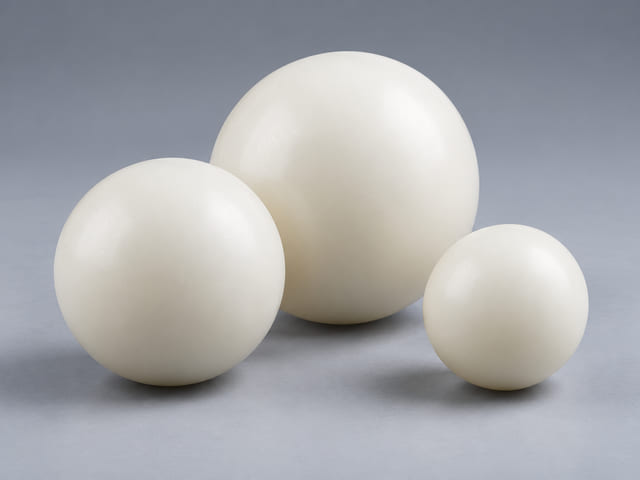
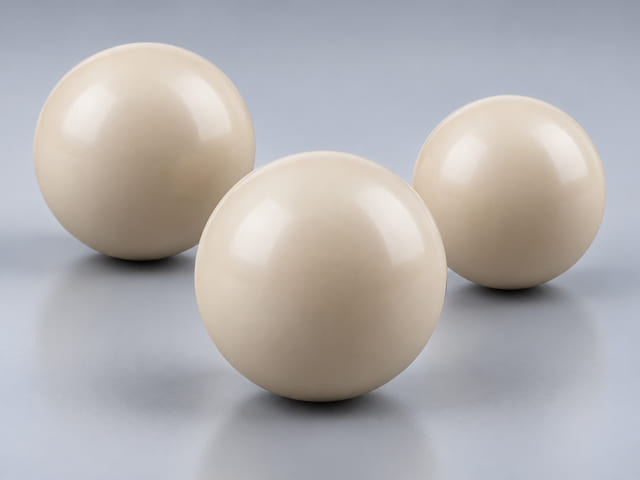
CGI illustrations explain product, application or structure concepts. They are not photographs, measured micrographs, assembly drawings or inspection results.