Home ↗
Materials. Mechanisms. A clearer route to specification.
Seven families, connected to the application.
Explore all products →Share the drawing, contact conditions and acceptance criteria for your component.
Material selection guide →Explore the contact, medium and mechanism.
All applications →Share the drawing, contact conditions and acceptance criteria for your component.
Material selection guide →From an open material question to an agreed component requirement.
Explore services →Share the drawing, contact conditions and acceptance criteria for your component.
Material selection guide →Industry and sourcing guides for twelve target markets.
Explore all markets →Share the drawing, contact conditions and acceptance criteria for your component.
Material selection guide →Match the component programme, purchasing role and project responsibilities.
Explore partnerships →Share the drawing, contact conditions and acceptance criteria for your component.
Material selection guide →Corporate background, practical purchasing information and direct contact.
Explore company →Share the drawing, contact conditions and acceptance criteria for your component.
Material selection guide →Choose a destination below or search the website from the navigation bar.

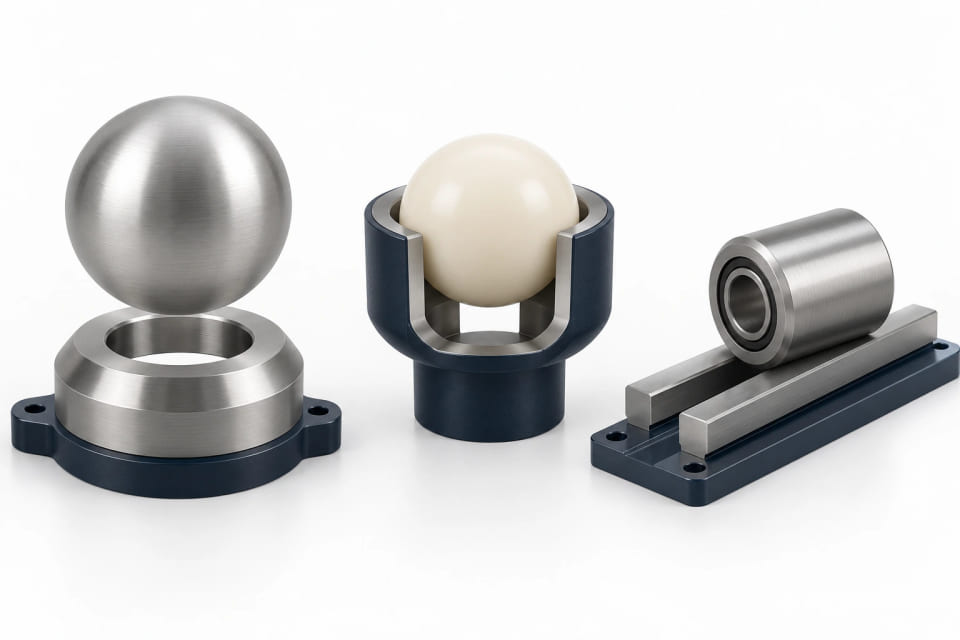
Use an application guide when the mechanism is known and the material is still open. Compare the contact, medium and movement before narrowing the product choice.
Explore the collection →Materials. Mechanisms. A clearer route to specification.
Meet the company behind the ball enquiry.
One contact. A clear next step.
Define the component. Share the working conditions.
Website features and the information you choose to share.
Read the product information in the context of your requirement.
Choose the support that moves your component from an open question to an agreed purchasing specification.
Define the special feature, its mating interface and the evidence needed to evaluate the complete component.
Choose around the operating envelope, mating contact and evidence that the application actually needs.
Give every sample a clear question, representative conditions and a recorded purchasing decision.
Keep the component identity, surface condition and receiving requirements intact through the commercial handover.
Connect each critical characteristic with a clear inspection question, method and acceptance record.
Start with a defined product requirement, customer segment or engineering problem and agree a reviewable first step.
Define the customers, products and responsibilities before discussing inventory, branding or territory.
Prepare a better enquiry, sample decision and supplier review with three editable procurement checklists.
Clarify the component, evidence and order questions before comparing proposals or approving a sample.
Turn a material question or component problem into a defined feasibility and validation brief.
Connect the ball specification to the assembly, approval record and purchasing process that depend on it.

The service and purchasing pages connect component requirements, sample acceptance and delivery questions to a focused enquiry.
Request a quote →