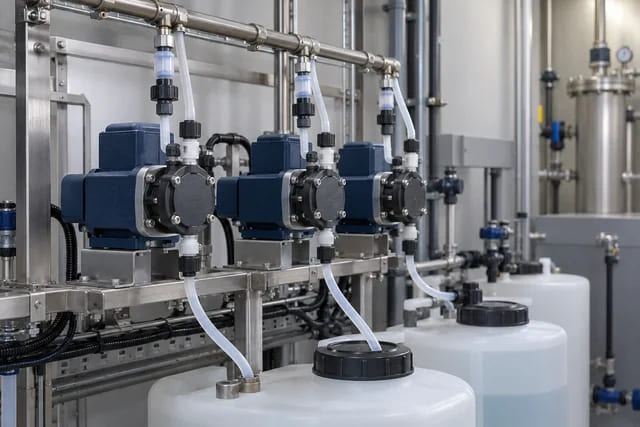
Fluid control
Check Balls for Metering & Dosing Pumps
Inlet and discharge behavior, repeatability and the full dosing cycle.
Seven families, connected to the application.
Explore all products →Share the drawing, contact conditions and acceptance criteria for your component.
Material selection guide →Explore the contact, medium and mechanism.
All applications →Share the drawing, contact conditions and acceptance criteria for your component.
Material selection guide →From an open material question to an agreed component requirement.
Explore services →Share the drawing, contact conditions and acceptance criteria for your component.
Material selection guide →Industry and sourcing guides for twelve target markets.
Explore all markets →Share the drawing, contact conditions and acceptance criteria for your component.
Material selection guide →Match the component programme, purchasing role and project responsibilities.
Explore partnerships →Share the drawing, contact conditions and acceptance criteria for your component.
Material selection guide →Corporate background, practical purchasing information and direct contact.
Explore company →Share the drawing, contact conditions and acceptance criteria for your component.
Material selection guide →Balls in chemical and water-treatment equipment may serve as check elements, dosing components or other wetted parts. Selection starts with the exact liquid, concentration, temperature and cleaning cycle. Compare the complete material and component specification; a label such as stainless, ceramic or chemical resistant does not establish compatibility for the process.
Normal operation is only one exposure. Cleaning, flushing, disinfection, idle storage and accidental carryover can introduce different conditions. Describe these separately so that the material review covers the complete life of the wetted part.
Water-treatment equipment also varies widely. A part handling a process chemical needs a different review from one in a treated-water stream. State any drinking-water contact or destination-specific document requirement explicitly; it is not implied by the application name.
Use these inputs to move from an application name to a useful component and supply enquiry.
| Selection input | Describe your conditions | Why it belongs in the enquiry |
|---|---|---|
| Exposure map | Operating, cleaning, flushing and storage liquids. | Identify concentration, temperature and exposure duration for each. |
| Component duty | Check action, dosing, moving contact or another function. | Connect compatibility with the component’s mechanical role. |
| Acceptance and documents | Drawing, functional criteria and contact-related records. | Define the product and destination scope of each requested document. |
The same equipment family can require different wetted materials for different liquids. A published pump-material example should not be generalized to all acids, solvents or disinfectants. Make the exposure conditions part of the enquiry.
Separate material compatibility from regulatory or customer acceptance. If a contact-related document is needed, identify the product, medium, intended use and issuing scope. Material identity by itself does not establish the required approval.
| Material or product candidate | Why review it here? | What must be confirmed? |
|---|---|---|
| PTFE Balls | A candidate for selected chemical-handling duties. | Use exact conditions and assess contact deformation and function. |
| PVDF Balls | An engineering-fluoropolymer option for appropriate exposure conditions. | Review the exact grade and the finished component geometry. |
| 316 / 316L Stainless Steel Balls | A metallic option for compatible media and component designs. | Do not extend a general stainless description to every water chemistry. |
These are application-review candidates. The exact grade, finished specification, supply scope and documents are confirmed in the quotation.
Plan compatibility and functional evaluation around the actual exposure sequence. Document changes in dimensions, surface or movement as relevant, and agree the acceptance criteria with the equipment owner before testing.
Avoid this assumption. Avoid treating a room-temperature compatibility statement as approval for a heated cleaning cycle.
No. Chemistry, concentration, cleaning and mechanical conditions need review for the actual component.
Both exposures must be considered together, including their temperatures and durations.
No. Identify the required product and destination-specific documentation during the enquiry.
Use a related function to compare requirements without assuming the same ball specification applies.
Inlet and discharge behavior, repeatability and the full dosing cycle.
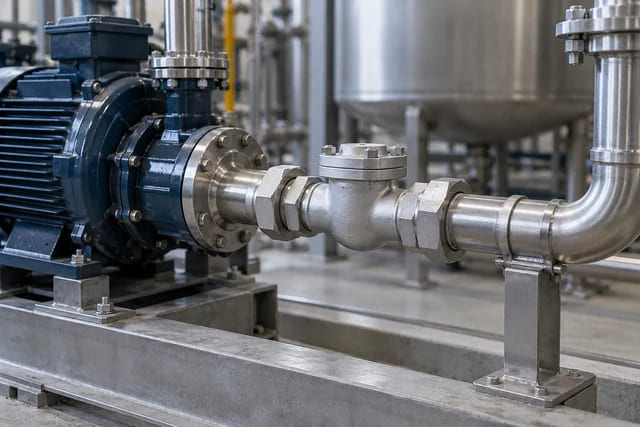
Ball-and-seat contact, closing behavior and compatibility with the working fluid.
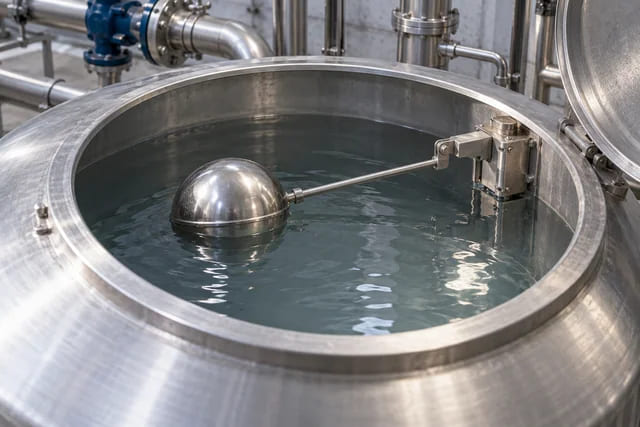
Hollow construction, mass, sealing and the liquid being monitored.
Bring the material, size, operating conditions and quantity. Include the drawing and validation topics that matter to this project.
Verder chemical-pump material example · Verder valve-ball material options
References describe industry practice and material-selection context. They do not establish MEITUO stock, equipment ownership, qualification or performance.