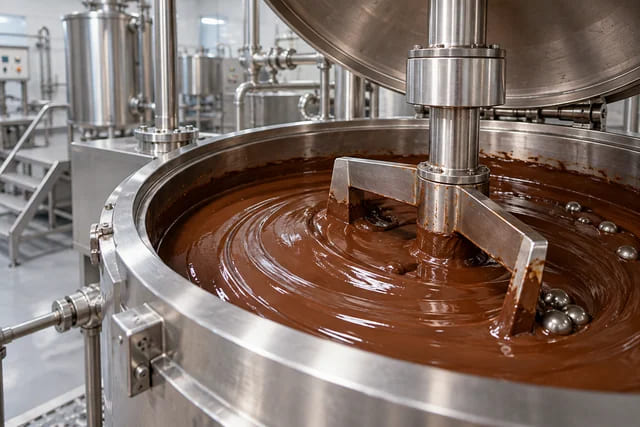
Process media
Balls & Media for Food and Chocolate Processing
Process-media selection, product-contact conditions and cleaning requirements.
Seven families, connected to the application.
Explore all products →Share the drawing, contact conditions and acceptance criteria for your component.
Material selection guide →Explore the contact, medium and mechanism.
All applications →Share the drawing, contact conditions and acceptance criteria for your component.
Material selection guide →From an open material question to an agreed component requirement.
Explore services →Share the drawing, contact conditions and acceptance criteria for your component.
Material selection guide →Industry and sourcing guides for twelve target markets.
Explore all markets →Share the drawing, contact conditions and acceptance criteria for your component.
Material selection guide →Match the component programme, purchasing role and project responsibilities.
Explore partnerships →Share the drawing, contact conditions and acceptance criteria for your component.
Material selection guide →Corporate background, practical purchasing information and direct contact.
Explore company →Share the drawing, contact conditions and acceptance criteria for your component.
Material selection guide →Grinding balls and beads act as process media rather than precision bearing elements. Their material, size distribution and condition must match the mill, feed and desired result. Compare suitable steel or ceramic media around wear, contamination, equipment compatibility and the required particle-size or dispersion outcome.
A useful grinding-media enquiry identifies the machine and the material being processed. Grinding, deagglomeration and dispersion are related but different objectives; state the result you need and the way it will be measured.
The media also interact with the chamber, agitator and separation system. A material that performs well in another device may be unsuitable for the equipment’s approved range. Start with the mill specification rather than a generic claim that harder or denser media are always better.
Use these inputs to move from an application name to a useful component and supply enquiry.
| Selection input | Describe your conditions | Why it belongs in the enquiry |
|---|---|---|
| Mill and feed | Mill type, approved media range and feed characteristics. | Identify wet or dry processing and the relevant process liquid. |
| Target result | Required fineness, distribution or dispersion acceptance. | State the measurement method and controlled comparison basis. |
| Contamination budget | Elements or residues that matter to the product or analysis. | Evaluate media and chamber abrasion together. |
Abrasive wear can add material from the grinding set to the product. This is particularly important when the result will be analyzed or when trace contamination affects product acceptance. Consider the whole grinding set, not only the balls.
Keep media supply requirements distinct from precision-ball grades. Relevant purchasing criteria may include material composition, size distribution, broken or irregular pieces, surface condition and the agreed packing basis. The process determines the useful inspection.
| Material or product candidate | Why review it here? | What must be confirmed? |
|---|---|---|
| Steel Grinding & Refining Balls | A metallic-media candidate for equipment and products that permit it. | Review wear and acceptable metallic contribution. |
| Zirconia Balls & Grinding Beads | A ceramic-media candidate for an appropriate mill and contamination objective. | Specify the exact ceramic formulation and wear acceptance. |
| Alumina Balls | A ceramic option to assess where the equipment permits it. | Check composition, media condition and product-contamination limits. |
These are application-review candidates. The exact grade, finished specification, supply scope and documents are confirmed in the quotation.
Compare candidate media in a controlled equipment trial with the same feed and stated operating conditions. Record the product result, media condition and relevant contamination measurements before approving repeat supply.
Avoid this assumption. A fine final product does not by itself prove acceptable contamination or media durability.
Use the equipment and process acceptance requirements. Bearing geometry grades may not describe the relevant media-quality criteria.
Both media and chamber can contribute wear material and affect the process result.
Confirm compatibility with the actual machine, feed and separation arrangement before adopting another size.
Use a related function to compare requirements without assuming the same ball specification applies.
Process-media selection, product-contact conditions and cleaning requirements.
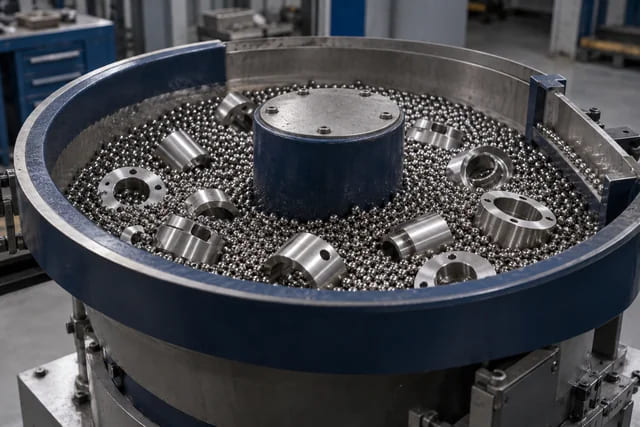
Surface objectives, workpiece contact and media separation.
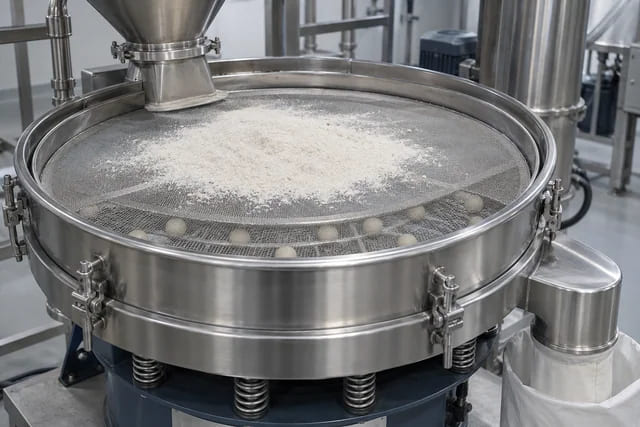
Under-mesh contact, rebound, compound compatibility and wear.
Bring the material, size, operating conditions and quantity. Include the drawing and validation topics that matter to this project.
RETSCH grinding-tool material selection · RETSCH abrasion and sample-contamination study
References describe industry practice and material-selection context. They do not establish MEITUO stock, equipment ownership, qualification or performance.