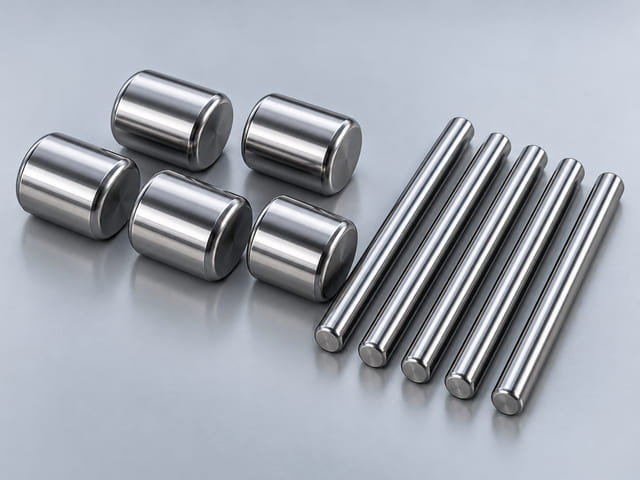
What separates a needle roller from another cylindrical roller?
Needle rollers have relatively slender proportions, while the broader cylindrical category includes other designs and profiles. Use the exact component drawing and governing reference. Diameter and length do not establish all guidance or contact requirements, and a shared category name does not make different end forms or profiles interchangeable.
Can rollers replace steel balls in an existing mechanism?
Not as a direct loose-element substitution. A sphere and a cylinder have different contact and raceway arrangements, with different guidance and alignment questions. A redesign needs the component owner's approval and complete functional evaluation. Matching one nominal dimension cannot establish equivalent fit, load distribution or operating behavior.
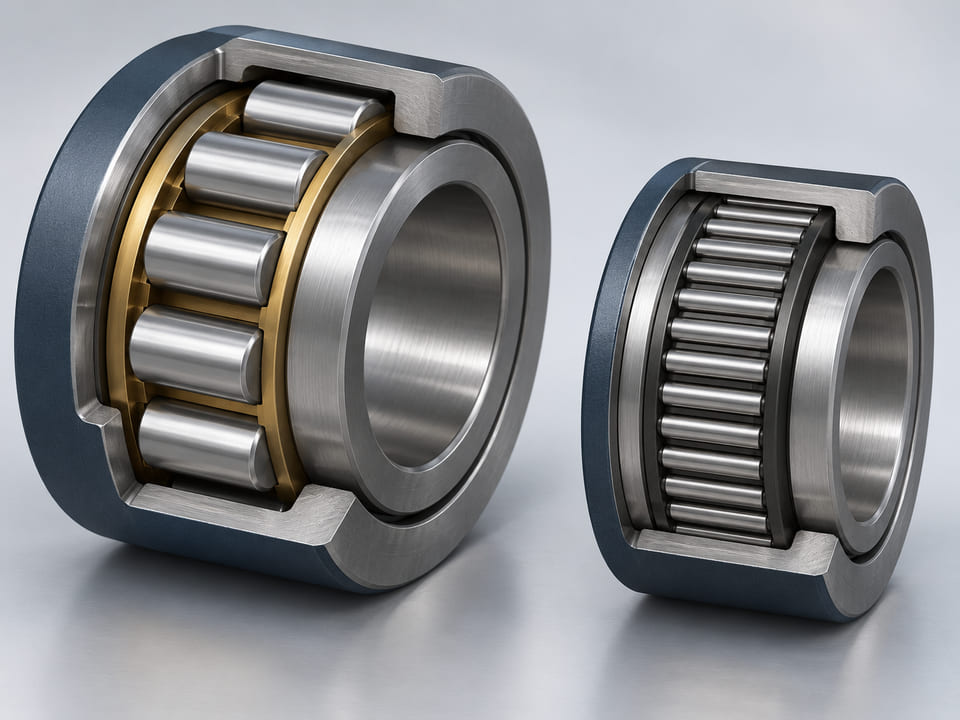
Does a bearing accuracy class provide the individual roller specification?
Not completely. A complete-bearing class refers to assembly-level requirements under its applicable standard. A loose roller still needs geometry, profile, ends, surface, material state and grouping criteria. Provide the component drawing and explain how any bearing designation applies, rather than treating the class as a substitute for part acceptance.
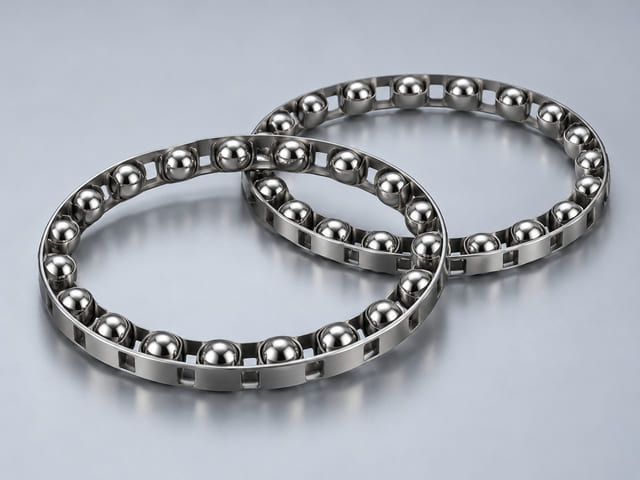
Does a ball retainer define the bearing load capacity?
No independent load capacity is assigned to the retainer here. Its principal role is separation and guidance, while rolling elements and raceways form the main contact load path. The complete bearing or mechanism determines capacity. Evaluate cage geometry and material within that assembly rather than treating the separator as a load-rated bearing.
Is an empty cage the same delivery as an assembled ball retainer?
No. An empty separator and a retained ball set include different components and need different acceptance. Identify every included item and specify the ball material and geometry separately when applicable. Keep the drawing revision, pocket and guide requirements connected to that delivery scope before comparing quotations or approving samples.
Can cage and rolling-element materials be changed together without review?
No. They perform different jobs, and both interact with lubricant, temperature, surfaces and the approved geometry. A new cage material can affect guidance while a new rolling element changes contact behavior. Define the proposed changes individually, then assess their combined effect through the complete mechanism's approval process.
Why inspect the races when replacing rollers or a cage?
Wear, damage or unsuitable guidance elsewhere can remain limiting after a part is replaced. Record the original approved component and assess the surrounding mechanism with its owner. New elements alone cannot prove restored performance. Keep the component inspection and the complete arrangement's functional acceptance linked but distinct.
What drawings and conditions are needed for a first enquiry?
Send the component and relevant assembly drawings with revisions, material and condition, geometry and surface criteria. Add roller grouping or cage delivery scope as applicable. Describe raceways, guidance, alignment, lubricant and environment, then provide quantities and sample acceptance. This establishes both the requested part and the interfaces it must satisfy.