Cylindrical & Needle Rollers
Cylindrical and needle rollers are elongated rolling elements specified by diameter, length, profile, end geometry and material condition. Needle rollers have a relatively slender form useful in compact radial designs, while other cylindrical rollers serve different bearing arrangements. They are not loose steel balls or complete bearings. Provide the component drawing, raceway conditions, material, surface and grouping requirements so the finished roller and assembly can be reviewed together.
- Material / construction
- Specified bearing steel or other approved material with defined treatment and roller geometry
- Specification basis
- Drawing, diameter & acceptance
- Order basis
- Sample & production quantities
Cylindrical & Needle Rollers: selection overview
A roller's length introduces design variables that a sphere does not have: parallelism, profile, end form and how load is distributed along the contact. Cylindrical and needle rollers share a broad rolling-element category but should remain distinguishable in the drawing and order. The material and heat-treated state also need explicit acceptance; a stainless roller cannot be assumed to share a hardened bearing-steel contact response. Bearing clearance, complete bearing accuracy and rated capacity belong to the assembly. They should not be copied as isolated roller specifications simply because the same terms appear in a catalogue.
Distinguish roller shape from bearing class
Provide the roller diameter and length, longitudinal profile, end shape and edge requirements using the drawing's references. Identify whether the item is a needle roller, another cylindrical roller or a complete cage-and-roller assembly. If a bearing class is listed, explain how it applies to the requested component. A complete bearing designation does not automatically define an individual roller's geometry, grouping or acceptance, so the loose-element requirements need their own measurable basis.
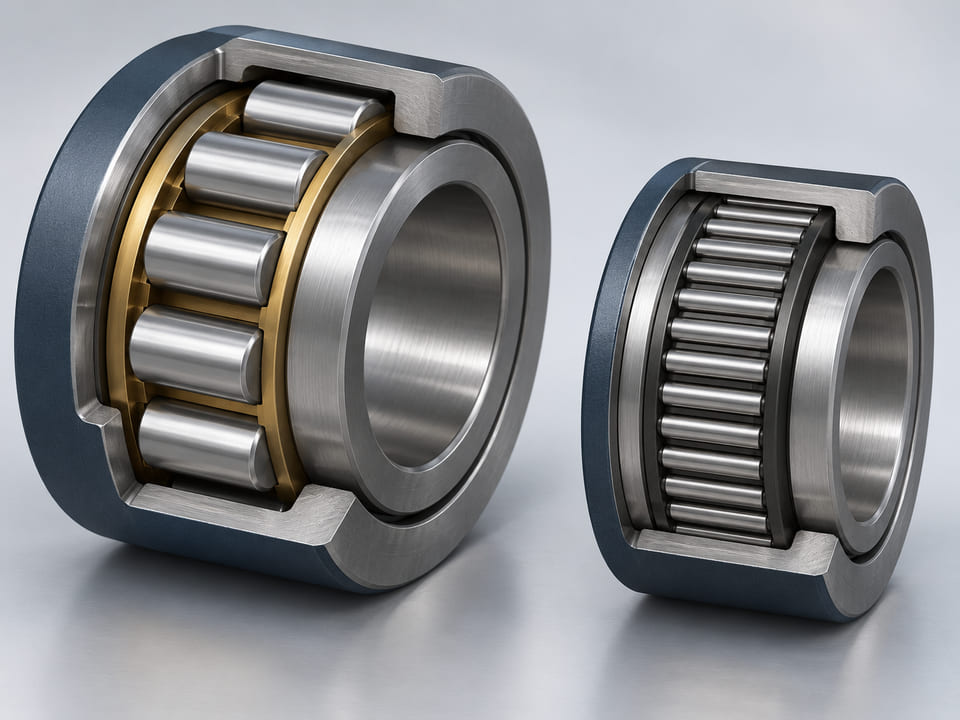
Review line contact and raceway conditions
A roller contact differs from a ball contact and can be sensitive to alignment, profile and end loading. Include the mating-race material, condition, lubricant and operating load path. If rollers are being replaced, assess the surrounding raceways and guidance rather than assuming new elements will correct wear elsewhere. State whether grouping by actual size is required. Functional acceptance should cover the complete arrangement while receiving inspection verifies the agreed roller geometry, surface and material evidence.
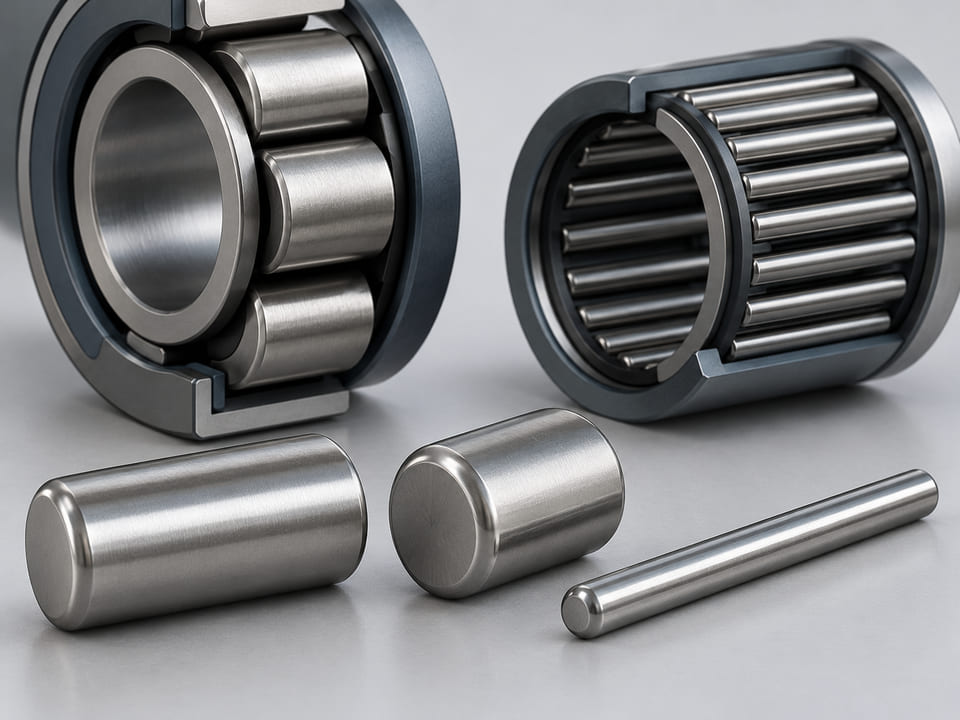
Cylindrical & Needle Rollers specifications
Define the component using the requirements below. Include your target values and acceptance method; the quotation records the agreed material, geometry, inspection and supply scope.
| Requirement | What to specify | Why it matters |
|---|---|---|
| Roller drawing | Provide diameter, length, profile, ends and edge requirements. | Distinguishes the individual rolling element from a complete bearing class. |
| Material and treatment | Name the alloy, condition and required evidence. | Keeps the contact state traceable to the specified material. |
| Geometry and grouping | Define form, surface and actual-size grouping as needed. | Supports fit, guidance and consistent load distribution. |
| Assembly conditions | Describe raceways, load path, alignment, lubricant and particles. | Allows complete-arrangement review without inventing a loose-roller capacity. |
Drawing and dimensional acceptance
Provide the drawing revision and nominal dimensions with units. Identify critical form, surface and fit requirements individually; a material designation alone does not define a finished component. Where an existing sample is the reference, describe wear and confirm the intended acceptance limits.
Order and inspection scope
Separate sample quantities from production demand. State the required inspection documents, lot identification, cleanliness and packaging. Any proposed substitute or change to the component specification should be reviewed before approval, with the quotation confirming the agreed scope.
Numeric performance values, when needed, must identify their material, conditions and evidence. Typical raw-material data should not be treated as guaranteed finished-component performance.
Cylindrical & Needle Rollers applications
Start with the actual mechanism and exposure conditions. Each use below identifies the information needed for a useful technical review.
Compact needle-bearing projects
Needle rollers can be evaluated where the design uses a slender rolling element and limited radial space. The shaft or raceway must satisfy the bearing designer's requirements. Do not infer complete bearing capacity from the appearance or dimensions of a loose roller.
Cylindrical-roller bearing components
A cylindrical roller requires a profile and end form compatible with its bearing arrangement. Guidance and alignment affect the contact. Material, treatment and surface acceptance should be matched to the drawing rather than borrowed from a different bearing type.
Linear and custom motion mechanisms
A drawing-defined roller can be considered for another guided motion arrangement if the complete contact and retention design supports it. Identify how skew, edge contact and contamination are controlled. Validate the mechanism against its real motion and load requirements.
Compare Cylindrical & Needle Rollers alternatives
Compare the requirement that drives the decision. A matching nominal diameter or similar appearance does not establish material or functional equivalence.
| Alternative | When to review it | Tradeoff to assess |
|---|---|---|
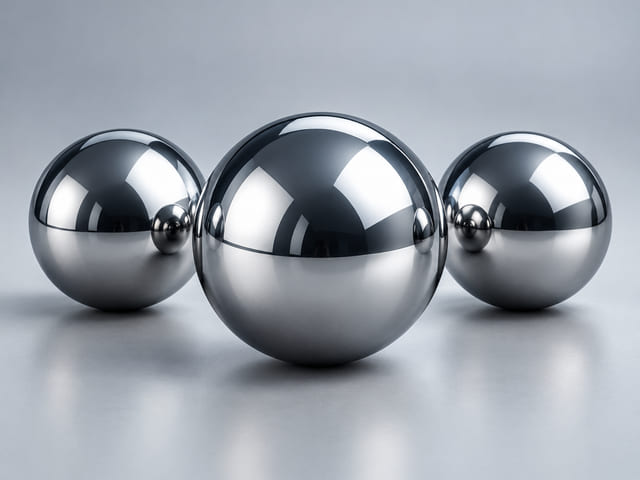
| AISI 52100 steel balls | Compare ball-based contact only when the component design is open to a different rolling-element geometry with a corresponding raceway arrangement. | Sphere and roller contacts have different load-distribution and guidance needs; they are not interchangeable loose elements at a matching nominal size. |
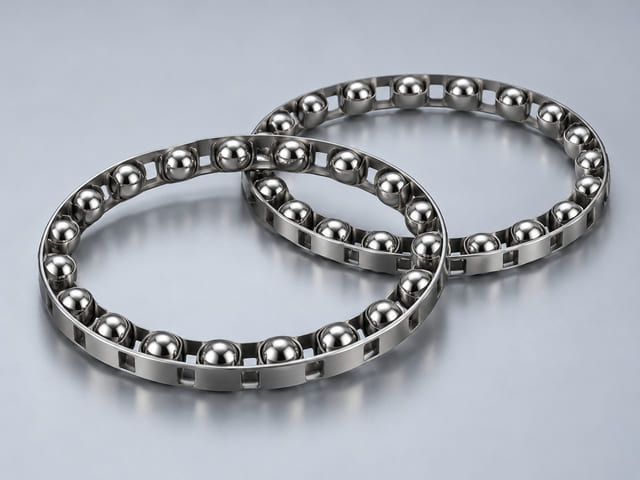
| Ball retainers | Review the separate separator component when the enquiry actually needs rolling-element spacing or retention rather than an individual roller. | A ball retainer is not a roller cage by default, and neither part independently establishes bearing load capacity or compatible clearances. |
| 440C stainless balls | Consider the distinct sphere family only for a redesign that calls for a hardenable stainless ball contact instead of a roller arrangement. | Material and geometry change together; the assembly designer must approve the raceway, contact and inspection basis rather than a catalogue substitution. |
These links open the corresponding product pages in this collection. Final selection depends on your complete specification and the agreed validation.
Cylindrical & Needle Rollers FAQs
How do needle rollers differ from cylindrical rollers?
Needle rollers are relatively slender rolling elements, while the broader cylindrical category includes other proportions and designs. Use the exact drawing and governing reference. Their shared category does not make different profiles, ends or sizes interchangeable.
Can a bearing accuracy class define a loose roller?
Not completely. Complete-bearing classes and clearances describe assembly-level requirements. A loose roller still needs its own diameter, length, form, profile, end, surface and grouping criteria. Identify how any assembly designation relates to the requested item.
Can rollers replace balls directly?
No direct substitution is established. Their contact geometry, raceways, guidance and load distribution differ. A redesign needs the component designer's approval and a complete functional assessment, rather than a nominal-size comparison of loose rolling elements.
Why do end form and profile matter?
They influence how the roller is guided and how contact is distributed in its arrangement. An unsuitable profile or end can change local contact behavior even if diameter and length appear correct. Follow the approved drawing and assembly acceptance.
Should replacement rollers be reviewed with the races?
Yes. Worn or damaged raceways and incorrect guidance can remain limiting after elements are replaced. Identify the mechanism and approved roller specification, then follow the bearing designer's acceptance. New loose rollers alone cannot establish restored system performance.
What should a roller enquiry contain?
Send the drawing, material and treatment, diameter and length, profile and ends, surface criteria and grouping. Include quantity, raceway conditions, lubrication and required documents. Clarify whether the request is for loose rollers or a complete assembly.
Request a quotation
Turn the Cylindrical & Needle Rollers requirements into a clear enquiry for MEITUO Balls.
- Define the material and geometry.
- Describe the application and acceptance.
- Separate sample and production demand.
The quotation confirms feasibility, supply scope, inspection documents and commercial terms. Generated illustrations are not evidence of available stock or completed validation.
Continue your material review
Engineering references and illustration notes
Material-family references support screening. The exact grade, finished geometry and application acceptance govern an actual enquiry.
CGI illustrations explain product, application or structure concepts. They are not photographs, measured micrographs, assembly drawings or inspection results.