440C Stainless Steel Balls
440C stainless steel balls are high-carbon martensitic spheres considered for wear-sensitive bearings, seats and precision mechanical contacts. Their heat-treated condition distinguishes them from austenitic stainless balls selected mainly for corrosion behavior. Confirm the material reference, treatment, hardness, ball geometry and surface acceptance. They are not a universal choice for chloride-rich or aggressive chemical exposure, and the complete assembly still determines load and life performance.
- Material / construction
- 440C high-carbon martensitic stainless steel
- Specification basis
- Drawing, diameter & acceptance
- Order basis
- Sample & production quantities
440C Stainless Steel Balls: selection overview
The reason to evaluate 440C is a defined combination of a hardened contact and a stainless material system. That combination does not mean that it has the corrosion behavior of 316L or that every bright sphere meets a bearing specification. The purchasing review should consider raw-material evidence, treatment, surface quality and geometrical consistency separately. In a rolling assembly, the races, lubricant and contamination conditions remain essential. In a seat, the closing contact and medium may become the limiting factors. An alternative should solve the real application constraint rather than simply increase a headline hardness.
Bearing-like duty needs bearing-like inputs
Provide the rolling arrangement, mating-race condition, duty cycle and lubricant. State whether actual-size grouping or specific surface-defect screening is needed. A loose sphere does not carry an application-independent bearing life or load rating. For replacement work, inspect the surrounding mechanism before assuming new balls alone will restore performance. If corrosion caused the original problem, include the complete exposure rather than requesting the same material with a shinier finish.
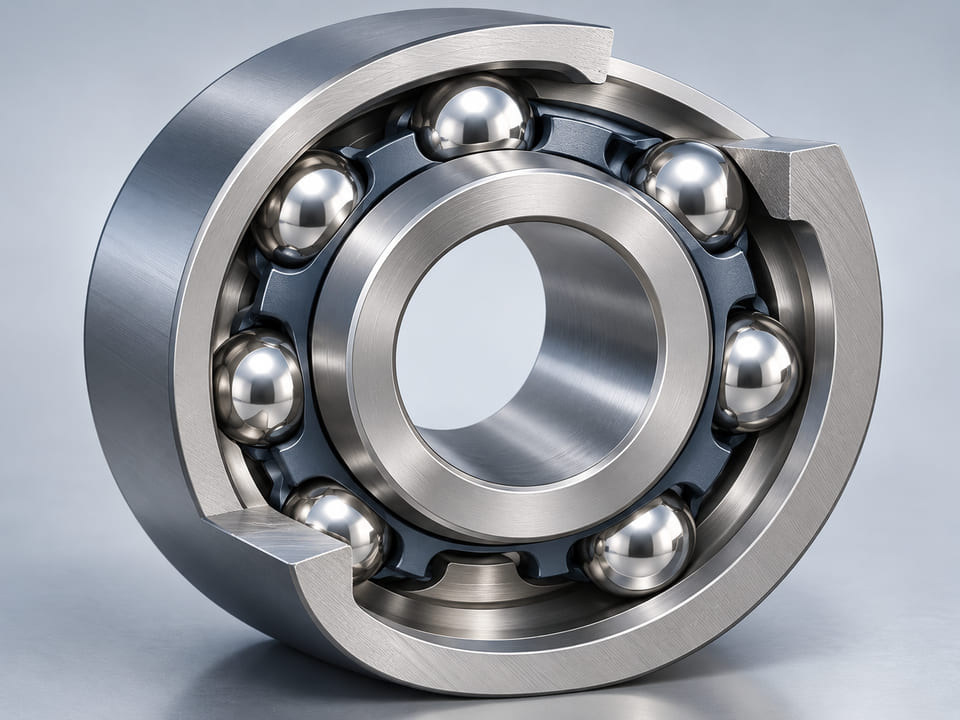
Hardness and corrosion must be balanced explicitly
Specify the required treatment and hardness test, but also identify the fluid, cleaner and exposure cycle. Hardenable stainless is a different selection route from austenitic stainless. A surface-processing requirement should support the intended exposure without obscuring the base alloy's limits. Where wear and corrosion requirements compete, compare approved samples under representative contact and environmental conditions. The most useful result is a justified component choice, not a generic ranking of stainless grades.
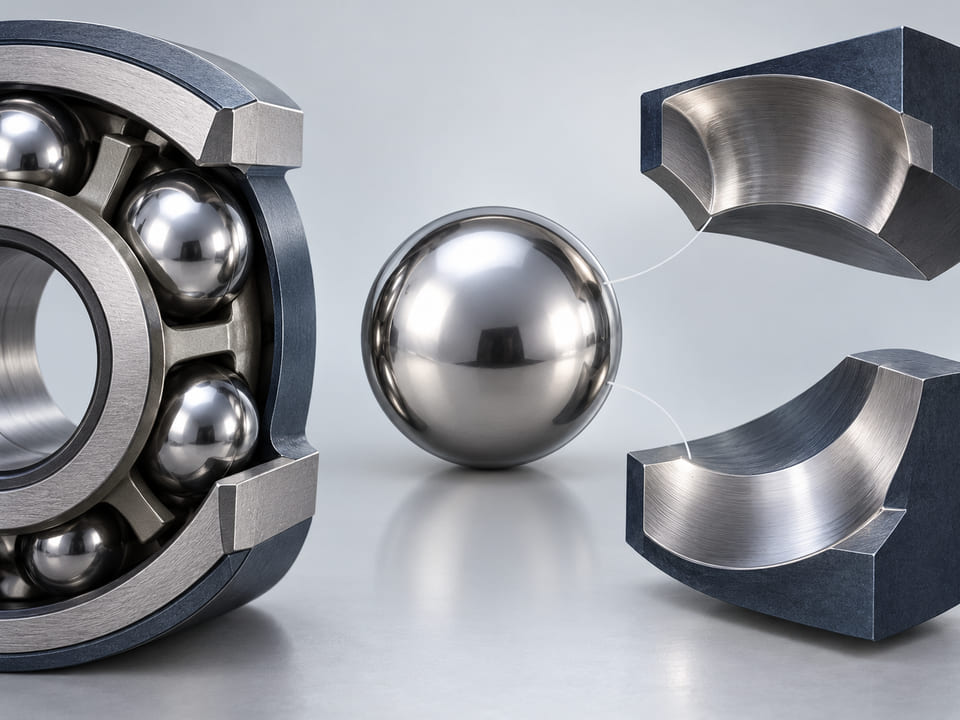
440C Stainless Steel Balls specifications
Define the component using the requirements below. Include your target values and acceptance method; the quotation records the agreed material, geometry, inspection and supply scope.
| Requirement | What to specify | Why it matters |
|---|---|---|
| 440C identity | Name the steel reference and any permitted equivalent. | Keeps material approval separate from similar-looking steel balls. |
| Treatment and hardness | Specify the finished condition and agreed testing basis. | Makes the wear-oriented requirement measurable. |
| Precision and surface | State diameter, form, grouping, roughness or defect criteria as needed. | Controls fit and contact quality in the actual mechanism. |
| Environmental duty | Describe fluid, cleaning, lubrication and storage exposure. | Prevents the stainless label concealing an unsuitable service condition. |
Drawing and dimensional acceptance
Provide the drawing revision and nominal dimensions with units. Identify critical form, surface and fit requirements individually; a material designation alone does not define a finished component. Where an existing sample is the reference, describe wear and confirm the intended acceptance limits.
Order and inspection scope
Separate sample quantities from production demand. State the required inspection documents, lot identification, cleanliness and packaging. Any proposed substitute or change to the component specification should be reviewed before approval, with the quotation confirming the agreed scope.
Numeric performance values, when needed, must identify their material, conditions and evidence. Typical raw-material data should not be treated as guaranteed finished-component performance.
440C Stainless Steel Balls applications
Start with the actual mechanism and exposure conditions. Each use below identifies the information needed for a useful technical review.
Precision rolling components
440C is a candidate when a bearing-oriented hardened stainless contact is needed. Geometry, surface quality and material condition must be matched to the assembly. Corrosion protection and lubricant compatibility still require review, even where the mechanism is described as stainless.
Wear-sensitive valve contacts
A hardened sphere may be considered for repeated seating in a compatible fluid. Review the seat's material and geometry as well as the ball. If particles or chemical attack dominate failure, increasing ball hardness may not resolve the cause.
Instrument and indexing mechanisms
For a repeated locating contact, the material can provide a candidate wear-resistant surface. The surrounding component may be softer, so check the complete contact pair and permitted marking. Any magnetic or cleanliness requirement should be specified independently.
Compare 440C Stainless Steel Balls alternatives
Compare the requirement that drives the decision. A matching nominal diameter or similar appearance does not establish material or functional equivalence.
| Alternative | When to review it | Tradeoff to assess |
|---|---|---|
| AISI 52100 chrome steel | Compare bearing steel for protected rolling systems where its material specification and contact behavior meet the design without a stainless requirement. | The corrosion plan becomes particularly important; do not infer that chromium alloying makes bearing steel equivalent to stainless steel. |
| 420C stainless steel | Review another hardenable stainless candidate when the required treatment, contact and economics can be satisfied without specifying 440C. | Grade identity and finished treatment matter; a related martensitic family name does not permit an unapproved substitute. |
| 316/316L stainless steel | Consider an austenitic material when the actual fluid or cleaning condition drives the decision toward corrosion-oriented selection. | Lower emphasis on hardened contact performance means load, indentation, wear and seat behavior need renewed validation. |
These links open the corresponding product pages in this collection. Final selection depends on your complete specification and the agreed validation.
440C Stainless Steel Balls FAQs
Is 440C suitable for seawater?
Do not approve it from the stainless name alone. Chloride exposure, temperature, stagnation and the surface condition require assessment. Compare a corrosion-oriented material if needed, and validate the contact system under representative conditions rather than relying on a broad marine label.
Can 440C replace 52100 bearing balls?
Only with the bearing designer's approval. Review geometry, treatment, contact mechanics, lubricant and the reason for changing material. A matching nominal diameter does not establish equivalent life, load response or assembly clearance.
Is 440C magnetic?
Martensitic 440C is generally magnetic. If a specific magnetic response matters to the instrument or assembly process, define the test and acceptance criterion separately. Magnetic attraction alone does not verify that a ball is 440C.
Why choose 440C over 316L?
Consider 440C when the requirement emphasizes a hardenable wear-oriented contact in a compatible environment. Consider 316L when corrosion behavior is the dominant constraint. Neither choice is universally superior, and changing material can alter the surrounding component design.
Does polishing establish bearing quality?
No. Visible polish cannot establish geometry, defect screening, material cleanliness or the heat-treated condition. Specify the needed inspection evidence and agree the component-level validation. A reflective image is not proof of production precision.
What drives quotation differences?
Material traceability, treatment, diameter, geometrical grade, actual-size grouping, surface criteria, inspection scope and quantity can all change the quoted basis. Align these requirements before comparing prices, especially when the contact is sensitive to small dimensional differences.
Request a quotation
Turn the 440C Stainless Steel Balls requirements into a clear enquiry for MEITUO Balls.
- Define the material and geometry.
- Describe the application and acceptance.
- Separate sample and production demand.
The quotation confirms feasibility, supply scope, inspection documents and commercial terms. Generated illustrations are not evidence of available stock or completed validation.
Continue your material review
Engineering references and illustration notes
Material-family references support screening. The exact grade, finished geometry and application acceptance govern an actual enquiry.
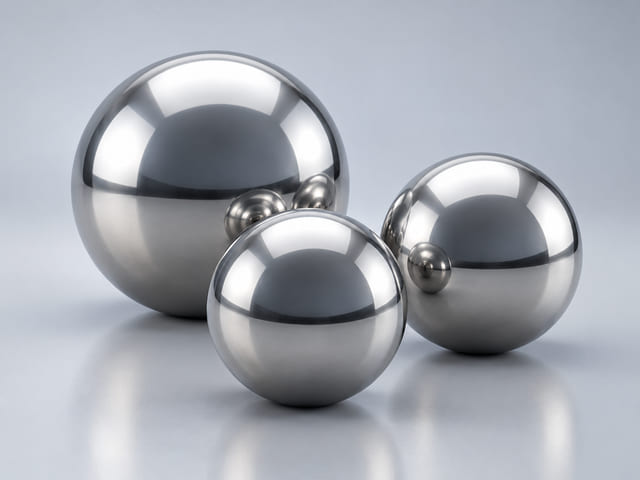
CGI illustrations explain product, application or structure concepts. They are not photographs, measured micrographs, assembly drawings or inspection results.