Skip to content
Industrial balls & precision componentsinfo@meituoballs.com
MEITUO Balls

Find a product, application or guide.

Practical resources

Procurement Resources & Checklists

Prepare a better enquiry, sample decision and supplier review with three editable procurement checklists.
Quick answer

These procurement resources help organise a ball-component enquiry, sample acceptance and supplier review. Use the RFQ checklist to describe the requirement, the sample checklist to define evidence and approval, and the supplier checklist to separate capability claims from verified scope. Each is an editable purchasing aid for your own project, with material, geometry, duty, documents and responsibilities reviewed for the actual component before commitment.

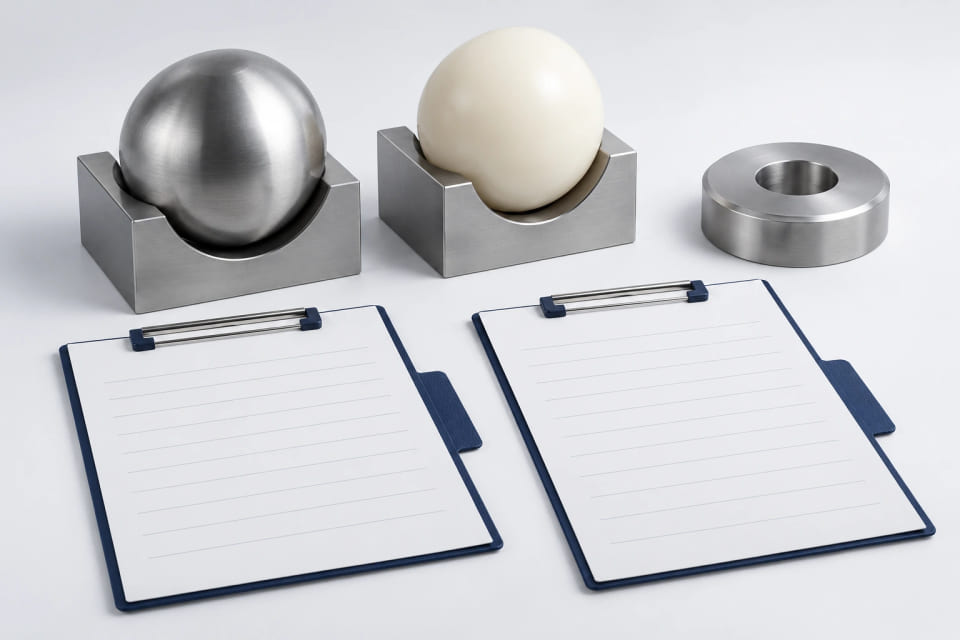
Blank physical procurement worksheets beside two component samples.
Editable checklists organize a component requirement. Conceptual CGI.
CHOOSE YOUR NEXT STEP

Practical tools for a clearer enquiry.

01

RFQ checklist

Prepare the component identity, material, geometry, duty and quantity before requesting a proposal. Mark mandatory requirements separately from alternatives that may be reviewed, and identify the documents or tests your decision depends on. Use the checklist with the quotation request so different proposals can be compared against the same actual scope.

02

Sample acceptance checklist

Define what a sample must demonstrate before ordering it. Record the revision, material proposal, inspection conditions, assembly test and approval owner. The checklist helps keep a dimensional pass, document review and functional acceptance distinct, with open items visible rather than allowing one successful check to imply that every requirement has been satisfied.

03

Supplier review checklist

Organise the questions behind a capability statement or commercial proposal. Record the proposed material source, production or sourcing route, inspection evidence, document scope and responsibilities, then distinguish claims from evidence reviewed. Use the checklist for a particular product and transaction instead of treating a general company description as approval of every component.

READY TO USE

Download the purchasing checklists.

Editable text templates to structure your own specification and supplier conversation.

A quotation is easier to assess when every proposal answers the same question. The three checklists below provide a starting structure for the information buyers, engineers and quality reviewers need to share. Adapt them to the product rather than treating every field as a universal requirement. A conditioned polymer sphere, a fluid-control component and a reference artefact project need different evidence. Keep essential acceptance, open questions and approval ownership visible as the enquiry becomes a sample or order.

01 / IN CONTEXT

RFQ checklist: describe the component and the decision

Start with the part name, identifier, drawing revision and units. Record the exact material or the function that needs a material proposal; identify permitted substitutions. Add diameter, form, surface and construction features such as a shell, thread or coating. Describe the fluid, temperature, contact, movement, dwell and cleaning that control performance. Separate sample quantity, initial demand and forecasts. List required material documents, inspection reports or special contact evidence, and state the functional acceptance if the component must pass an assembly test. Mark information that is unknown and identify who can resolve it. Finally, record destination and commercial questions for the quotation. The checklist is useful when it exposes a decision or evidence gap, not when it encourages invented values to make every line look complete.

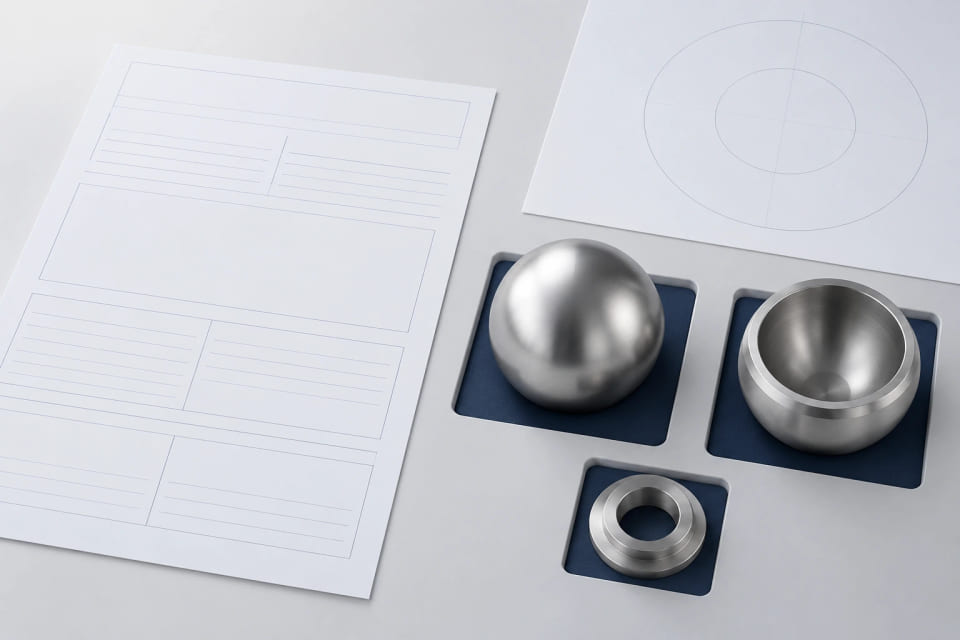
A blank enquiry sheet beside sphere, shell and seat concepts.
Start an enquiry with the actual component and its open requirements. CGI concept.
02 / IN CONTEXT

Sample checklist: record what was actually accepted

Identify the sample, proposed material, drawing revision and the requirement being evaluated. Agree inspection conditions, especially when temperature, conditioning or measurement force changes the result. Separate material evidence, size and form, surface defects and the relevant functional test. State the fixture, exposure and method needed to assess movement, leakage, wear or another project outcome. Identify the reviewer for each item and the person authorised to approve the sample. Record results and unresolved issues against the agreed acceptance rather than adding an unstated criterion after testing. Retain the approved reference, report and limits of applicability. If the drawing or operating conditions change, review whether that evidence still applies before carrying approval into another sample or order. Identify changes requiring another approval.

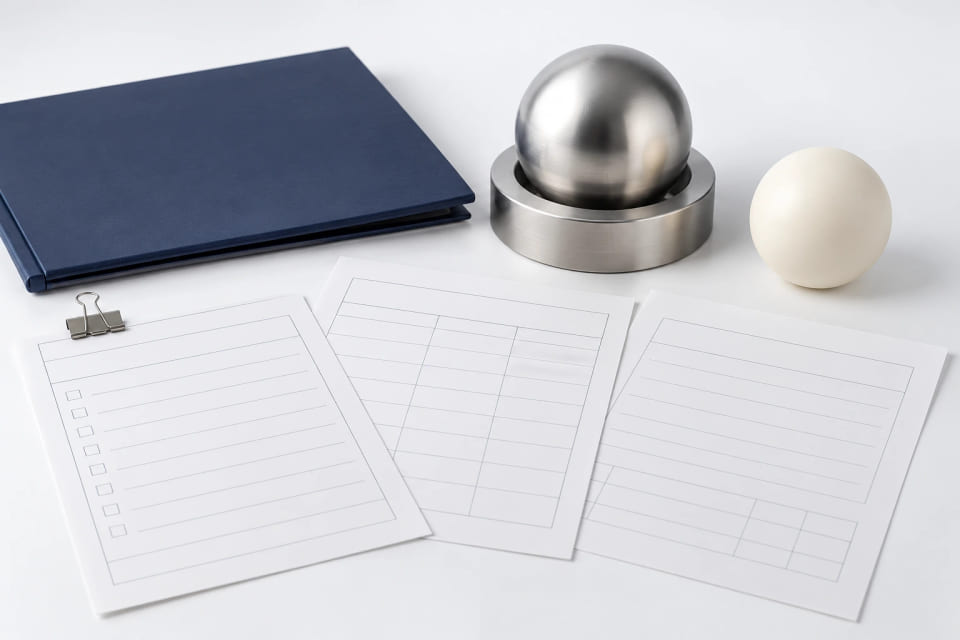
Separate sphere samples and blank acceptance forms beside a mating seat.
Record the sample, its conditions and the scope of acceptance. CGI illustration.
03 / IN CONTEXT

Supplier checklist: connect evidence to the proposed product

Record the supplier identity and the product scope under review, then ask how the actual component will be sourced, made and inspected. Distinguish in-house work from partner or purchased operations where that affects responsibility. Check whether proposed documents apply to the relevant material, component and intended use rather than a different product. Identify how drawings, revisions, batch identity and proposed changes are handled. Discuss packing, commercial terms and issue reporting for the transaction, without treating a forecast as a committed stock arrangement. For specialist deliverables, such as a calibrated reference, establish the laboratory, scope and report before approval. Keep a clear status for evidence requested, received, reviewed and accepted so a persuasive company description cannot substitute for the specific information your decision requires.

A SHARED REVIEW BASIS

Choose the checklist for the decision in front of you

Scroll the table to compare requirements →
Choose the checklist for the decision in front of you
ChecklistUse it beforeKeep visible
RFQ preparationComparing material or price proposals.Identity, duty, quantity and open questions.
Sample acceptanceOrdering or evaluating a trial component.Method, conditions, result and approval owner.
Supplier reviewAccepting a proposed supply route.Product-specific evidence and responsibilities.
Revision reviewReusing an earlier approval.What changed and whether evidence still applies.
Order confirmationTurning a proposal into a transaction.Agreed scope, documents and commercial terms.
WORKING SEQUENCE

Make the next conversation specific.

  1. 01

    Choose the relevant template

    Select the RFQ, sample or supplier checklist for the decision you are making. Read its fields against the actual product and remove irrelevant items. Keep requirements that affect function, evidence or commercial responsibility rather than treating the template as a fixed questionnaire.

  2. 02

    Fill confirmed information

    Add the drawing, material, duty and quantities you actually know. Label assumptions and unknowns, and identify their decision owner. A clear missing item is more useful than an unsupported value that makes the enquiry appear complete but changes its technical meaning.

  3. 03

    Agree evidence and acceptance

    Define which documents or tests are required and who can approve them. Share the completed checklist with the relevant parties so a quotation, sample or supplier proposal is reviewed against the same scope. Record unresolved questions before proceeding to the next commitment.

  4. 04

    Retain the reviewed version

    Keep the completed checklist with the quotation, sample record or order. Update it when the drawing, duty, material or proposed route changes. The useful record is the accepted project scope and evidence, not an unchanged blank template used after requirements have moved.

PRACTICAL ANSWERS

Questions before the next step.

Are the checklists editable purchasing templates?

Yes. They are intended to be adapted to your component and decision. Keep the fields relevant to material, geometry, duty, evidence and responsibilities, and mark unknowns honestly. The completed record should describe your actual enquiry or approval rather than imply a universal specification for every ball material.

Which checklist should I complete first?

Use the RFQ checklist when the requirement is being defined or compared. Use the sample checklist before a trial is agreed, and the supplier checklist when reviewing the proposed route and evidence. They can be used together, but each should answer a distinct decision rather than repeat an identical questionnaire.

Do the downloads provide product certificates or test results?

They provide procurement fields and review prompts. Actual material declarations, inspection reports or calibration results must apply to the proposed component and come from the relevant source. State the required document scope in the enquiry, then assess that evidence separately from the blank checklist used to request it.

What should I do with fields that are not yet known?

Mark them as open, explain why they matter and identify who can resolve them. For a material proposal, provide the function and constraints instead of guessing a resin or alloy. This helps the reviewer ask a purposeful question without treating an unconfirmed number or material name as an approved requirement.

Can one approved sample checklist cover every later order?

Only within the scope of the recorded approval. Check the material, drawing revision, duty, inspection and supply arrangement before reusing it. A changed condition may need review or further evidence. Preserve the applicable sample identity and approval limits rather than treating a successful trial as unlimited qualification.

Where should a completed checklist be sent?

Use the review request or email info@meituoballs.com with the component and decision described clearly. Share supporting drawings or confidential details through the agreed communication channel. The checklist starts a scope review; technical acceptance, supply conditions and commercial terms still need to be confirmed for the proposed transaction.
BRING YOUR REQUIREMENT

Turn a checklist into a clear review request

Share the completed requirement and the decision that needs material, sample or supplier evidence.

Prepare an enquiry ↗