Skip to content
Industrial balls & precision componentsinfo@meituoballs.com
MEITUO Balls

Find a product, application or guide.

Purchasing questions

Industrial Ball Purchasing FAQs

Clarify the component, evidence and order questions before comparing proposals or approving a sample.
Quick answer

An industrial ball enquiry needs material or function, geometry and units, operating conditions, quantities and acceptance. This centre addresses the purchasing questions that connect products to samples, documents and quotations. Sizes, sample conditions, pricing and timing require confirmation for the actual requirement; a listed material should not be treated as proof of an interchangeable or already qualified component.

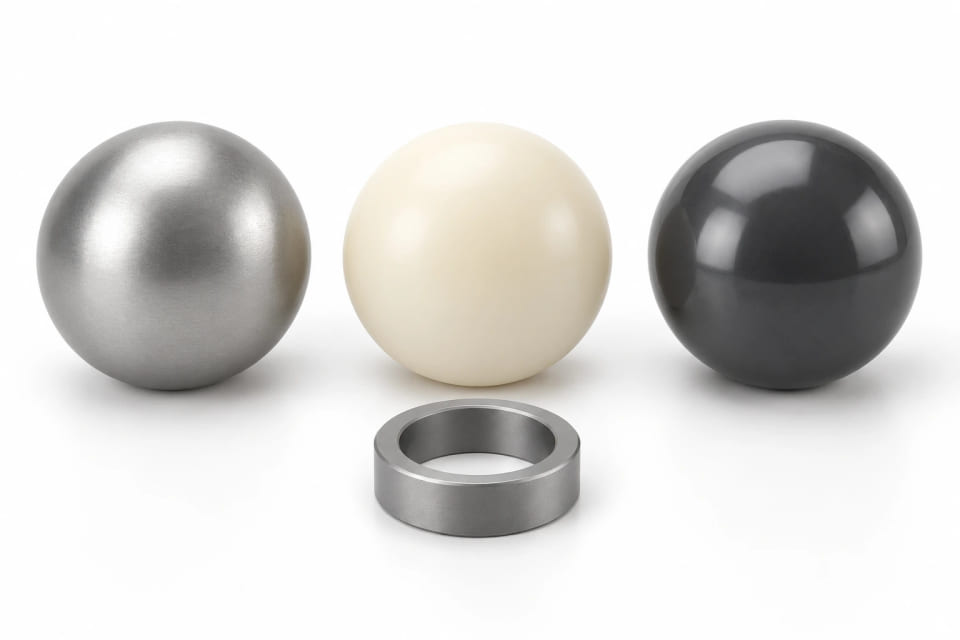
CGI concept of equal-size steel, polymer and ceramic spheres with different material surfaces beside a seat
The same nominal diameter can conceal a different component requirement · CGI material concept
CHOOSE YOUR NEXT STEP

Find the right route for your requirement.

01

Material and application questions

Compare the medium, temperature, contact and movement before choosing an alloy, polymer or ceramic. A material family can provide a shortlist, but the exact grade and finished-component duty still need review. Use the selection route when the question is which option could meet your application, rather than which name sounds most advanced.

02

Geometry and custom features

Define diameter and units together with form, finish, walls, bores, threads or coatings where relevant. A spherical exterior may hide the interface that makes the part useful. Use the custom-component route when a drawing, mounting detail or assembly question needs to be resolved before a meaningful quotation can be reviewed.

03

Samples and purchasing evidence

Establish what the sample and documents must prove before ordering them. Geometry, material identity, functional acceptance and a calibrated measurement deliverable are different requirements. Use the sample route to identify the method, conditions and approval owner so a trial result can support the next decision without being treated as unlimited qualification.

Use these answers to separate a product name from an orderable requirement. An alloy, polymer colour or nominal diameter can leave precision, construction, documents and function unresolved. Follow the relevant review route for the detail that matters. If information is missing, describe what is known rather than inventing a specification. A clear open question helps the technical and commercial review stay connected.

01 / IN CONTEXT

Turn a familiar product name into a clear requirement

Start with the function and identify the relevant product direction. 316/316L stainless spheres, PA6/PA66 nylon spheres and coated-core balls require different material and construction detail even if a buyer requests the same nominal diameter. Record units, dimensional limits, form and surface, then add the mating interface and operating exposure that govern performance. Where the drawing specifies a grade, standard or proprietary material, state the exact requirement and whether alternatives may be reviewed. Do not assume that a product title defines all those details. If the requirement is still being developed, label assumptions and identify the decision owner. This makes clarification productive and prevents a quotation from silently choosing a material, tolerance or construction that the equipment designer has not approved.

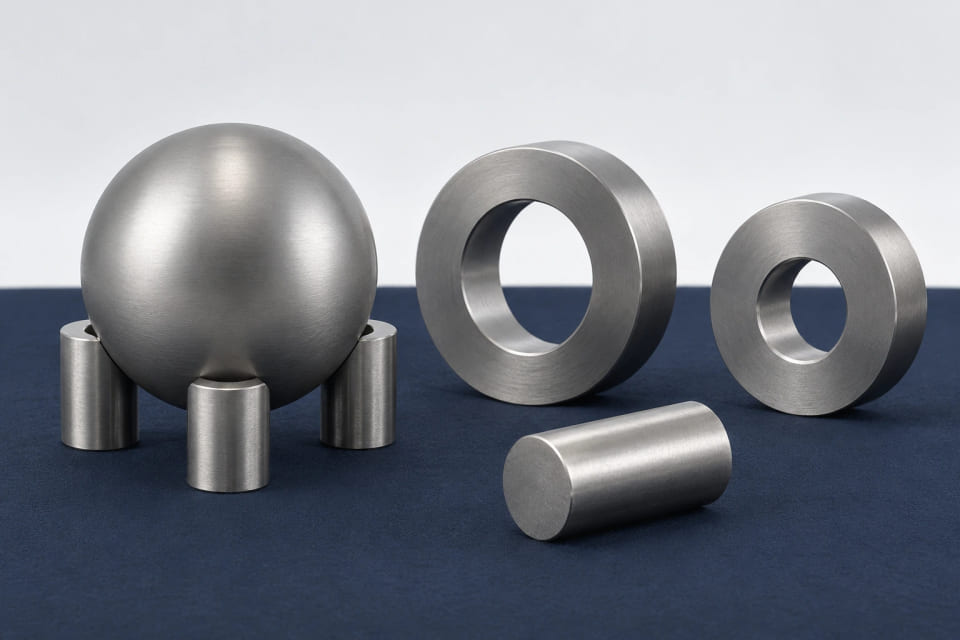
CGI concept of a sphere in a cradle beside different-bore rings and a cylindrical component
State the geometry, units and inspection question explicitly · CGI illustration
02 / IN CONTEXT

Ask for documents that answer the actual decision

Identify what evidence is required and why. A material document addresses identity or an applicable declaration; a dimensional report addresses agreed geometry; a functional test addresses a component or assembly result. A calibrated reference project additionally needs an assigned value, uncertainty and verified calibration arrangement. None of those deliverables should be inferred from the general word certificate. Specify the relevant product, revision, intended use and required report scope before sampling or order commitment. Confirm who reviews the evidence and what remains outside that scope, especially for regulated contact or complete-system qualification. The procurement checklists provide a place to organise those questions, but actual reports and declarations must come from the appropriate source and apply to the proposed component. Identify each evidence owner.

CGI concept of separately retained component samples beside a completely blank project folder
A sample and its required evidence answer different purchasing questions · CGI concept
03 / IN CONTEXT

Keep quotation assumptions visible through the order

A useful quotation review identifies the specification, quantity, documents, packing and delivery basis being discussed. Separate sample demand, an initial order and future forecasts, since they are different planning or commercial inputs. Pricing, minimum quantity, timing and payment depend on the reviewed transaction and should be confirmed in its terms. If the material, drawing or acceptance changes, ask whether the proposal and earlier sample approval still apply. The same principle helps with replacement components: a matching outside diameter is not evidence that the original seat, guide or sensor will behave identically. Preserve the agreed requirement and approval record with the purchase reference, so later questions about delivered condition or function can be reviewed against a clear scope rather than an unstated expectation.

A SHARED REVIEW BASIS

Route common questions to the right information

Scroll the table to compare requirements →
Route common questions to the right information
QuestionUseful inputNext review
Which material?Medium, temperature, contact and limiting condition.Material selection.
Which size or precision?Drawing, units, limits and inspection method.Component specification.
Will it work in the assembly?Mating parts, duty and acceptance test.Sampling and validation.
Which documents?Intended use and required evidence scope.Quality and document review.
What price or timing?Accepted specification, quantity and destination.Quotation and terms.
What if something changes?Revised requirement and earlier approval reference.Technical and commercial scope review.
WORKING SEQUENCE

Make the next conversation specific.

  1. 01

    Identify the question

    Start with the part or function and the decision being made. Separate a material question from geometry, documents or order terms. If the information is incomplete, state what is known and which person can approve the remaining requirement.

  2. 02

    Gather the relevant inputs

    Use a drawing or sample reference with material, units, quantity and duty. Add the specific evidence the question depends on, such as a seat test or intended-contact declaration. Avoid adding a generic requirement that does not serve the component's actual acceptance.

  3. 03

    Request a focused review

    Follow the appropriate page or send the requirement to info@meituoballs.com. Include open questions and permitted alternatives so the review can address the real decision. Technical feasibility and commercial conditions should be established for the proposed component rather than assumed from a listing.

  4. 04

    Retain the confirmed answer

    Keep the accepted specification, quotation and sample or document review together. Revisit the answer if the drawing, material, exposure or quantity changes. A useful purchasing record shows both what was agreed and the limits of the evidence behind that decision.

PRACTICAL ANSWERS

Purchasing questions, answered.

What size information should I provide?

State diameter, units and limits, with the drawing revision or sample reference. Add form and surface where function requires them. A unitless size or rounded metric-to-inch conversion can change the requirement. Review the actual geometry rather than relying only on a product name.

Is precision grade the same as material grade?

No. Material grade identifies an alloy, resin or ceramic requirement; precision concerns geometry and related acceptance. State both, including the applicable standard or explicit limits. A familiar grade label should not be assumed to define equivalent acceptance across unrelated metal, polymer and ceramic products.

How should I compare alternative materials?

Use the actual medium, temperature, contact and limiting condition, then review exact grades and finished components. Matching diameter is only a starting point. Changes in mass, moisture response, deformation or wear should be assessed against the same functional acceptance, rather than a generic material ranking.

Can I enquire if the material or drawing is not fixed?

Yes. Describe the function, known geometry, environment and open decision. Identify essential constraints and where a proposal may be reviewed. A clear unknown is more useful than a guessed grade or tolerance; the enquiry can establish a direction without implying that an incomplete design is validated.

Does a product listing confirm stock or an available size range?

No universal stock or size range is asserted by a material listing. Material, geometry, quantity, inspection and source require review. Use a specification-based request to establish feasibility and scope; another supplier's published dimensions should not be treated as a MEITUO supply commitment.

How are samples and their acceptance agreed?

Identify sample quantity, material proposal and drawing revision, then define inspection and any assembly test. State conditions and approval ownership before ordering. Record what passed and which questions remain. A dimensional pass should not be treated as complete equipment qualification or approval of another revision.

What determines a sample or order lead time?

Material and component route, quantity, geometry, inspection, documents and external testing affect review. Confirm sample and order timing separately in the quotation or agreement. A product page or forecast does not establish reserved capacity, a fixed delivery date or a recurring schedule for every specification.

Are minimum quantities and prices standard across products?

They require confirmation for the specification and transaction. Grade, size, construction, quantity, inspection and documents can change the basis. Separate sample and production demand, then compare proposals against the same acceptance so a lower price does not conceal a different material, evidence scope or order assumption.

Which documents can I request?

Describe the material, inspection, intended-contact or calibration evidence required, including its scope and relevant specification. Applicability must be reviewed for the component. A general request for certificates leaves the requirement unclear, and one report should not be assumed to prove unrelated conformity or complete-system performance.

What packing and destination details matter?

Identify the material, protected surfaces, quantity, identification and cleanliness needs, then provide destination and delivery questions. Decorative spheres and individually controlled components need different handling. Packing and shipment commitments belong to the agreed transaction rather than a universal promise made for every ball family.

How should a new candidate product be treated?

Review material, source, geometry, inspection and samples before supply is confirmed. Reference artefacts and paired interfaces need additional calibration or test responsibilities established. A useful technical discussion is a starting point; it does not itself prove an already qualified supply capability.

What is the best way to submit a purchasing enquiry?

Use the quotation review route or email info@meituoballs.com with the component, material or function, drawing reference, quantities, duty and evidence. Identify open decisions and approval ownership. The reviewed scope and terms should then be confirmed before an order or substitution is agreed.
BRING YOUR REQUIREMENT

Bring the remaining question into your enquiry

Share the requirement, known conditions and decision you need the review to support.

Prepare an enquiry ↗