Rubber-Coated Balls
Rubber-coated balls combine a solid core with an elastomer outer layer for compliant contact in valves, pumps and other mechanical assemblies. The core and coating serve different functions, so the finished diameter alone is insufficient for selection. Specify the core material, elastomer compound, coating thickness, working fluid and acceptance requirements. Adhesion, surface continuity and the behavior of the complete component need application-specific review.
- Material / construction
- Core plus specified elastomer
- Specification basis
- Drawing, diameter & acceptance
- Order basis
- Sample & production quantities
Rubber-Coated Balls: selection overview
A rubber-coated ball is a composite, unlike a solid rubber sphere. Its core contributes mass and stiffness, while its exterior provides the fluid-facing and contacting material. Changing either part can affect movement, sealing or response to impact. The nominal rubber family is only a starting point: formulation, cure and finished surface also matter. A shiny black exterior cannot identify a compound or demonstrate bond quality. Describe the actual medium and mechanical duty so that the coating is reviewed as part of the complete ball rather than as a cosmetic finish.
Define the core-to-coating relationship
Specify the finished outside diameter and identify whether the core diameter or minimum coating thickness is controlled. Include core material and any mass requirement where closure behavior or float response depends on it. The bond and coverage should have an acceptance method appropriate to the service. Surface defects that are harmless in a cushioning part may be unacceptable at a sealing contact, so the intended contact region must be explained during review.
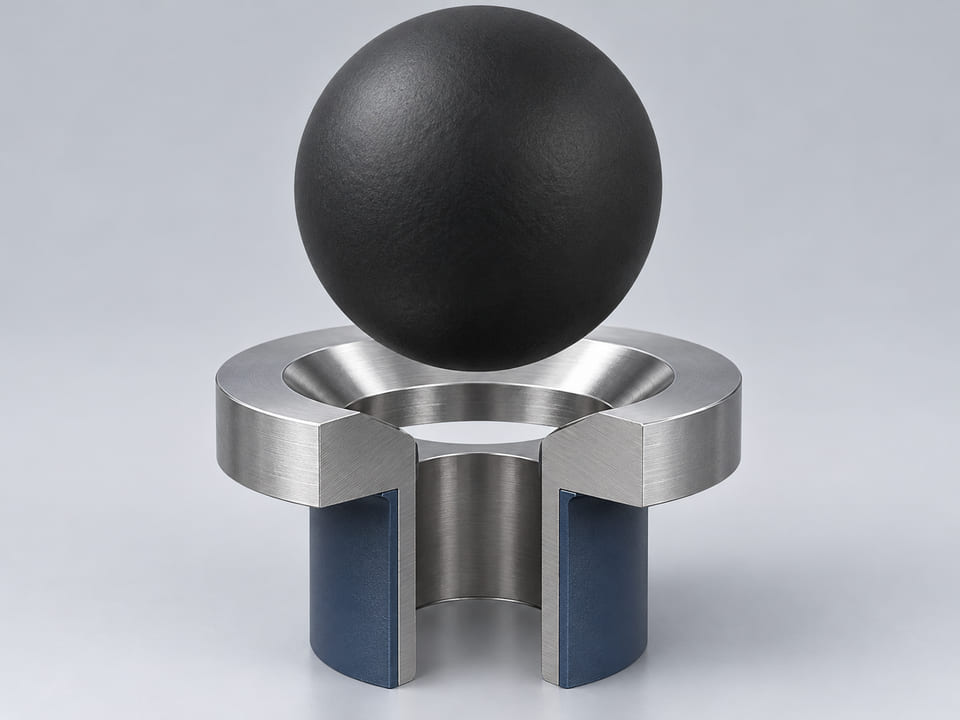
Select the actual elastomer compound
Fluid compatibility belongs to the specific compound under operating and cleaning conditions. Provide the chemical identity, concentration, temperature and exposure cycle, along with the contact load and movement. NBR, EPDM and silicone compounds have different strengths and limitations; a family label cannot substitute for compound approval. Any food-contact or controlled-use requirement needs documentation for the quoted finished product and application. Review swelling, permanent set and coating damage where those mechanisms could change the function.
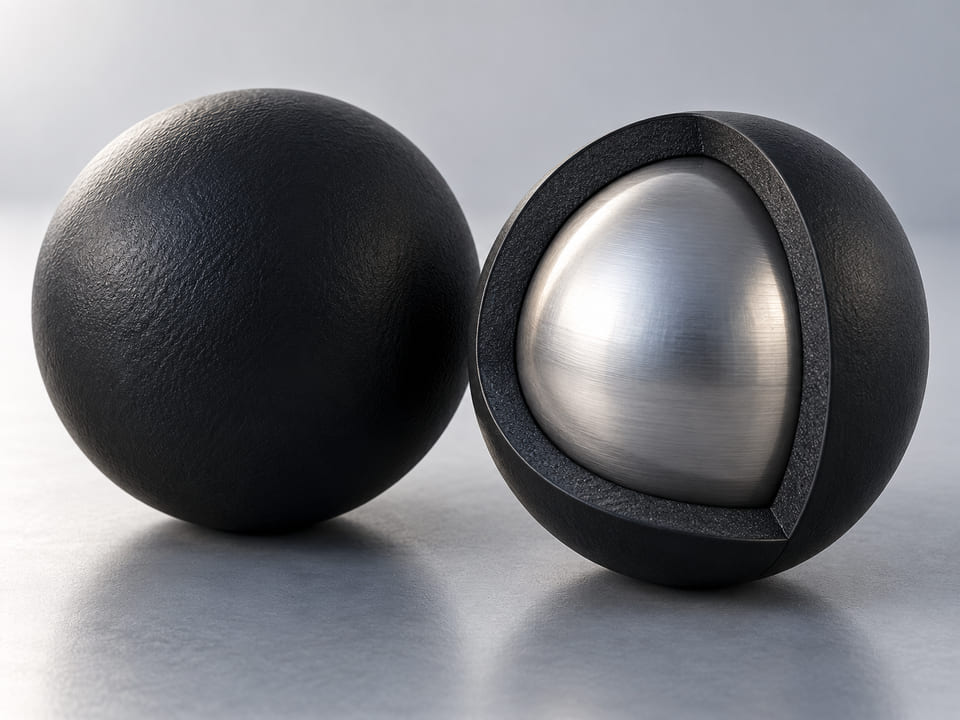
Rubber-Coated Balls specifications
Define the component using the requirements below. Include your target values and acceptance method; the quotation records the agreed material, geometry, inspection and supply scope.
| Requirement | What to specify | Why it matters |
|---|---|---|
| Core | Material, diameter or finished mass requirement. | The core affects stiffness and assembly behavior. |
| Coating | Compound identity, thickness and finished diameter. | Rubber family and finished geometry need separate definition. |
| Bond and continuity | Adhesion, pinhole and contact-surface criteria. | The exterior must remain functional through the duty cycle. |
| Service cycle | Medium, cleaning, temperature and mechanical contact. | Compatibility must address the actual exposure conditions. |
Drawing and dimensional acceptance
Provide the drawing revision and nominal dimensions with units. Identify critical form, surface and fit requirements individually; a material designation alone does not define a finished component. Where an existing sample is the reference, describe wear and confirm the intended acceptance limits.
Order and inspection scope
Separate sample quantities from production demand. State the required inspection documents, lot identification, cleanliness and packaging. Any proposed substitute or change to the component specification should be reviewed before approval, with the quotation confirming the agreed scope.
Numeric performance values, when needed, must identify their material, conditions and evidence. Typical raw-material data should not be treated as guaranteed finished-component performance.
Rubber-Coated Balls applications
Start with the actual mechanism and exposure conditions. Each use below identifies the information needed for a useful technical review.
Compliant check-valve closures
The elastomer exterior may provide a different contact response from a bare metallic sphere. Review the seat and the complete fluid cycle, including cleaning. Define the acceptance conditions for the coated component or assembled valve rather than assuming compliance guarantees leak-free operation.
Mechanical contact and cushioning
A coated core can be considered where a metallic center is useful but the external contact should be compliant. Explain impact, repeated movement and surrounding materials. The coating thickness and bond must match the intended use; visual similarity to a solid rubber ball is insufficient.
Custom fluid-handling assemblies
A composite ball may be part of an OEM pump or level-related device with a specified mass and fluid-facing compound. Give the assembly context so that the core and coating can be reviewed together. Any buoyancy requirement should use total finished mass.
Compare Rubber-Coated Balls alternatives
Compare the requirement that drives the decision. A matching nominal diameter or similar appearance does not establish material or functional equivalence.
| Alternative | When to review it | Tradeoff to assess |
|---|---|---|
| Solid elastomer balls | Choose a core-free sphere when the entire section should provide the same elastomer response and no dense core is needed. | Removing the core changes mass and deformation; equal diameter does not create an equivalent closure component. |
| Polyurethane balls | Review a specified polyurethane sphere when bulk elastomer properties are central and a separate coating bond is unnecessary. | A solid polyurethane part differs from an elastomer-coated metal core in mass, contact response and failure modes. |
| Uncoated valve balls | Compare a bare precision closure when a hard contacting surface is needed and the fluid conditions support that material. | A hard ball uses a different sealing interface; coating removal is an assembly design change rather than a finish substitution. |
These links open the corresponding product pages in this collection. Final selection depends on your complete specification and the agreed validation.
Rubber-Coated Balls FAQs
Is a rubber-coated ball solid rubber?
No. It contains a distinct core beneath the elastomer exterior. The core may change mass, stiffness and movement. If a uniform elastomer section is required, enquire about solid elastomer balls and compare the complete component behavior before approving an alternative.
Can I specify only the rubber hardness?
Hardness is useful but incomplete. Include the compound identity, medium, temperature, contact conditions and dimensional requirements. Two compounds with a similar hardness can behave differently in a fluid or over a repeated duty cycle. Coating bond and surface acceptance also need consideration.
Which coating is best for chemicals?
There is no universal best elastomer for every chemical. Selection depends on the actual substance, concentration, temperature, duration and cleaning agents. Provide that cycle for compound review. General material charts guide screening; the finished component still needs appropriate validation for the intended duty.
Does a coating make a component food compliant?
No. A family name such as silicone or EPDM does not establish the compliance of a particular compound or finished ball. State the contact conditions and applicable documentation requirement. Evidence must apply to the quoted formulation and intended use rather than an unrelated material grade.
What geometry should I define?
Identify the finished diameter, tolerance, core material, core size or mass and minimum coating requirement where relevant. Explain which part of the surface contacts a seat. These inputs help distinguish acceptable molded appearance from defects that could compromise the working interface.
What should a sample trial examine?
A trial should use the actual fluid and representative contact cycle, with acceptance agreed in advance. Relevant observations may include dimensional change, surface damage, coating integrity and functional behavior. A visually acceptable loose ball does not by itself establish the suitability of the complete assembly.
Request a quotation
Turn the Rubber-Coated Balls requirements into a clear enquiry for MEITUO Balls.
- Define the material and geometry.
- Describe the application and acceptance.
- Separate sample and production demand.
The quotation confirms feasibility, supply scope, inspection documents and commercial terms. Generated illustrations are not evidence of available stock or completed validation.
Continue your material review
Engineering references and illustration notes
Material-family references support screening. The exact grade, finished geometry and application acceptance govern an actual enquiry.
CGI illustrations explain product, application or structure concepts. They are not photographs, measured micrographs, assembly drawings or inspection results.