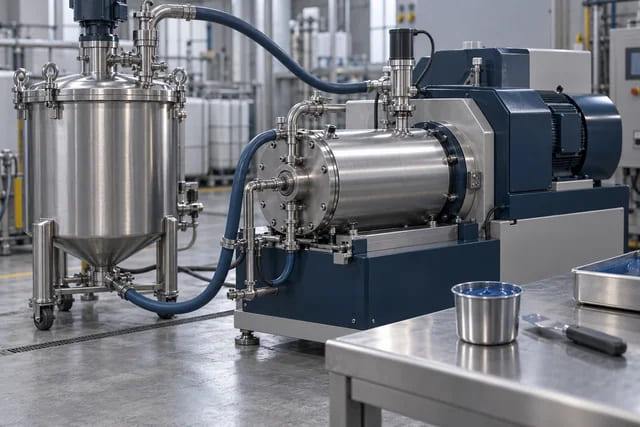
Process media
Grinding Balls for Fine Grinding & Dispersion
Media material, mill compatibility, wear and contamination control.
Seven families, connected to the application.
Explore all products →Share the drawing, contact conditions and acceptance criteria for your component.
Material selection guide →Explore the contact, medium and mechanism.
All applications →Share the drawing, contact conditions and acceptance criteria for your component.
Material selection guide →From an open material question to an agreed component requirement.
Explore services →Share the drawing, contact conditions and acceptance criteria for your component.
Material selection guide →Industry and sourcing guides for twelve target markets.
Explore all markets →Share the drawing, contact conditions and acceptance criteria for your component.
Material selection guide →Match the component programme, purchasing role and project responsibilities.
Explore partnerships →Share the drawing, contact conditions and acceptance criteria for your component.
Material selection guide →Corporate background, practical purchasing information and direct contact.
Explore company →Share the drawing, contact conditions and acceptance criteria for your component.
Material selection guide →Ball burnishing uses suitable metallic media in a mass-finishing process to work the surface of a component. Select the media with the workpiece geometry, material, process chemistry and desired finish. This differs from particle-size reduction in a grinding mill and from abrasive-media cutting or deburring operations.
A request for polishing balls should identify whether the objective is brightening, smoothing, cleaning or another controlled surface result. These words are not interchangeable process specifications, and different media shapes can interact differently with the part.
Workpiece features also matter. Holes, slots and recesses can trap media, while thin or delicate parts may require a different contact approach. Provide the component geometry and acceptable surface or edge changes for the process review.
Use these inputs to move from an application name to a useful component and supply enquiry.
| Selection input | Describe your conditions | Why it belongs in the enquiry |
|---|---|---|
| Surface objective | Appearance, roughness, edge or cleanliness acceptance. | Define a measurable limit or an approved comparison sample. |
| Workpiece geometry | Material, thin sections, holes, slots and sensitive surfaces. | Check media lodging, contact damage and separation. |
| Finishing system | Machine, process compound and wet or dry conditions. | Confirm that the complete process suits the part. |
Ball burnishing and abrasive finishing can have different mechanisms and results. Ask the process owner which media family is intended. A shiny steel sphere should not be substituted for an abrasive medium simply because both are called polishing media.
Specify how media will be screened, separated and maintained. Mixed or worn media can change contact and become lodged in workpiece features. The receiving requirement should preserve the approved media specification and packing identity.
| Material or product candidate | Why review it here? | What must be confirmed? |
|---|---|---|
| Ball Burnishing Media | Spherical steel or stainless media for an appropriate burnishing process. | Agree alloy, size mix, surface condition and separation requirements. |
| 302 / 304 / 304L Stainless Steel Balls | A stainless material family to review when specified for the media. | Confirm the process chemistry and finished-media acceptance. |
| Shaped Finishing Media | Non-spherical options when access or contact behavior requires review. | Compare shape and feature-lodging risk rather than assuming spheres are universal. |
These are application-review candidates. The exact grade, finished specification, supply scope and documents are confirmed in the quotation.
Trial representative workpieces using the defined machine and compound. Inspect the surface result, sensitive features and any media lodging, then document the accepted process and media condition.
Avoid this assumption. A decorative shine is not evidence that a specified roughness or dimensional limit has been achieved.
They serve different process objectives and may have different material and acceptance requirements.
Media can lodge in features or produce unwanted contact, so geometry affects shape and size selection.
Yes, when its identity and comparison conditions are clear. Use objective criteria wherever the application requires them.
Use a related function to compare requirements without assuming the same ball specification applies.
Media material, mill compatibility, wear and contamination control.
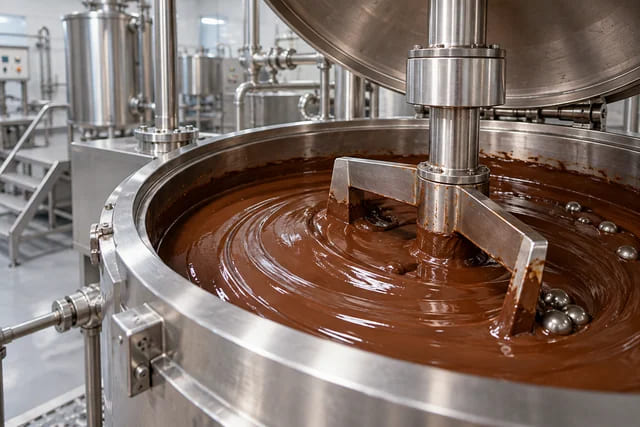
Process-media selection, product-contact conditions and cleaning requirements.
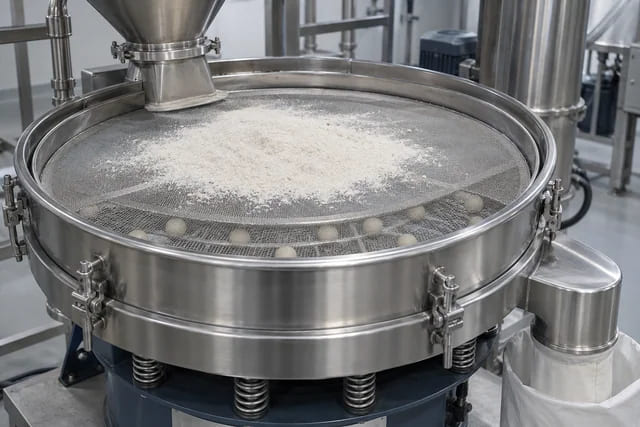
Under-mesh contact, rebound, compound compatibility and wear.
Bring the material, size, operating conditions and quantity. Include the drawing and validation topics that matter to this project.
Rösler polishing-media applications
References describe industry practice and material-selection context. They do not establish MEITUO stock, equipment ownership, qualification or performance.