Skip to content
Industrial balls & precision componentsinfo@meituoballs.com
MEITUO Balls

Find a product, application or guide.

Material selection / 07 product options

Engineered & Custom Ball Components

Choose the construction and deliverable around the assembly, not the spherical exterior alone.
Quick answer

Engineered balls are spherical components whose construction, interfaces or supplied function extend beyond a simple solid ball. Hollow shells control mass, tapped holes provide mounting, coated cores and solid elastomers offer different compliant contacts, and valve components require a defined interface. Start with the mechanism drawing and acceptance result; paired seats and calibrated reference spheres additionally require clear supply, inspection and validation boundaries before feasibility is confirmed.

01 / EXPLORE

Engineered Balls: product range

Open an individual product page for material-specific considerations, applications and the details needed for a quotation.

7 product options

All product options require specification confirmation. Entries marked “Project review” additionally require a feasibility assessment; neither label confirms stock or a past supply record.

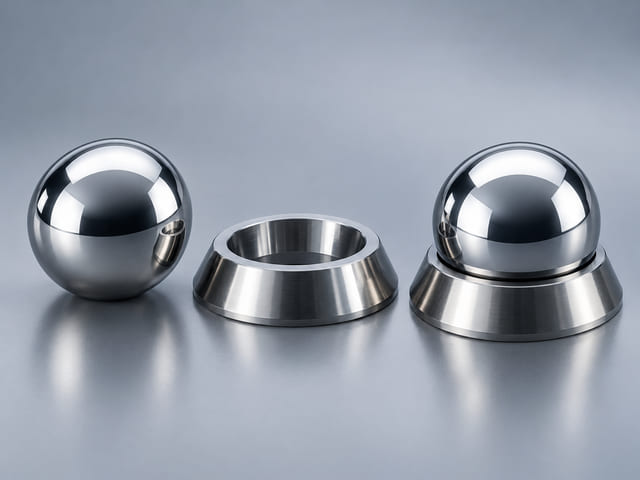
Two spheres with the same outside diameter may perform completely different jobs. A hollow stainless shell is not a lighter bearing ball by default. A tapped sphere is defined by its internal mounting interface. Coated-core construction and core-free elastomer distribute mass and deformation differently. This family brings those distinctions into the enquiry before material and finish are selected. It also separates an individual component from a paired fluid interface or a calibrated reference project, so the proposal states what is supplied and what evidence establishes acceptance.

02 / SELECT

Define construction, interface and evidence together

Choose a starting product by its role, then provide the surrounding assembly. Include the features hidden inside the sphere or beyond its outline. Project-review ranges require confirmed sourcing and validation; a product name should not imply an already calibrated artefact, tested complete valve, pressure-rated shell or approved elastomer formulation.

Swipe or scroll the comparison table →
Define construction, interface and evidence together
Component directionPrimary purposeHidden specificationRequired boundary
Valve ballsFluid closure or rotary flow control.Solid check sphere versus bored rotary component.Seat, drive and complete-valve test responsibility.
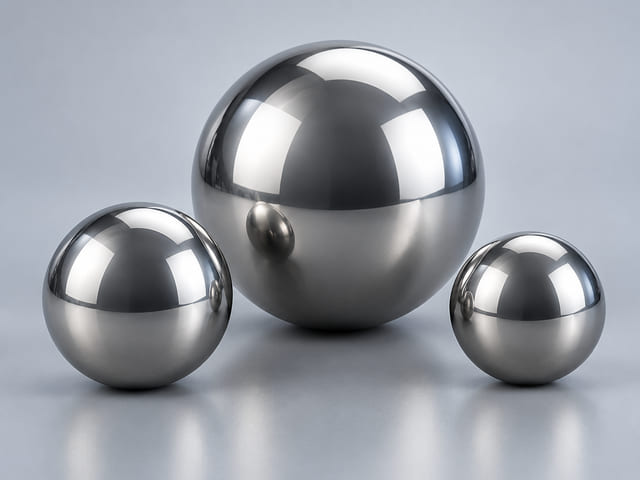
Hollow stainless spheresDefined mass, float or shell function.Wall, seam, attachments and integrity.Decorative shell versus loaded or sealed component.
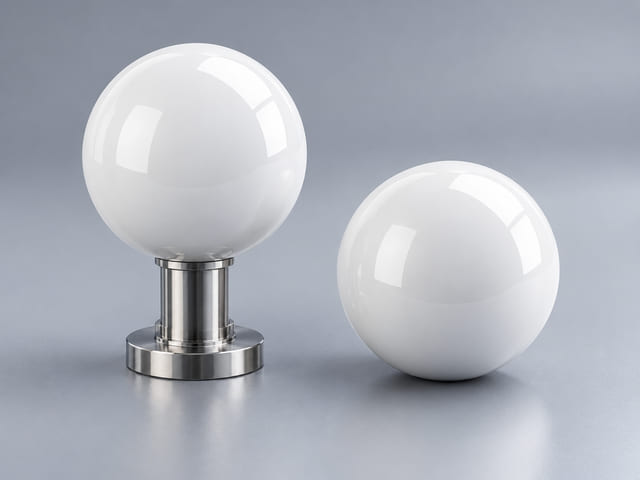
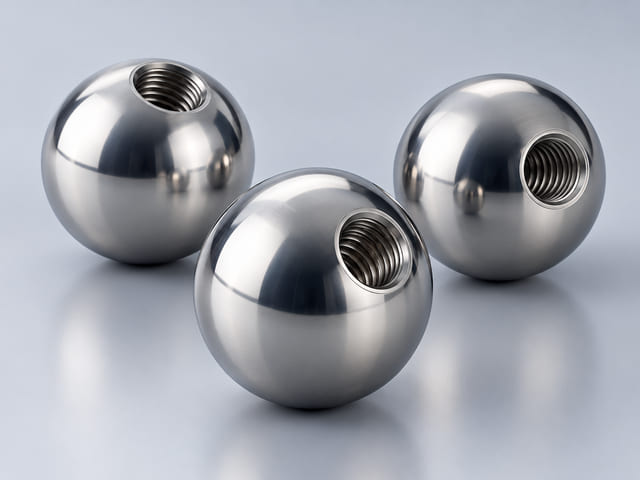
Threaded ballsMounting on rods, levers or fixtures.Thread standard, pitch, depth and remaining section.Tapped sphere versus supplied ball-stud assembly.
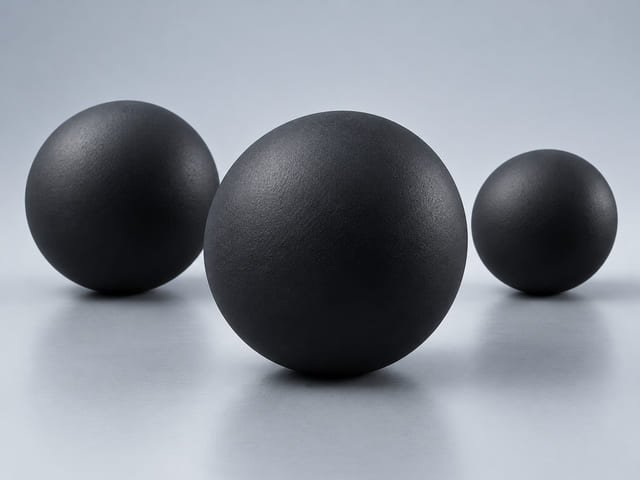
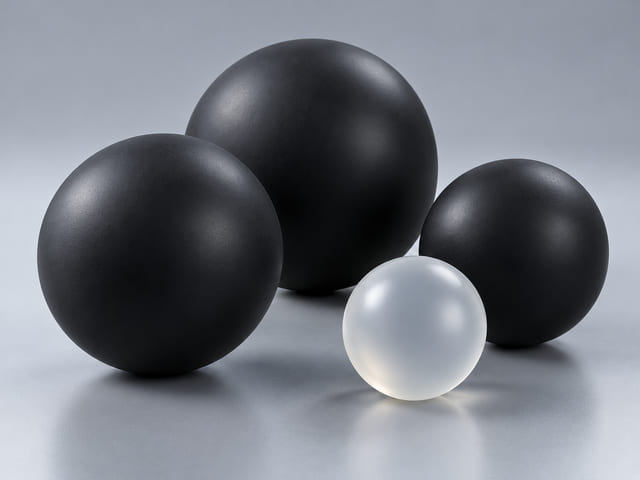
Coated-core ballsResilient exterior with a separate core.Core, compound, thickness and adhesion.Complete composite geometry and acceptance.
Solid elastomer spheresCore-free compliant contact.Formulation, moulding marks and recovery.Sample-qualified compound and compression duty.
Matched ball-and-seat setsReviewed paired fluid-contact interface.Pairing policy, housing and leakage method.Components or cartridge versus finished valve.
Reference spheresAssigned-value metrology artefact.Measurand, uncertainty, mounting and traceability.Calibration arrangement confirmed for the project.
01

Write the hidden features into the drawing

For a threaded ball, specify thread identity, pitch, hole depth and the section remaining around the feature. For a hollow sphere, define wall, seam, attachments and complete mass where function depends on it. Decide whether leak integrity or loading is required; a polished shell does not prove either. The spherical exterior may be cosmetic, a contact surface or a clearance envelope, so its finish and form should serve that role. Separating these features makes a quotation more useful than requesting a custom sphere and expecting the supplier to infer the attachment, strength or sealing requirement. Include the intended mating part in the review.

02

Compare composite and core-free compliance

A rubber-coated sphere combines core mass and stiffness with a fluid-facing elastic layer. A solid elastomer ball deforms through its section. Neither construction can be chosen from black colour or a generic hardness alone. Define formulation, hardness method, contact geometry, temperature and compression cycle. For the composite, include coating thickness, continuity and bond acceptance; for the core-free sphere, include moulding marks and recovery. Test the proposed finished component under relevant exposure rather than transferring a rubber data-sheet value to the assembly. The useful comparison is how the complete ball moves, seats or recovers in your mechanism. Its mass and attachment should be visible in the proposal.

03

Treat paired interfaces and references as distinct deliverables

A paired set needs specified contact, pairing identity and leakage conditions. Its component test is separate from the finished valve’s containment or operating qualification. A reference sphere project instead needs an assigned measured value, uncertainty, conditions and a verified calibration arrangement. Production inspection alone does not establish those metrology results. State the supplier and laboratory responsibilities, report scope and acceptance before committing to either service. This turns an appealing product name into a concrete proposal whose components, evidence and remaining system-level work can be reviewed without assuming capabilities or certifications that have not been established. Keep that scope consistent through sample approval.

03 / APPLY

Connect the material to the working application

Review the contact, environment and acceptance conditions in the assembly where the component will work.

Pumps, valves and replaceable fluid interfaces

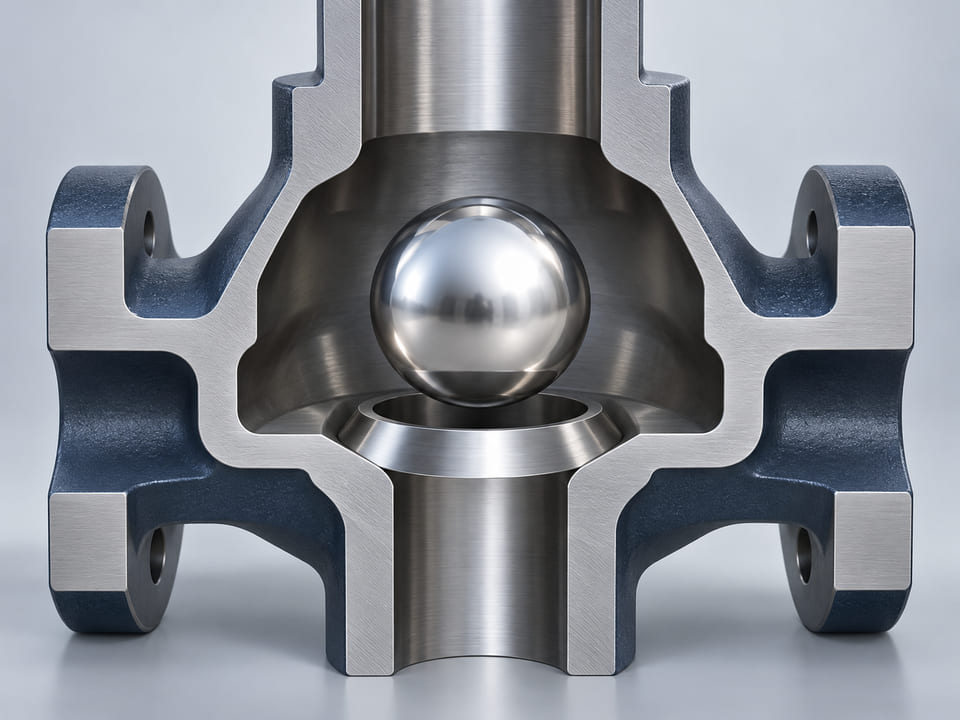
Start by distinguishing a freely moving check-valve sphere from a bored rotary valve component. Provide seat, medium, pressure sequence, orientation and closure acceptance. Compare elastomer-coated contact or a paired-set review only when the interface benefits from that construction. A geometrically similar replacement may change mass, compliance or alignment. Validate the ball-and-seat result after exposure, then keep the complete pump or valve’s containment, response and qualification within an explicitly assigned system test scope. Preserve the agreed interface and test records.

CGI illustration of Valve Balls
Valve Balls · application concept

Floats, fixtures and mechanical attachments

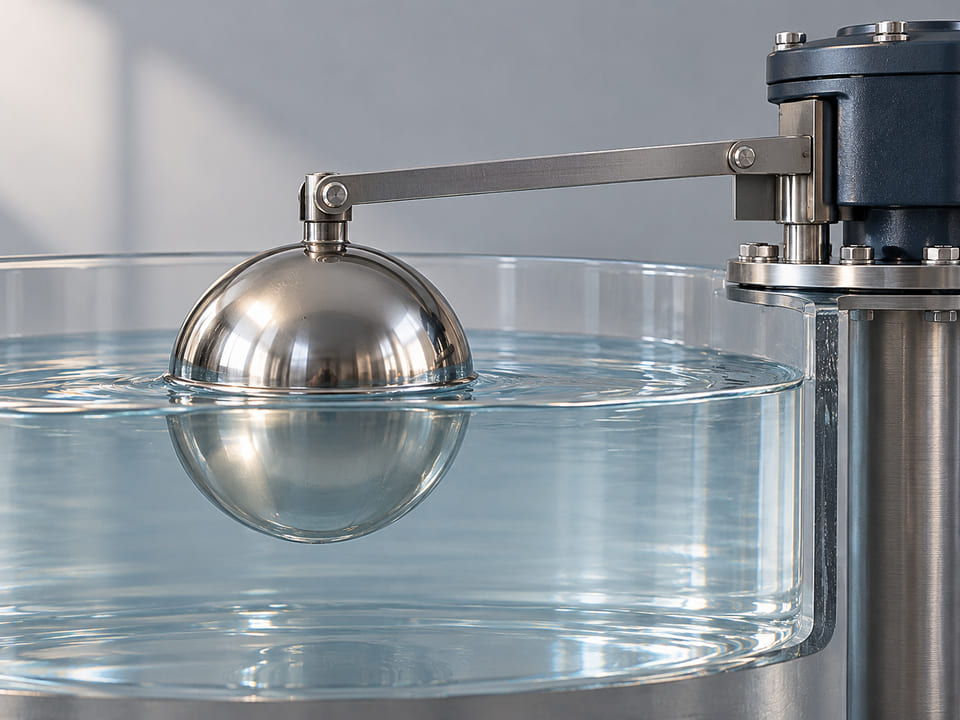
Hollow shells may address a mass or buoyancy requirement, while tapped spheres provide a mounting interface for a rod or lever. Define the complete assembly rather than only the free component: attachments add mass to a float and introduce loads into a shell or threaded section. Check the relevant integrity, fit and finish. Compare a solid or polymer sphere if the proposed shell or mounting detail cannot meet the mechanism’s requirements economically or reliably. Retain the complete mass and attachment requirements.

CGI illustration of Stainless Hollow Balls
Stainless Hollow Balls · application concept

Screening contacts and metrology fixtures

Elastic spheres can be reviewed for a defined compliant mechanism, with formulation and recovery tied to its duty. A metrology artefact follows a different route: define the measurement task, fixture, probing access and uncertainty before choosing material. These are both engineered components, but their acceptance is unrelated. A bounce demonstration cannot establish compression endurance, and a tight manufacturing tolerance cannot establish an assigned calibration value. Use the appropriate finished-component or calibration evidence for each role. Separate the relevant reports before approving samples.

04 / SPECIFY

Describe the complete component requirement

A drawing should show both the spherical surface and the interfaces that make the component useful. Add a short description of the operating problem and the result needed for acceptance. State which parts and tests belong in the quotation so feasibility, sampling and commercial review cover the same deliverable.

Swipe or scroll the comparison table →
Describe the complete component requirement
InputIncludePurpose
Assembly roleMechanism, fluid component, float, mount or reference artefact.Establishes the correct acceptance path.
GeometryOutside size, walls, holes, threads, bores and interfaces.Reveals features absent from a diameter-only enquiry.
MaterialsCore, shell, coating, elastomer and mating materials.Keeps constituent requirements visible.
DutyLoads, medium, temperature, motion, dwell and cleaning.Connects construction to actual exposure.
EvidenceGeometry, integrity, adhesion, leakage or calibration scope.Distinguishes separate inspection questions.
ResponsibilitySupplied parts, fixture, test owner and system validation.Prevents an undefined complete-assembly promise.
Samples and packingAcceptance sample, pairing identity and protected surfaces.Preserves the reviewed component condition.
From material name to a reviewable requirement

Feasibility, material identity, dimensions, inspection documents, quantities and supply terms are confirmed against your enquiry and quotation. Product illustrations do not establish a certified specification.

Prepare a focused enquiry →
05 / CLARIFY

Engineered Balls: common questions

What should I send for a custom ball review?

Send the component and assembly drawings, material requirements, quantity, operating conditions and acceptance result. Show interfaces such as threads, bores, walls or coatings. State which parts and tests belong in the quotation. A diameter and product photograph alone cannot define the hidden features or complete supply responsibility.

Are all valve balls solid spheres?

No. A freely moving solid check ball and a machined rotary ball with a flow bore and drive interface perform different jobs. Identify the valve type and drawing before comparing material or finish. The seat, housing and operating test remain necessary even when the spherical outside diameter is known.

Does a hollow sphere automatically float or resist pressure?

No. Buoyancy depends on fluid displacement and complete mass, while pressure and leak integrity require their own design and evidence. Specify wall, seam, attachments, medium and function. A decorative polished shell does not establish a validated float or a pressure-rated component simply because it is hollow stainless steel.

Is a threaded ball the same as a ball stud?

Not necessarily. A tapped sphere accepts a male mounting part, while a ball-stud assembly may include that part in the supplied deliverable. Define thread standard, pitch, engagement and scope. Identical-looking exteriors can conceal different internal interfaces and mounting acceptance, so a diameter match alone is insufficient.

How do rubber-coated and solid elastomer balls differ?

A coated sphere has a separate core and bonded elastic layer; a core-free sphere distributes compliance through its body. Mass, deformation and inspection needs differ. Specify compound and duty for both, then add thickness and bond acceptance for the composite or moulding and recovery acceptance for the solid elastomer design.

Does a matched pair guarantee a complete leak-free valve?

No. Pairing must have a defined geometry and test basis, including medium, differential pressure, temperature, time and fixture. That result does not automatically qualify the surrounding valve or pump. Identify component acceptance and complete-system responsibilities separately rather than using matched as an unrestricted leakage promise.

Can reference spheres be ordered as already calibrated stock?

No calibrated stock or existing laboratory capability is asserted here. A reference-sphere project requires the measurement task, uncertainty and report scope, then a verified calibration arrangement before supply is confirmed. A precision ball can be a component without providing the assigned measurement result required of a reference artefact.

Which features should sample acceptance include?

Choose evidence from the function: thread fit, wall or leak integrity, adhesion, recovery, leakage or calibration. Keep geometry and material identity alongside those checks rather than substituting one for another. Agree the fixture, exposure and reports before sampling so both parties evaluate the same component and deliverable.
Move from shortlist to specification

Tell us what the component needs to do.

Include the assembly function, material candidates, drawing or diameter, operating environment, quantities and acceptance needs. MEITUO Balls can review these details against the specific product enquiry.

info@meituoballs.com ↗

Drafts are prepared on your device. Review the message in your email app before sending.