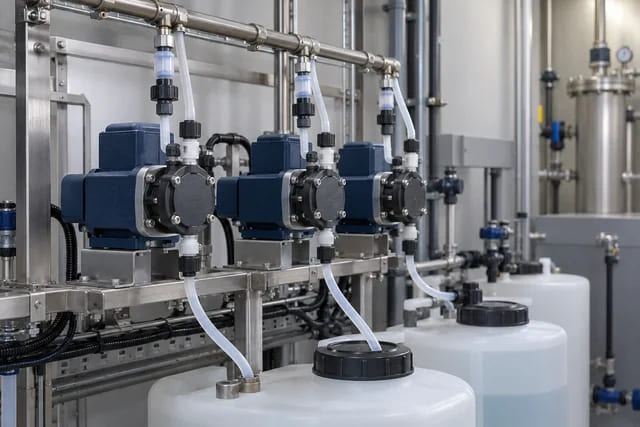
Fluid control
Check Balls for Metering & Dosing Pumps
Inlet and discharge behavior, repeatability and the full dosing cycle.
Seven families, connected to the application.
Explore all products →Share the drawing, contact conditions and acceptance criteria for your component.
Material selection guide →Explore the contact, medium and mechanism.
All applications →Share the drawing, contact conditions and acceptance criteria for your component.
Material selection guide →From an open material question to an agreed component requirement.
Explore services →Share the drawing, contact conditions and acceptance criteria for your component.
Material selection guide →Industry and sourcing guides for twelve target markets.
Explore all markets →Share the drawing, contact conditions and acceptance criteria for your component.
Material selection guide →Match the component programme, purchasing role and project responsibilities.
Explore partnerships →Share the drawing, contact conditions and acceptance criteria for your component.
Material selection guide →Corporate background, practical purchasing information and direct contact.
Explore company →Share the drawing, contact conditions and acceptance criteria for your component.
Material selection guide →A check-valve ball moves away from a seat to permit flow and returns to restrict reverse flow. Material, mass, geometry and the mating seat must be considered together. Stainless steel, engineering polymers and ceramics are candidates for different conditions; selection requires the actual medium, temperature, orientation and acceptance criteria.
The ball cannot be specified in isolation from the seat. Seat material, contact geometry, guidance and the available movement determine how the sphere contacts and separates from the sealing surface. Identify whether the enquiry concerns the ball alone or a matched component set.
Also distinguish a freely moving check ball from a ported rotary valve ball. A drilled valve component has different geometry and manufacturing requirements. This page concerns the movable sphere used at a check-valve seat.
Use these inputs to move from an application name to a useful component and supply enquiry.
| Selection input | Describe your conditions | Why it belongs in the enquiry |
|---|---|---|
| Fluid exposure | Full medium identity, concentration, solids and cleaning agents. | Include storage and flushing fluids rather than only the main operating liquid. |
| Closing conditions | Orientation, operating temperature and pressure cycle. | Describe the required behavior and the equipment acceptance test. |
| Contact geometry | Ball diameter, size limits, seat details and travel guidance. | Provide drawings or identify the controlled mating components. |
A material-compatibility chart is a starting reference, not a valve qualification. Concentration, temperature, exposure time and the full process cycle affect the decision. Ask for the exact material specification rather than a color or a broad plastic label.
If a ball changes material, its mass and contact behavior may change even when the nominal diameter stays constant. Validate closing and sealing in the intended orientation rather than assuming a same-size substitute will behave identically.
| Material or product candidate | Why review it here? | What must be confirmed? |
|---|---|---|
| 316 / 316L Stainless Steel Balls | Review for a fluid-contact metallic sphere when the medium and seat permit it. | Confirm corrosion compatibility and contact demands. |
| PTFE Balls | A fluoropolymer candidate where the medium drives material selection. | Check deformation, guidance and closing behavior in the assembly. |
| Alumina Balls | A ceramic candidate for an appropriate ball-and-seat design. | Review exact ceramic material, impact and contact acceptance. |
| PEEK Balls | A high-performance polymer candidate when the combined operating conditions justify review. | Specify the exact compound and validate contact, temperature and medium together. |
These are application-review candidates. The exact grade, finished specification, supply scope and documents are confirmed in the quotation.
Use the agreed valve test to evaluate leakage and cycling with the intended seat and operating medium, or a justified test medium. Record conditions and inspect the contact surfaces after the trial.
Avoid this assumption. A polished appearance alone does not establish sealing performance.
Clarify the scope in the enquiry. A ball-only quote does not include a matched seat or a completed valve performance test.
Only after reviewing the fluid, geometry, mass, contact and assembly behavior under the intended conditions.
No. Describe whether the sphere moves against a seat or rotates around a ported flow passage.
Use a related function to compare requirements without assuming the same ball specification applies.
Inlet and discharge behavior, repeatability and the full dosing cycle.
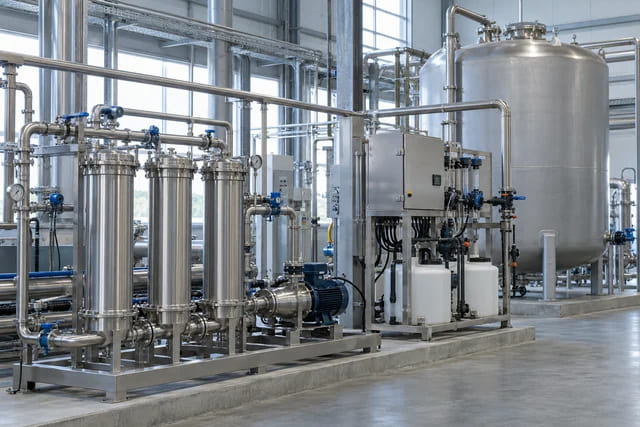
Media compatibility, cleaning cycles and wetted-component requirements.
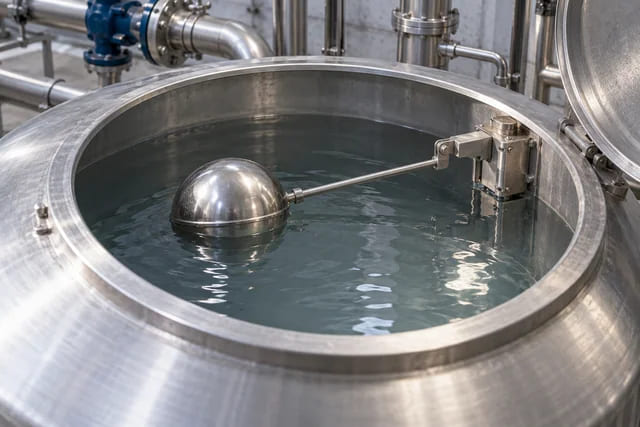
Hollow construction, mass, sealing and the liquid being monitored.
Bring the material, size, operating conditions and quantity. Include the drawing and validation topics that matter to this project.
Verder valve-ball material options
References describe industry practice and material-selection context. They do not establish MEITUO stock, equipment ownership, qualification or performance.