316/316L Stainless Steel Balls
316/316L stainless steel balls are molybdenum-bearing austenitic spheres considered for pumps, valves and clean mechanical components in defined chemical environments. 316L is the low-carbon member and should be requested when the drawing or process requires it. Choose the grade around actual fluid chemistry, temperature and cleaning, then confirm diameter, surface condition and contact acceptance. Neither material is a universal solution for seawater or every aggressive chemical.
- Material / construction
- AISI 316 or low-carbon 316L austenitic stainless steel
- Specification basis
- Drawing, diameter & acceptance
- Order basis
- Sample & production quantities
316/316L Stainless Steel Balls: selection overview
The material distinction that usually prompts a 316-family review is the molybdenum-bearing austenitic alloy system. It can offer a useful comparison with 304-type stainless in appropriate exposures, but the actual medium still governs suitability. The L designation identifies lower carbon; it is not a promise of greater ball precision, a sterile surface or immunity to all corrosion. These materials are not selected for the through-hardened contact behavior of martensitic bearing balls. Treat the exact grade, surface preparation, cleanliness and assembly contact as separate parts of a meaningful purchasing specification.
316 vs 316L: connect low carbon to the requirement
Identify whether the drawing requires 316 or 316L and why a low-carbon designation matters to the intended process. If a dual-certified material is proposed, review the actual certificate and standard rather than accepting an unqualified slash in a title. A loose sphere used without welding still needs its specified grade honored. Avoid using low carbon as shorthand for more precise, nonmagnetic or suitable for every clean application; those are separate acceptance questions.
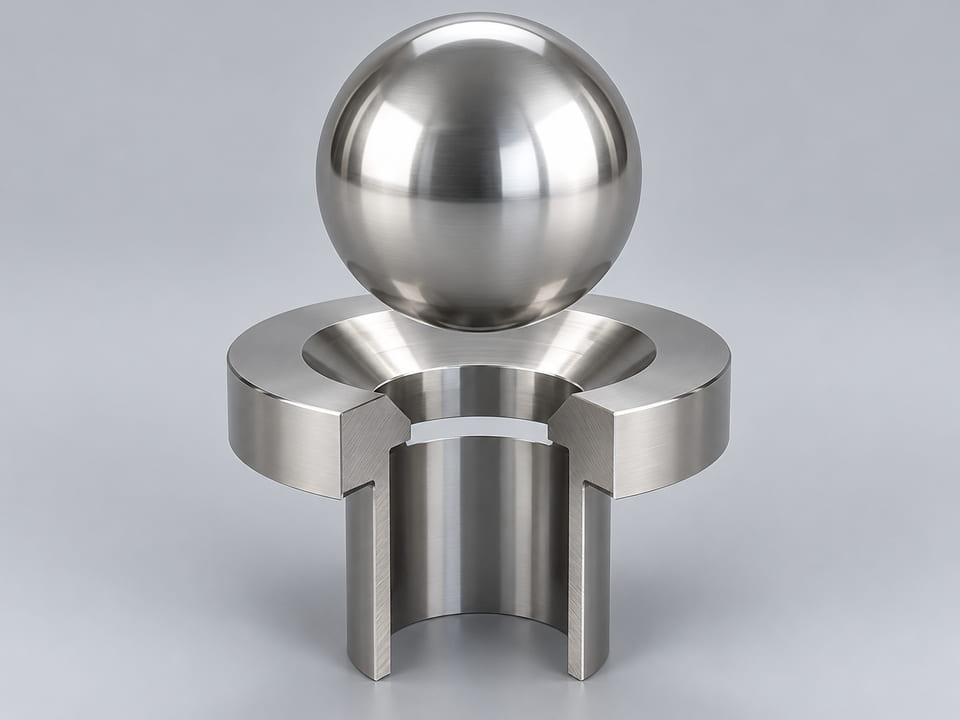
Chlorides and cleaning need a complete exposure description
Provide the fluid composition, concentration, operating temperature, exposure time and cleaning cycle. Include stagnant conditions, trapped liquid and contact with dissimilar materials where relevant. A pump or valve can have crevices and contact stresses that do not resemble a simple coupon exposure. If a corrosion issue has occurred, describe its location and operating history. This supports a useful comparison with duplex, polymer or ceramic candidates rather than a generic claim of marine resistance.
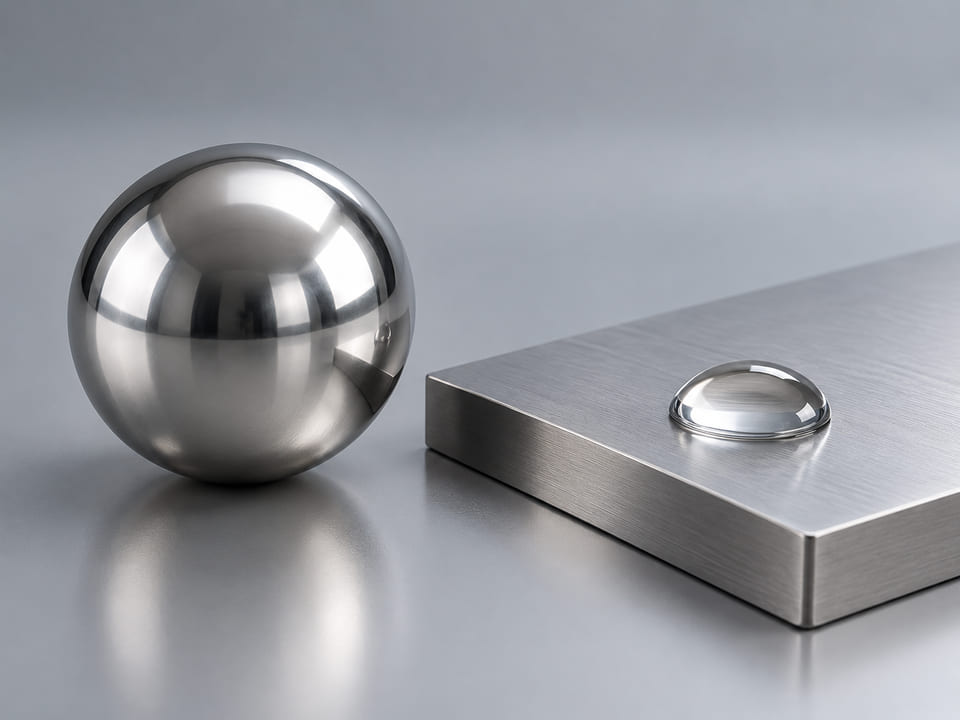
316/316L Stainless Steel Balls specifications
Define the component using the requirements below. Include your target values and acceptance method; the quotation records the agreed material, geometry, inspection and supply scope.
| Requirement | What to specify | Why it matters |
|---|---|---|
| 316 or 316L identity | State the exact member and material-document requirements. | Makes the low-carbon designation an explicit acceptance item. |
| Exposure envelope | Describe process fluid, cleaner, concentration, temperature and time. | Supports material review for real conditions rather than industry names. |
| Seating geometry | Give nominal diameter, form, surface and functional-test requirements. | Connects ball inspection with the complete valve or mechanism. |
| Surface cleanliness | Define residue, oil-free condition or passivation evidence if needed. | Keeps material identity separate from preparation and packing. |
Drawing and dimensional acceptance
Provide the drawing revision and nominal dimensions with units. Identify critical form, surface and fit requirements individually; a material designation alone does not define a finished component. Where an existing sample is the reference, describe wear and confirm the intended acceptance limits.
Order and inspection scope
Separate sample quantities from production demand. State the required inspection documents, lot identification, cleanliness and packaging. Any proposed substitute or change to the component specification should be reviewed before approval, with the quotation confirming the agreed scope.
Numeric performance values, when needed, must identify their material, conditions and evidence. Typical raw-material data should not be treated as guaranteed finished-component performance.
316/316L Stainless Steel Balls applications
Start with the actual mechanism and exposure conditions. Each use below identifies the information needed for a useful technical review.
Metering pump check elements
A 316-family ball is a candidate for compatible fluids where corrosion and cleanliness are important. Ball-and-seat geometry, particles and closing dynamics also affect operation. Define the fluid and the acceptance test for the assembled valve rather than assuming material identity establishes sealing performance.
Process and cleaning-sensitive equipment
For components exposed to both a process medium and cleaning chemicals, review the complete operating sequence. A compatible process fluid does not prove cleaner compatibility. Specify surface residue and any documentation required by the equipment program.
Dispenser and packaging assemblies
An austenitic stainless sphere may serve a small check, mixing or locating function. The material selection should consider the packaged formulation and the intended service life. Oil-free packing, batch identification and any magnetic limit need explicit agreement.
Compare 316/316L Stainless Steel Balls alternatives
Compare the requirement that drives the decision. A matching nominal diameter or similar appearance does not establish material or functional equivalence.
| Alternative | When to review it | Tradeoff to assess |
|---|---|---|
| 302/304/304L stainless steel | Compare a general-purpose austenitic family when the verified fluid and cleaning conditions do not require the particular 316-family alloy selection. | Use the same exposure basis and acceptance criteria; a lower-cost family is useful only when it meets the actual component requirements. |
| Duplex stainless steel | Review a defined duplex grade for a project where the strength or corrosion assessment calls for another stainless material system. | Exact grade, phase condition, temperature and finishing need qualification; do not treat duplex as a direct diameter-only upgrade. |
| PTFE polymer | Consider a fluoropolymer when compatibility, mass or nonmetallic contact behavior makes an all-metal ball an incomplete solution. | Compliance, deformation, creep and thermal movement differ substantially from steel and may require a different seat or operating design. |
These links open the corresponding product pages in this collection. Final selection depends on your complete specification and the agreed validation.
316/316L Stainless Steel Balls FAQs
What distinguishes 316L from 316 balls?
316L is the lower-carbon designation within the molybdenum-bearing austenitic family. Use it when the drawing, standard or process requires it. The L does not independently specify ball grade, cleanliness, corrosion immunity or a tighter dimensional tolerance.
Are 316/316L balls suitable for seawater?
Suitability depends on the actual exposure, including temperature, stagnation, crevices and maintenance. Do not approve them from a marine label alone. Provide the complete service conditions and compare other materials where the corrosion assessment calls for them.
Can 316L replace a hard bearing ball?
Only with an engineering review. Austenitic 316L has a different contact and hardening response from 440C or 52100. Matching the nominal diameter does not establish equivalent indentation resistance, wear performance or rolling-contact life.
Does low carbon make the surface food-safe?
No. Material identity, surface preparation, contamination control and the relevant contact regulations are separate questions. Identify the equipment's requirements and documentation. A 316L label alone cannot approve a finished component for every food or medical application.
Are these balls always nonmagnetic?
An absolute nonmagnetic promise should not be assumed. Processing can affect magnetic response. If the instrument or assembly has a limit, specify the measurement and acceptance conditions independently of material identity, rather than using a hand magnet as the only test.
What should I send for a chemical valve enquiry?
Include exact fluid chemistry and concentration, temperature, pressure cycle, cleaning, ball diameter, seat material and leakage acceptance. Identify 316 or 316L, sample and production quantities, surface preparation and the documents required for approval.
Request a quotation
Turn the 316/316L Stainless Steel Balls requirements into a clear enquiry for MEITUO Balls.
- Define the material and geometry.
- Describe the application and acceptance.
- Separate sample and production demand.
The quotation confirms feasibility, supply scope, inspection documents and commercial terms. Generated illustrations are not evidence of available stock or completed validation.
Continue your material review
Engineering references and illustration notes
Material-family references support screening. The exact grade, finished geometry and application acceptance govern an actual enquiry.
CGI illustrations explain product, application or structure concepts. They are not photographs, measured micrographs, assembly drawings or inspection results.