302/304/304L Stainless Steel Balls
302/304/304L stainless steel balls are austenitic spheres considered for fluid-handling components, dispensers and mechanical assemblies where corrosion behavior matters more than a hardened bearing contact. The three grades are related but distinct: identify the required composition and carbon designation. Confirm the medium, surface cleanliness, diameter and functional acceptance, and review cold-work effects if magnetic response is important to the application.
- Material / construction
- AISI 302, 304 or low-carbon 304L austenitic stainless steel
- Specification basis
- Drawing, diameter & acceptance
- Order basis
- Sample & production quantities
302/304/304L Stainless Steel Balls: selection overview
This family should be understood as a set of grade choices rather than one interchangeable material. 304 is a common general-purpose austenitic reference; 304L provides a low-carbon designation where the specification requires it. 302 has its own chemistry and processing considerations. None should be described as a conventionally through-hardened martensitic bearing steel. Cold forming can affect the finished condition and magnetic response, so nonmagnetic should be a defined requirement rather than an assumed promise. The useful specification combines actual grade, surface state, environmental exposure and the ball's role within the assembly.
302 vs 304 vs 304L: name the member
Use the exact grade from the drawing and identify any approved alternatives. Low carbon can matter to sensitization-related requirements or a specified downstream process, but a loose ball does not automatically need a low-carbon variant simply because it contacts fluid. Where the designer permits more than one member, compare them against the required documents and finished condition. A material certificate should identify the supplied member rather than merely repeat a broad 300-series description.
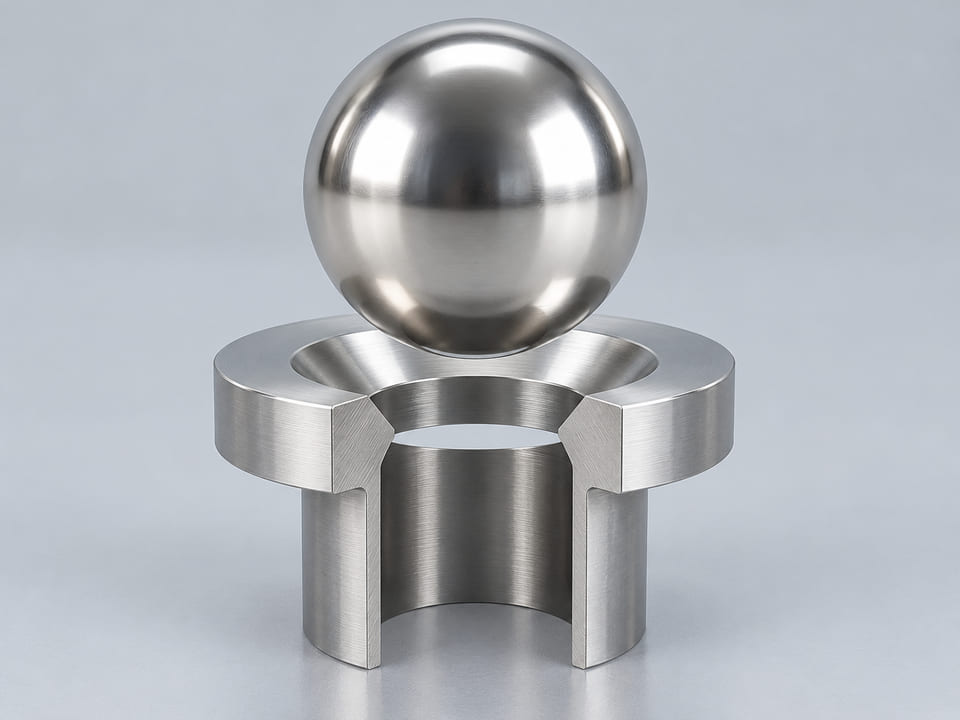
Fluid compatibility includes cleaning
Describe the product fluid and the cleaning or sterilization cycle, including concentration, temperature and contact time where relevant. The cleaner can be more demanding than the normal medium. Surface residues and contamination can also affect the contact, especially in a small check valve. If the application has food-contact or medical requirements, identify the exact documentation and validation scope. A stainless material name alone is not approval for a regulated use.
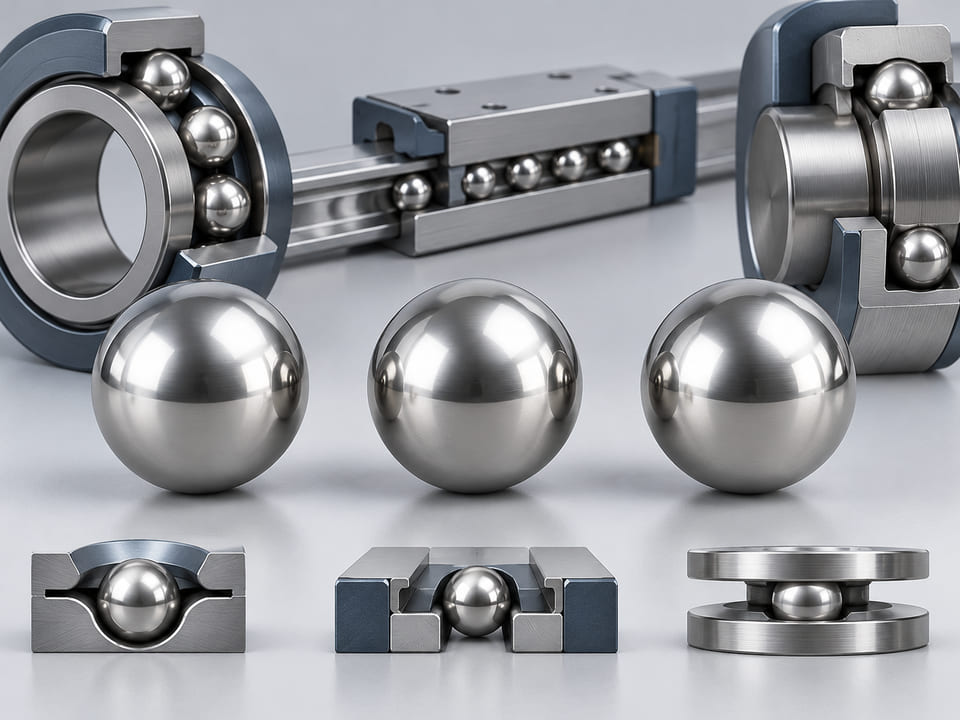
302/304/304L Stainless Steel Balls specifications
Define the component using the requirements below. Include your target values and acceptance method; the quotation records the agreed material, geometry, inspection and supply scope.
| Requirement | What to specify | Why it matters |
|---|---|---|
| Exact austenitic grade | Select 302, 304 or 304L and the required material standard. | Prevents silent substitution within the combined family. |
| Medium and cleaning | State fluid, concentration, temperature and cleaning cycle. | Makes corrosion evaluation specific to the actual device. |
| Geometry and contact | Define size, form, seat and allowable deformation or wear. | Distinguishes fluid-control or locating duty from hardened-bearing duty. |
| Surface and magnetism | Specify residue, passivation if required and any magnetic test. | Turns broad cleanliness or nonmagnetic descriptions into acceptance criteria. |
Drawing and dimensional acceptance
Provide the drawing revision and nominal dimensions with units. Identify critical form, surface and fit requirements individually; a material designation alone does not define a finished component. Where an existing sample is the reference, describe wear and confirm the intended acceptance limits.
Order and inspection scope
Separate sample quantities from production demand. State the required inspection documents, lot identification, cleanliness and packaging. Any proposed substitute or change to the component specification should be reviewed before approval, with the quotation confirming the agreed scope.
Numeric performance values, when needed, must identify their material, conditions and evidence. Typical raw-material data should not be treated as guaranteed finished-component performance.
302/304/304L Stainless Steel Balls applications
Start with the actual mechanism and exposure conditions. Each use below identifies the information needed for a useful technical review.
Dispenser and sprayer check balls
A small stainless sphere may serve as a check element in a dispenser. Fluid compatibility, seat conformity and cleanliness can influence operation more than a broad high-precision label. Confirm the starting and closing behavior with the intended liquid and complete assembly.
General pumps and valves
Consider the family for a defined corrosion-conscious flow-control contact where high hardened-ball wear performance is not the main constraint. Review stagnation, particles and the actual medium. If chlorides or cleaning chemicals challenge the choice, compare 316-family or other materials.
Mechanical and packaging components
Austenitic stainless spheres can be evaluated for retaining, mixing or locating functions in suitable assemblies. Check the possibility of contact marking and whether cold-work-related magnetism matters. Requirements for oil-free packing or surface residue should be written separately from the steel grade.
Compare 302/304/304L Stainless Steel Balls alternatives
Compare the requirement that drives the decision. A matching nominal diameter or similar appearance does not establish material or functional equivalence.
| Alternative | When to review it | Tradeoff to assess |
|---|---|---|
| 316/316L stainless steel | Compare a molybdenum-bearing austenitic family where actual chloride or chemical conditions call for additional material review beyond 304-type stainless. | Its presence is not universal corrosion immunity; retain the same medium, temperature and cleaning assumptions when comparing alternatives. |
| 420C stainless steel | Review a hardenable martensitic option when mechanical indentation or wear is the limiting requirement in a compatible service environment. | A change to hardened martensitic steel changes the corrosion tradeoff and needs validation against the actual fluid or cleaner. |
| AISI 201 stainless steel | Consider another austenitic material only when the defined atmosphere, mechanism and cost target support a controlled substitution review. | Different alloy chemistry means that appearance and a broad stainless designation are insufficient evidence of equivalent corrosion performance. |
These links open the corresponding product pages in this collection. Final selection depends on your complete specification and the agreed validation.
302/304/304L Stainless Steel Balls FAQs
Are 302, 304 and 304L the same?
No. They are related austenitic stainless grades with different specified chemistries. Identify the exact member and standard. If alternatives are permitted, list them on the drawing or approval record rather than relying on the combined product-family name.
Are these balls hardened like 440C?
No. They are not conventionally through-hardened in the same manner as martensitic 440C. Cold working can affect the finished condition, but that does not make the family a substitute for a specified hardened bearing ball.
Are 304 balls completely nonmagnetic?
Do not assume an absolute result. Austenitic stainless can show a changed magnetic response after forming or other processing. If the application needs a limit, define the required measurement and acceptance; simple magnet attraction does not identify the exact grade.
Can they be used in food-contact equipment?
Only against the applicable product and component requirements. Identify the contact medium, cleaning process, surface condition and required compliance evidence. An austenitic stainless designation alone cannot establish food-contact approval for every jurisdiction or finished device.
When should I choose 316 instead?
Compare 316/316L when the actual medium, chloride exposure or cleaning conditions make the 304-family choice questionable. Keep temperature and exposure duration consistent in the comparison. Selecting a higher alloy does not eliminate the need for application validation.
What helps a dispenser-ball quotation?
Send the exact grade, diameter, dimensional criteria, quantity, seat design, fluid and cleanliness requirement. Add any oil-free packing, magnetic-response limit and functional test so the quotation reflects the dispenser's operating conditions.
Request a quotation
Turn the 302/304/304L Stainless Steel Balls requirements into a clear enquiry for MEITUO Balls.
- Define the material and geometry.
- Describe the application and acceptance.
- Separate sample and production demand.
The quotation confirms feasibility, supply scope, inspection documents and commercial terms. Generated illustrations are not evidence of available stock or completed validation.
Continue your material review
Engineering references and illustration notes
Material-family references support screening. The exact grade, finished geometry and application acceptance govern an actual enquiry.
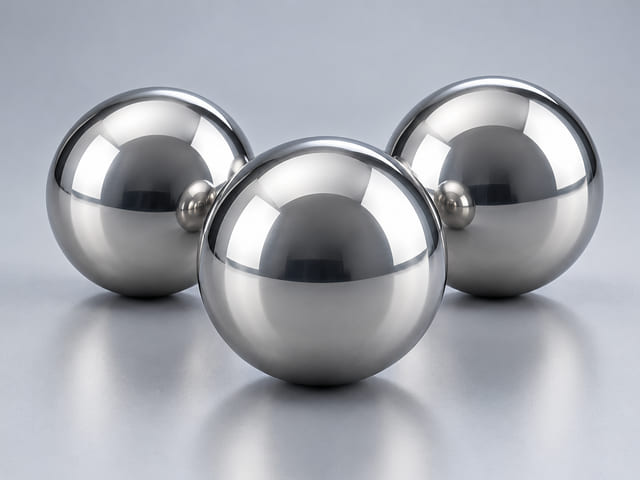
CGI illustrations explain product, application or structure concepts. They are not photographs, measured micrographs, assembly drawings or inspection results.