420C Stainless Steel Balls
420C stainless steel balls are hardenable martensitic spheres considered for mechanical contacts, selected rolling components and ball-seating applications. They offer a different balance from corrosion-oriented 300-series stainless balls: the heat-treated condition supports wear-oriented use, while corrosion suitability still depends on the medium and surface. Specify the exact material reference, hardness acceptance, ball geometry and contact environment before reviewing the quotation.
- Material / construction
- 420C martensitic stainless steel; composition and treatment defined by order
- Specification basis
- Drawing, diameter & acceptance
- Order basis
- Sample & production quantities
420C Stainless Steel Balls: selection overview
A 420C ball should be chosen around its finished condition and contact function. The sphere may be used against a raceway, a valve seat or a detent groove, but each contact imposes different demands. A surface that looks clean and reflective cannot establish hardness, roundness or sealing performance. The family also has limits: chloride-bearing and aggressive chemical environments may call for another material even if a hardened stainless ball is mechanically attractive. Review the actual cleaning process and any surface treatment with the same care as the nominal steel designation.
Turn the contact requirement into inspection criteria
For seating duty, describe the seat material, contact geometry and assembled leakage test. For rolling duty, describe the raceways, load cycle and lubrication. These inputs determine whether form, roughness, surface-defect screening or actual-size grouping needs emphasis. A general high-precision label is less useful than measurable criteria. Keep the finished-ball inspection separate from the assembly test, because passing one cannot establish the result of the other.
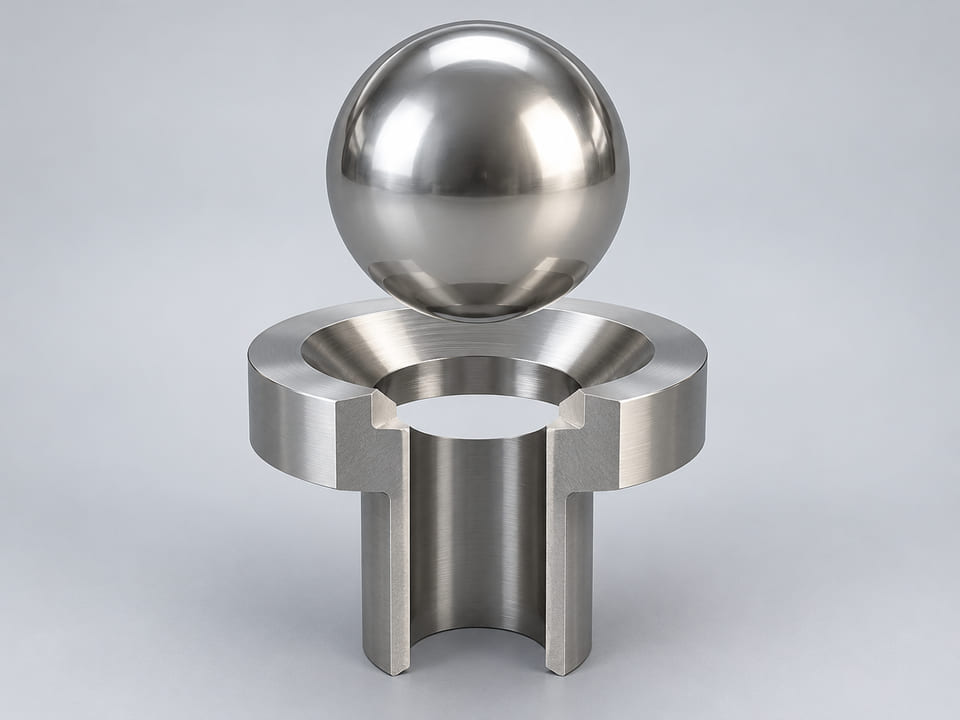
Confirm the 420C reference and treatment
Identify the governing material standard or approved regional designation, then define the required heat-treated state. If hardness is part of acceptance, state the test method and limits. Include any further surface-processing step and its compatibility with cleanliness or corrosion requirements. Treat a chemistry certificate, hardness result and geometrical report as different evidence: each answers a different purchasing question, and none alone proves the complete performance of the finished component.
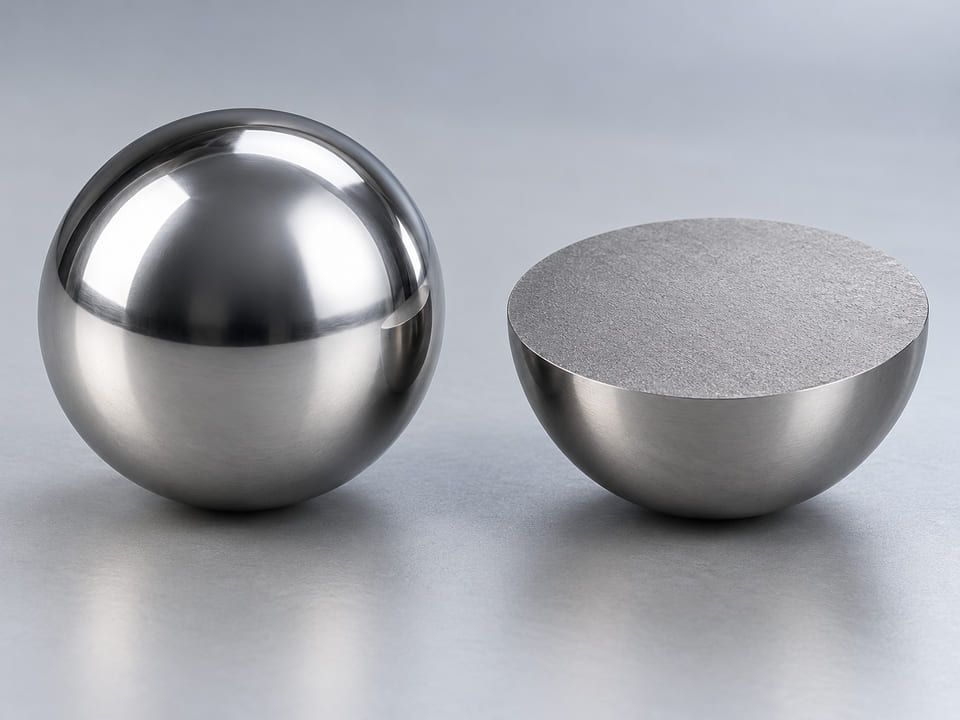
420C Stainless Steel Balls specifications
Define the component using the requirements below. Include your target values and acceptance method; the quotation records the agreed material, geometry, inspection and supply scope.
| Requirement | What to specify | Why it matters |
|---|---|---|
| Material identity | Specify 420C with an agreed standard or approved equivalent. | Avoids ambiguity in regional grade descriptions. |
| Mechanical state | Define heat treatment, hardness method and acceptance. | Confirms the intended hardened contact condition. |
| Sealing or rolling geometry | Provide the relevant diameter, form, surface and grouping criteria. | Aligns receiving inspection with the actual contact type. |
| Exposure evidence | Describe operating medium, cleaner, temperature and surface preparation. | Supports a corrosion assessment beyond the stainless label. |
Drawing and dimensional acceptance
Provide the drawing revision and nominal dimensions with units. Identify critical form, surface and fit requirements individually; a material designation alone does not define a finished component. Where an existing sample is the reference, describe wear and confirm the intended acceptance limits.
Order and inspection scope
Separate sample quantities from production demand. State the required inspection documents, lot identification, cleanliness and packaging. Any proposed substitute or change to the component specification should be reviewed before approval, with the quotation confirming the agreed scope.
Numeric performance values, when needed, must identify their material, conditions and evidence. Typical raw-material data should not be treated as guaranteed finished-component performance.
420C Stainless Steel Balls applications
Start with the actual mechanism and exposure conditions. Each use below identifies the information needed for a useful technical review.
Ball check valves
A 420C sphere can be evaluated when seating wear and a hardened contact matter in a compatible medium. The ball and seat must be considered as a pair. State fluid cleanliness and any particulate exposure, since contamination can prevent closure despite good incoming geometry.
Mechanical indexing
For repeated contact against a groove or stop, the hardened condition can support a wear-oriented design. Check whether the contact marks the mating component and whether lubrication can reach the interface. Specify any allowable marking after the required number of cycles.
Selected rolling components
A hardenable stainless ball is a candidate where the contact needs both mechanical wear resistance and corrosion review. The bearing arrangement still needs a defined duty and lubricant. Do not assign a life or speed rating to the loose ball without the assembly design.
Compare 420C Stainless Steel Balls alternatives
Compare the requirement that drives the decision. A matching nominal diameter or similar appearance does not establish material or functional equivalence.
| Alternative | When to review it | Tradeoff to assess |
|---|---|---|
| 420A/420B stainless steel | Compare a different 420-family material where the required hardened condition and contact duty allow a lower-carbon designation. | The material references and achievable finished conditions differ; obtain approval before substituting within the apparently similar family. |
| 440C stainless steel | Review 440C where bearing-like wear duty leads to a higher-carbon hardenable stainless specification with suitable finishing and inspection. | The decision must include exposure and contact mechanics rather than an unsupported claim that one grade is always better. |
| 316/316L stainless steel | Consider a corrosion-oriented austenitic option if the actual medium challenges the selected martensitic stainless condition. | Its different hardness and deformation response may require a new seat, load or wear validation rather than a direct substitution. |
These links open the corresponding product pages in this collection. Final selection depends on your complete specification and the agreed validation.
420C Stainless Steel Balls FAQs
How is 420C different from 304 or 316?
420C is a hardenable martensitic stainless selection. The 304/316 families are austenitic and usually considered around corrosion behavior rather than comparable through-hardened contact performance. Select against both mechanical duty and the actual medium.
Is 420C the same as 440C?
No. They are distinct material specifications with different composition and treatment considerations. Similar appearance and diameter do not establish equivalence. If the drawing specifies one, review a substitution through the component's mechanical and environmental acceptance process.
Can 420C balls seal a valve reliably?
The assembled valve must establish that. Ball form and surface quality help, but seat geometry, contact force, fluid contamination and wear also determine leakage. Include the leakage method and acceptance conditions when requesting a ball-and-seat evaluation.
Does passivation guarantee chemical resistance?
No. A specified surface treatment can support a surface-condition requirement, but it cannot make an unsuitable base alloy resistant to every medium. Confirm the chemistry, temperature and cleaning cycle; use a material-specific assessment for demanding exposure.
Should hardness be the main acceptance criterion?
It is one criterion where a hardened contact is required. Geometry, defects, surface condition and material identity remain important. A hard sphere with the wrong actual size or a damaged surface may still fail the intended contact function.
How should I describe the application?
Identify whether the sphere rolls, seats or locates. Add the mating material, load or closing conditions, medium, lubricant and cycling. Then provide the diameter, grade or form limits, quantity and documents needed for the component's approval.
Request a quotation
Turn the 420C Stainless Steel Balls requirements into a clear enquiry for MEITUO Balls.
- Define the material and geometry.
- Describe the application and acceptance.
- Separate sample and production demand.
The quotation confirms feasibility, supply scope, inspection documents and commercial terms. Generated illustrations are not evidence of available stock or completed validation.
Continue your material review
Engineering references and illustration notes
Material-family references support screening. The exact grade, finished geometry and application acceptance govern an actual enquiry.
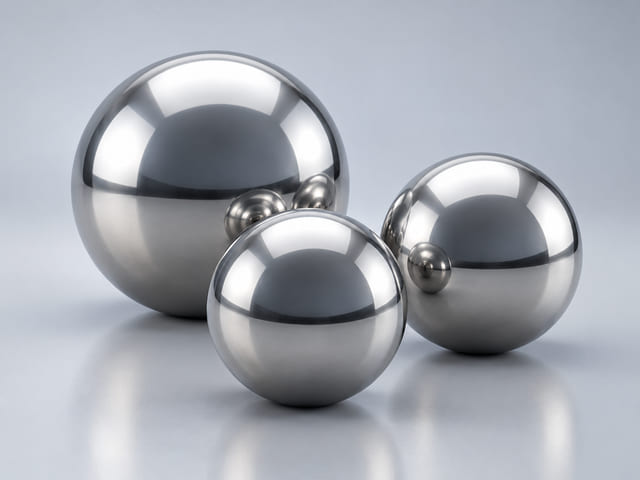
CGI illustrations explain product, application or structure concepts. They are not photographs, measured micrographs, assembly drawings or inspection results.