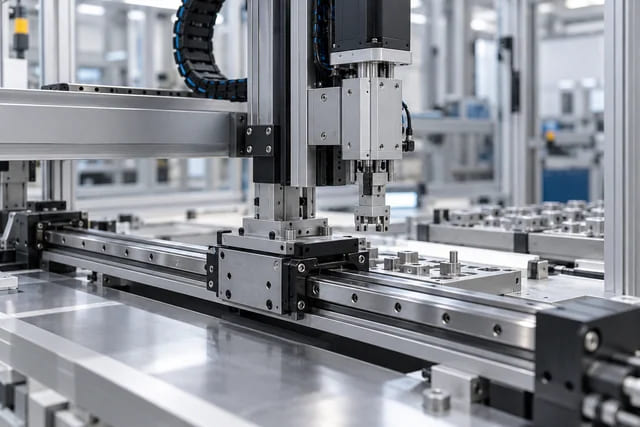
Motion & handling
Balls for Linear Guides & Slides
Ball recirculation, clearance and surface acceptance for guided motion.
Seven families, connected to the application.
Explore all products →Share the drawing, contact conditions and acceptance criteria for your component.
Material selection guide →Explore the contact, medium and mechanism.
All applications →Share the drawing, contact conditions and acceptance criteria for your component.
Material selection guide →From an open material question to an agreed component requirement.
Explore services →Share the drawing, contact conditions and acceptance criteria for your component.
Material selection guide →Industry and sourcing guides for twelve target markets.
Explore all markets →Share the drawing, contact conditions and acceptance criteria for your component.
Material selection guide →Match the component programme, purchasing role and project responsibilities.
Explore partnerships →Share the drawing, contact conditions and acceptance criteria for your component.
Material selection guide →Corporate background, practical purchasing information and direct contact.
Explore company →Share the drawing, contact conditions and acceptance criteria for your component.
Material selection guide →Bearing balls carry load through repeated contact with the raceways. The useful specification combines material, diameter variation, form and surface condition with the bearing design, lubrication and operating cycle. Compare bearing steel, hardened stainless steel and bearing-grade silicon nitride only within an assembly-level review.
The ball is one part of a rolling-contact system. Raceway geometry, cage design, clearance and lubrication all affect how the assembly behaves. A loose ball with the right nominal diameter is not automatically a suitable replacement for the original rolling element.
For an OEM enquiry, distinguish a new bearing design from a replacement component. Identify the approved drawing and whether balls are selected, matched or accepted as a lot. This makes the discussion more useful than asking for the highest available grade without a functional basis.
Use these inputs to move from an application name to a useful component and supply enquiry.
| Selection input | Describe your conditions | Why it belongs in the enquiry |
|---|---|---|
| Contact and motion | Radial or axial loading, rotation, acceleration and start-stop duty. | Provide the bearing design conditions; a ball-only enquiry cannot establish assembly load capacity. |
| Geometry | Nominal diameter, permitted variation, form and surface requirements. | State the drawing limits and the agreed measurement conditions. |
| Operating environment | Lubricant, temperature, contamination and moisture exposure. | Include idle periods and storage conditions as well as normal running. |
A hybrid bearing combines ceramic rolling elements with steel rings; it is a bearing-system choice rather than a universal ball upgrade. Ask the bearing designer to assess the geometry, clearance and operating requirements before changing the rolling-element material.
Keep ball inspection separate from a bearing-life claim. Material records and dimensional results help accept the component, while performance under load belongs to the complete bearing and its actual operating conditions.
| Material or product candidate | Why review it here? | What must be confirmed? |
|---|---|---|
| AISI 52100 Chrome Steel Balls | A conventional bearing-steel candidate for a design that specifies hardened rolling elements. | Confirm material condition, geometry and the intended lubrication system. |
| 440C Stainless Steel Balls | Consider where the bearing design calls for a hardened stainless rolling element. | Review corrosion exposure and rolling-contact requirements together. |
| Silicon Nitride Balls | A candidate for a properly engineered hybrid-bearing system. | Ceramic substitution changes contact and thermal behavior; retain assembly validation. |
These are application-review candidates. The exact grade, finished specification, supply scope and documents are confirmed in the quotation.
Approve samples against the rolling-element drawing first, then evaluate the assembled bearing under the intended loading and lubrication. Define what constitutes acceptable running behavior before the test starts.
Avoid this assumption. Avoid transferring a bearing manufacturer’s speed or life figures to an unqualified loose ball.
Only within a bearing-design review. Contact behavior, clearance, thermal response and lubrication must be considered with the races and cage.
No. A dimensional grade concerns the rolling element; bearing performance also depends on design, material condition, load and operation.
Send the rolling-element drawing, material designation, lot requirements and the assembly conditions that the sample is intended to validate.
Use a related function to compare requirements without assuming the same ball specification applies.
Ball recirculation, clearance and surface acceptance for guided motion.
Component-specific requirements, qualification records and controlled revisions.
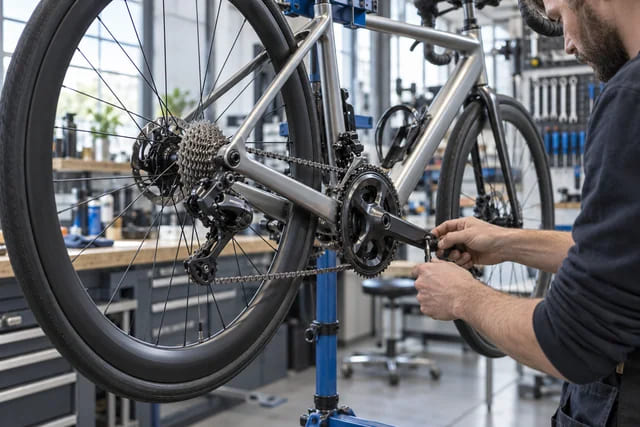
Cup-and-cone fit, retainers and outdoor exposure in light-motion assemblies.
Bring the material, size, operating conditions and quantity. Include the drawing and validation topics that matter to this project.
SKF hybrid-bearing overview · SKF hybrid-bearing selection context
References describe industry practice and material-selection context. They do not establish MEITUO stock, equipment ownership, qualification or performance.