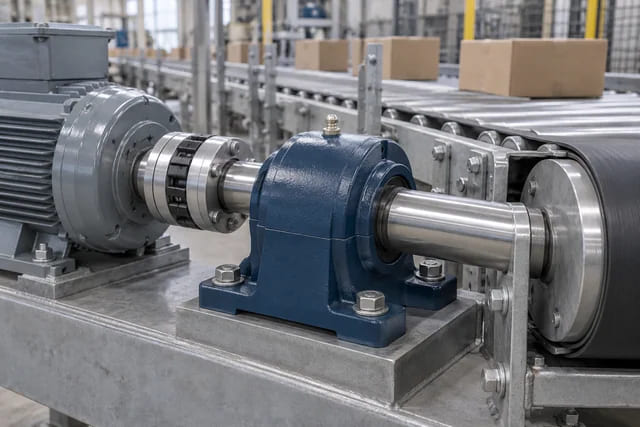
Motion & handling
Bearing & Rolling-Element Balls
Rolling contact, geometry and material condition for bearing assemblies.
Seven families, connected to the application.
Explore all products →Share the drawing, contact conditions and acceptance criteria for your component.
Material selection guide →Explore the contact, medium and mechanism.
All applications →Share the drawing, contact conditions and acceptance criteria for your component.
Material selection guide →From an open material question to an agreed component requirement.
Explore services →Share the drawing, contact conditions and acceptance criteria for your component.
Material selection guide →Industry and sourcing guides for twelve target markets.
Explore all markets →Share the drawing, contact conditions and acceptance criteria for your component.
Material selection guide →Match the component programme, purchasing role and project responsibilities.
Explore partnerships →Share the drawing, contact conditions and acceptance criteria for your component.
Material selection guide →Corporate background, practical purchasing information and direct contact.
Explore company →Share the drawing, contact conditions and acceptance criteria for your component.
Material selection guide →Bicycle and light-motion balls operate in assemblies such as cup-and-cone bearings or retained rolling-element arrangements. Confirm the exact ball diameter, material and delivery form against the component design. Dirt, water, lubrication and the condition of the mating races all affect whether a replacement performs acceptably.
A bicycle-related enquiry should identify the hub, headset, pedal or other assembly and whether it uses loose balls, a retainer or a sealed bearing. These forms are not interchangeable purchasing descriptions.
Where a ball runs against a cup and cone, inspect the mating surfaces and establish the intended adjustment. New balls cannot by themselves restore a damaged race. If a reference sample is worn, use the original component specification rather than assuming its measured diameter is the nominal size.
Use these inputs to move from an application name to a useful component and supply enquiry.
| Selection input | Describe your conditions | Why it belongs in the enquiry |
|---|---|---|
| Assembly and format | Loose balls, retainer or complete bearing. | Provide the part drawing or reliable component identification. |
| Size and matching | Nominal diameter, units and any required grouping. | Avoid mixing metric and inch descriptions without confirmation. |
| Use environment | Rain, washing, debris, storage and lubricant. | Review protection and the condition of the full assembly. |
Keep the order basis clear when purchasing balls with retainers. State whether the enquiry is for the rolling elements alone or for a cage-and-ball component, and identify the retention and clearance requirements.
For a proposed ceramic substitution, use the bearing-system review described on the bearing application page. A material advertised for a high-performance bearing is not automatically suitable for every cup-and-cone assembly.
| Material or product candidate | Why review it here? | What must be confirmed? |
|---|---|---|
| AISI 52100 Chrome Steel Balls | A hardened bearing-steel option for a design that calls for it. | Confirm size, surface and the mating race requirement. |
| Carbon Steel Balls | Review for specified economical light-duty mechanisms. | Identify the steel condition; a lower price does not establish equivalent service. |
| 440C Stainless Steel Balls | A stainless rolling-element candidate for suitable designs. | Evaluate corrosion and contact requirements together. |
These are application-review candidates. The exact grade, finished specification, supply scope and documents are confirmed in the quotation.
Assemble and adjust according to the component specification, then check running behavior under representative use. Record the lubricant, race condition and accepted rolling-element specification for repeat orders.
Avoid this assumption. Do not use a worn sample as the only dimensional reference.
No. The assembly and drawing determine the diameter and quantity; identify the exact component.
Follow the component service specification and the approved matching requirements rather than assuming a mixed set is acceptable.
No. Corrosion resistance does not establish dry-running suitability for the complete bearing arrangement.
Use a related function to compare requirements without assuming the same ball specification applies.
Rolling contact, geometry and material condition for bearing assemblies.
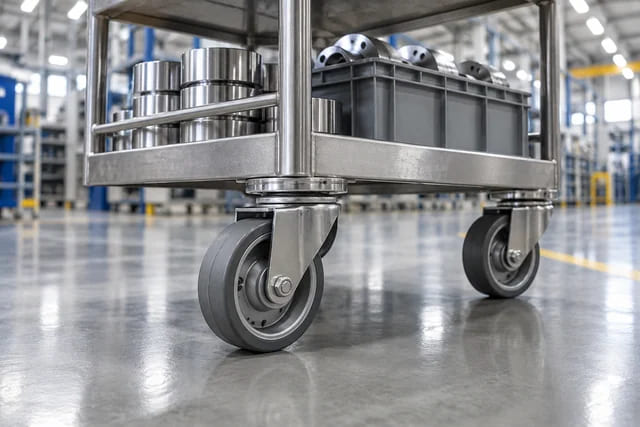
Swivel action, raceway wear and exposure in mobile equipment.
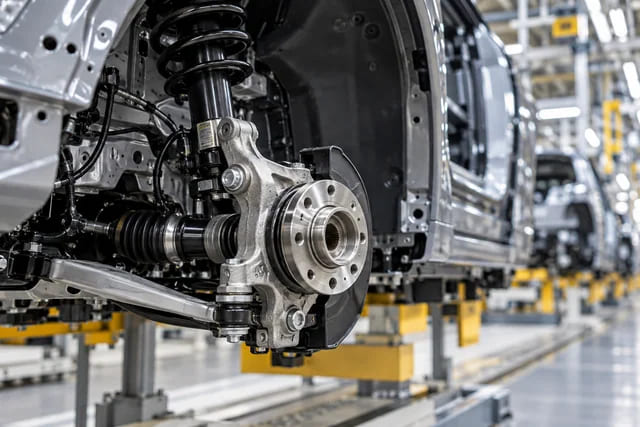
Component-specific requirements, qualification records and controlled revisions.
Bring the material, size, operating conditions and quantity. Include the drawing and validation topics that matter to this project.
SKF hybrid-bearing selection context
References describe industry practice and material-selection context. They do not establish MEITUO stock, equipment ownership, qualification or performance.