Motion & handling
Bearing & Rolling-Element Balls
Rolling contact, geometry and material condition for bearing assemblies.
Seven families, connected to the application.
Explore all products →Share the drawing, contact conditions and acceptance criteria for your component.
Material selection guide →Explore the contact, medium and mechanism.
All applications →Share the drawing, contact conditions and acceptance criteria for your component.
Material selection guide →From an open material question to an agreed component requirement.
Explore services →Share the drawing, contact conditions and acceptance criteria for your component.
Material selection guide →Industry and sourcing guides for twelve target markets.
Explore all markets →Share the drawing, contact conditions and acceptance criteria for your component.
Material selection guide →Match the component programme, purchasing role and project responsibilities.
Explore partnerships →Share the drawing, contact conditions and acceptance criteria for your component.
Material selection guide →Corporate background, practical purchasing information and direct contact.
Explore company →Share the drawing, contact conditions and acceptance criteria for your component.
Material selection guide →Automotive ball enquiries must identify the component function before choosing a material. A ball used in a bearing, a detent or a fluid valve faces different acceptance requirements. Define the approved drawing, operating conditions, traceability and customer qualification needs for the actual part rather than relying on an automotive label.
A vehicle contains many mechanisms, but a common industry name does not create a common ball specification. Rolling contact calls for a different review from indexing contact or a fluid-sealing interface. Start with the function and the controlled component drawing.
Describe whether the enquiry concerns development samples, a service component or a nominated production item. Identify the responsible design owner and the records expected for approval. This avoids presenting a general industrial sphere as a qualified replacement part.
Use these inputs to move from an application name to a useful component and supply enquiry.
| Selection input | Describe your conditions | Why it belongs in the enquiry |
|---|---|---|
| Component responsibility | Bearing element, detent contact or valve-related component. | Identify the assembly and design owner without assuming interchangeability. |
| Qualification scope | Customer-specific approval, sample and production-record requirements. | Provide the requested document package and acceptance process early. |
| Change control | Drawing revision, material condition and approved source requirements. | Define what needs approval before a material or process change. |
Treat qualification documents as part of the enquiry rather than an attachment requested after ordering. List the expected material evidence, dimensional results, sample identification and any customer-specific submission format.
Material selection and supplier qualification are separate decisions. A material can be appropriate in principle while the proposed product, source or documentation remains unsuitable for the project. Confirm both before a production order.
| Material or product candidate | Why review it here? | What must be confirmed? |
|---|---|---|
| AISI 52100 Chrome Steel Balls | Review for hardened rolling or mechanical-contact parts when specified. | The component drawing governs condition and acceptance. |
| 440C Stainless Steel Balls | A hardened stainless option for suitable contact and exposure conditions. | Validate the part in its mechanism; stainless is not an industry approval. |
| 316 / 316L Stainless Steel Balls | Review for selected fluid-contact duties where the design calls for this material. | Do not use corrosion considerations alone to approve a loaded contact. |
These are application-review candidates. The exact grade, finished specification, supply scope and documents are confirmed in the quotation.
Use the customer’s component-validation plan and receiving requirements. Where the part has a safety-relevant role, the responsible engineering and approval process must establish suitability; this page provides a procurement framework only.
Avoid this assumption. An application page is not evidence of automotive certification or an approved production programme.
No. The qualification required for a specific component and source must be established in the project and quotation.
No. The material is one requirement among geometry, surface, records and functional acceptance.
Yes. Identify open requirements and the tests or approvals needed before the part can move into production.
Use a related function to compare requirements without assuming the same ball specification applies.
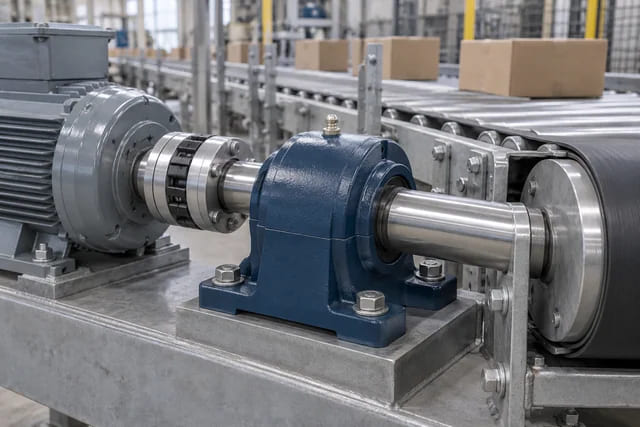
Rolling contact, geometry and material condition for bearing assemblies.
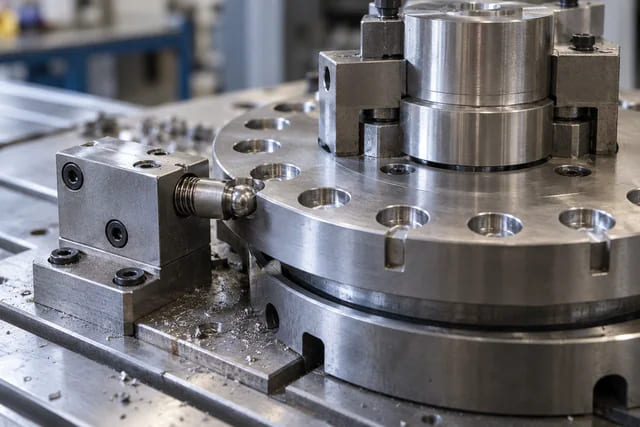
Spring contact, recess geometry, wear and repeatable mechanical feel.
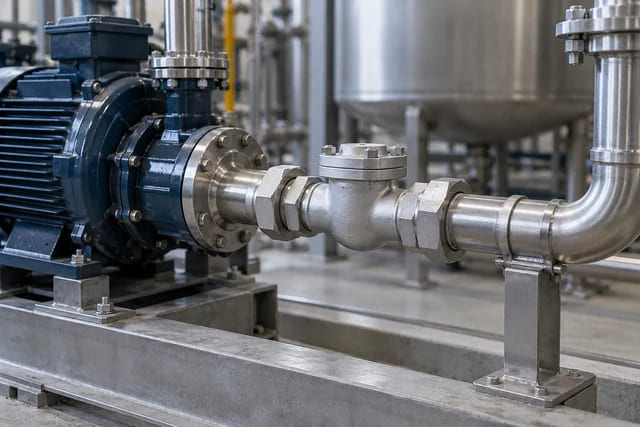
Ball-and-seat contact, closing behavior and compatibility with the working fluid.
Bring the material, size, operating conditions and quantity. Include the drawing and validation topics that matter to this project.
RGPBALLS automotive application overview · THK transport-system component overview
References describe industry practice and material-selection context. They do not establish MEITUO stock, equipment ownership, qualification or performance.