Skip to content
Industrial balls & precision componentsinfo@meituoballs.com
MEITUO Balls

Find a product, application or guide.

Engineering & Procurement

Services for Ball & Component Projects

Choose the support that moves your component from an open question to an agreed purchasing specification.
Quick answer

MEITUO Balls services organize the decisions behind a ball or component order: material selection, custom requirements, sample validation, inspection and supply preparation. Start with the drawing or the operating problem. The useful output is a clear technical and commercial brief that separates required properties, acceptance evidence and project responsibilities before a particular product or supply route is approved.

Material spheres and a threaded component on a conceptual project-review workbench.
Component and material concepts for a drawing-led project review. CGI illustration.
CHOOSE YOUR NEXT STEP

Find the right route for your requirement.

01

Material selection

Compare candidates using the actual medium, temperature, contact and dimensional requirements. A useful shortlist explains why each option remains relevant and what would disqualify it. Start here when the drawing leaves material open, a current component fails or a proposed substitute needs a structured comparison before evaluation.

02

Custom ball development

Turn a special size, attachment, hollow structure or paired contact into a drawing-led review. Identify what must be controlled and which manufacturing or sourcing questions affect feasibility. Start here when a standard product name does not describe the complete component, its mating interfaces or the required acceptance.

03

Sampling and validation

Define what a sample needs to establish before it is ordered. Separate material identity, incoming dimensions and assembly performance, then record the test conditions and decision. Start here when the next step is a trial, a replacement-source review or approval of a revised component against a real application.

04

Supply and packaging

Bring the accepted component, lot records and delivery presentation into one purchasing brief. Resolve quantity basis, packing protection, labels and the documents needed at receiving. Start here when an approved sample must become a repeatable commercial order or when a pack change affects cleanliness and identification.

A purchasing problem rarely begins with every field completed. An engineer may know the fluid but not the polymer; a buyer may have a sample without its material record. Choose the service below that addresses the missing decision. MEITUO Balls is the ball-products website of Qingdao Meituo Steel Co., Ltd. Project review connects your component requirements with an explicit enquiry, evaluation plan and commercial scope.

01 / IN CONTEXT

Start with the decision that is blocking the project

Explain clearly what the component does before selecting a service. A ball may roll, close against a seat, locate another part or act as a controlled process medium. Those functions need different inputs. For example, a PEEK ball enquiry may be driven by fluid and thermal exposure, while a threaded sphere needs an attachment drawing and load path. State whether the project is a new design, repeat purchase or replacement evaluation. Identify the current limiting issue, such as corrosion, wear, inconsistent closure or uncertain material identity. The review can then focus on a concrete question and an observable result. A photograph or existing sample is useful context, but it should remain linked to its known operating history and approval status.

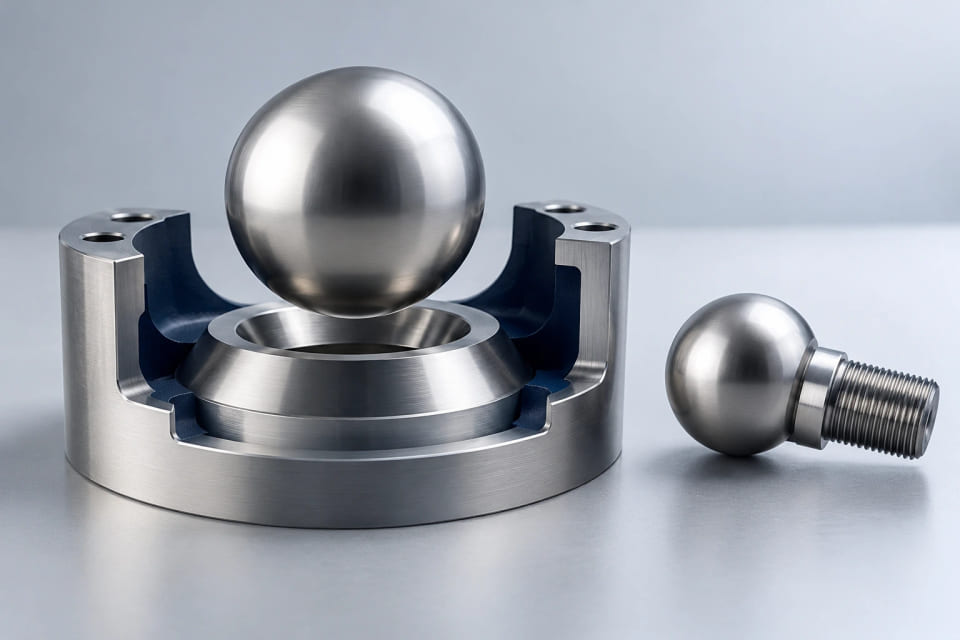
A ball-and-seat contact beside a threaded mounting sphere in a review cradle.
Different interfaces require different project inputs. Conceptual CGI.
02 / IN CONTEXT

Make the review output useful to both engineering and purchasing

An effective handover says what is required, why it matters and how it will be accepted. Separate exact material designations from candidate options, ball geometry from functional tests and desired quantities from order commitments. A material comparison can lead to an evaluation shortlist rather than an immediate substitution. A drawing review can identify a feature that changes the process route or inspection approach. A sample plan can define which result is needed before a purchasing decision. Keep unresolved items visible as specific questions with an owner, instead of hiding them inside broad phrases such as high quality. That structure makes quotations easier to compare and gives the engineering team a record it can revise without losing the original design intent.

03 / IN CONTEXT

Carry the accepted requirements through the next stage

A successful initial sample does not complete every purchasing decision. Its material, drawing revision, preparation and test conditions need to remain identifiable when the order changes to another quantity or delivery format. Use quality and inspection planning to name the relevant evidence, then connect it with the proposed lot and packaging. If a source, finish or material is changed, identify the part of the approval that needs review. Services can be combined where the project needs them, but each stage should produce a distinct decision record. The component owner retains the final application acceptance; commercial review establishes the agreed product, documents and delivery basis. This keeps a helpful technical project discussion connected to the actual item that will be purchased.

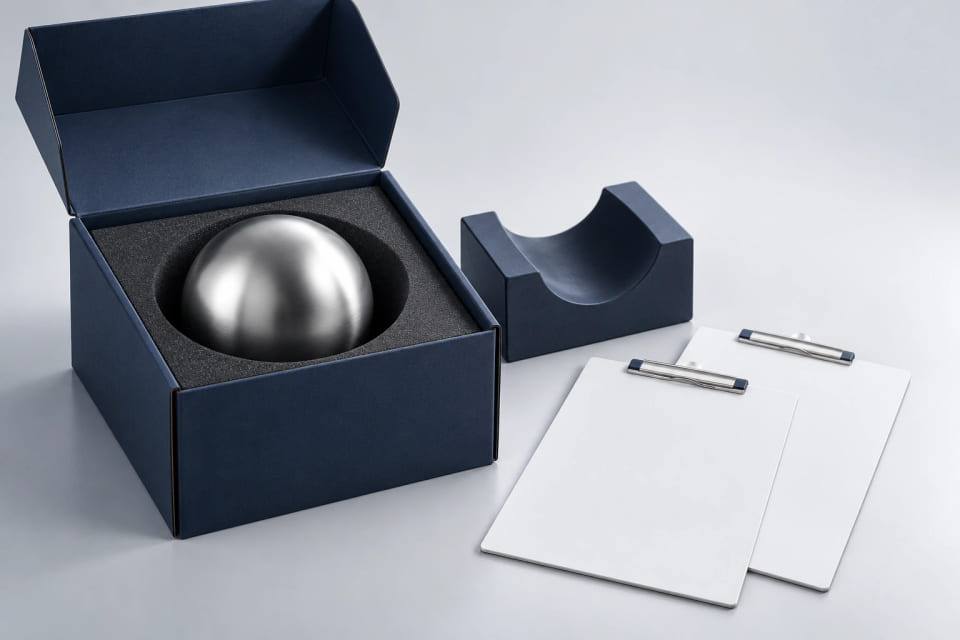
A protected sphere, sample cradle and blank project sheets prepared for a purchasing handover.
Link the evaluated component with its packing and project record. CGI concept.
A SHARED REVIEW BASIS

Choose a starting point

Scroll the table to compare requirements →
Choose a starting point
Your current questionUseful starting inputNext service
Which material fits the exposure?Medium, temperature and contact conditions.Material selection.
Can this special feature be specified?Component and mating-part drawings.Custom development.
What must a trial demonstrate?Functional objective and acceptance method.Sampling and validation.
Which report actually answers the requirement?Characteristic, limit and evidence need.Quality and inspection.
How should an accepted item be packed?Cleanliness, handling and receiving needs.Supply and packaging.
How do we make a useful first enquiry?Drawing or problem description and quantities.Project brief and quotation review.
WORKING SEQUENCE

Make the next conversation specific.

  1. 01

    Describe the requirement

    Send the drawing, existing item or problem description, together with the intended function and project stage. Identify the decision you need to make and any requirements already fixed by the component owner or purchasing specification.

  2. 02

    Build the review brief

    Organize material, geometry, exposure, evidence and commercial inputs. The aim is a manageable set of requirements and specific open questions, with an appropriate next step rather than an unqualified recommendation based only on a product name.

  3. 03

    Agree the evaluation

    Define whether the next decision needs a material comparison, drawing review or sample plan. Identify the test conditions, records and responsible parties so the result can support a real approval rather than a vague trial.

  4. 04

    Prepare the purchasing handover

    Connect the accepted component identity with quantities, inspection scope, lot records and packing. Record changes that require review and use the same updated basis when requesting a quotation, comparing options or planning the following order.

PRACTICAL ANSWERS

Questions before the next step.

Can I start without a finished drawing?

Yes. Describe the component function, operating conditions and current problem, and identify what is known from an existing sample. A first review can organize those inputs into specific questions. Detailed features and acceptance still need an explicit specification before a component is approved.

Which service should I choose for a failed component?

Start with the failure description, operating history and available part records. Material selection may be relevant, but a damaged seat, unsuitable geometry or contamination can also matter. The first step is to identify the decision needed, then choose the review or evaluation that addresses it.

Does a material recommendation approve the final application?

No. A shortlist explains candidates and the reasons for evaluating them. The component owner approves the actual application against its functional and documentation requirements. Material data, incoming inspection and complete assembly validation answer different questions and should remain distinct within the project record.

Can services be combined for one project?

Yes. A custom feature can require material comparison, drawing review and a sample plan before commercial preparation. Combine the relevant work while keeping its outputs clear. Each stage should resolve a defined decision and preserve the component identity and acceptance basis for the next stage.

Do all projects need the same inspection documents?

No. Required evidence depends on the material, characteristic and component program. Name the question the document must answer, such as chemistry, geometry or assigned measurement traceability. The review should define the appropriate scope rather than assume that one generic certificate proves every product requirement.

How do I send the first requirement?

Use the quotation brief or contact info@meituoballs.com with the product, drawing or application problem. Add sample and production quantities, operating conditions and required records. If a decision remains open, state it directly so the enquiry has a clear starting objective.

BRING YOUR REQUIREMENT

Bring the next component decision into focus

Share the drawing or operating problem, project stage and the result you need. Begin with a structured enquiry.

Prepare an enquiry ↗