Skip to content
Industrial balls & precision componentsinfo@meituoballs.com
MEITUO Balls

Find a product, application or guide.

Material selection / 09 product options

Ceramic & Glass Balls

Separate hard-contact, optical, fluid and decorative requirements before choosing a ceramic or glass sphere.
Quick answer

Ceramic and glass balls are mineral spheres used for distinct mechanical, fluid, instrument and visual functions. Choose engineering ceramics by grade, contact and integrity; choose glass by composition, defects and thermal or chemical exposure. A transparent sphere is not automatically a lens, a grinding bead is not automatically a precision component, and hardness alone cannot establish impact tolerance or a successful bearing or valve.

01 / EXPLORE

Ceramic & Glass Balls: product range

Open an individual product page for material-specific considerations, applications and the details needed for a quotation.

9 product options

All product options require specification confirmation. Entries marked “Project review” additionally require a feasibility assessment; neither label confirms stock or a past supply record.

This family contains alternatives that should not share one broad performance claim. Silicon nitride may enter a qualified rolling-contact design; alumina and zirconia need their own grade and interface review; borosilicate glass adds a different composition and visual discussion. Decorative marbles have a separate acceptance goal again. Begin with the role, then define composition, geometry, surface and defects. This approach distinguishes useful material comparisons from appearance-based substitution, and clarifies which evidence belongs to the free sphere, its contact interface or the complete assembly.

02 / SELECT

Start with the sphere’s actual job

The table separates engineering contacts from optical and decorative uses. It is a guide to the next review, not a claim that one mineral material outperforms every metal or polymer. SiC and ruby/sapphire are project-review directions whose material, processing and inspection evidence must be established for the proposed component.

Swipe or scroll the comparison table →
Start with the sphere’s actual job
Sphere familyRelevant starting roleCritical distinctionApproval focus
Silicon nitrideQualified rolling or precision contact.Ball quality differs from bearing qualification.Class, defects, raceways and lubricant.
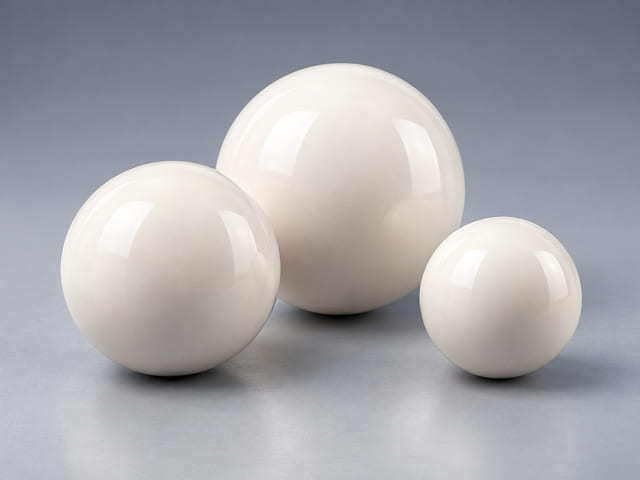
AluminaHard contacts or specified media.White colour cannot identify purity.Composition, integrity and functional acceptance.
ZirconiaWear, fluid or media duty.Stabiliser and grade define the material.Composition, exposure and wear chemistry.
SiCChemical-contact or wear projects.Route and electrical response require review.Grade, porosity evidence and function.
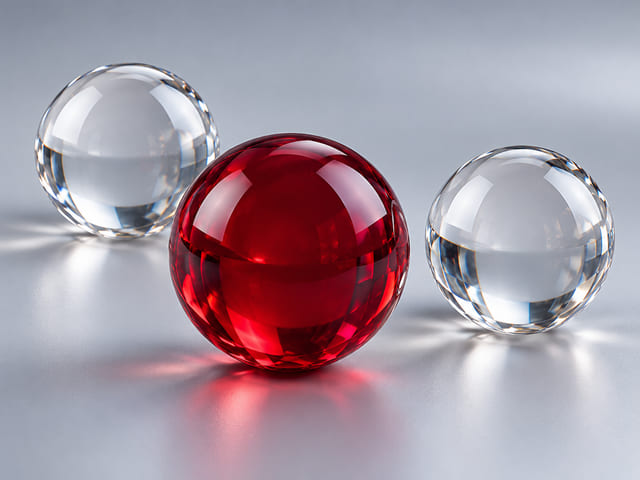
Ruby / sapphireStyli, contacts or defined optics.Precision is not calibration or lens qualification.Crystal, form, mounting and optics.
Soda-lime glassIndicators, mixing or suitable seats.Clarity cannot define material or integrity.Fluid, defects and instrument response.
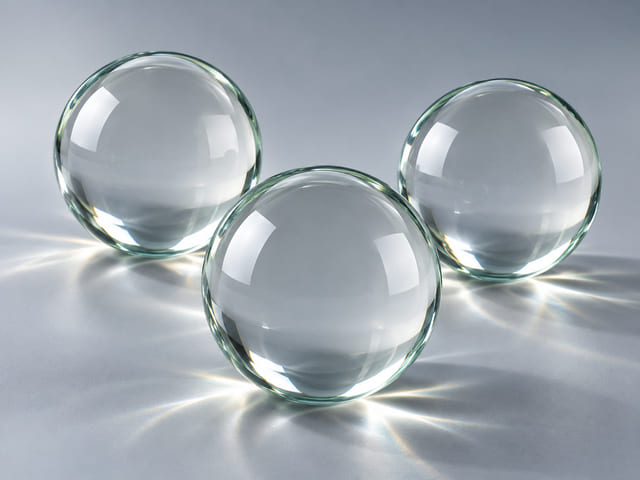
Borosilicate glassSpecified chemical or thermal exposure.Material data is not a sphere rating.Composition, transitions, restraint and defects.
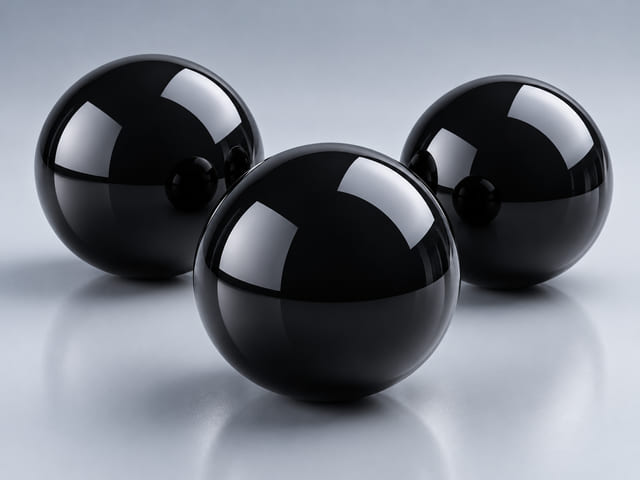
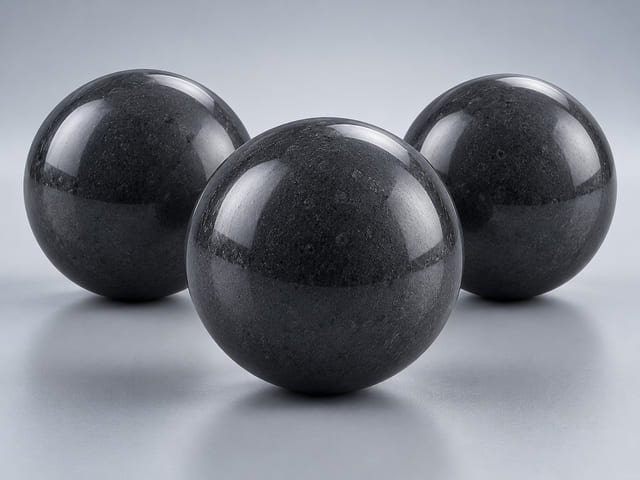
Black glassContrasting instrument elements.Black appearance is not spectral opacity.Composition, gloss, illumination and movement.
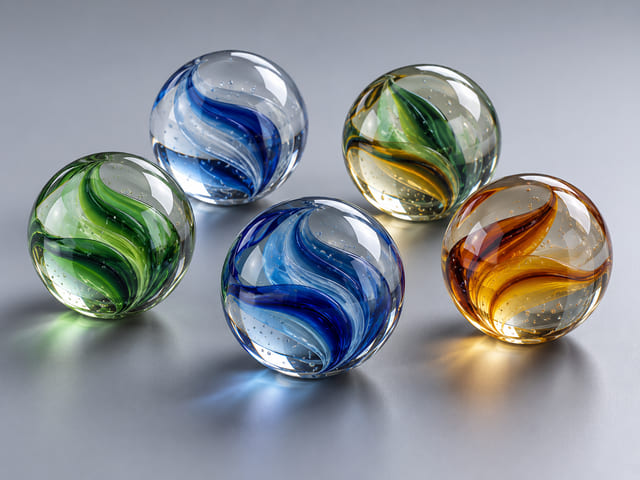
Decorative marblesDisplays or visual components.Pattern variation differs from damage.Reference, distribution and visual limits.
01

Material grade and surface integrity are different controls

A polished alumina sphere does not identify its purity, while a zirconia sphere needs its stabilised grade identified. For SiC, processing route and secondary phases may affect the review; do not inherit an electrical-insulation description from another ceramic family. After material identity, define geometry and permitted defects. A sphere can pass diameter inspection yet remain unsuitable because of a contact flaw or unacceptable internal quality. Ask which inspection evidence addresses the expected load and failure consequence, and preserve the accepted condition through handling. This avoids using a familiar ceramic name as a substitute for both composition and finished-component quality. Include any impact-sensitive contact in that inspection review.

02

Glass clarity, thermal durability and optical quality are separate

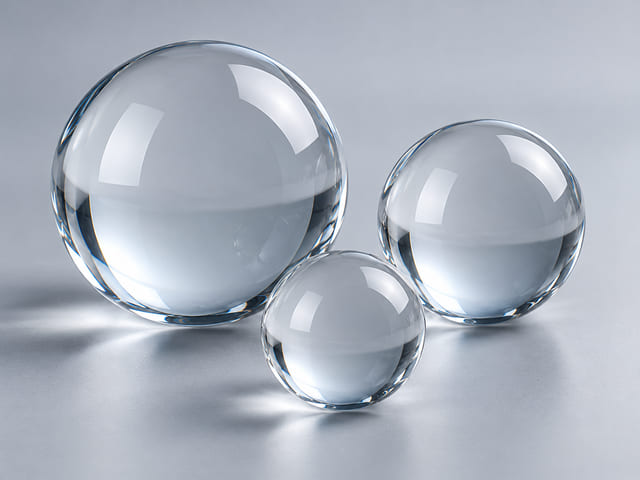
Soda-lime and borosilicate spheres can look similar while belonging to different composition and exposure reviews. Describe the actual fluid, cleaning transitions, mounting restraint and impact. A material data sheet for flat glass or tubing can inform the discussion but does not establish a ball’s service rating. If the function is visual, define scratches, haze, chips and inclusions with a viewing method. If the sphere transmits or focuses light to a specification, add the relevant optical requirements. A transparent industrial sphere should not become an optical lens merely because its catalogue image is clear. The optical purpose should be explicit before selecting samples.

03

Keep bearings, media and metrology deliverables distinct

Ceramic rolling elements need the quality and complete contact review appropriate to a bearing; a successful grinding bead does not establish that evidence. Conversely, a precision sphere drawing does not specify milling contamination or process performance. Corundum contacts may need mounted geometry or optical acceptance, while a reference artefact needs an assigned measurement value and uncertainty through an appropriate calibration arrangement. Name the role before requesting a higher grade or more expensive material. Each role has a different definition of success, and one manufacturing inspection report cannot silently serve as bearing qualification, process validation and metrological calibration. Keep those report scopes visible in the enquiry.

03 / APPLY

Connect the material to the working application

Review the contact, environment and acceptance conditions in the assembly where the component will work.

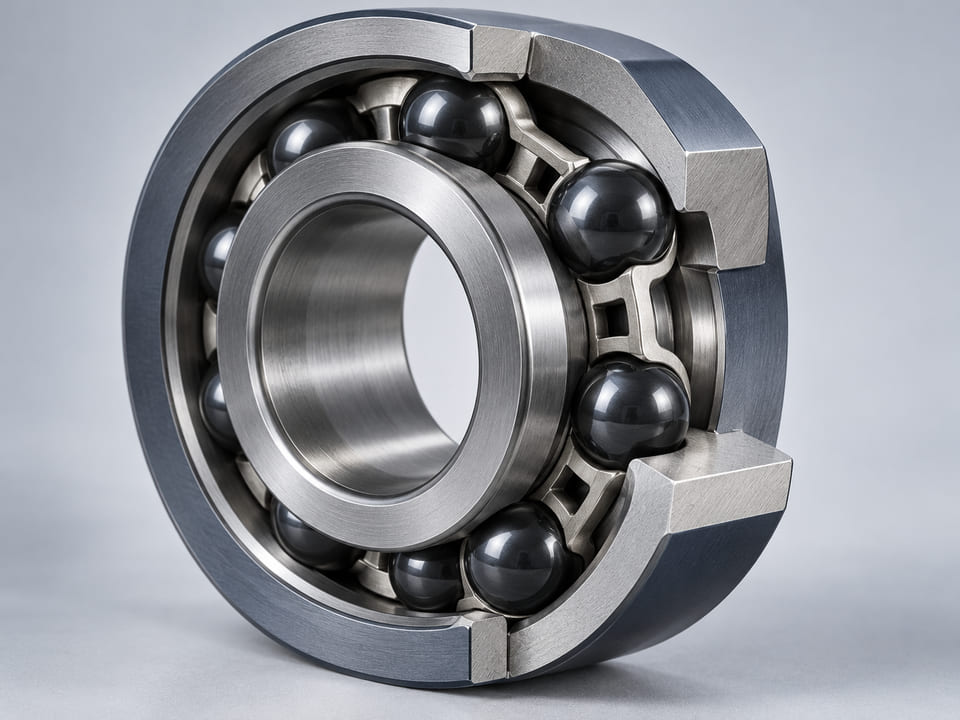
Hybrid bearings and rolling-contact mechanisms

Si3N4 may be compared with steel in a qualified bearing design. Review load, speed, raceways, preload, cage and lubricant together, alongside material and defect evidence. A ceramic ball does not remove the limits of metallic rings or other components. Compare another ceramic or a validated steel design only against the actual duty, then assess the assembled result. Surface hardness alone cannot establish rolling-contact life, dry-running capability or unrestricted resistance to impact during assembly and operation. Retain the approved bearing qualification basis.

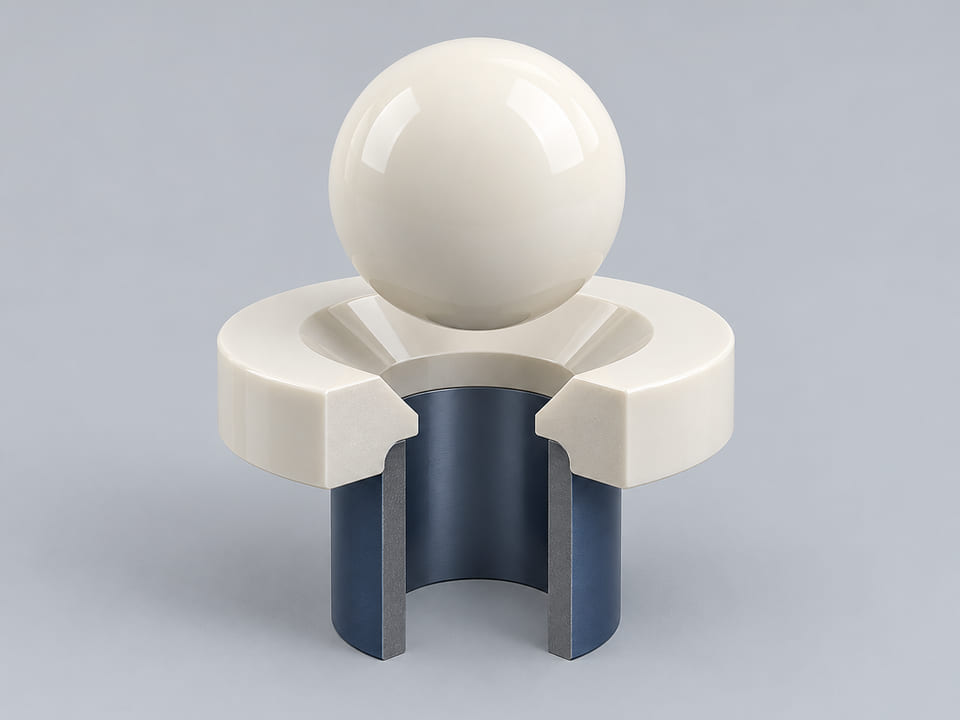
CGI illustration of Silicon Nitride Balls
Silicon Nitride Balls · application concept

Metering valves, pumps and liquid indicators

Alumina, zirconia and appropriate glass spheres enter different fluid-component comparisons. A valve needs medium, seat, closing cycle and leakage acceptance; an indicator also needs mass, visibility and calibration. Describe cleaning, deposits, impact and temperature history. Compare a polymer when compliant or lighter contact may be useful, or a metal when the required contact is better served by that design. Validate the selected sphere in its actual interface rather than approving it from a generic corrosion statement. Include the longest stationary exposure period.

CGI illustration of Zirconia Balls
Zirconia Balls · application concept

Styli, optical components and visual displays

A ruby stylus contact, a sapphire optical element, a dark visible indicator and a decorative marble have different acceptance goals. Define mounting and contact for the stylus, optical function for the transmitting element, illumination for the indicator, and representative appearance for decoration. Where one sphere has two roles, state both. A colour match does not establish instrument compatibility, while a precise shape does not by itself provide calibration, optical quality or an approved decorative batch range. Define both roles before sample approval.

04 / SPECIFY

Specify mineral spheres beyond material and diameter

A useful enquiry separates what the sphere is from what it must do. Provide the material requirement, geometry and defects, then state the relevant contact, optical or process result. A general request for a hard, clear or corrosion-resistant ball leaves important quality and inspection questions unresolved before sampling begins.

Swipe or scroll the comparison table →
Specify mineral spheres beyond material and diameter
Specification itemProvide or defineDecision it supports
CompositionCeramic grade, stabiliser, glass or crystal identity.Prevents appearance-based substitution.
RoleBearing, valve, indicator, lens, stylus, media or decoration.Sets the correct acceptance.
GeometryDiameter, form, finish and mounting interfaces.Connects inspection to function.
DefectsChips, cracks, inclusions, bubbles and inspection method.Separates appearance from integrity.
EnvironmentMedium, thermal history, cleaning, impact and restraint.Defines actual exposure.
FunctionLeakage, wear, instrument, optical or process result.Requires more than material identity.
Reports and handlingIdentity, inspection, traceability and protective packing.Preserves the accepted condition.
From material name to a reviewable requirement

Feasibility, material identity, dimensions, inspection documents, quantities and supply terms are confirmed against your enquiry and quotation. Product illustrations do not establish a certified specification.

Prepare a focused enquiry →
05 / CLARIFY

Ceramic & Glass Balls: common questions

Which ceramic ball is best for a valve?

Select from the actual medium, seat, pressure cycle, impact and required leakage, then identify the ceramic grade. Alumina, zirconia and SiC have different material and processing questions. No universal winner can be selected from hardness or colour alone, and chemical screening does not replace a ball-and-seat test.

Are all ceramic balls lighter than every metal ball?

Do not use a blanket comparison. Density varies across ceramics and metals, and the finished component’s construction also matters. Use the actual grade and geometry when mass affects movement or calibration. A ceramic family name cannot establish the ball’s working mass or justify changing an existing mechanism without validation.

Can I use grinding beads as precision components?

Only if the complete component specification is demonstrated. Media and precision spheres may differ in form, finish, defects and material acceptance. A successful milling trial does not establish leakage, rolling quality or instrument geometry. Identify the intended role and use its required inspection and functional test.

Does hard ceramic mean impact-proof?

No. Hardness and resistance to fracture or chipping describe different concerns. Provide the impact, mating geometry and handling conditions. Define permissible defects and test the actual component where appropriate, rather than assuming a hard polished surface cannot be damaged during packing, assembly or repeated contact.

Are silicon carbide balls electrical insulators?

That cannot be assumed. SiC electrical behaviour depends on grade and conditions, and some products are used for conductive functions. If insulation or conductivity matters, specify and verify the required property explicitly. Do not transfer the electrical description of alumina or silicon nitride to every ceramic sphere.

Can clear glass be ordered as a ball lens?

A lens requires an optical specification beyond visual clarity. Identify material, wavelength, surface and relevant performance requirements. Acrylic, glass and sapphire can all appear transparent, yet they are different optical and mechanical choices. An industrial clear sphere does not automatically meet a lens application’s acceptance.

Is a ruby precision ball a calibrated reference sphere?

No. A precision component report and a calibration deliverable are different. A calibrated reference project needs an assigned value, uncertainty, conditions and appropriate traceability documentation. The required calibration arrangement must be established; polished appearance or a tight manufacturing tolerance cannot provide that status by itself.

What should I send to compare ceramic and glass quotations?

Provide the role, exact material requirement, geometry, permitted defects, environment and required reports. Add the functional test and quantity. For optics or metrology, define the additional evidence explicitly. This prevents superficially similar quotations from concealing different grades, inspection scope or assumptions about what the sphere must achieve.
Move from shortlist to specification

Tell us what the component needs to do.

Include the assembly function, material candidates, drawing or diameter, operating environment, quantities and acceptance needs. MEITUO Balls can review these details against the specific product enquiry.

info@meituoballs.com ↗

Drafts are prepared on your device. Review the message in your email app before sending.