Silicon Carbide Balls
Silicon carbide balls are hard ceramic spheres considered for selected wear contacts, chemical-handling components and specialist mechanisms. SiC grades differ in processing route, porosity and electrical behaviour, so the name alone does not establish a component rating. Specify ceramic grade, precision or media function, diameter and form, surface integrity, medium, contact cycle and required evidence before approving this additional product candidate.
- Material / construction
- Silicon carbide, SiC; grade, processing route and secondary phases identified
- Specification basis
- Drawing, diameter & acceptance
- Order basis
- Sample & production quantities
Silicon Carbide Balls: selection overview
Silicon carbide introduces a different non-oxide ceramic family alongside alumina, zirconia and silicon nitride. Its useful wear and chemical profile must be assessed for a specified grade and component role. Reaction-bonded and sintered materials can differ in secondary phases and properties, and electrical behaviour should not be assumed from a general ceramic label. A precision sphere and a grinding bead also need different acceptance. For this candidate range, material research is a starting point; the production route, finished integrity and actual supplier evidence must be reviewed before commercial capability or service performance is asserted.
Identify the SiC route and required integrity
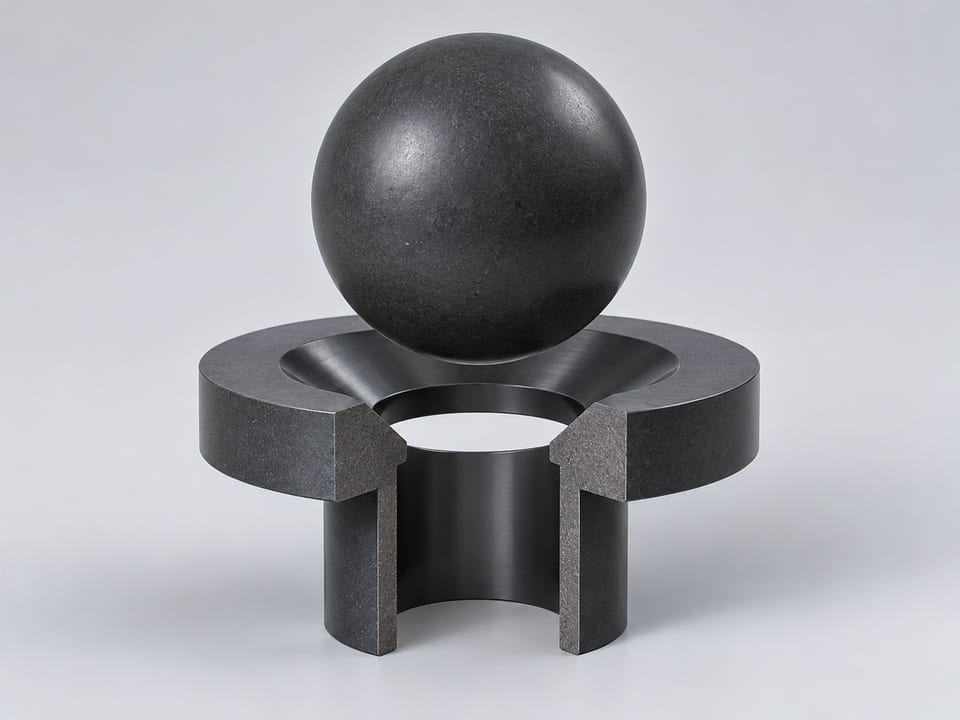
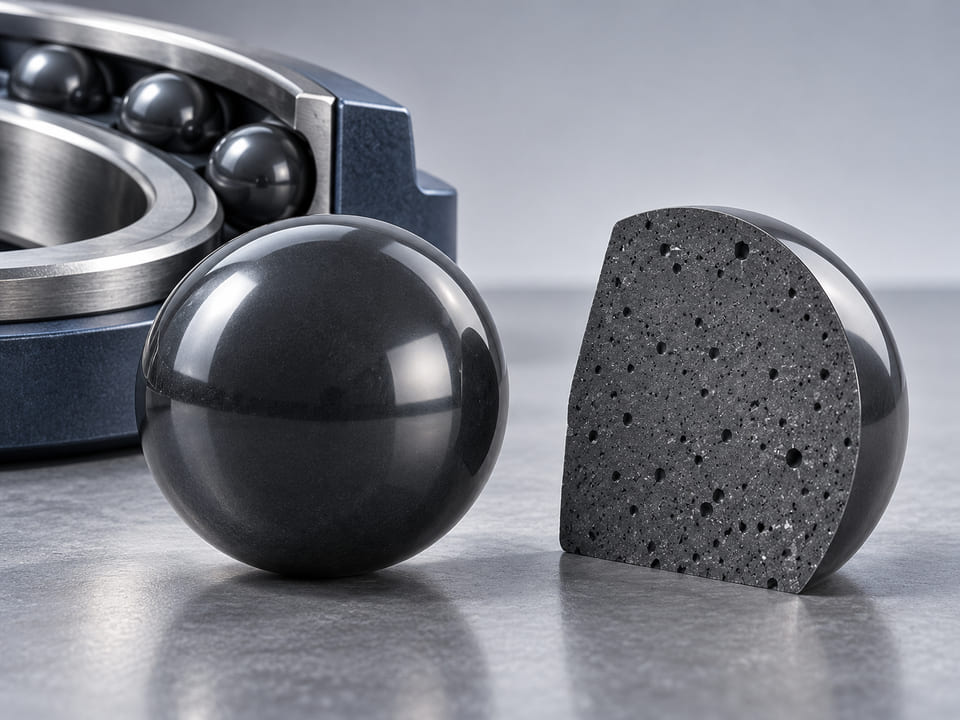
State the ceramic grade, processing route and any restriction on residual phases where the application depends on them. Define acceptable porosity, defects and material evidence through the drawing or qualification plan rather than inferring density from a polished exterior. If electrical insulation or conductivity matters, specify and verify it explicitly. Silicon carbide should not inherit the insulating description used for another ceramic family, because the relevant electrical response depends on grade and conditions.
Validate the intended contact or process role
Provide the seat or counterface, pressure or mechanical loading, impact and environment. For precision components, set form, finish and defect acceptance alongside the functional test. For media, define process and contamination requirements separately. A hard ceramic may resist a particular wear mechanism yet still be unsuitable for an impact or chemical condition, so combine material screening with a representative component or process test before approval.
Silicon Carbide Balls specifications
Define the component using the requirements below. Include your target values and acceptance method; the quotation records the agreed material, geometry, inspection and supply scope.
| Requirement | What to specify | Why it matters |
|---|---|---|
| SiC grade and route | Identify sintered, reaction-bonded or other specified material and secondary phases. | Composition and route influence chemical, mechanical and electrical response. |
| Component role | State precision sphere or process-media use. | Each function needs a distinct geometry and integrity specification. |
| Surface and internal quality | Define form, finish, defects and required inspection evidence. | A polished surface alone cannot prove acceptable ceramic integrity. |
| Environment and function | Provide medium, contact, impact and any electrical requirement. | The candidate must satisfy the full duty and relevant functional acceptance. |
Drawing and dimensional acceptance
Provide the drawing revision and nominal dimensions with units. Identify critical form, surface and fit requirements individually; a material designation alone does not define a finished component. Where an existing sample is the reference, describe wear and confirm the intended acceptance limits.
Order and inspection scope
Separate sample quantities from production demand. State the required inspection documents, lot identification, cleanliness and packaging. Any proposed substitute or change to the component specification should be reviewed before approval, with the quotation confirming the agreed scope.
Numeric performance values, when needed, must identify their material, conditions and evidence. Typical raw-material data should not be treated as guaranteed finished-component performance.
Silicon Carbide Balls applications
Start with the actual mechanism and exposure conditions. Each use below identifies the information needed for a useful technical review.
Chemical-handling component candidates
SiC may be reviewed for a hard sphere in a defined fluid-contact design. Specify chemistry, secondary-phase restrictions and the seat so the material proposal can be assessed meaningfully. Test movement or leakage after exposure and cycling, rather than interpreting a general corrosion-resistance description as a valve service rating.
Specialist wear contacts
A SiC sphere can enter the shortlist where the actual wear mechanism and counterface support a non-oxide ceramic option. Include impact and debris because hardness does not eliminate fracture or contamination. The sample plan should check both the sphere and the mating surface after the representative duty.
Separately specified process media
Where SiC is considered as grinding media, define that process explicitly instead of reusing a precision-ball specification. Assess contamination, breakage, size distribution and the target process result under the actual formulation. A successful media trial cannot establish the integrity and geometry needed for a valve or precision instrument sphere.
Compare Silicon Carbide Balls alternatives
Compare the requirement that drives the decision. A matching nominal diameter or similar appearance does not establish material or functional equivalence.
| Alternative | When to review it | Tradeoff to assess |
|---|---|---|
| Alumina | Compare an oxide ceramic where its composition and processing can meet the contact or media requirement at the intended commercial basis. | Chemical and electrical behaviour differ, so evaluate the exact grade rather than assuming all ceramic spheres share the same service profile. |
| Zirconia | Review zirconia where density, mechanical response or the wear chemistry motivates a different ceramic choice. | Stabiliser, environment and application role require their own review; a white ceramic alternative is not a direct equivalent to SiC. |
| Silicon nitride | Consider Si3N4 for qualified rolling or precision contacts where its particular mass and electrical profile suit the design. | Require material and rolling-element quality evidence; the word silicon in both names does not make the two ceramics interchangeable. |
These links open the corresponding product pages in this collection. Final selection depends on your complete specification and the agreed validation.
Silicon Carbide Balls FAQs
Is silicon carbide the same as silicon nitride?
No. SiC and Si3N4 are different ceramic materials with different compositions and property balances. Compare the exact grades against the application. Similar naming or a dark polished appearance does not establish equivalent contact, electrical, chemical or thermal behaviour in a bearing, valve or instrument.
Are all silicon carbide balls electrically insulating?
No. Do not infer insulation from the ceramic label. SiC electrical behaviour depends on grade and conditions, and some SiC products are used for conductive applications. If electrical behaviour matters, define the requirement and test basis explicitly and verify the proposed material rather than using a generic ceramic description.
Why does the SiC manufacturing route matter?
Processing can change porosity, secondary phases and material behaviour. State the required grade or restrictions and obtain relevant evidence. A visually dense polished sphere cannot establish the internal quality or composition needed for a demanding chemical, wear or electrical component without the appropriate material and inspection review.
Can SiC media be used as precision valve balls?
Not without demonstrating the complete precision-component specification. Media and valve balls can differ in form, finish, defects and material acceptance. State the role clearly, then validate the actual seat and exposure. A process-media product description is not evidence of sealing performance or precision-ball integrity.
How should a new SiC ball candidate be qualified?
Review the exact grade, route and supplier evidence, inspect finished geometry and integrity, then test the representative counterface, medium and duty. Include impact, contamination or electrical checks where relevant. Candidate status should not become an unqualified commercial capability before the agreed evidence and sample acceptance are available.
What should a silicon carbide enquiry include?
Provide grade and route, precision or media use, ball geometry, quantity, medium, counterface and duty. Add required integrity inspection, electrical behaviour and functional acceptance. Those inputs establish the qualification and quotation basis without borrowing another supplier's dimensions, processing claims, certifications or service ratings.
Request a quotation
Turn the Silicon Carbide Balls requirements into a clear enquiry for MEITUO Balls.
- Define the material and geometry.
- Describe the application and acceptance.
- Separate sample and production demand.
The quotation confirms feasibility, supply scope, inspection documents and commercial terms. Generated illustrations are not evidence of available stock or completed validation.
Continue your material review
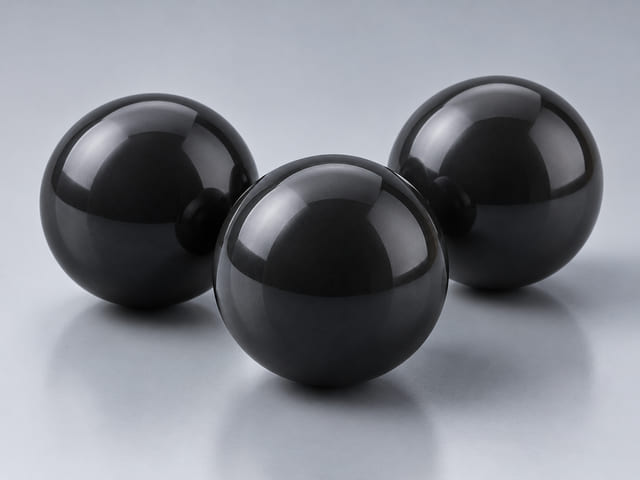
Engineering references and illustration notes
Material-family references support screening. The exact grade, finished geometry and application acceptance govern an actual enquiry.
CGI illustrations explain product, application or structure concepts. They are not photographs, measured micrographs, assembly drawings or inspection results.