Silicon Nitride Balls
Silicon nitride balls are hard, relatively lightweight ceramic spheres considered for qualified bearings, precision contacts and selected fluid components. Their material profile makes them useful to compare with steel where mass, electrical insulation or environmental exposure matters, but ceramic quality and the complete contact design remain critical. Specify material requirements, diameter, form, surface integrity, mating components and duty cycle before approving a finished Si3N4 ball.
- Material / construction
- Si3N4 engineering ceramic; material class and acceptance specified
- Specification basis
- Drawing, diameter & acceptance
- Order basis
- Sample & production quantities
Silicon Nitride Balls: selection overview
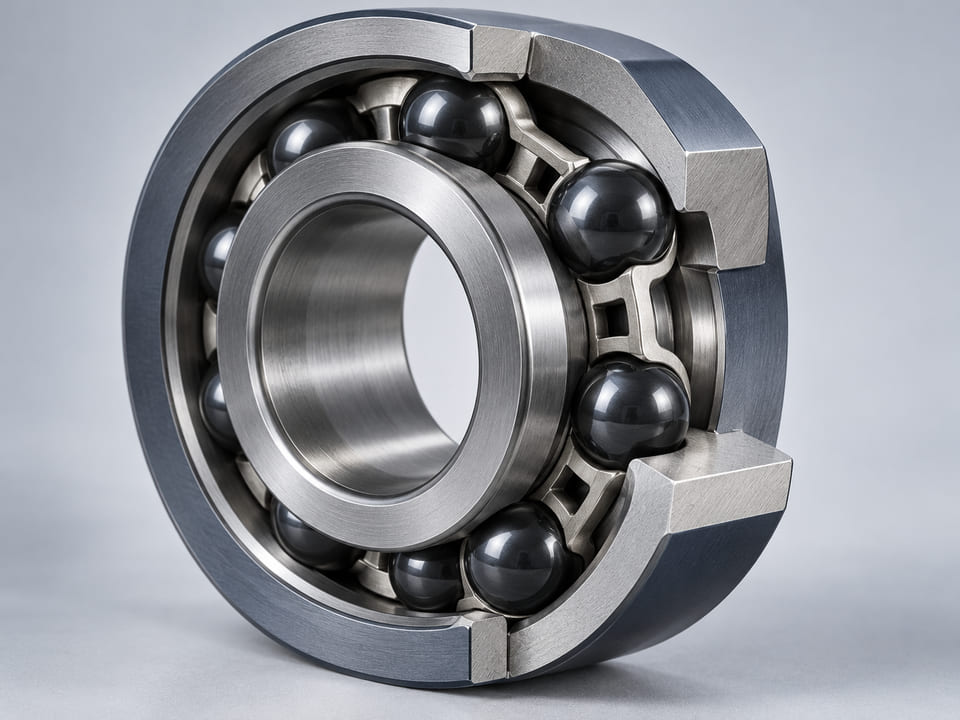
Silicon nitride is a familiar ceramic option for hybrid bearing concepts, yet the material name does not define a rolling-element quality level. Surface defects, internal integrity and the chosen manufacturing route matter alongside diameter and form. Changing a steel ball to ceramic alters the contact system, including the way it interacts with steel raceways, lubrication and assembly clearances. It is therefore a component and bearing-design review rather than an unrestricted material upgrade. A polished dark surface is a useful product image but cannot establish conformity to a ceramic ball standard or a fatigue-life claim.
Define ceramic quality beyond the diameter
Specify the material class or applicable drawing requirement, permitted defects and required inspection evidence. A dimensionally accurate sphere can still be unacceptable if its surface or internal integrity does not meet the intended contact duty. Where a standard such as ASTM F2094 is required, identify the relevant scope and acceptance explicitly and confirm conformity rather than assuming it from the material. Sample approval should connect the inspection record to the actual delivered ball batch.
Review the bearing or contact system
Provide the race or seat geometry, load, speed, lubricant, temperature and electrical requirement. In a hybrid bearing, a ceramic sphere does not make steel rings or lubricant immune to their own limits. Confirm fit, preload and handling to avoid damaging a hard but brittle component during assembly. Evaluate noise, wear and life using an appropriate component or bearing test; a resin-like image of a sphere or a hardness comparison cannot predict the complete system result.
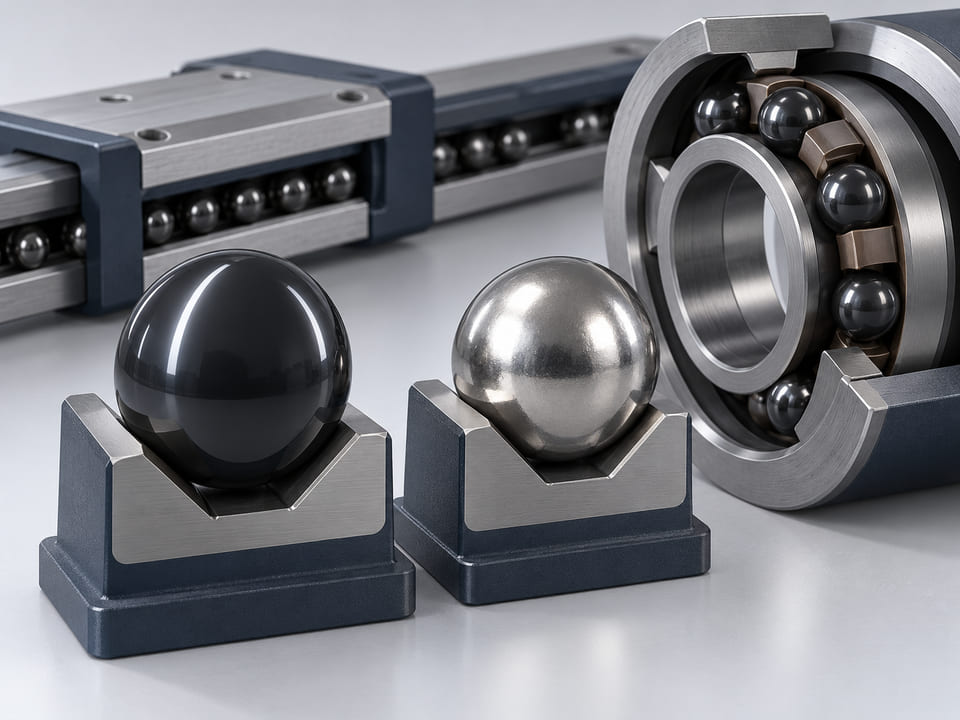
Silicon Nitride Balls specifications
Define the component using the requirements below. Include your target values and acceptance method; the quotation records the agreed material, geometry, inspection and supply scope.
| Requirement | What to specify | Why it matters |
|---|---|---|
| Material and class | Identify Si3N4 grade and applicable material standard or drawing. | The family name does not establish bearing-quality conformity. |
| Surface integrity | Define form, roughness and permitted surface defects. | A hard rolling contact needs more than a nominal diameter check. |
| Inspection evidence | State batch traceability and required internal or surface inspection. | Acceptance should cover the integrity relevant to the component duty. |
| Assembly duty | Provide races or seats, load, speed, lubricant and temperature. | The complete contact determines function and qualification. |
Drawing and dimensional acceptance
Provide the drawing revision and nominal dimensions with units. Identify critical form, surface and fit requirements individually; a material designation alone does not define a finished component. Where an existing sample is the reference, describe wear and confirm the intended acceptance limits.
Order and inspection scope
Separate sample quantities from production demand. State the required inspection documents, lot identification, cleanliness and packaging. Any proposed substitute or change to the component specification should be reviewed before approval, with the quotation confirming the agreed scope.
Numeric performance values, when needed, must identify their material, conditions and evidence. Typical raw-material data should not be treated as guaranteed finished-component performance.
Silicon Nitride Balls applications
Start with the actual mechanism and exposure conditions. Each use below identifies the information needed for a useful technical review.
Hybrid bearing projects
Silicon nitride may be reviewed as a rolling element paired with metallic rings in a qualified design. The ball, raceways, cage and lubricant must be evaluated together. Define the intended speed and load cycle and require the relevant material and surface evidence before treating the ceramic option as compatible with an existing bearing.
Electrical-insulation-sensitive contacts
A ceramic rolling element may be considered where electrical behaviour is part of the design requirement. Define the electrical path and component-level acceptance because other parts of the assembly can remain conductive. Material insulation should be documented for the selected grade, and contamination or damaged surfaces should be included in the relevant validation.
Selected pumps and instruments
A hard non-metallic sphere can enter the comparison for compatible process or instrument contacts. Check medium, seat, impact and cleanliness rather than applying a bearing specification to every use. A successful component should meet both geometry and function, with handling that protects the ceramic surface before installation.
Compare Silicon Nitride Balls alternatives
Compare the requirement that drives the decision. A matching nominal diameter or similar appearance does not establish material or functional equivalence.
| Alternative | When to review it | Tradeoff to assess |
|---|---|---|
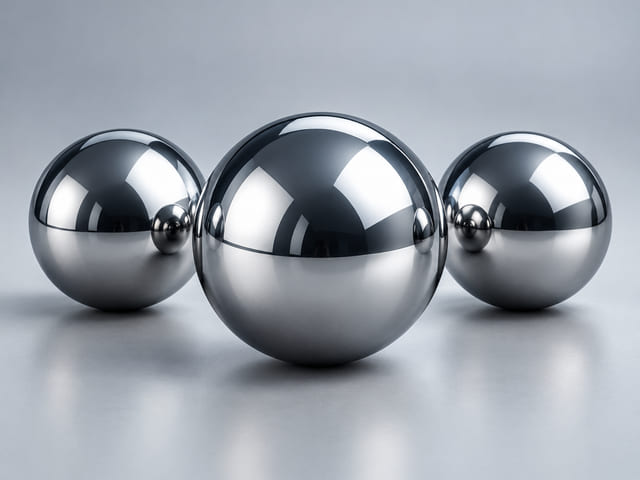
| AISI 52100 steel | Compare bearing steel when its validated fatigue, mass and environmental performance meets the application at the required commercial basis. | Steel's corrosion and electrical response require separate review; a lower-cost baseline is useful only when it meets the complete bearing duty. |
| Zirconia | Review zirconia when the contact and environmental requirement motivate a different oxide-ceramic property balance. | Recalculate moving mass and contact behaviour; ceramic materials differ and should not be treated as interchangeable dark or white spheres. |
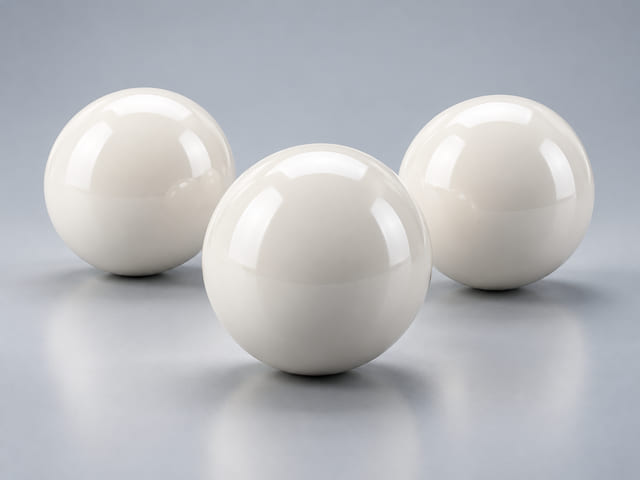
| Alumina | Compare alumina for defined non-metallic contacts where its material and processing route may meet the application requirement. | Bearing-quality acceptance and impact tolerance still need evidence; a general ceramic hardness description does not qualify a rolling element. |
These links open the corresponding product pages in this collection. Final selection depends on your complete specification and the agreed validation.
Silicon Nitride Balls FAQs
Can silicon nitride balls replace steel balls directly?
Only after the bearing or mechanism is reviewed. Mass, stiffness, thermal response and contact interaction change, even if diameter is identical. Check raceways, preload, cage and lubrication, then qualify the assembled design against its actual duty instead of treating the ceramic ball as an unrestricted drop-in upgrade.
Are all Si3N4 balls bearing grade?
No. Material identity alone does not establish surface integrity, internal quality, form or conformity to a rolling-element requirement. State the relevant standard or drawing and required evidence. A polished dark sphere can be an illustration without proving the quality needed for a fatigue-loaded bearing.
Does a ceramic ball make the whole bearing corrosion resistant?
No. Rings, cage, lubricant and seals retain their own limits. A ceramic rolling element addresses only part of the design. Review the entire assembly and environment before making a system claim, particularly where moisture, chemicals or cleaning can attack metallic or polymer components.
Can silicon nitride balls be used without lubricant?
That depends on the complete contact and duty. A general low-friction or material description does not establish dry-running life. Provide race materials, load, speed, heat and contamination, then use a relevant qualification test before approving an unlubricated or reduced-lubrication operating condition.
How should ceramic balls be handled?
Use a method that avoids impact, mixing and surface damage, with packaging appropriate to the inspection requirement. A hard surface is not immune to chipping. Inspect and trace the parts as required, and confirm any cleaning or assembly process that could alter the approved surface before the balls enter service.
What is needed for a silicon nitride quotation?
Provide diameter, form, surface and material-class requirements, quantity, component duty and inspection scope. Include the applicable drawing or standard and any batch or sample validation. Ball-specific supply and conformity must be confirmed against those inputs; another manufacturer's published material class is not a MEITUO commitment.
Request a quotation
Turn the Silicon Nitride Balls requirements into a clear enquiry for MEITUO Balls.
- Define the material and geometry.
- Describe the application and acceptance.
- Separate sample and production demand.
The quotation confirms feasibility, supply scope, inspection documents and commercial terms. Generated illustrations are not evidence of available stock or completed validation.
Continue your material review
Engineering references and illustration notes
Material-family references support screening. The exact grade, finished geometry and application acceptance govern an actual enquiry.
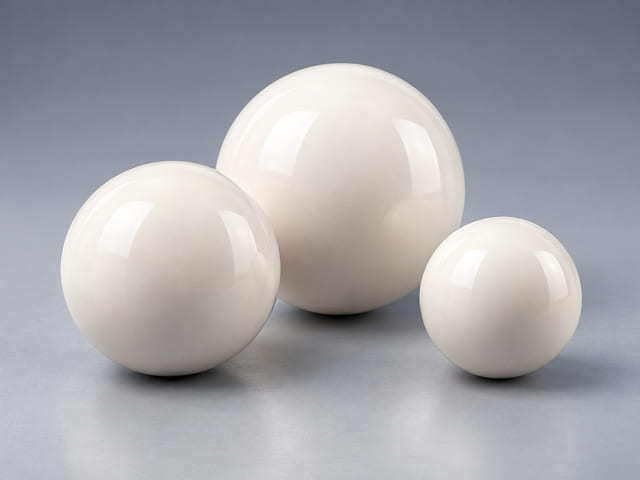
CGI illustrations explain product, application or structure concepts. They are not photographs, measured micrographs, assembly drawings or inspection results.