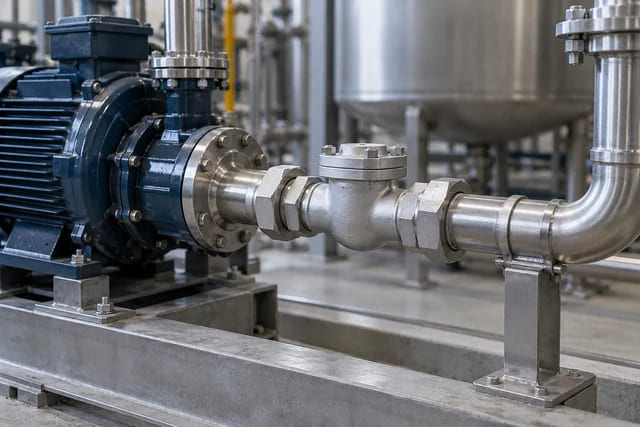
Fluid control
Balls for Check Valves & Fluid Control
Ball-and-seat contact, closing behavior and compatibility with the working fluid.
Seven families, connected to the application.
Explore all products →Share the drawing, contact conditions and acceptance criteria for your component.
Material selection guide →Explore the contact, medium and mechanism.
All applications →Share the drawing, contact conditions and acceptance criteria for your component.
Material selection guide →From an open material question to an agreed component requirement.
Explore services →Share the drawing, contact conditions and acceptance criteria for your component.
Material selection guide →Industry and sourcing guides for twelve target markets.
Explore all markets →Share the drawing, contact conditions and acceptance criteria for your component.
Material selection guide →Match the component programme, purchasing role and project responsibilities.
Explore partnerships →Share the drawing, contact conditions and acceptance criteria for your component.
Material selection guide →Corporate background, practical purchasing information and direct contact.
Explore company →Share the drawing, contact conditions and acceptance criteria for your component.
Material selection guide →A float ball is designed to provide buoyancy in a particular liquid and mechanism. Material, construction, total mass, attachments and sealing all matter. A hollow stainless float and a solid stainless sphere are not interchangeable. Specify the liquid conditions and complete float assembly before reviewing a sample or quotation.
A sphere’s material name does not determine whether the complete component will float as required. A hollow shell, joined seams, attachments and any internal parts all contribute to its construction and mass. The mechanism also needs the intended travel and guidance.
Identify whether the float operates with a switch, a guided stem or another level-control arrangement. The ball’s role and mating features should be defined on the drawing. A generic hollow decorative sphere is not a level-control component specification.
Use these inputs to move from an application name to a useful component and supply enquiry.
| Selection input | Describe your conditions | Why it belongs in the enquiry |
|---|---|---|
| Liquid and conditions | Liquid identity, density context, temperature and pressure conditions. | Include cleaning and any buildup expected in service. |
| Float construction | Material, outside geometry, total mass, joints and attachments. | Define finished-component acceptance, not only shell diameter. |
| Mechanism and sealing | Guidance, required travel and leak acceptance. | Agree the complete assembly’s functional test and inspection scope. |
A published float-switch product illustrates the importance of the complete device and its liquid conditions. Do not copy its temperature, pressure or liquid-density limits onto another sphere. Those values belong to the tested construction.
For repeat orders, retain the approved drawing and finished mass requirement alongside the material. Include the acceptance method for joined features and leakage, and define any documentation needed for the destination and contact duty.
| Material or product candidate | Why review it here? | What must be confirmed? |
|---|---|---|
| Stainless Steel Hollow Balls | A hollow stainless construction for an appropriate float design. | Specify mass, seam, attachments and leak acceptance. |
| PP Balls | A polymer candidate for compatible liquids and a suitable construction. | Confirm the finished float geometry and use conditions. |
| HDPE Balls | Another polymer family to assess for a defined float application. | Material-family properties do not establish the complete float performance. |
These are application-review candidates. The exact grade, finished specification, supply scope and documents are confirmed in the quotation.
Evaluate the finished float in the intended mechanism and representative liquid conditions. Include sealing, travel, switching or control behavior as relevant to the device, with acceptance set by its design owner.
Avoid this assumption. A hollow sphere does not carry a pressure or temperature rating simply because it is stainless steel.
No. Construction and finished mass are fundamental to buoyancy; use the actual float design.
Include material, mass, attachments, joints, liquid conditions and the required leak or functional acceptance.
No. Ratings concern a specific construction and test basis, not every similar sphere.
Use a related function to compare requirements without assuming the same ball specification applies.
Ball-and-seat contact, closing behavior and compatibility with the working fluid.
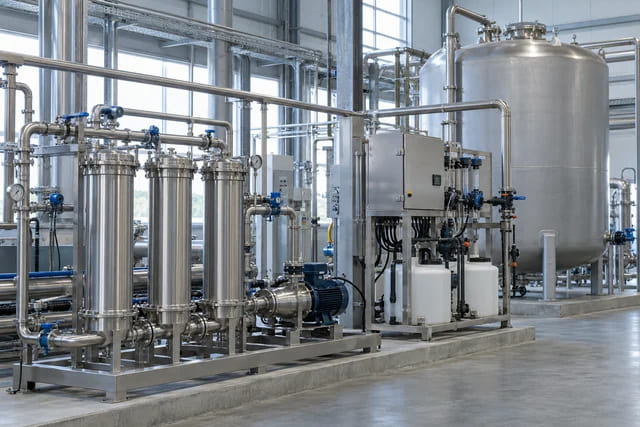
Media compatibility, cleaning cycles and wetted-component requirements.
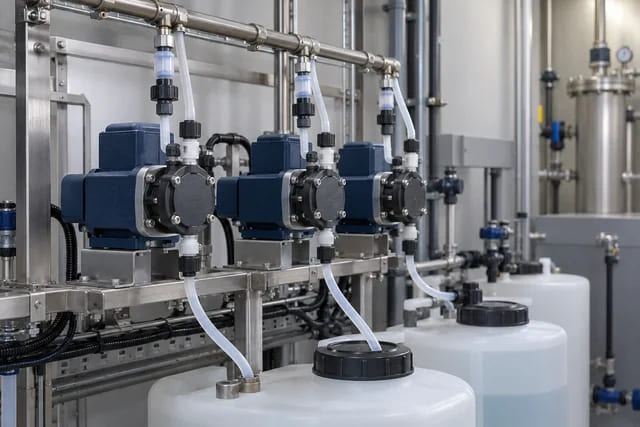
Inlet and discharge behavior, repeatability and the full dosing cycle.
Bring the material, size, operating conditions and quantity. Include the drawing and validation topics that matter to this project.
Gems Sensors stainless-steel float-switch example
References describe industry practice and material-selection context. They do not establish MEITUO stock, equipment ownership, qualification or performance.