Black Glass Balls
Black glass balls are dark opaque spheres considered for instruments, visible moving elements and selected precision contacts. Their appearance can improve contrast, but black colour alone does not identify composition, optical transmission or technical quality. Specify glass grade, diameter and form, surface defects, required opacity or reflectance, working environment and instrument-level acceptance before approving a black glass component.
- Material / construction
- Black glass; composition, colour and transmission requirements specified
- Specification basis
- Drawing, diameter & acceptance
- Order basis
- Sample & production quantities
Black Glass Balls: selection overview
The useful distinction of black glass is its optical appearance combined with a hard mineral surface. That can help a moving element remain visible against a pale instrument background, yet colour should not be confused with a calibrated optical property. A sphere that looks opaque under room lighting may behave differently at another wavelength or thickness. Composition, surface and geometry still determine the mechanical and chemical review. Avoid inferring magnetism, conductivity or special radiation response from the black colour; define any such requirement explicitly and obtain the appropriate evidence for the actual grade.
Specify visual contrast or optical performance
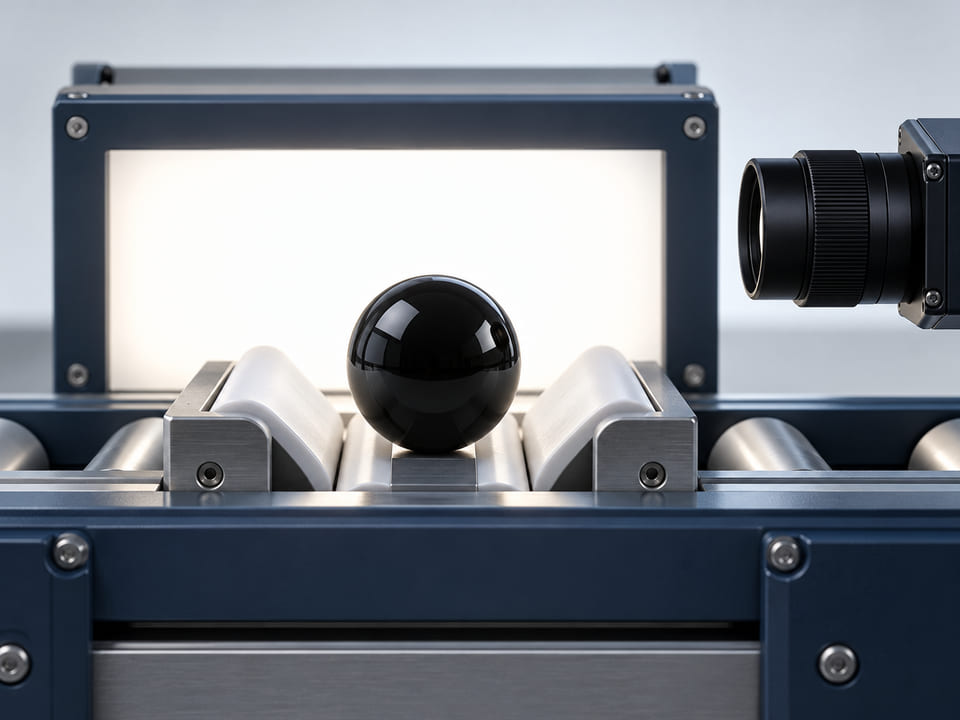
State whether black is a cosmetic preference, a visible indicator requirement or part of an optical sensor function. For cosmetic use, agree colour and gloss under defined viewing conditions. For sensing, identify illumination, wavelength and acceptance rather than assuming complete opacity. Surface reflections can matter as much as bulk colour, so test the sphere with the actual camera or optical path where relevant. A product photograph cannot establish spectral transmission or consistent recognition.
Connect precision to the mechanism
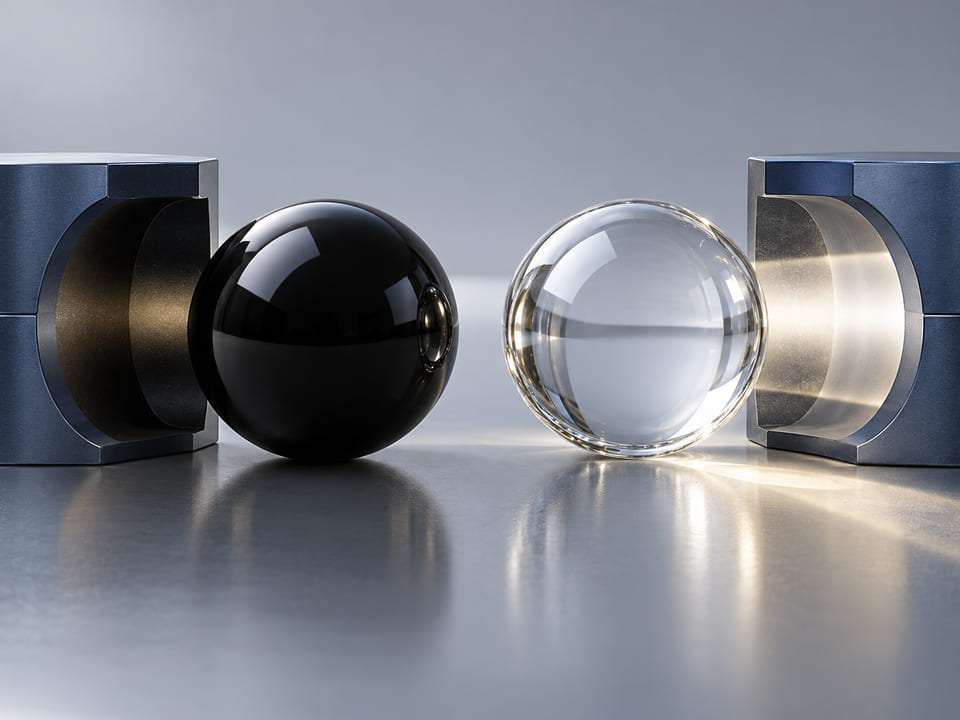
Define diameter, form, finish and defect limits for the actual guide, seat or support. An instrument may need repeatable movement and clear visibility, while a contact component may need leakage or wear acceptance. Include fluid, cleaning and thermal changes in the review. If the sphere replaces another material, recheck mass and the assembled response. A black glass component should not inherit a steel ball's motion behaviour or a clear glass lens's optical specification without validation.
Black Glass Balls specifications
Define the component using the requirements below. Include your target values and acceptance method; the quotation records the agreed material, geometry, inspection and supply scope.
| Requirement | What to specify | Why it matters |
|---|---|---|
| Glass composition | Identify the proposed grade and required material evidence. | Black appearance cannot identify chemistry or physical properties. |
| Colour and optics | Define colour, gloss and any transmission or reflectance requirement. | Cosmetic appearance and optical performance require different acceptance methods. |
| Contact geometry | Provide diameter, form, finish and guide or seat detail. | Precision must serve the actual movement or contact function. |
| Instrument validation | State lighting, medium, cleaning and functional acceptance. | The complete instrument determines visibility and response. |
Drawing and dimensional acceptance
Provide the drawing revision and nominal dimensions with units. Identify critical form, surface and fit requirements individually; a material designation alone does not define a finished component. Where an existing sample is the reference, describe wear and confirm the intended acceptance limits.
Order and inspection scope
Separate sample quantities from production demand. State the required inspection documents, lot identification, cleanliness and packaging. Any proposed substitute or change to the component specification should be reviewed before approval, with the quotation confirming the agreed scope.
Numeric performance values, when needed, must identify their material, conditions and evidence. Typical raw-material data should not be treated as guaranteed finished-component performance.
Black Glass Balls applications
Start with the actual mechanism and exposure conditions. Each use below identifies the information needed for a useful technical review.
Visible instrument elements
A black glass sphere may provide useful contrast in an indicator or moving instrument component. Establish visibility under the actual background and lighting, then assess motion and any calibration. A visually suitable colour match is not enough if the ball sticks, changes the instrument response or reflects light in a way that obscures the intended indication.
Camera-inspected components
Where a camera identifies a sphere or its position, test the surface and colour with the actual optical arrangement. Define contrast and recognition acceptance across expected orientations and contamination. Bulk opacity and gloss are separate variables, and an attractive studio rendering should not be treated as proof of reliable machine-vision performance.
Selected glass contact assemblies
Black glass may be reviewed where a hard opaque sphere meets the mechanism's material and visual purpose. Check the composition and exposure rather than assuming equivalence with another black material. Define surface integrity and the assembled contact test so chips or scratches do not undermine the required function.
Compare Black Glass Balls alternatives
Compare the requirement that drives the decision. A matching nominal diameter or similar appearance does not establish material or functional equivalence.
| Alternative | When to review it | Tradeoff to assess |
|---|---|---|
| Clear soda-lime glass | Compare clear glass when transparency is useful and a dark contrasting indicator is unnecessary for the assembly. | Confirm the exact composition and function; colour alone does not establish that black and clear glass have identical material or contact behaviour. |
| Resin trackballs | Review a resin sphere when an interface needs a validated sensor pattern, support arrangement and operating feel rather than an instrument glass element. | Optical tracking, mass and support contact must be established at module level; a dark glass ball is not a default resin-trackball replacement. |
| Zirconia | Compare a specified ceramic for a hard opaque contact where the design depends on mechanical or environmental requirements rather than black appearance. | Material identity, density and contact quality differ, so evaluate the actual mechanism instead of choosing by surface colour. |
These links open the corresponding product pages in this collection. Final selection depends on your complete specification and the agreed validation.
Black Glass Balls FAQs
Are black glass balls completely opaque?
Define the wavelength, lighting and required transmission before making that judgement. A sphere that appears opaque in normal room light may not satisfy a specific sensor requirement. Where opacity is functional, use the relevant optical test rather than a black colour description or a product photograph.
Does black colour identify the glass composition?
No. It does not establish the base glass, additives, conductivity, magnetism or thermal properties. Request the material evidence required for the intended use. Colour and gloss can be specified separately, while chemistry and functional acceptance should be tied to the actual proposed grade.
Can black glass be used as a trackball?
Only a purpose-designed module can establish that. Trackballs depend on sensing, support contact, mass and operating feel. A black glass sphere is not automatically compatible with an optical or mechanical resin-trackball module, even if its diameter is the same and its surface looks suitable.
Why would an instrument use a black sphere?
Visual contrast may make a moving element easier to observe against a suitable background. The actual benefit depends on illumination, gloss, position and the surrounding design. Validate both visibility and movement or calibration so an attractive visual choice does not compromise the instrument's required functional response.
How should black glass samples be evaluated?
Inspect composition evidence, diameter, form, surface defects, colour and gloss using agreed methods. If a sensor or camera is involved, test the actual optical arrangement. Include fluid, cleaning and thermal exposure where relevant, then repeat the functional check rather than approving the component solely from appearance.
What should a black glass quotation include?
Provide the material or composition requirement, diameter, form and finish, quantity, colour reference and purpose of opacity. Add the sensor or instrument acceptance, exposure conditions and required documents. This establishes the correct proposal basis without assuming every black glass sphere has the same optical or precision quality.
Request a quotation
Turn the Black Glass Balls requirements into a clear enquiry for MEITUO Balls.
- Define the material and geometry.
- Describe the application and acceptance.
- Separate sample and production demand.
The quotation confirms feasibility, supply scope, inspection documents and commercial terms. Generated illustrations are not evidence of available stock or completed validation.
Continue your material review
Engineering references and illustration notes
Material-family references support screening. The exact grade, finished geometry and application acceptance govern an actual enquiry.
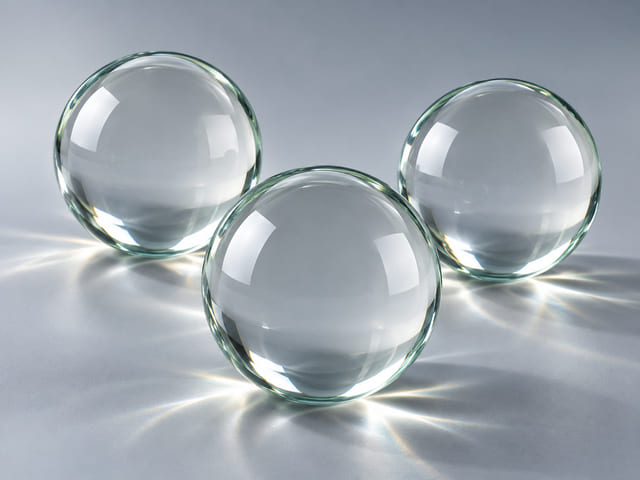
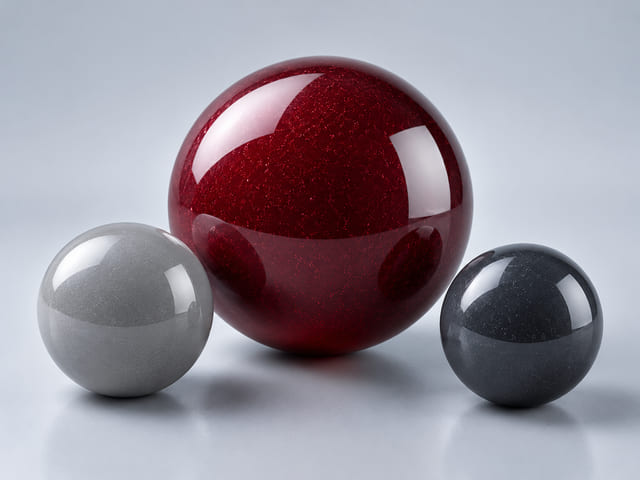
CGI illustrations explain product, application or structure concepts. They are not photographs, measured micrographs, assembly drawings or inspection results.