Optical & Mechanical Trackballs
Trackballs are functional interface spheres whose size, surface and mass must work with a specific sensor and support arrangement. Optical modules require a compatible tracking pattern, while mechanical modules rely on controlled roller contact. Define the resin, diameter, roundness, colour or pattern, surface finish, cleaning conditions and module-level acceptance before treating a replacement sphere as compatible with an industrial trackball assembly.
- Material / construction
- Specified resin system; optical pattern and surface validated with the module
- Specification basis
- Drawing, diameter & acceptance
- Order basis
- Sample & production quantities
Optical & Mechanical Trackballs: selection overview
A trackball is an interface component rather than simply a decorative resin sphere. The surface must support the chosen sensing method while the geometry and supports determine friction, movement and operating feel. Optical and mechanical requirements overlap but are not identical: an attractive glossy solid colour may fail optical tracking, while a useful optical texture may not suit a mechanical roller system. The legacy product family identifies unsaturated polyester resin, but a new component's actual resin and finish must still be confirmed. Colour and diameter alone cannot establish interchangeability with a particular module.
Optical pattern vs mechanical contact
For an optical module, provide the sensor model or test fixture, illumination and required tracking performance. Define whether the pattern is moulded, printed or part of the material where this affects durability. For a mechanical module, identify roller contact and required traction. In either case, test the sphere across orientation and speed. A still photograph demonstrates appearance only; it cannot establish sensor recognition, dropout behaviour or consistent feel during slow motion.
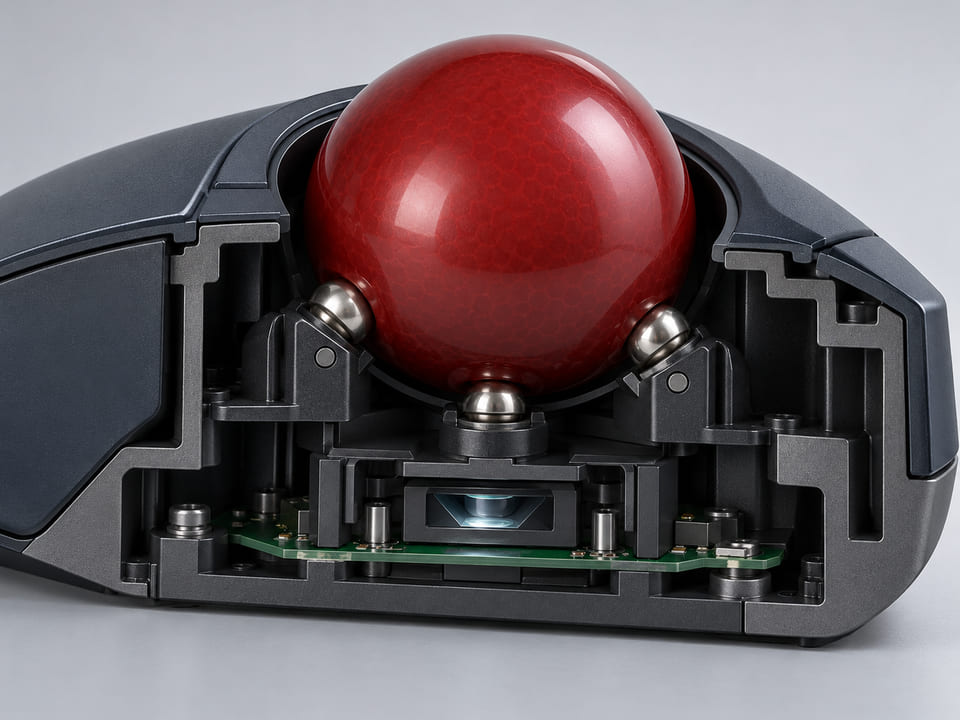
Approve the sphere with its supporting hardware
Provide the support-ball or roller layout, retaining clearance and any preload. Roundness, surface finish and mass can all change start-up force and continued movement. Include cleaning agents, skin contact and expected contamination in the surface review. Agree a module-level test for movement, tracking and surface durability after cleaning. This provides a clear acceptance basis when a ball fits physically but produces a different operating feel or intermittent sensor response.
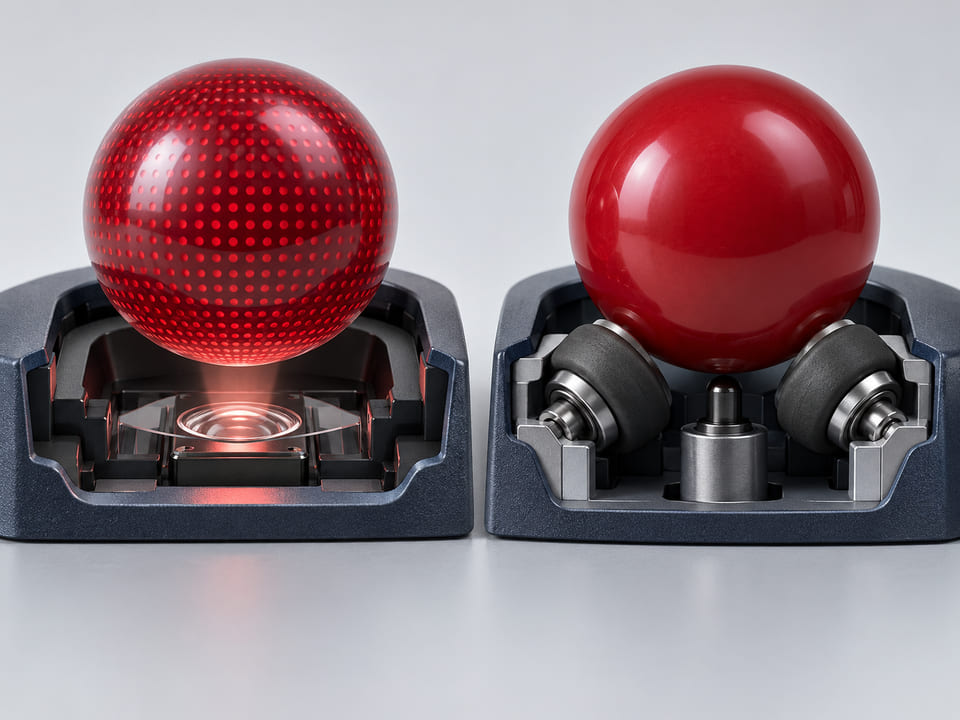
Optical & Mechanical Trackballs specifications
Define the component using the requirements below. Include your target values and acceptance method; the quotation records the agreed material, geometry, inspection and supply scope.
| Requirement | What to specify | Why it matters |
|---|---|---|
| Sensing system | Identify optical sensor and illumination or mechanical roller arrangement. | The required surface depends on how movement is detected. |
| Movement geometry | Specify diameter, form, supports, retention and clearance. | A sphere that fits the opening can still rub or move inconsistently. |
| Surface and pattern | Define finish, colour, pattern and durability acceptance. | Appearance and tracking performance need separate but coordinated checks. |
| Module test | Set tracking, movement and cleaning-cycle acceptance. | Functional compatibility belongs to the assembled interface, not the ball alone. |
Drawing and dimensional acceptance
Provide the drawing revision and nominal dimensions with units. Identify critical form, surface and fit requirements individually; a material designation alone does not define a finished component. Where an existing sample is the reference, describe wear and confirm the intended acceptance limits.
Order and inspection scope
Separate sample quantities from production demand. State the required inspection documents, lot identification, cleanliness and packaging. Any proposed substitute or change to the component specification should be reviewed before approval, with the quotation confirming the agreed scope.
Numeric performance values, when needed, must identify their material, conditions and evidence. Typical raw-material data should not be treated as guaranteed finished-component performance.
Optical & Mechanical Trackballs applications
Start with the actual mechanism and exposure conditions. Each use below identifies the information needed for a useful technical review.
Industrial operator interfaces
A resin trackball may form the moving input element in a control panel. Match its optical or mechanical surface to the actual module rather than specifying only a colour. Check slow positioning, rapid movement and repeated cleaning, because the interface should remain controllable after the exposure conditions expected in its installation.
Instrumentation and specialist controls
In a precision interface, small changes in friction or tracking may matter more than nominal diameter. Define the functional resolution or pointing acceptance at assembly level. Review the supports and retention alongside the sphere so the component does not rub, bind or create inconsistent motion in different directions.
Replacement and private-label modules
A replacement ball should be validated against the existing sensor, supports and finish specification. Obtain a drawing or representative module where possible. A copied diameter or visual colour match is not enough to establish compatibility, especially if the original surface pattern or resin system is unknown.
Compare Optical & Mechanical Trackballs alternatives
Compare the requirement that drives the decision. A matching nominal diameter or similar appearance does not establish material or functional equivalence.
| Alternative | When to review it | Tradeoff to assess |
|---|---|---|
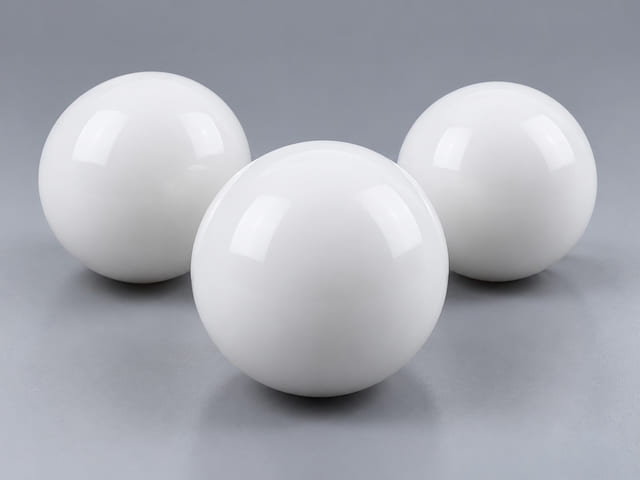
| PMMA acrylic spheres | Compare a clear acrylic sphere only where the interface design specifically benefits from transparency and its sensing method can accommodate it. | A transparent sphere may not provide the pattern required by an optical sensor, so this is a module-design decision rather than a cosmetic substitution. |
| POM spheres | Review acetal for a mechanical contact concept where dimensional behaviour and sliding or rolling feel matter more than a glossy resin appearance. | Sensor recognition, traction and surface treatment must be revalidated; a mechanically plausible sphere may still be unsuitable for the original sensing method. |
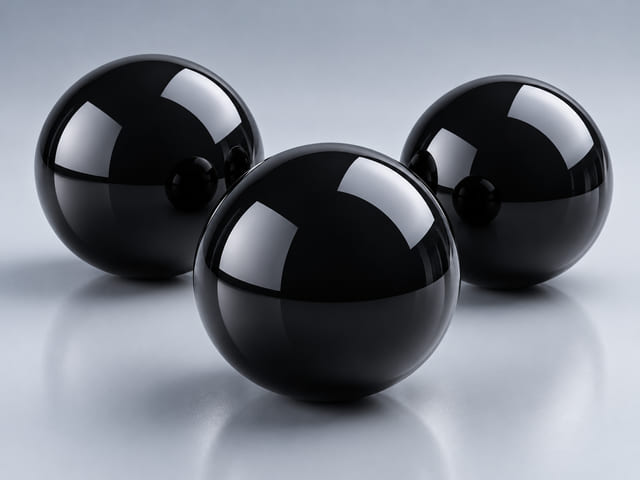
| Black glass spheres | Consider glass only for a specifically designed instrument mechanism where its surface, mass and optical appearance support the required function. | Mass, brittleness and support loading change substantially, and an instrument ball should not be assumed compatible with a resin-trackball module. |
These links open the corresponding product pages in this collection. Final selection depends on your complete specification and the agreed validation.
Optical & Mechanical Trackballs FAQs
Can any smooth sphere be used as a trackball?
No. Optical sensors need a compatible surface pattern, and mechanical systems need suitable roller contact. Diameter, form, mass and finish also affect movement. Evaluate the ball in the actual module and define tracking and operating-feel acceptance before approving it as a replacement.
What is different about an optical trackball?
Its surface must provide features the sensor can reliably detect under the module's illumination and geometry. A visually uniform glossy finish may not track consistently. State the sensor or provide a test module, then evaluate slow movement, rapid movement and different sphere orientations rather than relying on appearance.
Does matching diameter establish compatibility?
No. The ball can fit mechanically while producing excessive friction, poor tracking or an unfamiliar feel. Compare supports, clearances, mass, surface and sensor response. If the original specification is unavailable, use a representative approved sample and module-level test to define the replacement acceptance.
Can colour and pattern be customised?
They can be reviewed as part of the component design, but any change needs sensor and durability validation. Specify the desired appearance and the tracking requirements together. A colour match that compromises recognition or wears away during cleaning does not meet a functional trackball specification.
How should cleaning resistance be tested?
Use the actual cleaner, application method, exposure time and repeated cycle. Inspect appearance and surface damage, then repeat the tracking and movement test. A resin that remains visually intact can still experience a finish or friction change that affects the way the module responds to the user.
What is needed for a trackball quotation?
Provide the ball and module drawings, resin requirement if known, sensor or mechanical arrangement, geometry, finish, colour or pattern and quantity. Include an approved sample or acceptance test for tracking and feel. Material, appearance and compatibility should be agreed together before commercial terms are confirmed.
Request a quotation
Turn the Optical & Mechanical Trackballs requirements into a clear enquiry for MEITUO Balls.
- Define the material and geometry.
- Describe the application and acceptance.
- Separate sample and production demand.
The quotation confirms feasibility, supply scope, inspection documents and commercial terms. Generated illustrations are not evidence of available stock or completed validation.
Continue your material review

Engineering references and illustration notes
Material-family references support screening. The exact grade, finished geometry and application acceptance govern an actual enquiry.
CGI illustrations explain product, application or structure concepts. They are not photographs, measured micrographs, assembly drawings or inspection results.