Grinding & Burnishing Balls
Grinding and burnishing balls are spherical process media selected for different outcomes: grinding reduces particle size, while burnishing improves a workpiece surface through the specified contact process. They are not interchangeable uses of one generic ball. Define the equipment, material or formulation, target particle or surface result, media grade, size distribution, contamination limits and validation method before comparing a spherical-media proposal.
- Material / construction
- Steel, stainless or ceramic media selected by process; exact grade reviewed
- Specification basis
- Drawing, diameter & acceptance
- Order basis
- Sample & production quantities
Grinding & Burnishing Balls: selection overview
The first purchasing decision is the process objective. A milling charge, an abrasive finishing medium and a non-abrasive burnishing charge can all contain spheres while producing different results. Hardness and diameter alone do not identify the correct medium. Density, wear chemistry, size distribution and the surrounding equipment also matter. This page concerns precision or process-specific media review, with no assumed heavy mining-ball capability. Where a formulation involves food or another controlled contact, identify the exact material and documentation requirements; a stainless or ceramic description does not establish compliance for the delivered media.
Grinding vs burnishing: define the required result
For particle reduction, describe the feed or formulation, target distribution and acceptable contamination. For surface finishing, describe the workpiece, starting condition and required surface or edge outcome. If burnishing is intended, distinguish it from abrasive stock removal. This prevents quotations from appearing comparable while proposing media for different mechanisms. Provide a representative sample or measurable result where possible, and evaluate the complete process rather than expecting a universal media size or grade to work across unrelated equipment.
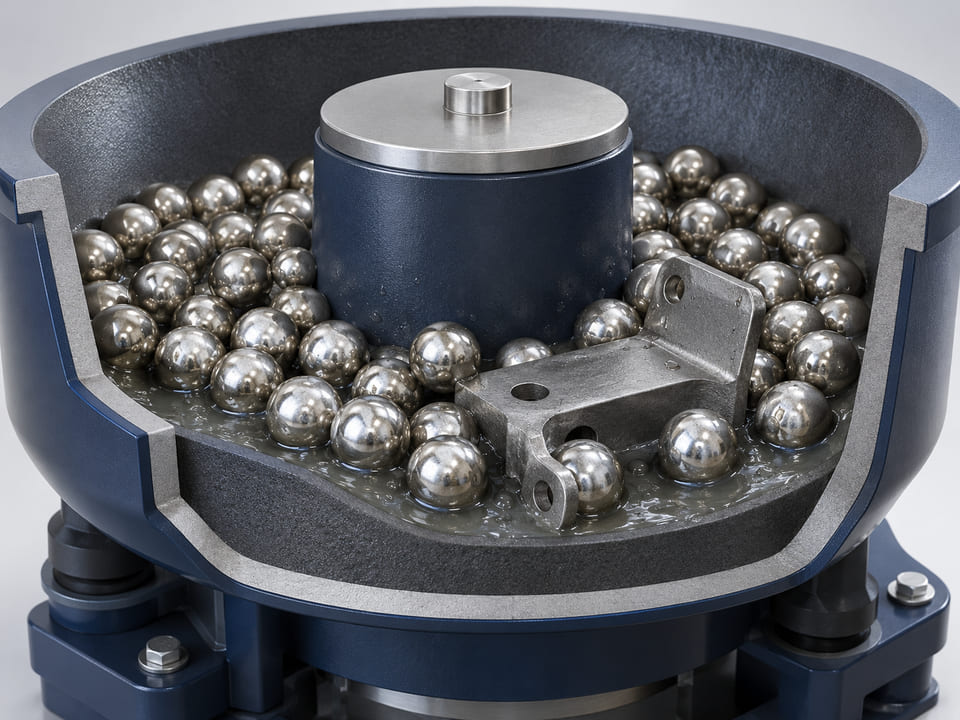
Compare media through a representative trial
State the equipment and relevant operating context without assuming that another installation's result transfers. Define what will be measured before and after the trial: particle result, surface condition, wear, contamination, breakage or separation. Include the media's size distribution and replenishment policy where they affect consistency. A shiny sphere may be suitable for one burnishing duty but not a milling formulation, while an abrasive media charge may remove material that the part drawing does not permit.
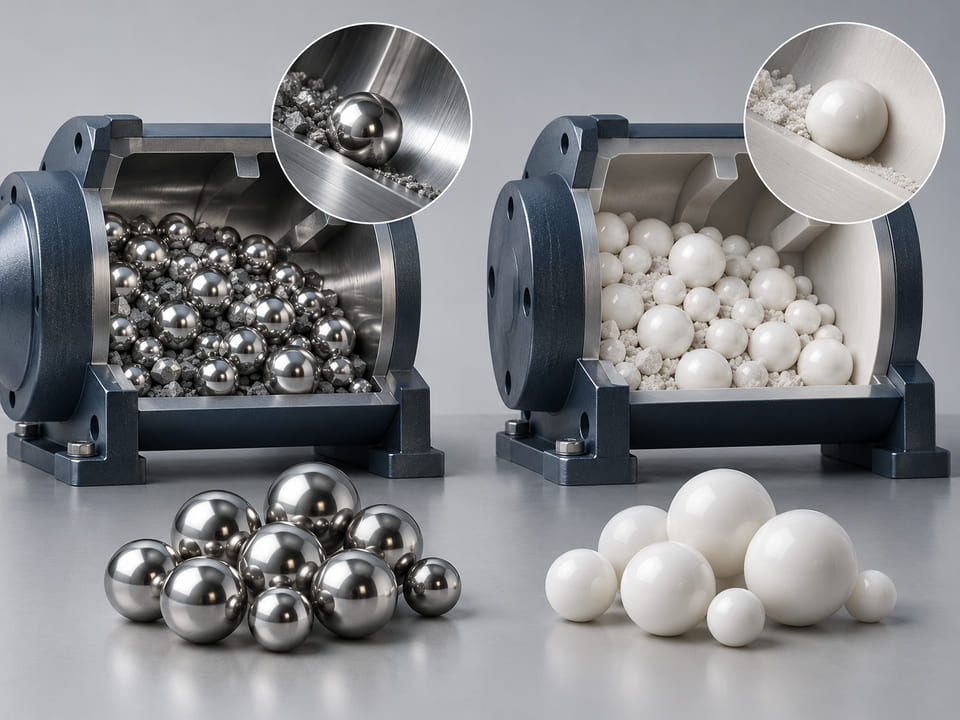
Grinding & Burnishing Balls specifications
Define the component using the requirements below. Include your target values and acceptance method; the quotation records the agreed material, geometry, inspection and supply scope.
| Requirement | What to specify | Why it matters |
|---|---|---|
| Process objective | Identify particle reduction, abrasive finishing or non-abrasive burnishing. | Similar sphere shapes can serve different contact mechanisms. |
| Material and distribution | Specify media grade, size distribution and relevant wear chemistry. | The process charge must remain consistent, not merely match a nominal diameter. |
| Equipment and work | Provide equipment, formulation or workpiece and starting condition. | Media selection depends on the surrounding process and accessible contact. |
| Trial acceptance | Define particle, surface, dimensional, contamination and separation results. | Performance needs a measurable process outcome rather than an unqualified polishing claim. |
Drawing and dimensional acceptance
Provide the drawing revision and nominal dimensions with units. Identify critical form, surface and fit requirements individually; a material designation alone does not define a finished component. Where an existing sample is the reference, describe wear and confirm the intended acceptance limits.
Order and inspection scope
Separate sample quantities from production demand. State the required inspection documents, lot identification, cleanliness and packaging. Any proposed substitute or change to the component specification should be reviewed before approval, with the quotation confirming the agreed scope.
Numeric performance values, when needed, must identify their material, conditions and evidence. Typical raw-material data should not be treated as guaranteed finished-component performance.
Grinding & Burnishing Balls applications
Start with the actual mechanism and exposure conditions. Each use below identifies the information needed for a useful technical review.
Particle-reduction processes
Spherical media can be compared for a defined milling formulation and equipment. Identify the target particle result and acceptable wear chemistry, then test the proposed grade and size distribution. Media performance should be assessed with the real formulation and process constraints rather than inferred from material hardness or a generic grinding label.
Surface burnishing
Non-abrasive metallic media may be considered where the goal is a defined smoothing or brightening effect on a workpiece. Establish the part material, geometry and acceptance, and distinguish surface appearance from stock removal. The complete process should preserve the permitted dimensions and avoid contact damage or unwanted residues.
Light finishing and polishing trials
Spherical abrasive or ceramic media may be reviewed for a suitable finishing process, provided the shape and grade reach the relevant surfaces and can be separated. Define the result and cleaning requirements. A successful visual improvement should be supported by the agreed surface, edge or contamination checks rather than brightness alone.
Compare Grinding & Burnishing Balls alternatives
Compare the requirement that drives the decision. A matching nominal diameter or similar appearance does not establish material or functional equivalence.
| Alternative | When to review it | Tradeoff to assess |
|---|---|---|
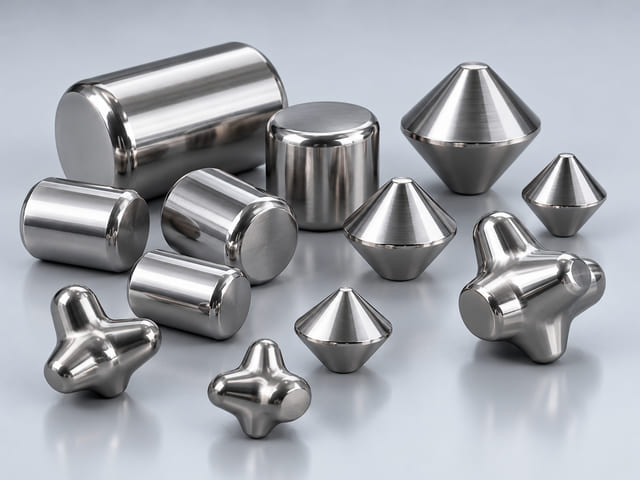
| Shaped finishing media | Compare shaped media where edges, contours or contact access require a geometry different from a sphere in a finishing process. | Access, lodging and separation need a specific trial; a shape change alters contact and should not be treated as the same media charge. |
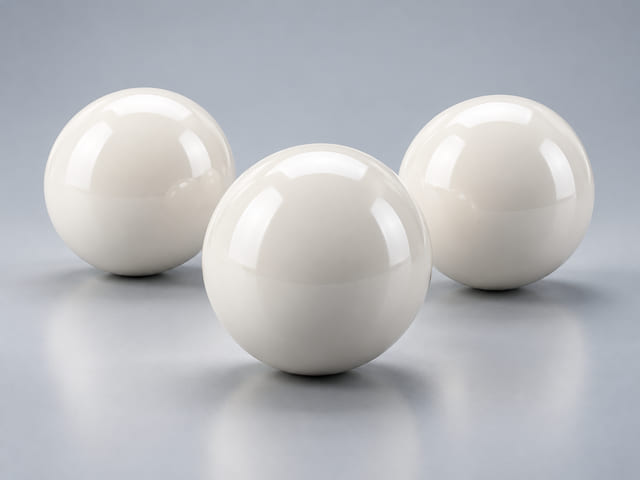
| Zirconia media candidate | Review a specified zirconia composition where process density and acceptable wear chemistry motivate an oxide-ceramic option. | Separate media quality from precision-component quality, and validate the formulation rather than assuming an inert white ceramic cannot contaminate it. |
| Alumina media candidate | Compare an alumina grade where the process and permitted wear chemistry may be met on a suitable commercial basis. | Confirm size distribution, breakage and process result under the same test; material-family claims are insufficient to rank media for every formulation. |
These links open the corresponding product pages in this collection. Final selection depends on your complete specification and the agreed validation.
Grinding & Burnishing Balls FAQs
Are grinding and burnishing the same process?
No. Grinding commonly describes particle reduction or abrasive material removal, while burnishing uses the defined contact to smooth or brighten a workpiece surface. State the actual objective and equipment. A spherical shape does not make media interchangeable between milling, abrasive finishing and non-abrasive surface treatment.
Can one ball material be used for every formulation?
No. The material, grade, density and wear chemistry must suit the product and process. Define acceptable contamination and the required particle or surface result. Use a representative trial rather than ranking media solely by hardness, appearance or a broad corrosion-resistance description.
Are stainless media automatically suitable for food contact?
No. The exact grade, manufacturing and cleaning route, intended contact and required documents must be reviewed. State the formulation, contact conditions and market requirements. A generic stainless designation or another supplier's application claim does not establish conformity of the proposed MEITUO media for a controlled-contact process.
Do burnishing balls remove material like abrasive media?
Their intended mechanism is different, so define the specific process rather than assuming equivalent stock removal. Record the surface goal and permitted dimensional change, then evaluate the workpiece after a representative trial. Brightness alone does not establish that the part still meets its geometric and surface requirements.
How should a media trial be evaluated?
Agree the starting condition and measurable target, then assess the relevant particle distribution or surface result alongside wear, contamination, breakage and separation. Keep the equipment and formulation representative. This creates a useful comparison between media proposals without importing an unrelated supplier's cycle time or claimed improvement.
What should a spherical-media enquiry include?
Provide process objective, equipment, formulation or workpiece, media grade and size distribution, quantity and target result. Add contamination, cleaning, regulated-contact documents and trial acceptance as needed. Clarify whether milling or surface finishing is intended so the proposed material and supply scope address the correct task.
Request a quotation
Turn the Grinding & Burnishing Balls requirements into a clear enquiry for MEITUO Balls.
- Define the material and geometry.
- Describe the application and acceptance.
- Separate sample and production demand.
The quotation confirms feasibility, supply scope, inspection documents and commercial terms. Generated illustrations are not evidence of available stock or completed validation.
Continue your material review
Engineering references and illustration notes
Material-family references support screening. The exact grade, finished geometry and application acceptance govern an actual enquiry.
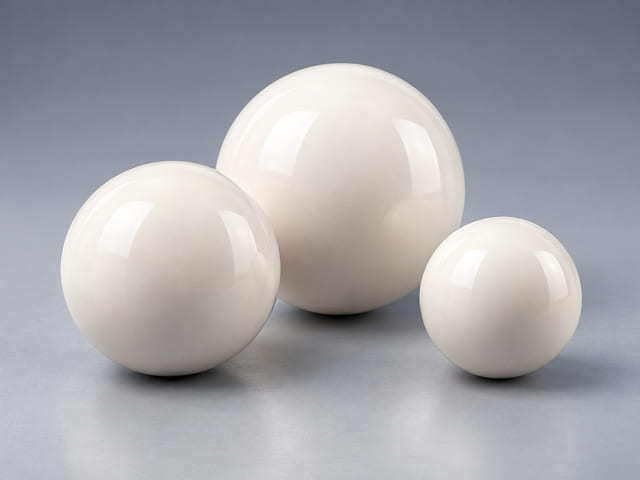
CGI illustrations explain product, application or structure concepts. They are not photographs, measured micrographs, assembly drawings or inspection results.