PTFE Balls
PTFE balls are fluoropolymer spheres considered for demanding fluid-contact and low-friction applications. Their chemical-resistance profile can be useful in selected valves and process equipment, but PTFE can deform under sustained contact and should not be specified from chemical compatibility alone. Confirm unfilled or filled compound, diameter and inspection method, seat geometry, fluid, temperature and leakage acceptance before approving the component.
- Material / construction
- PTFE; unfilled or a named filled compound
- Specification basis
- Drawing, diameter & acceptance
- Order basis
- Sample & production quantities
PTFE Balls: selection overview
PTFE offers a distinctive surface and chemical profile, but its relatively compliant contact changes how a sphere seats and recovers under load. This is why a PTFE replacement for a rigid metal, ceramic or engineering-polymer ball needs more than a matching nominal diameter. Filled PTFE compounds can change stiffness, wear, electrical behaviour and the acceptability of contact debris. State the exact formulation where relevant. Colour, smoothness or a broad temperature statement cannot substitute for the finished ball's material identity and its performance in the actual valve seat.
Match fluid compatibility to the exact exposure
List the process fluid, concentration, contaminants and cleaning cycle. Include temperature and exposure duration so the proposed compound can be checked for the complete operating condition. A compatibility chart is a useful screen, but it does not evaluate contact pressure or leakage. Where a filled compound is proposed, review the filler as well as the PTFE matrix, because the formulation and any exposed particles may affect chemistry, cleanliness or regulated-contact requirements.
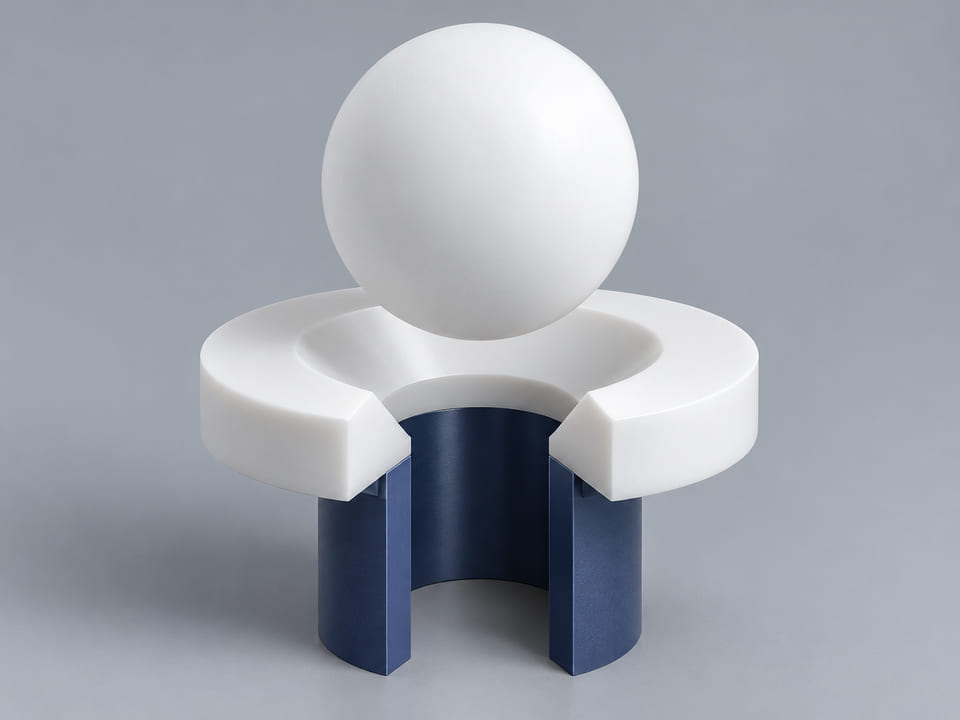
Specify creep and seating acceptance
Define the seat profile, contact width, pressure cycle and longest stationary dwell. PTFE may conform to a seat while also changing shape under sustained loading, so the useful acceptance test considers closing behaviour after dwell and recovery after unloading. Agree dimensional inspection conditions and measuring force. A tighter initial size limit is not a complete answer to a seal that changes under pressure, heat or repeated seating.
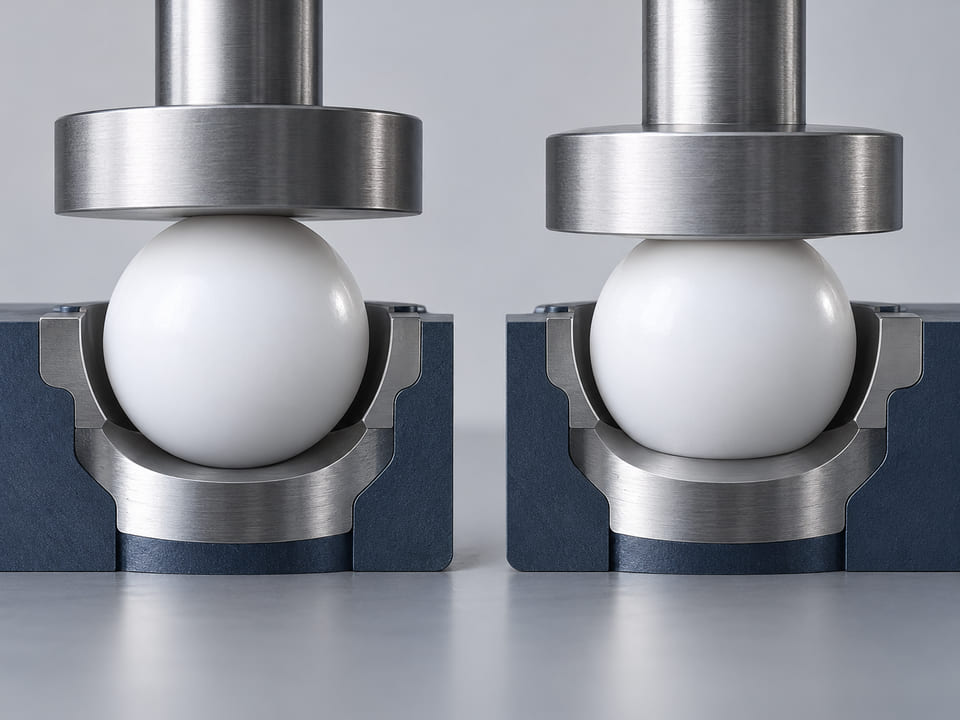
PTFE Balls specifications
Define the component using the requirements below. Include your target values and acceptance method; the quotation records the agreed material, geometry, inspection and supply scope.
| Requirement | What to specify | Why it matters |
|---|---|---|
| Compound identity | State unfilled PTFE or the exact filler and formulation required. | Fillers can change chemistry, contact, wear debris and electrical behaviour. |
| Seat geometry | Provide contact profile, width and mating material. | The interface controls local deformation and closure behaviour. |
| Load and dwell | Define pressure, temperature and the longest continuous loaded period. | Creep assessment needs time and temperature as well as peak load. |
| Acceptance after exposure | Specify leakage, movement and dimensional checks after a representative cycle. | Initial inspection does not establish performance after prolonged seating. |
Drawing and dimensional acceptance
Provide the drawing revision and nominal dimensions with units. Identify critical form, surface and fit requirements individually; a material designation alone does not define a finished component. Where an existing sample is the reference, describe wear and confirm the intended acceptance limits.
Order and inspection scope
Separate sample quantities from production demand. State the required inspection documents, lot identification, cleanliness and packaging. Any proposed substitute or change to the component specification should be reviewed before approval, with the quotation confirming the agreed scope.
Numeric performance values, when needed, must identify their material, conditions and evidence. Typical raw-material data should not be treated as guaranteed finished-component performance.
PTFE Balls applications
Start with the actual mechanism and exposure conditions. Each use below identifies the information needed for a useful technical review.
Chemical check valves
PTFE can be considered where the process medium makes other materials unsuitable. Test the exact ball-and-seat combination through operating and idle periods, including reverse pressure. The chemical review and the leakage review address different failure mechanisms and should remain distinct evidence items in the component approval.
Low-adhesion moving contacts
In a compatible low-load mechanism, the PTFE surface may be useful where adhesion or friction is a concern. Establish the counterface, debris and lubrication conditions. A simple material description cannot define friction for every contact, and wear or contamination may determine whether the proposed compound remains acceptable.
Clean fluid-processing assemblies
When purity or regulated contact matters, evaluate the exact formulation, surface cleaning and handling route. A chemically resistant material is not automatically a clean or compliant delivered component. Identify the evidence and packing requirements early, then validate samples using the actual installation and cleaning method.
Compare PTFE Balls alternatives
Compare the requirement that drives the decision. A matching nominal diameter or similar appearance does not establish material or functional equivalence.
| Alternative | When to review it | Tradeoff to assess |
|---|---|---|
| PVDF | Compare PVDF where the fluid permits it and a different balance of rigidity, abrasion behaviour and fluoropolymer chemistry is useful. | A successful material screen still needs a valve test; the replacement changes contact and mass as well as chemical response. |
| PEEK | Review PEEK when mechanical contact and dimensional behaviour drive a change from a comparatively compliant PTFE design. | Chemical suitability must be checked for the exact medium; mechanical advantages do not establish universal chemical equivalence. |
| POM / acetal | Compare acetal in milder compatible conditions where repeatable rigid contact and cost are more relevant than the PTFE surface profile. | Acetal is not a general chemical substitute for PTFE, so reassess fluid and cleaning compatibility before dimensional comparison. |
These links open the corresponding product pages in this collection. Final selection depends on your complete specification and the agreed validation.
PTFE Balls FAQs
Are PTFE balls suitable for every chemical?
No material should be approved from an unrestricted claim. PTFE has a useful chemical-resistance profile, but the exact medium, temperature and compound still need review. For filled grades, examine the filler and cleanliness requirements as well as the polymer matrix before defining the finished component's suitability.
Why do PTFE valve balls change contact shape?
PTFE can deform under sustained pressure, and temperature and dwell influence that response. Some conformity may help seating, but excessive change can affect movement or leakage. Specify the complete seat and cycle, then inspect performance after representative loading rather than only checking a fresh ball diameter.
Should I choose unfilled or filled PTFE?
Choose according to the mechanical, chemical, electrical and cleanliness requirements. A filler can change several characteristics at once, so it is not a simple universal upgrade. Identify its type and formulation, review the grade data and validate the finished ball under the actual contact and fluid conditions.
Can PTFE replace a stainless valve ball?
Only after the complete assembly is reviewed. PTFE changes mass, stiffness, thermal response and seat contact, even when the nominal diameter is unchanged. Confirm closure in the installed orientation, pressure and fluid conditions, including the longest idle period, before approving a direct replacement.
How should PTFE ball dimensions be inspected?
Agree the measuring temperature, conditioning, gauge method and contact force because the polymer can deform during measurement. Diameter and form limits should support the assembled function. If leakage or movement after dwell is the real acceptance criterion, include that test rather than relying solely on an unloaded dimensional result.
What information helps quote PTFE balls accurately?
Provide the compound, diameter and form requirements, quantity, seat drawing, medium and operating cycle. Add the required cleanliness, contact documentation and sample acceptance test. These details allow the material and production route to be reviewed without assuming a universal size range, certification, stock level or lead time.
Request a quotation
Turn the PTFE Balls requirements into a clear enquiry for MEITUO Balls.
- Define the material and geometry.
- Describe the application and acceptance.
- Separate sample and production demand.
The quotation confirms feasibility, supply scope, inspection documents and commercial terms. Generated illustrations are not evidence of available stock or completed validation.
Continue your material review
Engineering references and illustration notes
Material-family references support screening. The exact grade, finished geometry and application acceptance govern an actual enquiry.
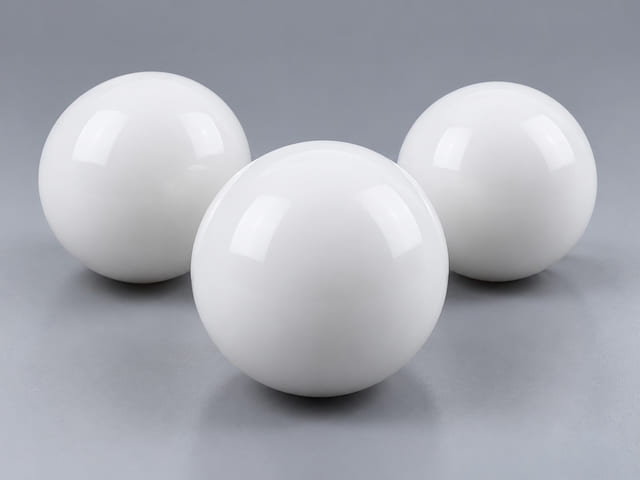
CGI illustrations explain product, application or structure concepts. They are not photographs, measured micrographs, assembly drawings or inspection results.