Threaded Steel Balls
Threaded balls are metal spheres with a tapped hole for mounting on a rod, lever or fixture. They are used in handles, adjustment mechanisms and custom tooling where a spherical exterior serves a defined mechanical purpose. Specify the thread standard, pitch, hole depth, orientation and remaining wall together with the ball diameter. Material, surface finish and attachment loads require review before quotation.
- Material / construction
- Specified steel or stainless steel
- Specification basis
- Drawing, diameter & acceptance
- Order basis
- Sample & production quantities
Threaded Steel Balls: selection overview
The critical interface in a threaded ball is often inside the sphere. Two balls can look identical while using different pitches, thread classes or blind-hole depths. A diameter-only enquiry therefore misses the feature that makes the component useful. The spherical exterior may be a hand contact, a locating surface or a clearance envelope, and those uses require different finish criteria. A tapped ball is also different from a ball stud: identify whether the male threaded part belongs to the customer assembly or must be included in the quoted component scope.
Define the internal thread completely
State the applicable thread standard, nominal size, pitch, class and usable engagement length. Distinguish drill depth from fully formed thread depth on a blind hole. If the mating screw is already fixed, provide its specification and the required shoulder or bottoming clearance. The remaining material at the hole bottom and the entrance condition belong on the drawing where they matter to assembly. Avoid relying on a photograph to identify metric versus inch threads.
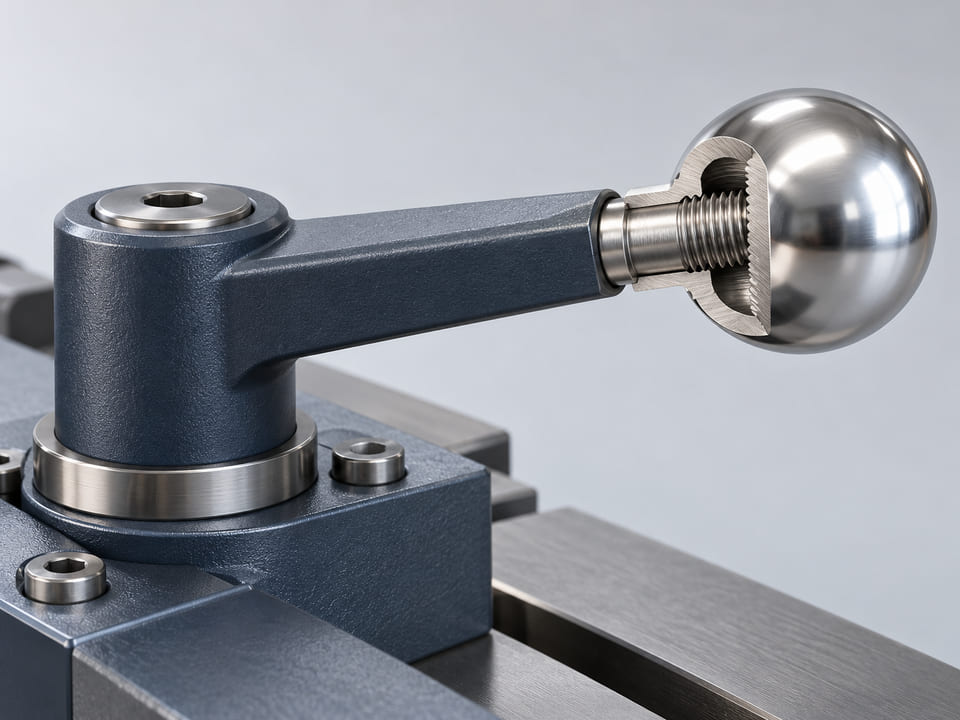
Control the relationship to the spherical exterior
Decide whether the hole axis, opening location or a surrounding spotface must align to a datum. A lever handle may need a comfortable exterior and secure engagement, while a fixture ball may require a specified contact region free from machining marks. Include any coating after machining because it can affect both the thread fit and the surface. Explain loads and fastening arrangements for review without treating a decorative mounting ball as a rated lifting component.
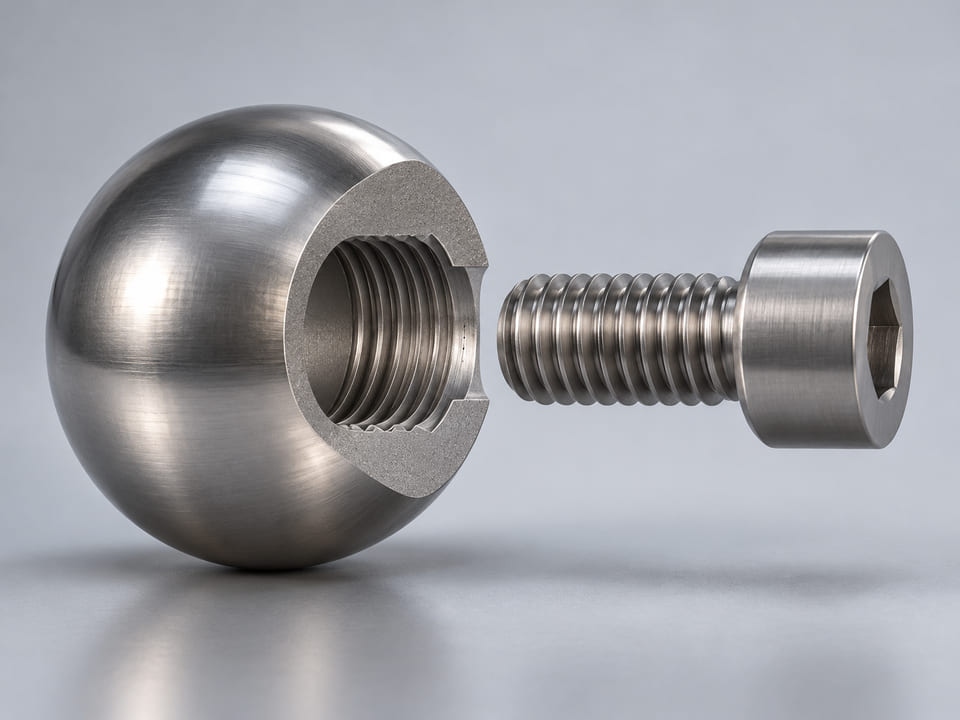
Threaded Steel Balls specifications
Define the component using the requirements below. Include your target values and acceptance method; the quotation records the agreed material, geometry, inspection and supply scope.
| Requirement | What to specify | Why it matters |
|---|---|---|
| Thread identity | Standard, diameter, pitch, fit class and mating part. | Similar-looking threads may not assemble correctly. |
| Hole depth | Drill depth, usable thread depth and bottom clearance. | Usable engagement is different from total cavity depth. |
| Geometry relationship | Hole axis, opening position, spotface and spherical datums. | Mounting alignment can control the mechanism. |
| Finish and assembly | Material, coating, contact finish and retaining method. | Finishing and assembly can affect fit and appearance. |
Drawing and dimensional acceptance
Provide the drawing revision and nominal dimensions with units. Identify critical form, surface and fit requirements individually; a material designation alone does not define a finished component. Where an existing sample is the reference, describe wear and confirm the intended acceptance limits.
Order and inspection scope
Separate sample quantities from production demand. State the required inspection documents, lot identification, cleanliness and packaging. Any proposed substitute or change to the component specification should be reviewed before approval, with the quotation confirming the agreed scope.
Numeric performance values, when needed, must identify their material, conditions and evidence. Typical raw-material data should not be treated as guaranteed finished-component performance.
Threaded Steel Balls applications
Start with the actual mechanism and exposure conditions. Each use below identifies the information needed for a useful technical review.
Machine adjustment handles
A spherical handle can provide a simple gripping surface on a mechanical lever. The mounting thread must match the rod and provide the intended engagement without bottoming prematurely. State the visible finish and explain whether assembly uses a locknut, adhesive or another approved retaining method.
Tooling and fixtures
A tapped ball may form part of a locating or adjustment fixture where its exterior contacts another component. Identify the actual contact region and its dimensional limits. The internal mounting feature and external sphere must be specified as a combined part rather than separately approved shapes.
Custom OEM mechanisms
A customer drawing can define a threaded sphere as one element of a larger mechanism. Clarify whether the quote covers the ball only or an assembled stud. Provide the required finish sequence and inspection access, particularly when the internal feature becomes inaccessible after assembly.
Compare Threaded Steel Balls alternatives
Compare the requirement that drives the decision. A matching nominal diameter or similar appearance does not establish material or functional equivalence.
| Alternative | When to review it | Tradeoff to assess |
|---|---|---|
| Unhardened steel balls | Compare a plain soft steel sphere when a separate joining or forming operation is preferred over a tapped mount. | Welding or forming changes the assembly route; it does not provide the removable interface of an internal thread. |
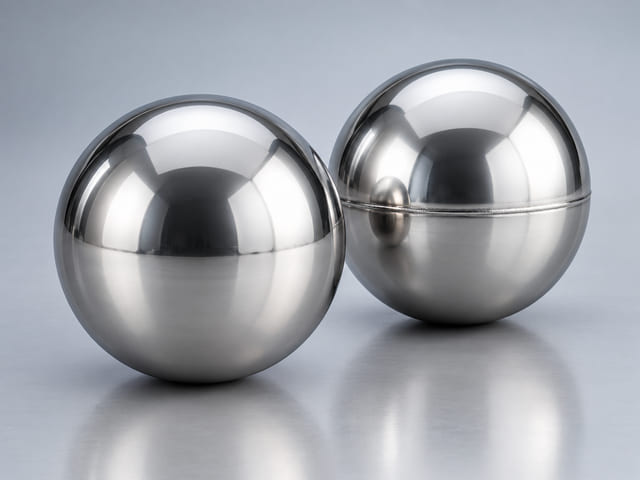
| Hollow stainless balls | Consider shell construction when mass or decorative scale is more important than a deep tapped solid mount. | A thin shell needs a separate boss or attachment design before it can accept the same threaded connection. |
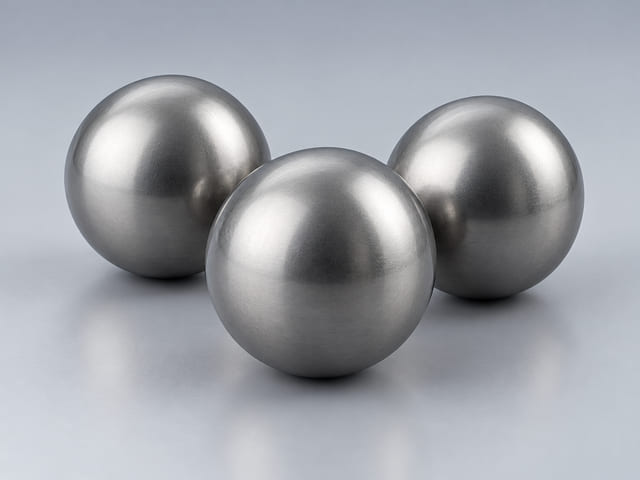
| Plain stainless spheres | Choose a plain stainless ball when the spherical surface is the entire purchased component and no internal mount is required. | A thread added later changes the part scope, machining risks and the surface acceptance requirements. |
These links open the corresponding product pages in this collection. Final selection depends on your complete specification and the agreed validation.
Threaded Steel Balls FAQs
Is a threaded ball the same as a ball stud?
No. A threaded ball in this range has an internal tapped feature, while a ball stud normally includes a projecting male part. Describe the required assembly and include the mating drawing. The quotation should explicitly state whether a rod or stud is included.
Which thread information is needed?
Provide the standard, diameter, pitch, class and usable engagement length. For a blind hole, identify total drill depth separately from fully formed thread depth. Include the mating screw specification if fit or bottoming clearance is important to the completed assembly.
Can the thread be inferred from a sample?
A sample supports identification, but wear, plating and damage may affect the result. Give any original specification and explain which interfaces are critical. Dimensional review should establish the intended thread and acceptance method before a replacement is approved for the mechanism.
Can I specify stainless steel?
Yes, identify the required alloy or the service conditions for review. Stainless selection should account for the environment and the mating fastener as well as appearance. A stainless name alone does not establish a load rating or resistance to every cleaning fluid.
Does polishing affect the hole?
External polishing and internal thread finishing are separate requirements, but finishing sequence can affect cleanliness and fit. State whether the hole entrance, burr condition and thread protection are important. Include coating thickness or masking requirements if a later finish changes the assembly interface.
What is needed for a firm component quotation?
Supply the drawing revision, sphere diameter, material, thread callout, usable depth, quantities and finish. Add any critical orientation, contact area and inspection method. This defines a machinable component more clearly than a ball diameter combined with a photograph of the mounting rod.
Request a quotation
Turn the Threaded Steel Balls requirements into a clear enquiry for MEITUO Balls.
- Define the material and geometry.
- Describe the application and acceptance.
- Separate sample and production demand.
The quotation confirms feasibility, supply scope, inspection documents and commercial terms. Generated illustrations are not evidence of available stock or completed validation.
Continue your material review
Engineering references and illustration notes
Material-family references support screening. The exact grade, finished geometry and application acceptance govern an actual enquiry.
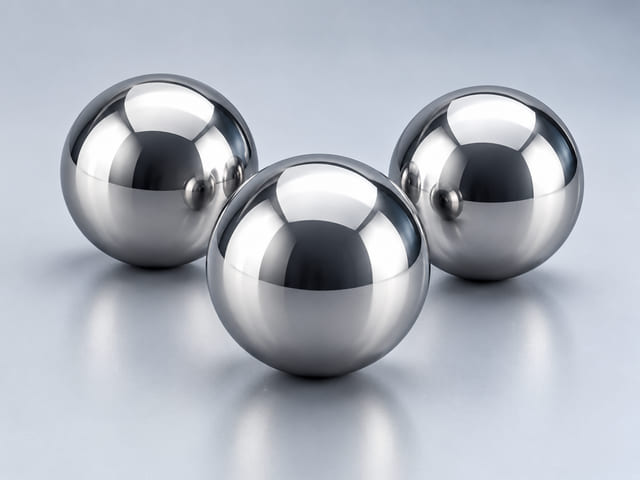
CGI illustrations explain product, application or structure concepts. They are not photographs, measured micrographs, assembly drawings or inspection results.