Soft Unhardened Carbon Steel Balls
Soft unhardened carbon steel balls are low-carbon steel spheres specified without a hardened case or through-hardened bearing condition. They are considered for welding, forming, staking and components where controlled deformation is useful. Confirm the exact steel, supplied condition, diameter and downstream operation before ordering. Their lower hardness changes indentation and wear behavior, so they should not replace hardened rolling elements without an engineering review.
- Material / construction
- Low-carbon steel in an explicitly unhardened condition
- Specification basis
- Drawing, diameter & acceptance
- Order basis
- Sample & production quantities
Soft Unhardened Carbon Steel Balls: selection overview
Soft is a material condition rather than a precise purchasing specification. A drawing may need an annealed or otherwise controlled state, a hardness range and evidence that an unintended hardened skin is absent. The ball's main value can be its ability to accept a subsequent joining or forming operation. That operation may also change size, roundness, surface appearance or local hardness. For this reason, an attractive polished incoming sphere is only one step in the component process. Plan the acceptance of both the supplied ball and the assembled part, including corrosion protection around the joint.
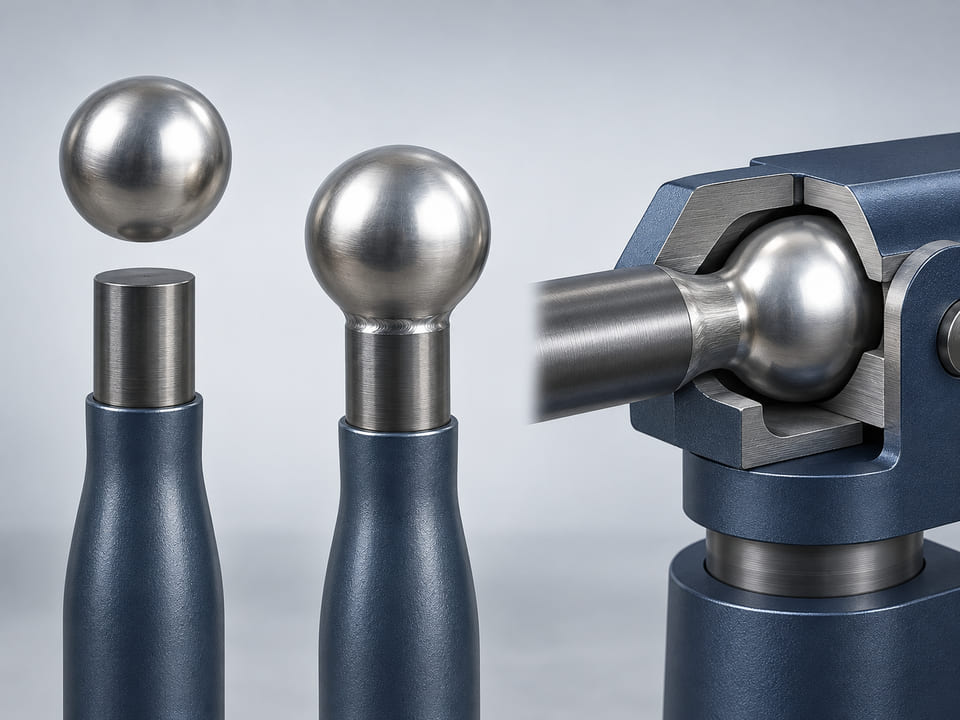
Plan the weld or forming operation before the finish
Describe the joining process, mating material and required joint function before selecting oil, coating or final polish. A protective surface suitable for transport may be unsuitable at the joint or may require removal. If the sphere will be machined, pressed or flattened, share the expected deformation and final geometry. Sample validation should address both process repeatability and the surface condition remaining after the operation, rather than appearance alone before assembly.
Separate low hardness from low inspection demand
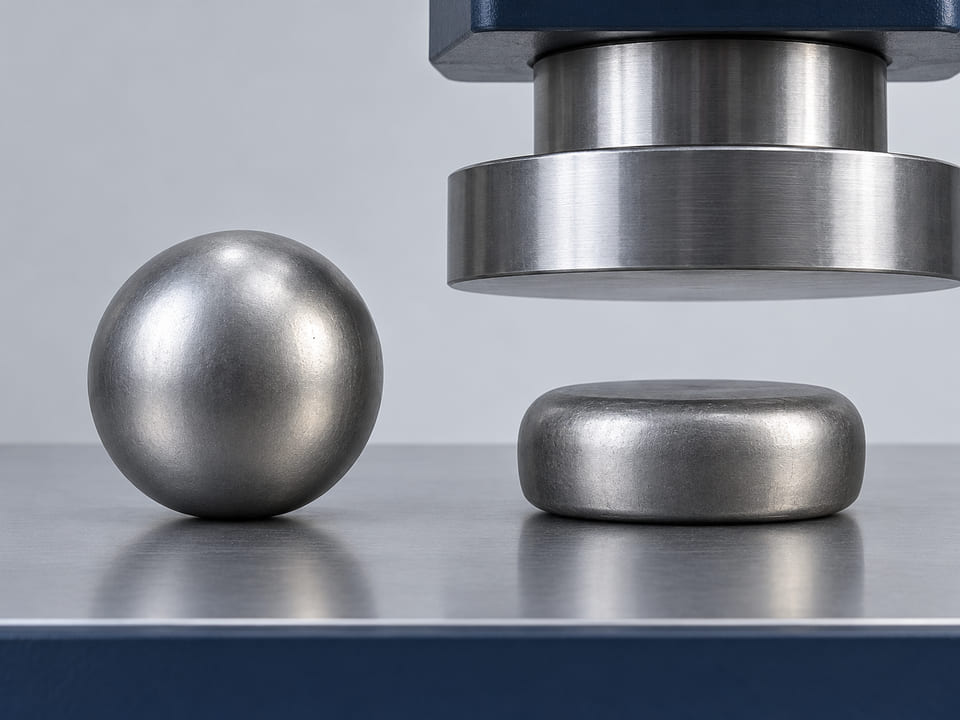
An unhardened sphere can still require controlled diameter, form and cleanliness. Specify the incoming geometry that the assembly needs, then decide whether any deformation during joining is acceptable. If a hardness limit is important to the process, agree on how it will be checked on the curved part. A general request for soft steel should not be used as a substitute for a measurable condition or an approved sample process.
Soft Unhardened Carbon Steel Balls specifications
Define the component using the requirements below. Include your target values and acceptance method; the quotation records the agreed material, geometry, inspection and supply scope.
| Requirement | What to specify | Why it matters |
|---|---|---|
| Unhardened condition | Specify the material state and any maximum hardness or annealing requirement. | Makes formability review more useful than the word soft alone. |
| Joining preparation | Describe allowable oil, coating, cleaning and surface residue. | Prevents transport protection interfering with the subsequent joint. |
| Incoming geometry | Define size, form and visual criteria before deformation. | Creates a measurable receiving basis for the ball itself. |
| Post-assembly criteria | State joint strength, final geometry and appearance requirements. | Ensures the selected condition serves the actual component process. |
Drawing and dimensional acceptance
Provide the drawing revision and nominal dimensions with units. Identify critical form, surface and fit requirements individually; a material designation alone does not define a finished component. Where an existing sample is the reference, describe wear and confirm the intended acceptance limits.
Order and inspection scope
Separate sample quantities from production demand. State the required inspection documents, lot identification, cleanliness and packaging. Any proposed substitute or change to the component specification should be reviewed before approval, with the quotation confirming the agreed scope.
Numeric performance values, when needed, must identify their material, conditions and evidence. Typical raw-material data should not be treated as guaranteed finished-component performance.
Soft Unhardened Carbon Steel Balls applications
Start with the actual mechanism and exposure conditions. Each use below identifies the information needed for a useful technical review.
Welded handles and hardware
A soft low-carbon sphere can be evaluated as an end fitting or contact feature joined to another steel component. Material compatibility, preparation and the joint design govern the result. The weld must be validated for its intended service rather than inferred from the ball's grade.
Staked and formed assemblies
Controlled deformation may help retain a sphere or create a functional feature. Define the movement of material and the acceptable final outline. A hardened alternative can respond very differently under the same tooling, so the supplied condition needs clear identification.
Low-load locating or spacing
Where the sphere locates or spaces another component, the designer may accept some contact marking in exchange for a formable material. Evaluate contact pressure and long-term indentation. If the assembly requires repeated wear resistance, compare a hardened option.
Compare Soft Unhardened Carbon Steel Balls alternatives
Compare the requirement that drives the decision. A matching nominal diameter or similar appearance does not establish material or functional equivalence.
| Alternative | When to review it | Tradeoff to assess |
|---|---|---|
| Case-hardened low-carbon steel | Compare when surface wear becomes more important than downstream formability and a hardened outer layer suits the mechanical duty. | A hardened skin changes welding and forming behavior; it is not an automatic substitute for an explicitly unhardened sphere. |
| AISI 1085 high-carbon steel | Review a through-hardened alternative for a component whose priority has shifted toward wear-resistant contact rather than deliberate plastic deformation. | Its high-carbon, hardened condition changes joining and fracture considerations, so reconsider the assembly process as well as ball size. |
| 302/304/304L stainless steel | Consider an austenitic stainless family when corrosion behavior drives the design and the joining or forming route can be requalified. | Stainless material has a different forming and welding specification; approve the exact grade and post-process surface condition. |
These links open the corresponding product pages in this collection. Final selection depends on your complete specification and the agreed validation.
Soft Unhardened Carbon Steel Balls FAQs
Are soft steel balls suitable for welding?
They can be considered, but the complete joining procedure needs approval. Provide the exact grade, mating material, surface preparation and joint requirement. A formable low-carbon composition helps define the review; it does not guarantee a satisfactory weld.
Can I machine an unhardened ball?
Potentially, with a fixture and process suitable for a spherical part. Specify the stock material, condition and finished feature. Holding, deformation and loss of roundness may matter as much as tool access, particularly for small or thin features.
Are these balls bearing steel?
This product is explicitly an unhardened low-carbon selection. It should not be described as a through-hardened bearing ball. Where rolling fatigue or wear resistance matters, compare an appropriate hardened steel and review the complete contact design.
Will a polished soft ball keep its shape under load?
That depends on the material state and contact stresses. A polished surface does not prevent indentation or deformation. State the load, mating-seat shape and acceptable marking; use an assembly test if small geometry changes affect function.
Can a case-hardened ball be substituted?
Only after reviewing the downstream process and contact function. The hardened surface can materially alter forming, staking, machining and joining behavior. Keep the unhardened condition explicit on the drawing and purchase requirements to avoid an accidental substitution.
What should I send with an enquiry?
Provide the intended process, exact material if known, initial diameter, final component drawing and required condition. Add quantity, surface preparation and whether corrosion protection must be removed before assembly. These details help define a useful sample evaluation.
Request a quotation
Turn the Soft Unhardened Carbon Steel Balls requirements into a clear enquiry for MEITUO Balls.
- Define the material and geometry.
- Describe the application and acceptance.
- Separate sample and production demand.
The quotation confirms feasibility, supply scope, inspection documents and commercial terms. Generated illustrations are not evidence of available stock or completed validation.
Continue your material review
Engineering references and illustration notes
Material-family references support screening. The exact grade, finished geometry and application acceptance govern an actual enquiry.
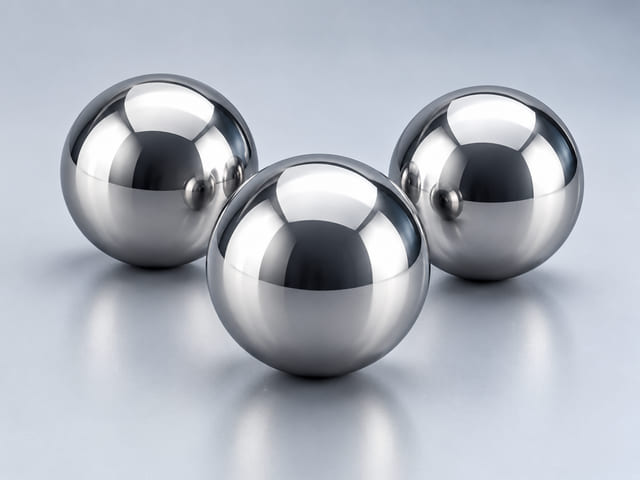
CGI illustrations explain product, application or structure concepts. They are not photographs, measured micrographs, assembly drawings or inspection results.