AISI 1085 Carbon Steel Balls
AISI 1085 carbon steel balls are high-carbon steel spheres considered where a hardened bulk material and wear resistance are needed in mechanical components. They differ from low-carbon case-hardened balls because the specified treatment can harden through the section. Confirm the finished hardness, diameter, form, surface condition and contact duty before ordering. They remain carbon steel and require an appropriate approach to corrosion protection.
- Material / construction
- AISI 1085 high-carbon steel; final heat-treatment condition subject to specification
- Specification basis
- Drawing, diameter & acceptance
- Order basis
- Sample & production quantities
AISI 1085 Carbon Steel Balls: selection overview
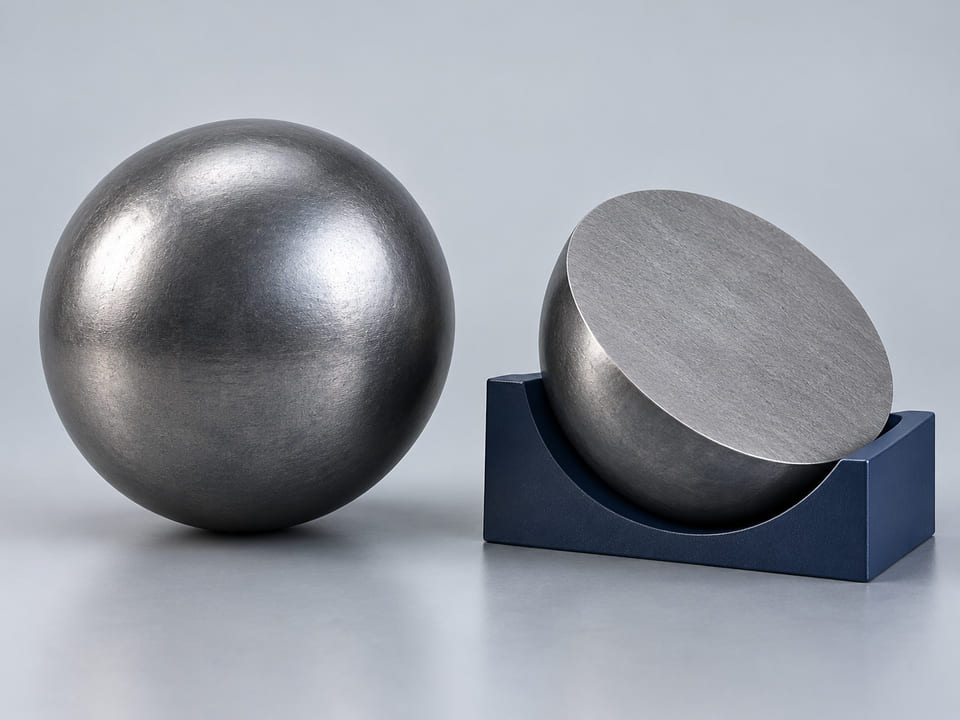
For AISI 1085 balls, composition and heat treatment work together. A high-carbon designation creates the potential for a hardened structure; it does not prove that a finished sphere received the correct cycle or achieved a particular hardness. Through-hardening also distinguishes the selection problem from a soft core protected by a thin hard case. The design should account for indentation, wear, contact fatigue and impact rather than treating higher hardness as an unconditional benefit. Water, aggressive cleaners and humid storage remain relevant because this alloy is not stainless steel.
Through-hardening must match the contact duty
State whether through-hardening is required and identify the hardness test and acceptance limits. Review the load path and the expected number of contacts with the component designer. If the ball is subject to impact or an operation involving staking, the appropriate balance of hardness and resistance to fracture needs specific review. Do not transfer a value from a raw-steel datasheet directly to a ball without confirming treatment and measurement conditions.
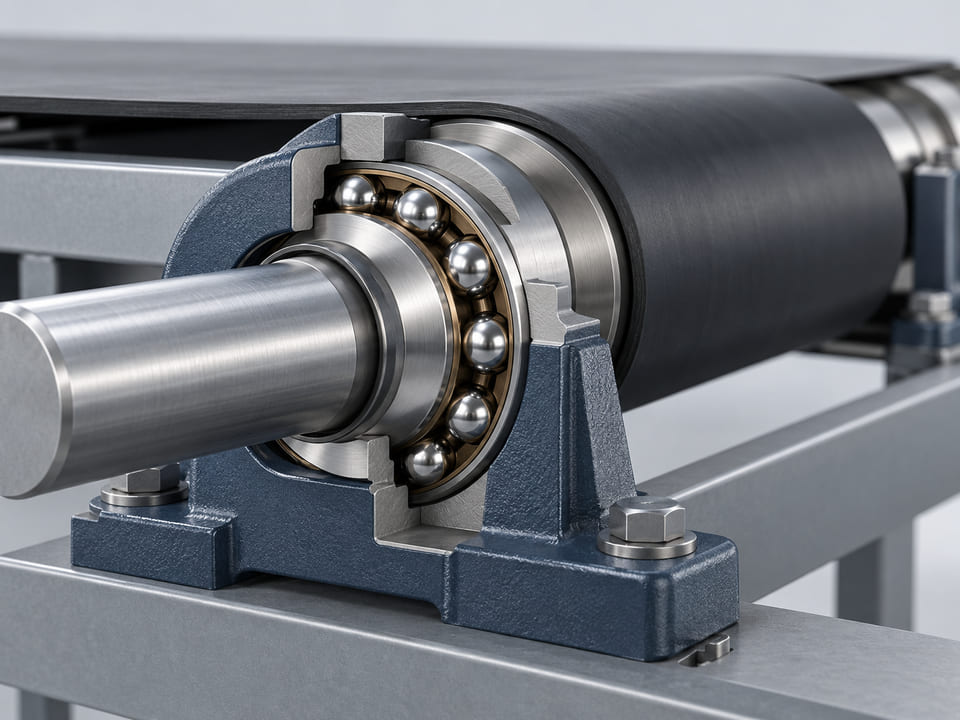
Keep surface finish and fatigue requirements distinct
A smooth finish helps the contact perform as intended, but surface appearance alone cannot establish fatigue life. Describe any roundness, diameter variation or defect limits that the assembly needs. If the mechanism resembles a bearing, include its raceway hardness, lubrication and contamination conditions. This allows a meaningful comparison with bearing-oriented chrome steel instead of a quotation based only on a nominal ball diameter and a broad request for high precision.
AISI 1085 Carbon Steel Balls specifications
Define the component using the requirements below. Include your target values and acceptance method; the quotation records the agreed material, geometry, inspection and supply scope.
| Requirement | What to specify | Why it matters |
|---|---|---|
| Steel identity | Specify AISI 1085 and the governing material reference. | Avoids an unspecified high-carbon substitute. |
| Through-hardening | Define treatment condition, hardness method and any metallurgical evidence. | Relates the bulk structure to contact and impact requirements. |
| Contact geometry | Provide diameter, ball-grade or explicit form limits and seat details. | Controls repeated contact rather than nominal size alone. |
| Surface preservation | Confirm corrosion protection, cleanliness and packing conditions. | Prevents rust while respecting the assembly's contamination limits. |
Drawing and dimensional acceptance
Provide the drawing revision and nominal dimensions with units. Identify critical form, surface and fit requirements individually; a material designation alone does not define a finished component. Where an existing sample is the reference, describe wear and confirm the intended acceptance limits.
Order and inspection scope
Separate sample quantities from production demand. State the required inspection documents, lot identification, cleanliness and packaging. Any proposed substitute or change to the component specification should be reviewed before approval, with the quotation confirming the agreed scope.
Numeric performance values, when needed, must identify their material, conditions and evidence. Typical raw-material data should not be treated as guaranteed finished-component performance.
AISI 1085 Carbon Steel Balls applications
Start with the actual mechanism and exposure conditions. Each use below identifies the information needed for a useful technical review.
Wear-sensitive hardware
A hardened high-carbon sphere can be considered for repeated mechanical contacts where an unhardened ball would indent or wear excessively. The mating surface must also be suitable. An exceptionally hard ball working against a soft track can shift damage into the surrounding component.
Rolling mechanisms and guides
AISI 1085 is a candidate for selected rolling components when the required geometry, treatment and surface quality can be specified together. Check how lubricant and protective oil interact with the assembly. Application validation should include realistic contact and contamination conditions.
Industrial locating components
For a ball used as a repeatable contact or locator, local indentation and wear may be more important than a general industry label. Include the mating-seat geometry and whether a static load remains applied for long periods. Evaluate marking of both contact surfaces.
Compare AISI 1085 Carbon Steel Balls alternatives
Compare the requirement that drives the decision. A matching nominal diameter or similar appearance does not establish material or functional equivalence.
| Alternative | When to review it | Tradeoff to assess |
|---|---|---|
| Case-hardened low-carbon steel | Compare a case-hardened economical option when the required contact can be supported by its hardened layer and the core response is suitable. | The hardened case and core are different from a through-hardened structure; define acceptance for the actual load path. |
| AISI 52100 chrome steel | Review bearing steel when the purchasing requirement focuses on rolling-contact fatigue, bearing material cleanliness and demanding dimensional control. | An alloy designation alone still cannot establish fatigue life; compare finished-ball treatment, inspection and the complete bearing environment. |
| 440C stainless steel | Consider a hardenable stainless option when the design combines wear-oriented contacts with an environment that challenges protected carbon steel. | Stainless corrosion behavior depends on chemistry, treatment and exposure; a material change needs application and cost review. |
These links open the corresponding product pages in this collection. Final selection depends on your complete specification and the agreed validation.
AISI 1085 Carbon Steel Balls FAQs
How does 1085 differ from 1010/1015 balls?
1085 is a high-carbon steel, while 1010/1015 are low-carbon grades commonly considered for case-hardened or soft-ball roles. Compare the actual treatment and contact requirements; the carbon designation does not independently specify the finished hardness.
Does through-hardened mean unbreakable?
No. A hardened sphere still needs to be assessed for impact, defects and the surrounding contact geometry. Hardness does not replace a toughness or functional-validation requirement, particularly where the component can experience shock or misalignment.
Is 1085 chrome steel?
No. AISI 1085 and AISI 52100 are distinct steel selections. If a drawing specifies bearing chrome steel, obtain approval before substituting a high-carbon grade. Finished geometry, treatment and material evidence remain relevant to either choice.
Can I request a ball grade without a hardness value?
You can specify geometry separately, but a complete purchase specification should also define the required material condition. Ball grade addresses geometrical characteristics; it does not automatically state the steel's heat-treatment result or contact suitability.
What environments require additional review?
Wet exposure, aggressive cleaning and humid storage require a corrosion-protection plan. Include any oil-free, staining or cleanliness requirement. The proposed protective condition should be checked against the assembled mechanism instead of assumed compatible with every application.
What information helps compare quotations?
Use the same steel identity, treatment, hardness acceptance, dimensional criteria and protection requirements for each quotation. Include sample and production quantities plus the mating-contact description; otherwise, apparently similar prices may represent different finished components.
Request a quotation
Turn the AISI 1085 Carbon Steel Balls requirements into a clear enquiry for MEITUO Balls.
- Define the material and geometry.
- Describe the application and acceptance.
- Separate sample and production demand.
The quotation confirms feasibility, supply scope, inspection documents and commercial terms. Generated illustrations are not evidence of available stock or completed validation.
Continue your material review
Engineering references and illustration notes
Material-family references support screening. The exact grade, finished geometry and application acceptance govern an actual enquiry.
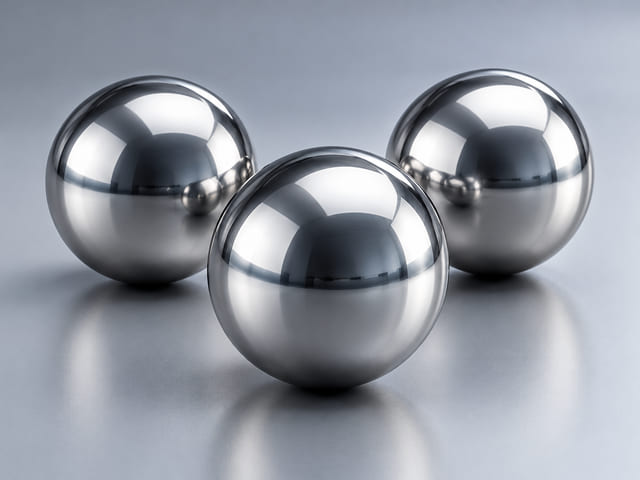
CGI illustrations explain product, application or structure concepts. They are not photographs, measured micrographs, assembly drawings or inspection results.