Motion & handling
Load Balls for Ball Transfer Units
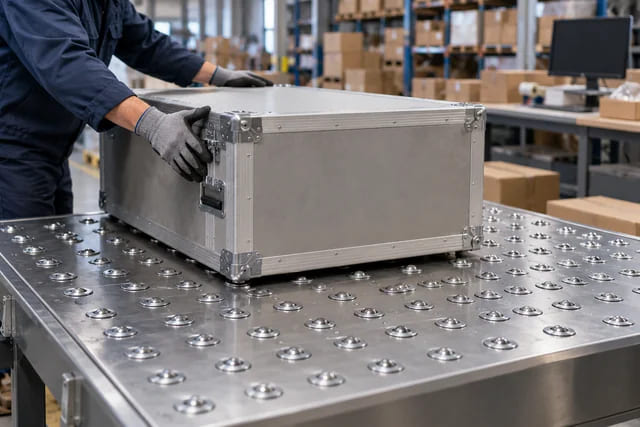
Main load balls, supporting balls and the surface being handled.
Seven families, connected to the application.
Explore all products →Share the drawing, contact conditions and acceptance criteria for your component.
Material selection guide →Explore the contact, medium and mechanism.
All applications →Share the drawing, contact conditions and acceptance criteria for your component.
Material selection guide →From an open material question to an agreed component requirement.
Explore services →Share the drawing, contact conditions and acceptance criteria for your component.
Material selection guide →Industry and sourcing guides for twelve target markets.
Explore all markets →Share the drawing, contact conditions and acceptance criteria for your component.
Material selection guide →Match the component programme, purchasing role and project responsibilities.
Explore partnerships →Share the drawing, contact conditions and acceptance criteria for your component.
Material selection guide →Corporate background, practical purchasing information and direct contact.
Explore company →Share the drawing, contact conditions and acceptance criteria for your component.
Material selection guide →Caster balls support rolling contact within a swivel head or wheel-bearing arrangement. Select around the raceway design, load distribution, lubrication and exposure to moisture or debris. Carbon steel, bearing steel and suitable stainless materials should be compared against the complete caster’s operating and acceptance requirements.
A swivel head changes the direction of a caster, while the wheel rotates about its axle. Both can contain rolling elements, but the races, ball sizes and working conditions may differ. Identify exactly where the requested balls operate.
For industrial trolleys and mobile fixtures, describe starts, turns, floor joints and washdown or outdoor exposure. The operating pattern helps explain why a nominally similar caster may have a different wear or corrosion requirement. Do not derive a caster load rating from the ball material alone.
Use these inputs to move from an application name to a useful component and supply enquiry.
| Selection input | Describe your conditions | Why it belongs in the enquiry |
|---|---|---|
| Raceway arrangement | Swivel race or wheel bearing, with drawing and ball count where defined. | Confirm diameter, race contact and assembly retention. |
| Duty and handling | Repeated turns, impacts, travel and periods of standing. | Provide the intended duty rather than only total trolley weight. |
| Environment | Dust, water, cleaning agents, grease and storage. | Review the material and protection of all contacting parts. |
Keep the purchasing specification aligned with the caster drawing. Ask whether the balls are supplied loose, in a retainer or as part of a larger approved subassembly. The delivery form affects handling and receiving inspection.
For a change of material, review both the ball and the race. A corrosion-resistant ball does not make the complete swivel corrosion resistant if the race, fasteners or lubrication system are unsuitable for the environment.
| Material or product candidate | Why review it here? | What must be confirmed? |
|---|---|---|
| Carbon Steel Balls | A material family to review for cost-sensitive mechanical assemblies. | Specify the exact steel and required surface or hardness condition. |
| AISI 52100 Chrome Steel Balls | Review where the race design requires hardened bearing-steel contact. | Confirm the lubrication and corrosion-protection strategy. |
| 440C Stainless Steel Balls | A candidate where hardened stainless contact is required. | Assess the actual cleaning medium and mating raceway. |
These are application-review candidates. The exact grade, finished specification, supply scope and documents are confirmed in the quotation.
Evaluate the complete caster through representative swivel and travel cycles. Inspect ball and race surfaces after the trial, and record the lubrication, applied load arrangement and exposure conditions used.
Avoid this assumption. A quiet unloaded swivel test does not establish loaded service behavior.
No. The wheel diameter does not identify the swivel race or its rolling elements. Use the component drawing or the exact ball specification.
Review the complete caster materials, cleaning conditions and lubrication. The ball is only one exposed component.
No. Identify the exact material and condition required by the race design and acceptance specification.
Use a related function to compare requirements without assuming the same ball specification applies.
Main load balls, supporting balls and the surface being handled.
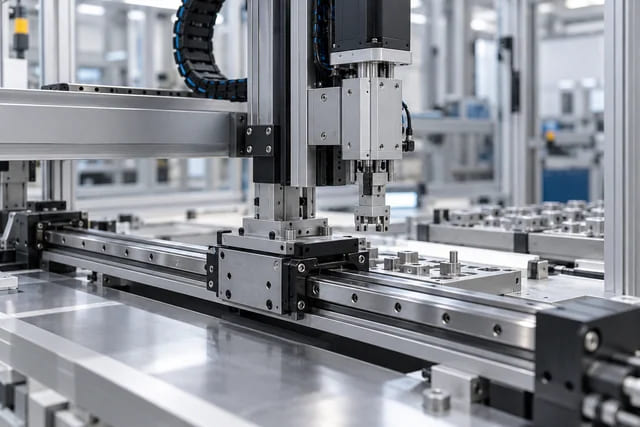
Ball recirculation, clearance and surface acceptance for guided motion.
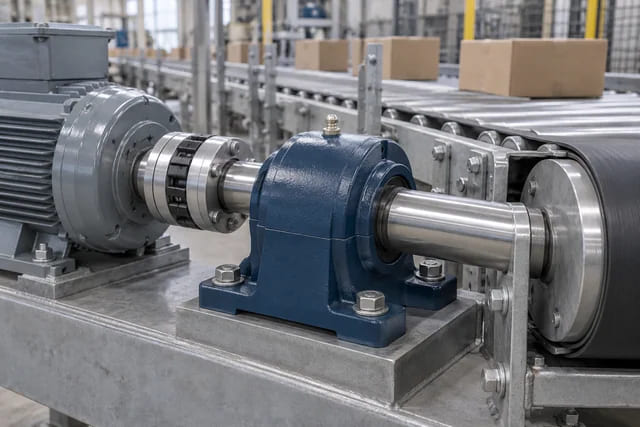
Rolling contact, geometry and material condition for bearing assemblies.
Bring the material, size, operating conditions and quantity. Include the drawing and validation topics that matter to this project.
ALWAYSE ball-transfer product and material overview · THK transport-system component overview
References describe industry practice and material-selection context. They do not establish MEITUO stock, equipment ownership, qualification or performance.