Motion & handling
Bearing & Rolling-Element Balls
Rolling contact, geometry and material condition for bearing assemblies.
Seven families, connected to the application.
Explore all products →Share the drawing, contact conditions and acceptance criteria for your component.
Material selection guide →Explore the contact, medium and mechanism.
All applications →Share the drawing, contact conditions and acceptance criteria for your component.
Material selection guide →From an open material question to an agreed component requirement.
Explore services →Share the drawing, contact conditions and acceptance criteria for your component.
Material selection guide →Industry and sourcing guides for twelve target markets.
Explore all markets →Share the drawing, contact conditions and acceptance criteria for your component.
Material selection guide →Match the component programme, purchasing role and project responsibilities.
Explore partnerships →Share the drawing, contact conditions and acceptance criteria for your component.
Material selection guide →Corporate background, practical purchasing information and direct contact.
Explore company →Share the drawing, contact conditions and acceptance criteria for your component.
Material selection guide →Linear-guide balls roll between rail and carriage raceways, with recirculation in many guide designs. Their size consistency, form and surface condition must match the guide’s clearance or preload concept. Specify the complete ball requirement and review it with the guide geometry, lubrication and travel cycle.
A recirculating guide routes balls through loaded raceways and a return path. Smooth travel therefore depends on more than one contact point: ball size, race geometry, return features, lubrication and assembly condition work together.
Distinguish a precision linear guide from a light-duty furniture slide. Both may use balls, but their functional requirements, contact arrangement and inspection basis can be very different. Provide the actual mechanism rather than a generic request for slide balls.
Use these inputs to move from an application name to a useful component and supply enquiry.
| Selection input | Describe your conditions | Why it belongs in the enquiry |
|---|---|---|
| Fit concept | Specified clearance, preload or matching requirement. | Use the guide manufacturer’s drawing or the design authority’s limits. |
| Travel cycle | Stroke, direction changes, dwell and operating speed. | Describe the cycle and contamination conditions relevant to the guide. |
| Geometry and surface | Diameter consistency, form and finish. | State acceptance limits and any lot-sorting or matching requirement. |
Do not increase the ball diameter simply to remove play. A change affects the contact and assembly behavior and needs to follow the approved guide design. Provide the required limits rather than reverse-engineering preload from a worn sample.
For repeat supply, retain the approved drawing revision and the agreed size-distribution requirements. Receiving inspection should identify the lot and use the same measurement basis established for sample acceptance.
| Material or product candidate | Why review it here? | What must be confirmed? |
|---|---|---|
| AISI 52100 Chrome Steel Balls | A bearing-steel candidate for hardened rolling-contact guides. | Confirm size grouping and the required condition. |
| 440C Stainless Steel Balls | Review for suitable stainless rolling-element designs. | Corrosion exposure must be balanced with contact requirements. |
| Silicon Nitride Balls | A specialist candidate when the guide design explicitly supports it. | Changing material needs a system-level contact and clearance review. |
These are application-review candidates. The exact grade, finished specification, supply scope and documents are confirmed in the quotation.
Check travel behavior across the intended stroke and after representative cycling. Record mounting condition, lubrication and temperature so that any change in resistance, noise or clearance can be interpreted.
Avoid this assumption. Loose balls are not a universal service kit for a recirculating guide.
A diameter change needs the guide design authority’s review. It can alter contact and preload rather than restore the original specification.
They may serve different duty, geometry and acceptance requirements. Identify the actual slide and drawing.
A controlled drawing, approved size grouping, material condition and an agreed lot-inspection basis.
Use a related function to compare requirements without assuming the same ball specification applies.
Rolling contact, geometry and material condition for bearing assemblies.
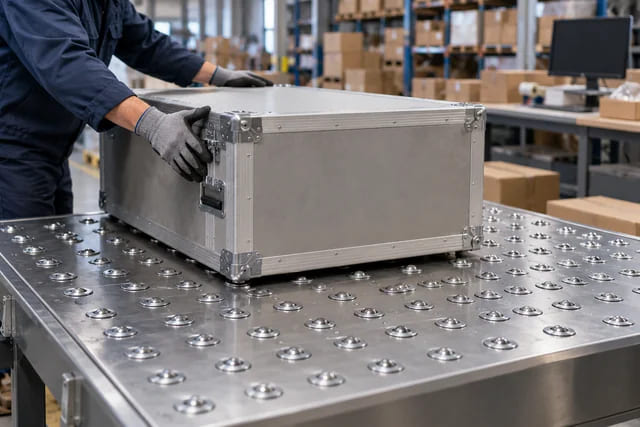
Main load balls, supporting balls and the surface being handled.
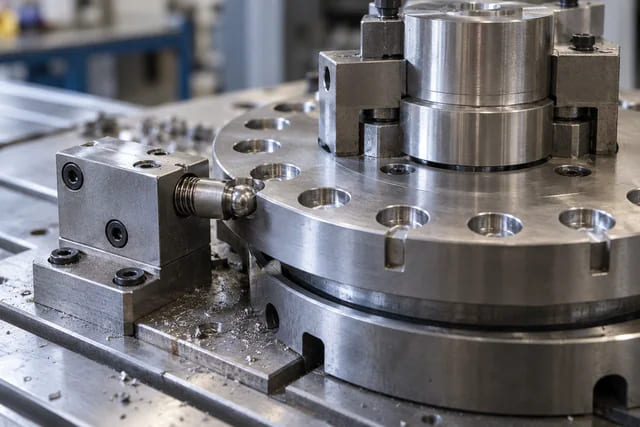
Spring contact, recess geometry, wear and repeatable mechanical feel.
Bring the material, size, operating conditions and quantity. Include the drawing and validation topics that matter to this project.
THK linear-guide structure and selection · THK transport-system component overview
References describe industry practice and material-selection context. They do not establish MEITUO stock, equipment ownership, qualification or performance.