420A/420B Stainless Steel Balls
420A/420B stainless steel balls are martensitic steel spheres considered when a mechanical contact needs a hardenable stainless material. They sit within a family of different carbon levels, so 420A and 420B must be identified against the required standard rather than treated as interchangeable labels. Confirm hardness, surface condition, dimensional acceptance and actual exposure. Their corrosion behavior does not equal that of an austenitic 316-family ball.
- Material / construction
- 420A or 420B martensitic stainless steel; exact standard and condition required
- Specification basis
- Drawing, diameter & acceptance
- Order basis
- Sample & production quantities
420A/420B Stainless Steel Balls: selection overview
This family offers a selection route between a corrosion-oriented austenitic ball and a higher-carbon hardenable stainless option. The useful balance depends on the specified grade, heat treatment and environment. A letter suffix alone is insufficient when naming conventions differ between material systems. Use the drawing's reference and the supporting material record to remove ambiguity. Hardened martensitic balls also need attention to finish and cleaning: a stainless designation does not cancel the effects of surface contamination, aggressive cleaners or unsuitable service media. Define the mechanism's real duty before choosing the harder option.
420A vs 420B: resolve the designation first
Request the grade standard and chemistry limits that distinguish the two candidates. Their different carbon levels influence the possible hardened condition, but the finished acceptance still needs a specified treatment and test. Where the original design uses a regional steel designation, list it explicitly rather than assuming a suffix translates directly. This is especially useful for repeat orders in which appearance and nominal diameter would otherwise hide a material substitution.
Choose hardness with corrosion exposure
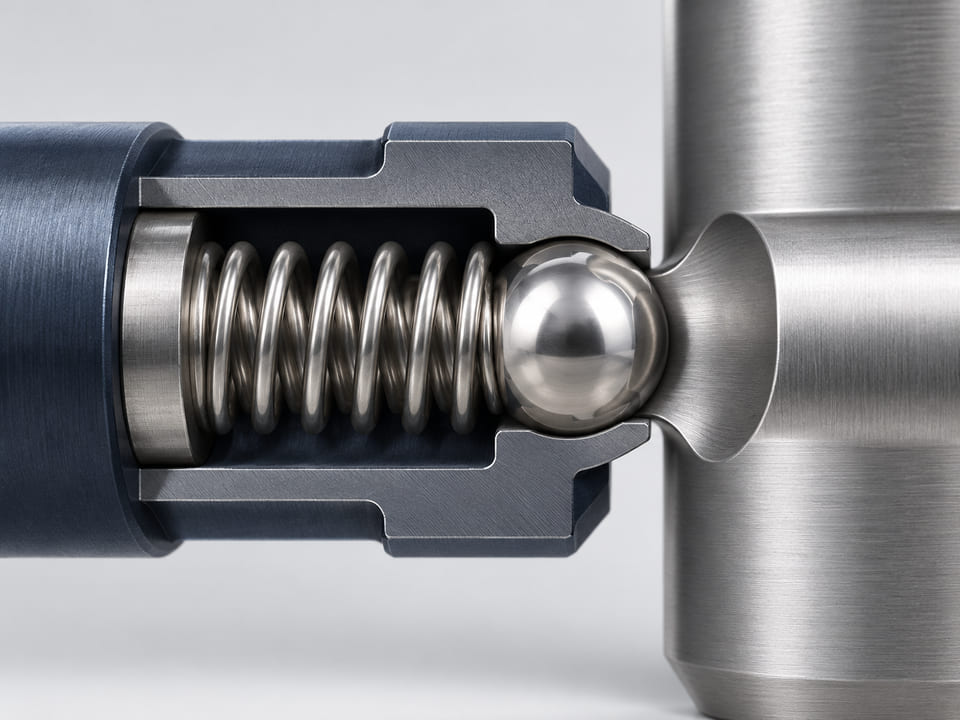
Start with the contact job: a detent, rolling element and seating ball can need different combinations of hardness, geometry and finish. Then state the fluid, cleaning agent and exposure time. Higher hardness is not a universal improvement if the environment or mating component becomes the limiting factor. Ask for the surface condition appropriate to the application and include any passivation or cleanliness acceptance in the purchase requirements rather than as an implied property of stainless steel.
420A/420B Stainless Steel Balls specifications
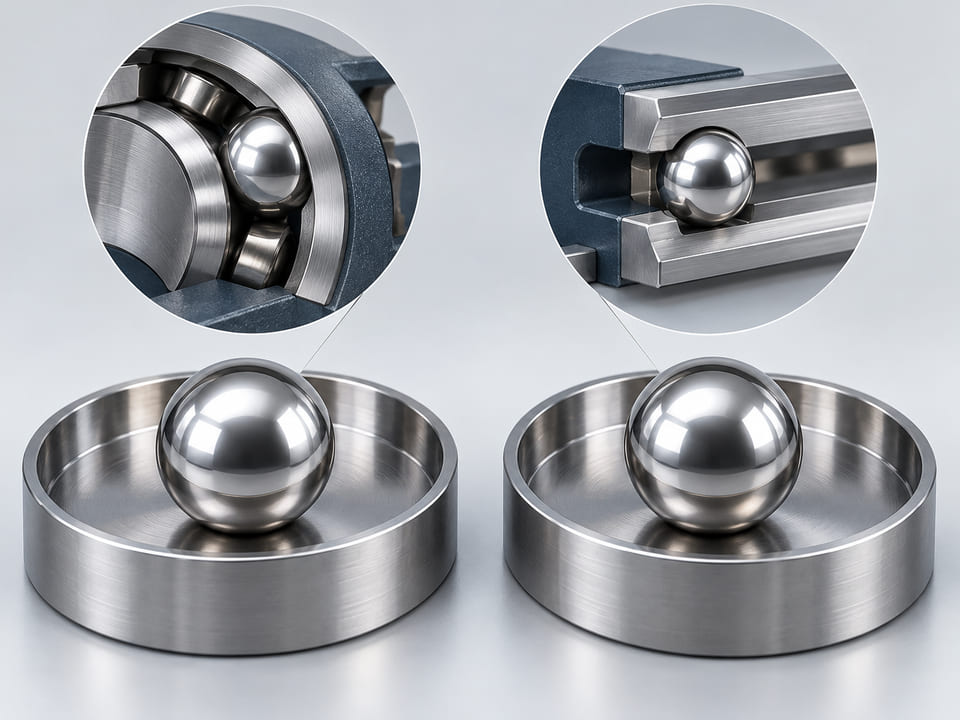
Define the component using the requirements below. Include your target values and acceptance method; the quotation records the agreed material, geometry, inspection and supply scope.
| Requirement | What to specify | Why it matters |
|---|---|---|
| Grade reference | Name 420A or 420B with the governing standard. | Resolves ambiguous suffixes and unapproved substitutions. |
| Hardened condition | Specify treatment condition and hardness test acceptance. | Relates the delivered ball to the intended wear contact. |
| Media and cleaning | Define fluid, temperature, duration and cleaning agents. | Keeps corrosion review tied to actual service conditions. |
| Seat and surface | Provide contact geometry, form and surface criteria. | Connects dimensional inspection with mechanism performance. |
Drawing and dimensional acceptance
Provide the drawing revision and nominal dimensions with units. Identify critical form, surface and fit requirements individually; a material designation alone does not define a finished component. Where an existing sample is the reference, describe wear and confirm the intended acceptance limits.
Order and inspection scope
Separate sample quantities from production demand. State the required inspection documents, lot identification, cleanliness and packaging. Any proposed substitute or change to the component specification should be reviewed before approval, with the quotation confirming the agreed scope.
Numeric performance values, when needed, must identify their material, conditions and evidence. Typical raw-material data should not be treated as guaranteed finished-component performance.
420A/420B Stainless Steel Balls applications
Start with the actual mechanism and exposure conditions. Each use below identifies the information needed for a useful technical review.
Detents and indexing mechanisms
A hardened stainless sphere may provide a wear-oriented contact in a spring-loaded detent. The groove shape, spring force and repeated movement govern contact marking. Define whether the mechanism is dry, lubricated or intermittently wet so the material and surface condition can be evaluated together.
Small mechanical assemblies
Consider the family for retained contacts in mechanisms where an austenitic sphere would not meet the intended wear requirement. The assembly process should not damage the finished surface. Share any magnetic handling or inspection constraint as an explicit acceptance item.
Selected fluid-control contacts
A 420-family sphere may be assessed for a defined mild-medium application, but the valve's wet parts and sealing criteria must be reviewed together. Avoid selecting it merely because the device handles water; cleaning chemistry and stagnation can change the exposure.
Compare 420A/420B Stainless Steel Balls alternatives
Compare the requirement that drives the decision. A matching nominal diameter or similar appearance does not establish material or functional equivalence.
| Alternative | When to review it | Tradeoff to assess |
|---|---|---|
| 420C stainless steel | Compare when the design calls for a different carbon-level and hardened-condition balance within the martensitic stainless family. | Confirm the exact material reference and treatment; moving between 420 designations requires more than matching diameter and polish. |
| 440C stainless steel | Review a higher-carbon hardenable stainless candidate for more demanding wear-oriented or bearing-like contacts under a defined environment. | Hardness, contact response and corrosion limitations need joint review; do not regard a higher grade number as universal superiority. |
| 316/316L stainless steel | Consider an austenitic option when actual chemical exposure matters more than the hardenable martensitic contact characteristics. | The change reduces the emphasis on hardened wear performance and requires reassessment of indentation, load and seating behavior. |
These links open the corresponding product pages in this collection. Final selection depends on your complete specification and the agreed validation.
420A/420B Stainless Steel Balls FAQs
What is the difference between 420A and 420B?
They are distinct 420-family material designations, commonly differentiated by carbon level under the applicable reference. Confirm the exact standard, chemistry and heat-treated condition. A family heading covering both does not allow automatic substitution between them.
Are these balls heat-treatable?
The martensitic family is hardenable, but the finished ball's condition must be specified and verified. Ask for the required hardness method and acceptance limits rather than assuming that every 420-family sphere has received the same heat treatment.
Are 420A/420B balls magnetic?
Martensitic stainless steel is generally magnetic. If magnetism is a functional requirement, define a measurable acceptance criterion and the test arrangement. An ordinary magnet attraction check cannot establish grade identity, finished hardness or suitability for a particular mechanism.
Can they operate in water?
Only after reviewing the complete exposure. Water chemistry, cleaning chemicals, temperature and stagnation can affect the choice. Stainless does not mean resistance to every wet environment; compare an austenitic or other material if the medium needs it.
When should I compare 420C or 440C?
Compare them when the drawing or wear duty calls for another hardenable stainless condition. Review contact load, treatment, geometry and environment together. A higher achievable hardness does not automatically improve the surrounding assembly or its corrosion performance.
What is needed for a detent quotation?
Provide the exact grade or permitted alternatives, ball diameter, form, spring force, groove material, lubrication and cycling. Add sample and production quantities plus any surface or magnetic requirement so evaluation reflects the mechanism's actual function.
Request a quotation
Turn the 420A/420B Stainless Steel Balls requirements into a clear enquiry for MEITUO Balls.
- Define the material and geometry.
- Describe the application and acceptance.
- Separate sample and production demand.
The quotation confirms feasibility, supply scope, inspection documents and commercial terms. Generated illustrations are not evidence of available stock or completed validation.
Continue your material review
Engineering references and illustration notes
Material-family references support screening. The exact grade, finished geometry and application acceptance govern an actual enquiry.
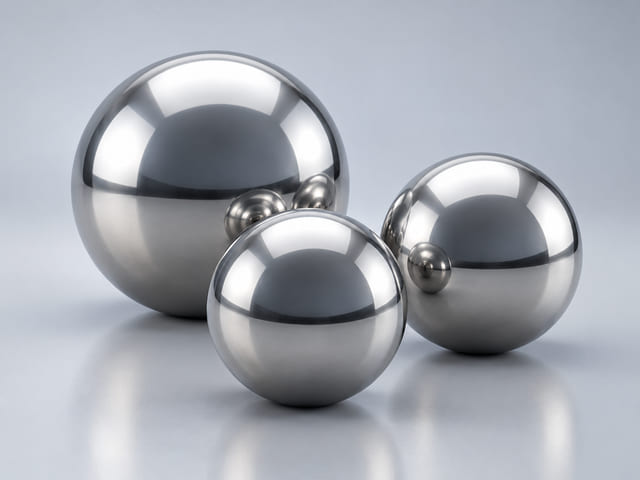
CGI illustrations explain product, application or structure concepts. They are not photographs, measured micrographs, assembly drawings or inspection results.