Duplex Stainless Steel Balls
Duplex stainless steel balls are project-specific spheres made from a defined ferritic-austenitic stainless grade, such as a specified 2205 or superduplex designation. They are considered when the mechanical or corrosion assessment leads beyond a conventional austenitic selection. Identify the exact grade, heat-treated condition, phase-related acceptance and service medium. Supply feasibility, finishing, dimensions and inspection must be reviewed for the proposed component before a quotation is confirmed.
- Material / construction
- Specified duplex or superduplex stainless steel; exact grade subject to project review
- Specification basis
- Drawing, diameter & acceptance
- Order basis
- Sample & production quantities
Duplex Stainless Steel Balls: selection overview
Duplex describes a stainless-steel family with both ferritic and austenitic phases. Its material advantages depend on achieving the required grade and metallurgical condition. A 2205 reference and a 2507 reference are not interchangeable versions of a generic corrosion-proof alloy. Processing and thermal exposure need attention, and properties from a plate or bar datasheet cannot be assigned directly as finished-ball guarantees. This is a project-evaluation product: the intended sphere, inspection route and supporting documents should be established against a real drawing and service requirement before commercial supply claims are made.
2205 and 2507 are separate engineering choices
State the exact UNS, EN or other required grade designation and governing standard. Explain the process fluid and the reason for considering duplex: strength, localized-corrosion behavior or another design constraint. A superduplex label alone cannot establish suitability for every aggressive medium. Where a comparison is being made with 316L, keep temperature, fluid concentration, exposure time and contact conditions the same. This produces a meaningful material review rather than an abstract ranking of alloy names.
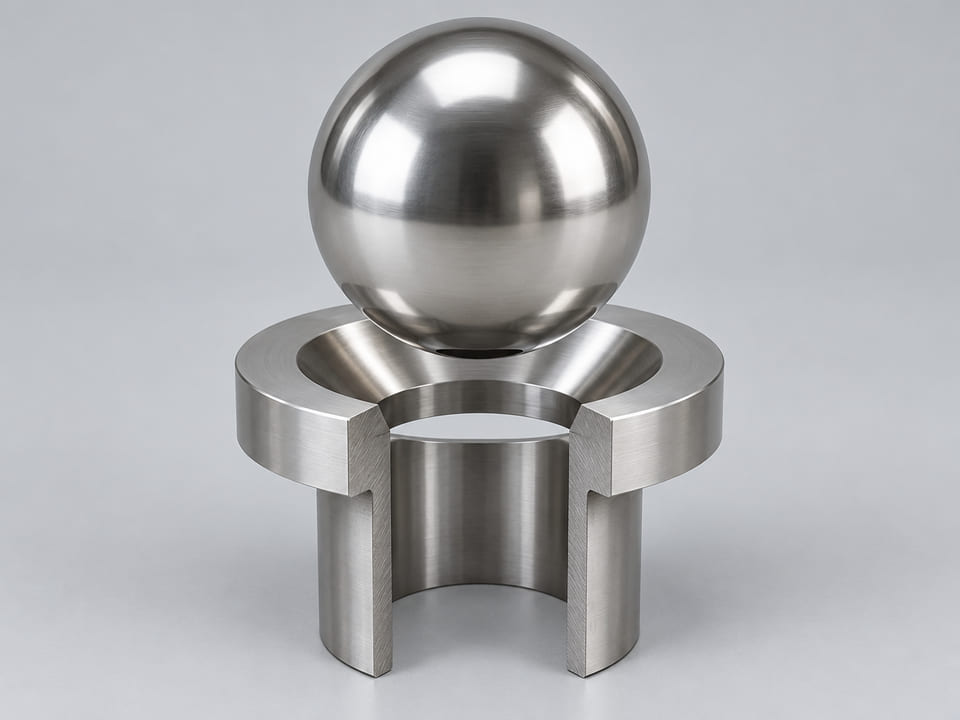
Control material state and finishing feasibility
Review the proposed raw material, heat-treated condition and any phase-related or corrosion testing required by the component specification. State diameter, form and surface acceptance so machining and finishing feasibility can be assessed. If the ball seats against another material, include the complete contact pair. The enquiry should also identify traceability and reporting needs; these must be agreed for the actual route rather than inferred from the existence of duplex material elsewhere in the company.
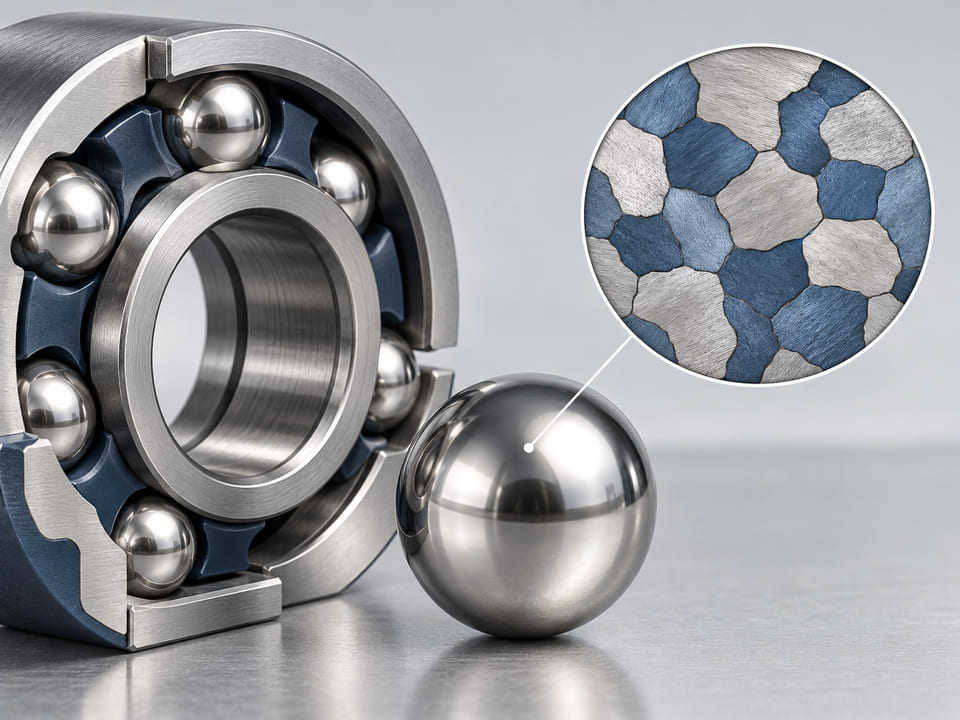
Duplex Stainless Steel Balls specifications
Define the component using the requirements below. Include your target values and acceptance method; the quotation records the agreed material, geometry, inspection and supply scope.
| Requirement | What to specify | Why it matters |
|---|---|---|
| Exact duplex grade | Provide the full designation and governing material standard. | Distinguishes lean, standard and superduplex candidates. |
| Metallurgical acceptance | Identify treatment, phase-related evidence and required corrosion tests. | Supports qualification of the actual finished-component route. |
| Service and contact | Describe medium, thermal cycle, load, seat and leakage acceptance. | Links material choice to the complete operating envelope. |
| Feasibility and documents | Submit drawing, quantity, traceability and report requirements. | Allows a project-specific assessment without implying stock or universal capability. |
Drawing and dimensional acceptance
Provide the drawing revision and nominal dimensions with units. Identify critical form, surface and fit requirements individually; a material designation alone does not define a finished component. Where an existing sample is the reference, describe wear and confirm the intended acceptance limits.
Order and inspection scope
Separate sample quantities from production demand. State the required inspection documents, lot identification, cleanliness and packaging. Any proposed substitute or change to the component specification should be reviewed before approval, with the quotation confirming the agreed scope.
Numeric performance values, when needed, must identify their material, conditions and evidence. Typical raw-material data should not be treated as guaranteed finished-component performance.
Duplex Stainless Steel Balls applications
Start with the actual mechanism and exposure conditions. Each use below identifies the information needed for a useful technical review.
Process-water valve projects
A duplex sphere can be assessed for a defined valve application when the medium and mechanical requirement justify the material system. The ball, seat and surrounding wet parts need coordinated review. Retain the actual leakage and corrosion acceptance rather than choosing the alloy from an industry label.
Corrosion-sensitive mechanical contacts
A project may require a stainless contact with a different strength and corrosion balance from austenitic steel. Confirm static and cyclic loads as well as fluid exposure. The finished metallurgical condition and surface are part of the evaluation, not background assumptions.
Specialist OEM development
For a new component, start with an engineering drawing and an agreed sample plan. Establish material identity, acceptable finishing and application tests before assuming repeat-production capability. This allows the design team to assess whether duplex solves the actual problem economically.
Compare Duplex Stainless Steel Balls alternatives
Compare the requirement that drives the decision. A matching nominal diameter or similar appearance does not establish material or functional equivalence.
| Alternative | When to review it | Tradeoff to assess |
|---|---|---|
| 316/316L stainless steel | Compare a conventional austenitic family when its verified environmental and mechanical performance satisfies the component without a duplex-specific material requirement. | The austenitic and duplex systems differ in strength, phase structure and processing; compare approved conditions rather than family names alone. |
| Specified nickel alloy | Review a defined nickel-based grade if the actual medium or thermal requirement directs material selection beyond the duplex candidate. | Nickel alloys are a broad family with their own processing and corrosion limits; specify the exact alloy and document scope. |
| Specified titanium grade | Consider titanium when the environment, mass or system compatibility makes a different passive-metal system worth evaluating for the application. | Mass, stiffness, contact wear and joining behavior change; any substitution requires a complete contact and compatibility review. |
These links open the corresponding product pages in this collection. Final selection depends on your complete specification and the agreed validation.
Duplex Stainless Steel Balls FAQs
Are duplex balls already a standard stocked item?
This page presents a project-review candidate. Dimensions, finishing, material evidence, samples and commercial conditions need confirmation for the proposed requirement. The existence of duplex bar or sheet does not independently establish a qualified sphere supply route.
Are 2205 and 2507 interchangeable?
No. They are distinct grade selections with different compositions and qualification requirements. Provide the exact designation from the drawing. A proposed change should be reviewed against service chemistry, temperature, mechanical contact and the required material evidence.
Does duplex mean immune to seawater corrosion?
No. Actual performance depends on grade, material condition, temperature, crevices and the medium. Use a service-specific assessment and identify any required corrosion test. A family label cannot establish unlimited suitability for all seawater or chloride conditions.
Can plate properties be used as ball guarantees?
No. Datasheets describe particular material forms and conditions. Finished-ball requirements need their own agreed acceptance, including geometry, surface and material evidence. Use reference properties to guide selection without presenting them as verified results for an unqualified sphere.
Which inspection documents should I request?
Request the documents your component specification actually needs, such as grade traceability, treatment records, geometrical results and applicable metallurgical or corrosion evidence. The exact scope must be agreed with the proposed route; do not assume every test is automatically available.
How should a first enquiry be framed?
Send the exact duplex grade, drawing, medium and temperature, contact duty, quantity and qualification criteria. Explain why the existing material is insufficient. This gives the engineering review a concrete problem to solve and a measurable basis for sample approval.
Request a quotation
Turn the Duplex Stainless Steel Balls requirements into a clear enquiry for MEITUO Balls.
- Define the material and geometry.
- Describe the application and acceptance.
- Separate sample and production demand.
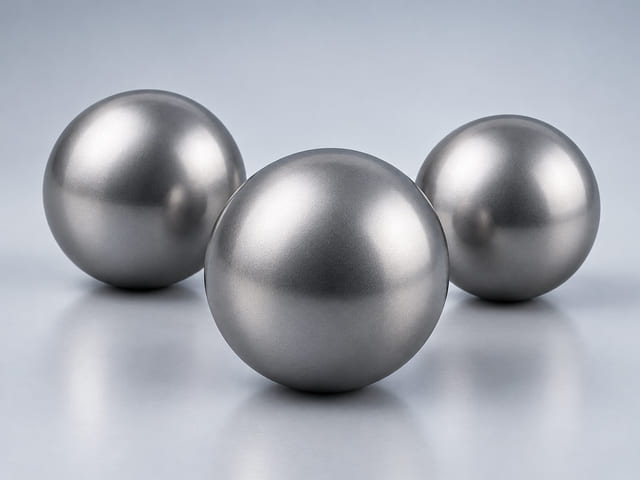
The quotation confirms feasibility, supply scope, inspection documents and commercial terms. Generated illustrations are not evidence of available stock or completed validation.
Continue your material review
Engineering references and illustration notes
Material-family references support screening. The exact grade, finished geometry and application acceptance govern an actual enquiry.
CGI illustrations explain product, application or structure concepts. They are not photographs, measured micrographs, assembly drawings or inspection results.