Titanium Balls
Titanium balls are metallic spheres made from a specified commercially pure titanium or titanium-alloy grade. They are considered where mass, environmental compatibility or a non-ferrous material supports the component design. Grade 1, Grade 2 and Grade 5 are distinct selections, not interchangeable supply labels. Confirm grade, condition, contact wear, surface, geometry and medium before quotation, and qualify any regulated or specialist use through the complete equipment program.
- Material / construction
- Specified commercially pure titanium or titanium alloy, including grade and condition
- Specification basis
- Drawing, diameter & acceptance
- Order basis
- Sample & production quantities
Titanium Balls: selection overview
Titanium's low-mass metallic character and passive surface can be useful, but those characteristics do not establish every contact function. Commercially pure grades and alloyed Grade 5 serve different material requirements. A strength value for one cannot be assigned to the other or transferred unqualified from bar to a finished sphere. Wear and galling at a metal contact also need attention; good compatibility with a medium does not guarantee a durable ball-and-seat interface. Specify why titanium is being considered and use that reason to direct the material, geometrical and functional acceptance.
Grade 1, Grade 2 and Grade 5 need separate approval
Name the exact grade and applicable material standard. Commercially pure titanium and Ti-6Al-4V are different composition systems with different mechanical and processing considerations. If a permitted alternative is proposed, compare it against the required contact, medium and document scope rather than a broad strength-to-weight description. Include material condition and any impurity controls that the component program requires. A grade number alone is not evidence of medical, aerospace or other equipment qualification.
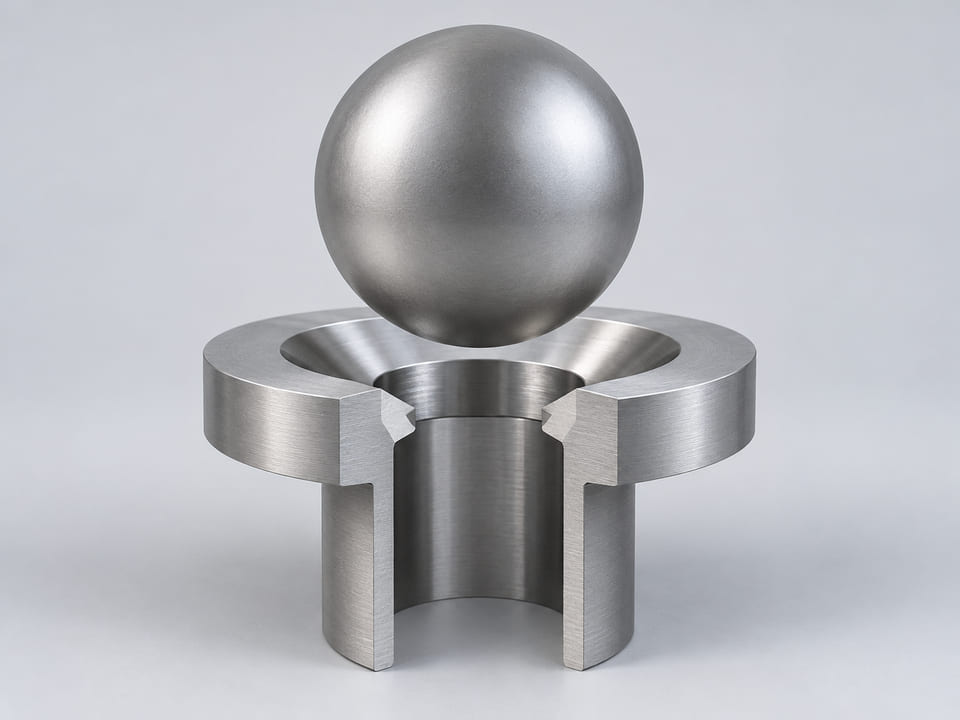
Evaluate wear and the complete wet contact
Describe the mating material, load, sliding or seating motion and lubrication. Titanium-on-metal contact may need particular attention to galling or surface damage depending on the pair. For fluid service, provide the medium, concentration, temperature and cleaning cycle, including dissimilar wet metals. A satisfactory corrosion review and a satisfactory mechanical contact review are different steps. An application test should represent both when they interact in the actual device.
Titanium Balls specifications
Define the component using the requirements below. Include your target values and acceptance method; the quotation records the agreed material, geometry, inspection and supply scope.
| Requirement | What to specify | Why it matters |
|---|---|---|
| Titanium grade | Specify the exact commercially pure or alloyed grade and standard. | Separates Grade 1/2 requirements from Grade 5 alloy selection. |
| Material condition | Define condition and traceability or impurity evidence as needed. | Keeps reference material properties separate from component acceptance. |
| Contact and surface | Give counterface, load, motion, finish and allowable damage. | Supports wear and galling review for the actual pair. |
| Medium and qualification | Identify fluid, cleaner, temperature and equipment-specific evidence. | Avoids treating a material name as unrestricted application approval. |
Drawing and dimensional acceptance
Provide the drawing revision and nominal dimensions with units. Identify critical form, surface and fit requirements individually; a material designation alone does not define a finished component. Where an existing sample is the reference, describe wear and confirm the intended acceptance limits.
Order and inspection scope
Separate sample quantities from production demand. State the required inspection documents, lot identification, cleanliness and packaging. Any proposed substitute or change to the component specification should be reviewed before approval, with the quotation confirming the agreed scope.
Numeric performance values, when needed, must identify their material, conditions and evidence. Typical raw-material data should not be treated as guaranteed finished-component performance.
Titanium Balls applications
Start with the actual mechanism and exposure conditions. Each use below identifies the information needed for a useful technical review.
Low-mass mechanical designs
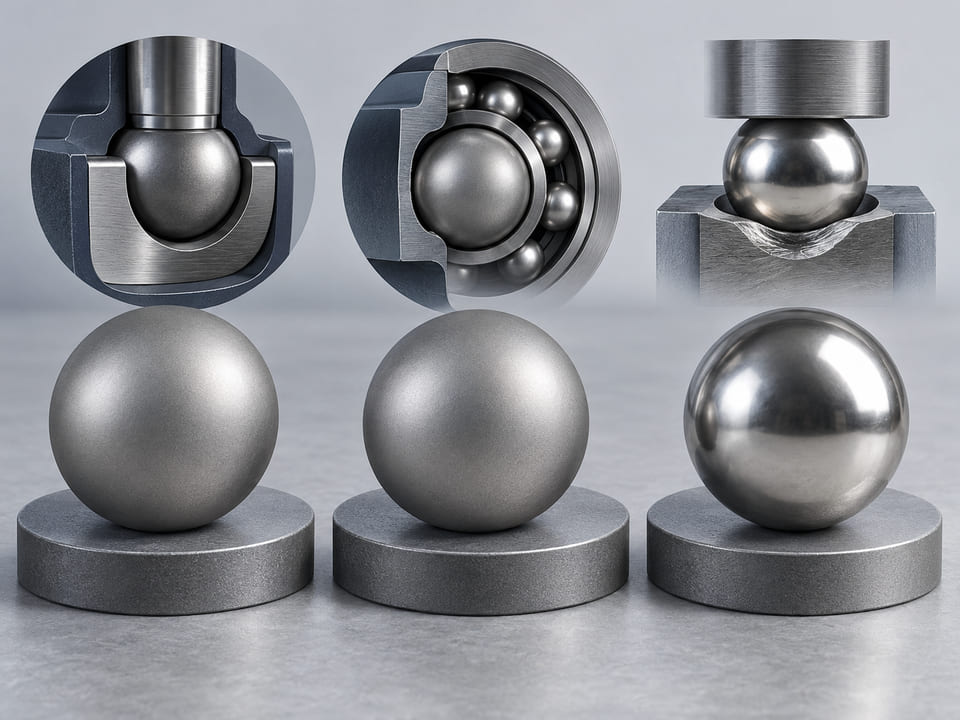
A titanium sphere can be evaluated where moving mass matters and a metallic component is needed. Compare the exact grade with the required contact force and wear. Reducing mass does not independently make the sphere suitable for a rolling or sliding mechanism.
Compatible-fluid check elements
For a defined fluid-control project, titanium can be considered against the actual chemical and mechanical conditions. Include the seat material and any tendency toward repeated rubbing. The assembled closure test should establish function rather than an assumed corrosion advantage.
Specialist instrument components
A project may require a titanium contact for material compatibility or system constraints. Identify the actual function and evidence needed. If regulated equipment is involved, the device program must define qualification; the material family does not independently confer approval.
Compare Titanium Balls alternatives
Compare the requirement that drives the decision. A matching nominal diameter or similar appearance does not establish material or functional equivalence.
| Alternative | When to review it | Tradeoff to assess |
|---|---|---|
| 316/316L stainless steel | Compare an austenitic steel where mass and medium requirements can be met without a titanium-specific composition or system constraint. | Contact wear, density and environmental behavior differ; assess the full assembly rather than treating both passive metals as equivalent. |
| Aluminium | Review a specified aluminium grade when low mass is central and the verified contact and environment permit another metallic system. | The grade, temper, oxide and deformation response change, so the material needs its own contact and compatibility evaluation. |
| Tantalum | Consider a specified tantalum requirement when the application depends on its particular chemical, purity or dense-metal characteristics rather than low mass. | It is a substantially different refractory-metal selection; neither corrosion reputation nor a polished surface establishes functional interchangeability. |
These links open the corresponding product pages in this collection. Final selection depends on your complete specification and the agreed validation.
Titanium Balls FAQs
Are Grade 2 and Grade 5 titanium balls equivalent?
No. Grade 2 is a commercially pure titanium reference, while Grade 5 is an alloyed titanium system. Use the drawing's grade and condition. Any substitution needs review of mechanical contact, medium compatibility and the required material documents.
Are titanium balls suitable for bearings?
Not by material name alone. Wear, galling, stiffness, geometry and lubrication need a specific contact assessment. A low-mass metallic sphere does not automatically replace a hardened steel or ceramic rolling element at the same load and size.
Is titanium universally corrosion resistant?
No material should be approved for every medium. Provide actual chemistry, concentration, temperature, cleaning and exposure time. The selected titanium grade and the surrounding wet materials need review against those conditions rather than a generic corrosion-resistant description.
Can these balls be used in medical devices?
Only under the device program's material, processing and regulatory requirements. Titanium's general material reputation is not finished-device approval. Specify the exact grade, traceability, surface and validation scope rather than using medical as a broad application guarantee.
Does a polished surface solve galling?
Not necessarily. The contact pair, load, motion, lubrication and surface treatment govern the interface. Specify allowable damage and the representative cycle test. A visual polish cannot establish wear performance in an untested assembly.
What information helps start a titanium project?
Provide grade, condition, drawing, mass objective, medium, mating material and contact duty. Add quantity, surface criteria and the required qualification documents. Explain why the current material is unsuitable so sample evaluation has a measurable objective.
Request a quotation
Turn the Titanium Balls requirements into a clear enquiry for MEITUO Balls.
- Define the material and geometry.
- Describe the application and acceptance.
- Separate sample and production demand.
The quotation confirms feasibility, supply scope, inspection documents and commercial terms. Generated illustrations are not evidence of available stock or completed validation.
Continue your material review
Engineering references and illustration notes
Material-family references support screening. The exact grade, finished geometry and application acceptance govern an actual enquiry.
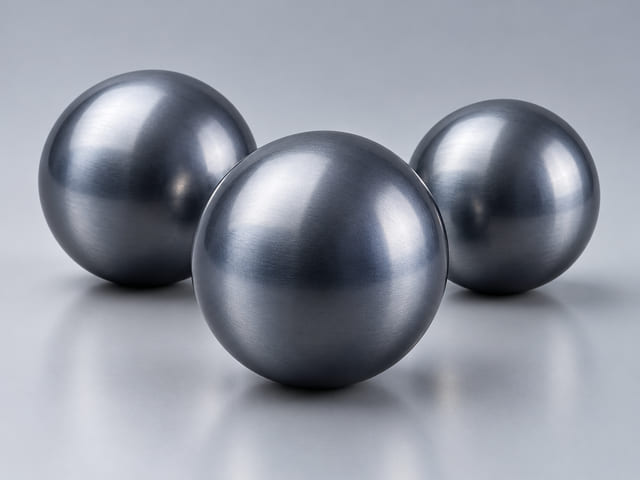
CGI illustrations explain product, application or structure concepts. They are not photographs, measured micrographs, assembly drawings or inspection results.