Aluminium Balls
Aluminium balls are metallic spheres considered when low mass and a non-ferrous material are useful to a component. Specify the aluminium grade and condition because alloyed and commercially pure materials have different mechanical and processing behavior. Confirm diameter, contact load, surface treatment and environmental exposure. A lightweight sphere is not automatically a buoyant device, and it should not replace a hardened rolling element without contact and deformation review.
- Material / construction
- Specified aluminium or aluminium-alloy grade and temper
- Specification basis
- Drawing, diameter & acceptance
- Order basis
- Sample & production quantities
Aluminium Balls: selection overview
The first decision is whether the design needs a solid aluminium sphere or a hollow structure. A solid ball can reduce mass relative to many metal alternatives, but floating performance depends on the complete body's density and construction. The second decision is grade and temper: aluminium is a family, not a single hardness or strength. Its surface oxide and any anodized or other finished condition can also affect joining and contact behavior. A low-mass advantage is useful only if the sphere's deformation, wear and compatibility satisfy the component's actual duty.
Specify grade and temper with the load
Provide the exact alloy designation and material condition from the drawing. If the material choice remains open, explain the mass target, contact force and expected deformation. A stronger alloy can bring different corrosion, finishing or processing considerations. Use reference properties for the correct condition and product form as a selection aid, not as guarantees for an unspecified sphere. State the receiving hardness or other material acceptance only where the component needs it.
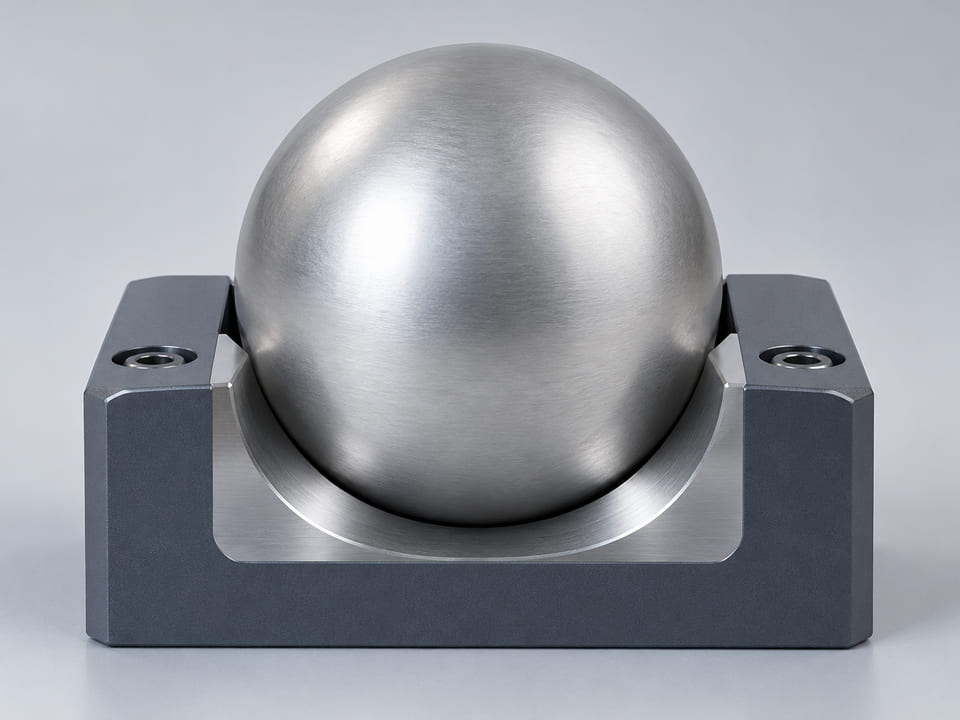
Define the finished surface, not just bare aluminium
Identify whether the sphere is polished, anodized, coated or supplied in another controlled state. A surface treatment can change appearance, dimension, friction and electrical contact behavior. Specify the final diameter after treatment if it affects fit. For a fluid component, include the medium and the other wetted materials; for a joining process, describe preparation requirements. Surface oxide is a material characteristic and cannot be treated as an invisible detail when the interface performs a critical function.
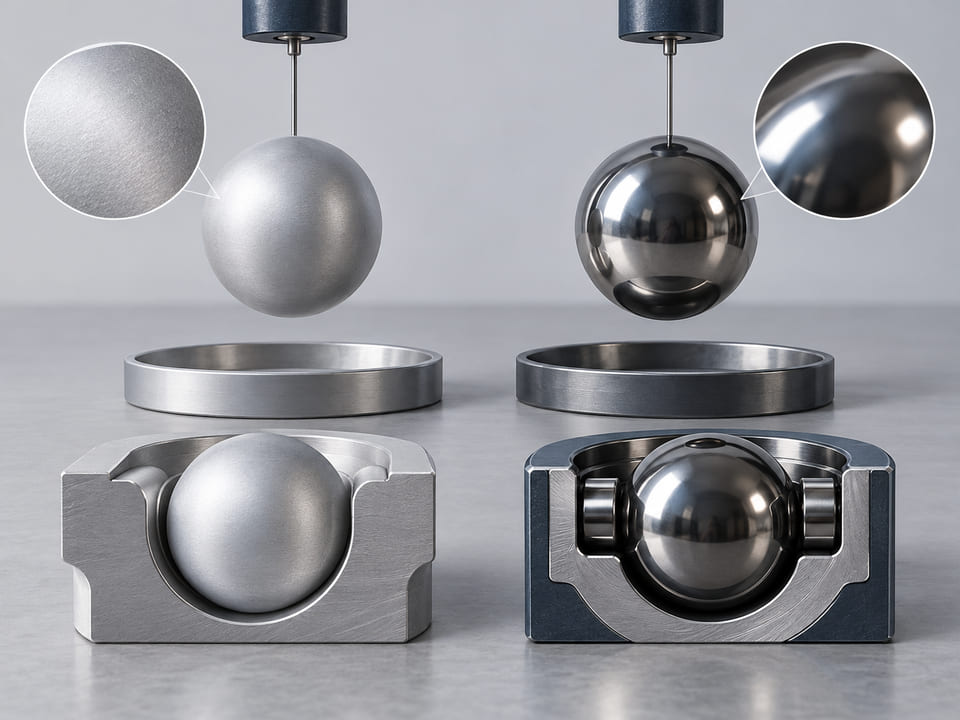
Aluminium Balls specifications
Define the component using the requirements below. Include your target values and acceptance method; the quotation records the agreed material, geometry, inspection and supply scope.
| Requirement | What to specify | Why it matters |
|---|---|---|
| Grade and temper | Provide the exact aluminium designation and material condition. | Separates alloy identity from an undefined lightweight-metal description. |
| Mass and construction | State solid or hollow requirements and the actual mass objective. | Avoids confusing low density with guaranteed flotation. |
| Finished dimensions | Define diameter, form and final treatment condition. | Controls fit after polishing, anodizing or other agreed processing. |
| Contact and medium | Describe force, counterface, liquid and allowable marking. | Supports deformation, wear and compatibility evaluation. |
Drawing and dimensional acceptance
Provide the drawing revision and nominal dimensions with units. Identify critical form, surface and fit requirements individually; a material designation alone does not define a finished component. Where an existing sample is the reference, describe wear and confirm the intended acceptance limits.
Order and inspection scope
Separate sample quantities from production demand. State the required inspection documents, lot identification, cleanliness and packaging. Any proposed substitute or change to the component specification should be reviewed before approval, with the quotation confirming the agreed scope.
Numeric performance values, when needed, must identify their material, conditions and evidence. Typical raw-material data should not be treated as guaranteed finished-component performance.
Aluminium Balls applications
Start with the actual mechanism and exposure conditions. Each use below identifies the information needed for a useful technical review.
Low-mass mechanical contacts
A solid aluminium sphere can be evaluated where moving mass is a design concern and contact loads are suitable. Check indentation and repeated wear against the mating component. A reduced mass does not compensate for an unsuitable contact stress or retaining method.
Handling and product mechanisms
For a locating, guiding or handling component, the chosen grade and surface condition should suit contact with the product or adjacent parts. Appearance, marking and contamination may be central acceptance issues. Validate the contact with representative materials and motion.
Fluid-device development
An aluminium sphere may be considered in a defined fluid mechanism after compatibility and construction are reviewed. Do not assume a solid metal ball will float. If buoyancy is the objective, evaluate the entire sphere structure and liquid rather than diameter alone.
Compare Aluminium Balls alternatives
Compare the requirement that drives the decision. A matching nominal diameter or similar appearance does not establish material or functional equivalence.
| Alternative | When to review it | Tradeoff to assess |
|---|---|---|
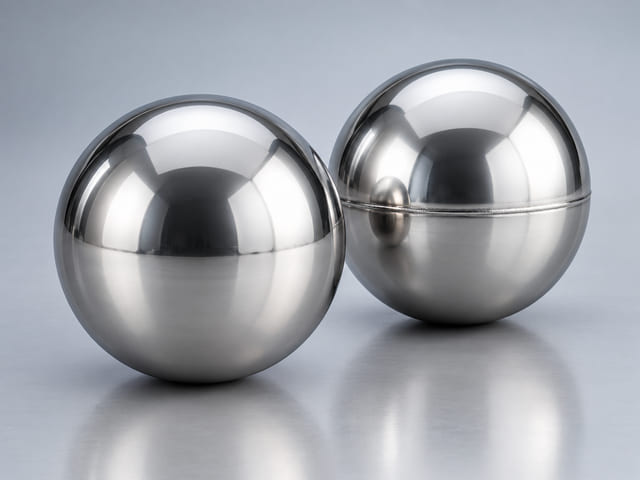
| Stainless hollow spheres | Compare a hollow structure where the objective is a larger sphere with reduced overall mass or a specifically engineered buoyancy function. | Wall, joint and leak integrity become essential, while a hollow sphere does not share the contact response of a solid ball. |
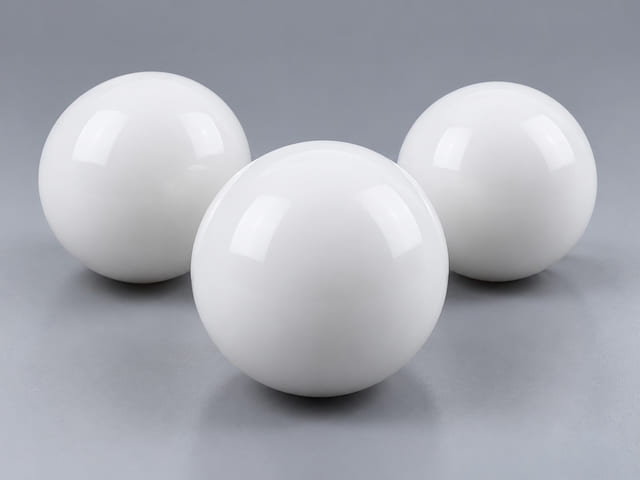
| POM polymer | Review an engineering polymer when low mass and nonmetallic contact are useful and its thermal and dimensional behavior fit the component. | Polymer creep, thermal movement and stiffness differ from aluminium; the retention and contact design may need to change. |
| Titanium | Consider a specified titanium grade when mass, mechanical duty and environmental compatibility call for another non-ferrous metallic material system. | The cost, wear, surface and joining considerations differ; use a complete component comparison rather than a simple density ranking. |
These links open the corresponding product pages in this collection. Final selection depends on your complete specification and the agreed validation.
Aluminium Balls FAQs
Will a solid aluminium ball float in water?
Do not assume that it will. Buoyancy depends on overall density and construction, not the fact that aluminium is lighter than steel. If flotation is required, provide the liquid and performance target so a suitable complete structure can be evaluated.
Are all aluminium balls the same hardness?
No. Alloy and temper materially affect the finished condition. State the required grade and condition, plus a test requirement if hardness matters. A general aluminium description does not establish a repeatable mechanical property for the component.
Can aluminium replace a steel bearing ball?
Only after contact and wear review. Aluminium has a different stiffness and deformation response from hardened steel. Matching diameter and reducing mass cannot establish equivalent rolling-contact performance, so evaluate the full mechanism and its acceptance criteria.
Can the spheres be anodized?
A requested treatment needs feasibility and dimensional review for the specific grade and part. Define the final surface, appearance and functional requirements. Anodizing should not be assumed to provide the same contact behavior as bare aluminium.
Is aluminium nonmagnetic enough for an instrument?
If magnetic response is critical, specify a measurable acceptance criterion and consider the complete component. The material family can inform selection, but the required test, surface condition and any other included materials should be identified explicitly.
What should an enquiry include?
Send the alloy and temper if specified, solid or hollow requirement, diameter, mass objective, quantity and contact function. Include final surface treatment, medium, allowable deformation and required inspection so the review addresses the complete design.
Request a quotation
Turn the Aluminium Balls requirements into a clear enquiry for MEITUO Balls.
- Define the material and geometry.
- Describe the application and acceptance.
- Separate sample and production demand.
The quotation confirms feasibility, supply scope, inspection documents and commercial terms. Generated illustrations are not evidence of available stock or completed validation.
Continue your material review
Engineering references and illustration notes
Material-family references support screening. The exact grade, finished geometry and application acceptance govern an actual enquiry.
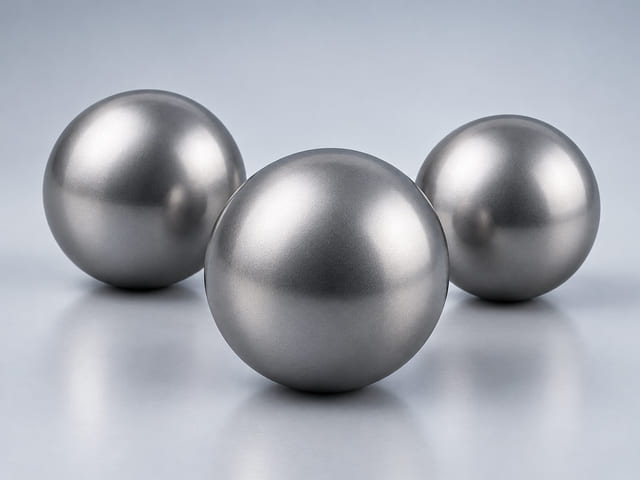
CGI illustrations explain product, application or structure concepts. They are not photographs, measured micrographs, assembly drawings or inspection results.