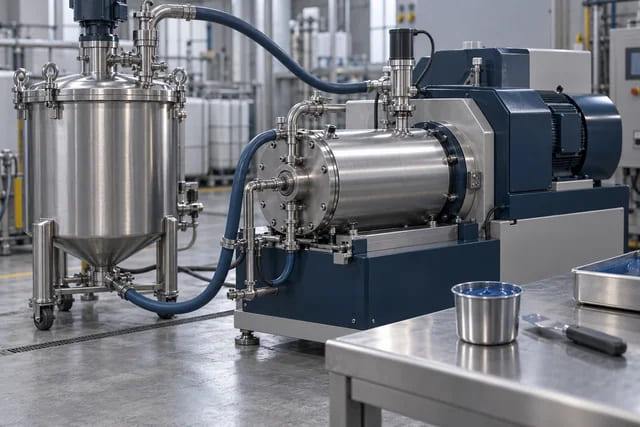
Process media
Grinding Balls for Fine Grinding & Dispersion
Media material, mill compatibility, wear and contamination control.
Seven families, connected to the application.
Explore all products →Share the drawing, contact conditions and acceptance criteria for your component.
Material selection guide →Explore the contact, medium and mechanism.
All applications →Share the drawing, contact conditions and acceptance criteria for your component.
Material selection guide →From an open material question to an agreed component requirement.
Explore services →Share the drawing, contact conditions and acceptance criteria for your component.
Material selection guide →Industry and sourcing guides for twelve target markets.
Explore all markets →Share the drawing, contact conditions and acceptance criteria for your component.
Material selection guide →Match the component programme, purchasing role and project responsibilities.
Explore partnerships →Share the drawing, contact conditions and acceptance criteria for your component.
Material selection guide →Corporate background, practical purchasing information and direct contact.
Explore company →Share the drawing, contact conditions and acceptance criteria for your component.
Material selection guide →Balls in food equipment may be grinding media or individual moving components, and these roles require different specifications. For chocolate refining, define the mill, recipe, desired product result and media acceptance with the equipment owner. Food-contact suitability and documentation must concern the actual material, product and intended conditions of use.
A ball mill can use a charge of media to refine chocolate or compound mass. An individual ball in a food-handling valve performs a different mechanical task. Identify the role before comparing materials or using an existing product drawing.
For refining media, discuss the equipment’s approved media specification and the recipe context. For a valve or other discrete component, provide its geometry and functional requirements. Neither enquiry should be reduced to a request for a generic food-grade ball.
Use these inputs to move from an application name to a useful component and supply enquiry.
| Selection input | Describe your conditions | Why it belongs in the enquiry |
|---|---|---|
| Food and process | Product type, contact conditions, processing and cleaning cycle. | Identify the complete intended-use and document scope. |
| Equipment role | Refining media, check element or another component. | Use the equipment owner’s media or component specification. |
| Product acceptance | Fineness or texture objective, contamination and cleanliness needs. | Agree process evaluation separately from material identity. |
The equipment manufacturer’s chocolate-mill description establishes a real use for ball media, not a universal media recipe. Ball size, material and charge must follow the specific equipment and validated process rather than being copied from another mill.
For food contact, specify the actual material, intended food, temperature, contact and cleaning conditions, and the documents needed for the destination. Do not infer suitability from appearance or the word stainless.
| Material or product candidate | Why review it here? | What must be confirmed? |
|---|---|---|
| Steel Grinding & Refining Balls | Review where the mill design specifies steel refining media. | Confirm material condition, wear acceptance and food-contact documents. |
| Zirconia Balls & Grinding Beads | A ceramic-media candidate only when the equipment and process support it. | Reassess the media charge, wear and product result. |
| 316 / 316L Stainless Steel Balls | A candidate for selected food-equipment components with a suitable specification. | Do not treat a stainless designation as finished-part food-contact approval. |
These are application-review candidates. The exact grade, finished specification, supply scope and documents are confirmed in the quotation.
Run the approved equipment and food-contact assessment process. Compare product results and media condition using a controlled recipe and cycle, and define how accepted media will be identified and replenished.
Avoid this assumption. A material certificate alone does not validate a food-contact component or chocolate process.
The actual finished part, intended conditions and required documentation need review; the alloy name alone is insufficient.
Only with equipment and process review. Media changes can alter operation, wear and the product result.
Include the mill reference and approved media specification, recipe context, process objective, quantity and required contact documents.
Use a related function to compare requirements without assuming the same ball specification applies.
Media material, mill compatibility, wear and contamination control.
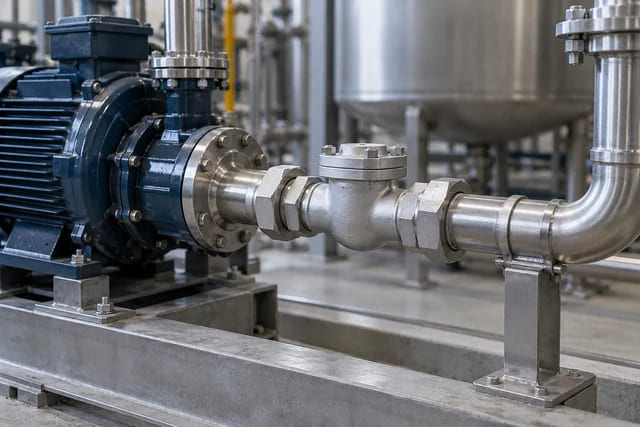
Ball-and-seat contact, closing behavior and compatibility with the working fluid.
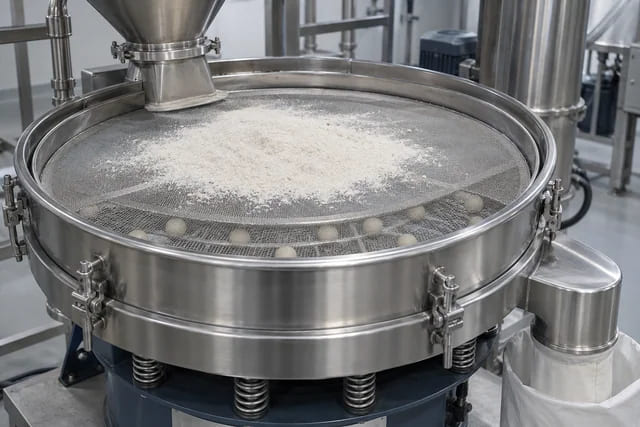
Under-mesh contact, rebound, compound compatibility and wear.
Bring the material, size, operating conditions and quantity. Include the drawing and validation topics that matter to this project.
Royal Duyvis Wiener chocolate ball-mill process · European Commission food-contact overview
References describe industry practice and material-selection context. They do not establish MEITUO stock, equipment ownership, qualification or performance.