Ball Retainers & Bearing Cages
Ball retainers, bearing cages and ball separators maintain rolling-element spacing and assist guidance within a specified assembly. They are functional components rather than a substitute for bearing races or a complete load-rated bearing. Define the ball arrangement, pocket geometry, guide surfaces, material and assembly clearances from the drawing. The operating speed, lubricant, temperature and handling requirements help determine whether a proposed retainer is suitable for the mechanism.
- Material / construction
- Drawing-defined retainer material and construction; ball content specified separately
- Specification basis
- Drawing, diameter & acceptance
- Order basis
- Sample & production quantities
Ball Retainers & Bearing Cages: selection overview
The retainer's job is to manage rolling-element separation and movement. The balls and raceways carry the principal rolling contact; a cage's appearance or ball count does not independently define the bearing's load capacity. Designs also differ in whether the cage is guided by rolling elements or another surface, how pockets retain the balls and whether it is supplied empty or assembled. Those details matter to fit, handling and lubricant access. A product described as a ball retainer should therefore start with a component drawing and assembly function, rather than a generic list of ball diameters.
Define pockets, guides and the assembly envelope
Provide the ball diameter, count and arrangement together with the pocket and guide geometry. Identify the available installation space and the approved clearance basis. If the part is supplied as a retained-ball assembly, name the required ball material and geometry separately from the cage. An empty separator and an assembled ball cage are different deliverables. Keep the drawing revision and sample approval linked so a visually similar component cannot hide a different pocket fit or guide condition.
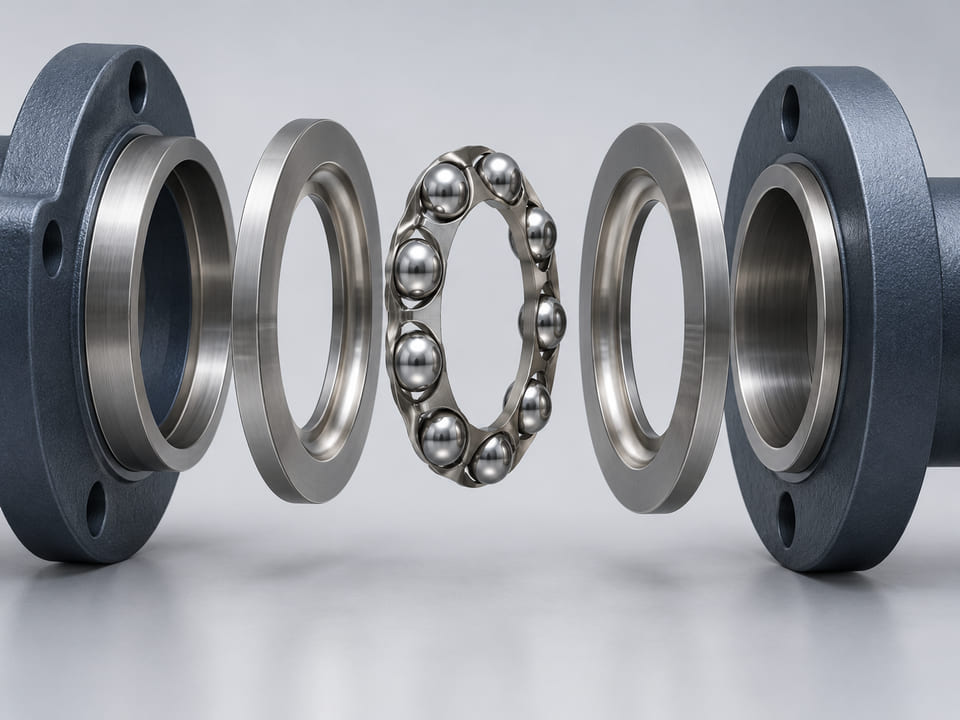
Material selection includes lubricant and temperature
Specify the material and construction required by the design, or describe the operating conditions if a comparison is needed. Temperature, lubricant, cleaning chemicals and handling can affect the cage differently from the rolling elements. A polymer cage, stamped metal separator and machined retainer need separate evaluation rather than a blanket material ranking. Confirm whether the design needs assembly retention, guidance or another function, and identify the component-level tests that will establish acceptable operation.
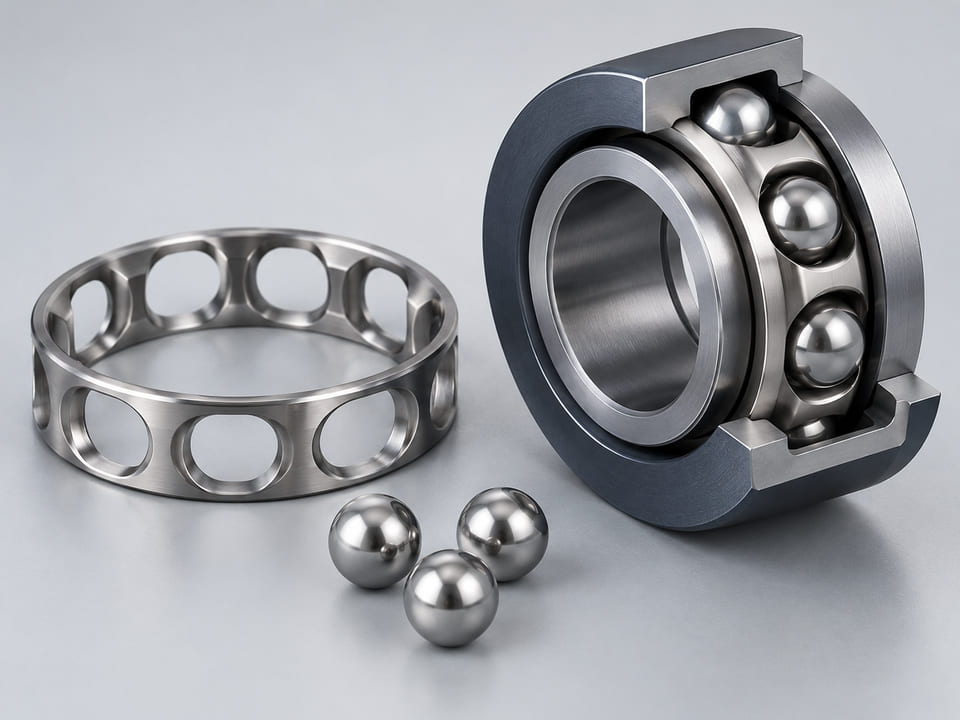
Ball Retainers & Bearing Cages specifications
Define the component using the requirements below. Include your target values and acceptance method; the quotation records the agreed material, geometry, inspection and supply scope.
| Requirement | What to specify | Why it matters |
|---|---|---|
| Assembly definition | State empty retainer or assembled ball cage, drawing revision and function. | Prevents ambiguity over which components form the delivery. |
| Pocket and guide geometry | Provide ball arrangement, pocket dimensions, guide surfaces and clearance basis. | Controls fit and movement rather than nominal ball diameter alone. |
| Retainer material | Specify construction, lubricant, temperature and cleaning exposure. | Supports material compatibility within the mechanism. |
| Ball and validation scope | Define ball specification separately and the complete assembly test. | Keeps separator function distinct from a bearing load or life guarantee. |
Drawing and dimensional acceptance
Provide the drawing revision and nominal dimensions with units. Identify critical form, surface and fit requirements individually; a material designation alone does not define a finished component. Where an existing sample is the reference, describe wear and confirm the intended acceptance limits.
Order and inspection scope
Separate sample quantities from production demand. State the required inspection documents, lot identification, cleanliness and packaging. Any proposed substitute or change to the component specification should be reviewed before approval, with the quotation confirming the agreed scope.
Numeric performance values, when needed, must identify their material, conditions and evidence. Typical raw-material data should not be treated as guaranteed finished-component performance.
Ball Retainers & Bearing Cages applications
Start with the actual mechanism and exposure conditions. Each use below identifies the information needed for a useful technical review.
Light-duty motion assemblies
A ball retainer can be evaluated to maintain spacing in a defined motion mechanism. The surrounding tracks or races still need to support the actual contact. Describe the complete arrangement and avoid assigning a load rating to the separator alone.
OEM cage and separator development
A drawing-led project can establish pocket geometry, material and installation requirements for a new retainer. Sample evaluation should address assembly, guidance and contact with rolling elements. Changes to the ball set or lubricant may also require review of the cage.
Replacement and assembly programs
A replacement retainer should match the original approved component, including guide and pocket details that may not be visible in a photograph. Review the condition of balls and races as part of the mechanism. Confirm whether the delivery is an empty cage or an assembled element set.
Compare Ball Retainers & Bearing Cages alternatives
Compare the requirement that drives the decision. A matching nominal diameter or similar appearance does not establish material or functional equivalence.
| Alternative | When to review it | Tradeoff to assess |
|---|---|---|
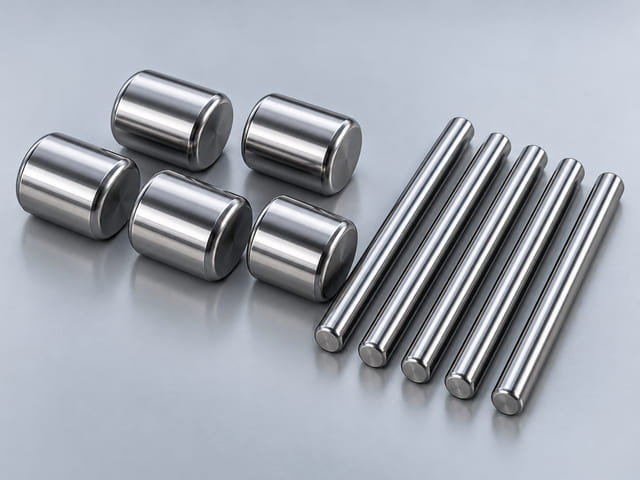
| Cylindrical and needle rollers | Review the separate rolling-element family when the enquiry needs rollers or an approved roller assembly rather than a ball separator. | A ball-pocket cage does not automatically guide rollers, and a loose roller does not provide spacing or retention by itself. |
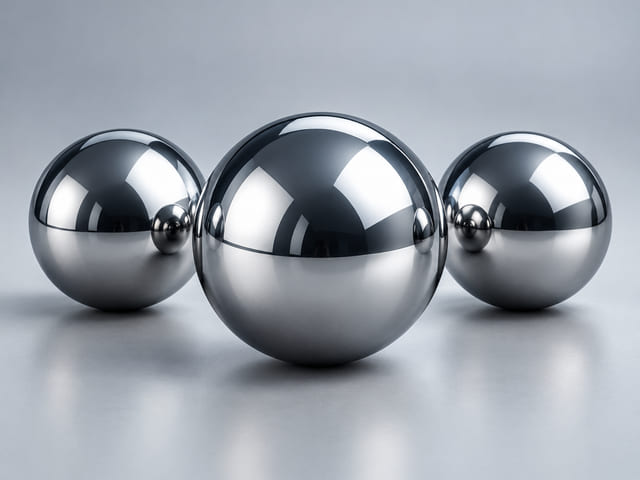
| AISI 52100 chrome steel balls | Consider the ball specification separately when an approved cage assembly requires hardened steel rolling elements with defined geometry and grouping. | The ball material does not define pocket clearance, cage strength or complete bearing capacity; align both component specifications with the drawing. |
| POM balls | Review a polymer ball only if the mechanism design expressly permits a different rolling or contact element within a compatible arrangement. | Changing ball stiffness, thermal movement and surface behavior can require different pocket and guide acceptance; no automatic assembly compatibility is implied. |
These links open the corresponding product pages in this collection. Final selection depends on your complete specification and the agreed validation.
Ball Retainers & Bearing Cages FAQs
Does a ball retainer carry the bearing load?
Its principal role is spacing and guidance; the rolling elements and raceways form the main load-carrying contacts. A retainer alone cannot establish a complete bearing capacity. Assess the actual arrangement and the component designer's requirements.
Are a cage and a complete bearing the same product?
No. A cage is one component. Specify whether it is supplied empty or with rolling elements, and identify any included parts. Bearing rings, races and complete assembly performance should not be inferred from a separator description.
Is ball diameter enough to specify a retainer?
No. Ball count and arrangement, pocket shape, guide surfaces, installation envelope and clearances also matter. Provide the drawing and revision, plus the ball specification if the delivery includes a retained set of balls.
Can the retainer material be changed freely?
No. Material, construction, lubricant, temperature and chemical exposure interact with the design. A proposed change needs evaluation of guidance, pocket fit, handling and sample performance. A general polymer-versus-metal ranking cannot establish a suitable replacement.
Can a cage be replaced while keeping worn balls and races?
That needs a complete mechanism assessment. Damage or wear elsewhere may remain limiting and may also affect the replacement retainer. Follow the approved component requirements and inspect the arrangement rather than assuming a new cage restores bearing performance.
What is needed for a quotation?
Send the assembly drawing, ball arrangement, pocket and guide details, material, lubricant and operating conditions. Clarify empty or assembled delivery, quantity, inspection records and sample test. Include the revision and approved replacement reference where applicable.
Request a quotation
Turn the Ball Retainers & Bearing Cages requirements into a clear enquiry for MEITUO Balls.
- Define the material and geometry.
- Describe the application and acceptance.
- Separate sample and production demand.
The quotation confirms feasibility, supply scope, inspection documents and commercial terms. Generated illustrations are not evidence of available stock or completed validation.
Continue your material review
Engineering references and illustration notes
Material-family references support screening. The exact grade, finished geometry and application acceptance govern an actual enquiry.
CGI illustrations explain product, application or structure concepts. They are not photographs, measured micrographs, assembly drawings or inspection results.