Pure Copper Balls
Pure copper balls are copper spheres considered for conductive contacts, thermal functions and specialist industrial components. Specify the required copper grade, such as a defined ETP or oxygen-free designation, rather than relying on colour or a general purity description. Material condition, surface film and contact force affect the finished function. Confirm diameter, cleanliness, conductivity-related acceptance and any downstream joining or plating requirements before quotation.
- Material / construction
- Specified high-conductivity copper grade; purity and metallurgical state defined separately
- Specification basis
- Drawing, diameter & acceptance
- Order basis
- Sample & production quantities
Pure Copper Balls: selection overview
Copper's electrical and thermal behavior can motivate a sphere design, but the bulk material is only part of the contact system. A surface film, residue or poor interface can affect the assembly even when the base metal meets its chemistry requirement. Copper is also relatively deformable compared with a hardened steel contact; that can be useful in one design and unacceptable in another. C11000 ETP and oxygen-free copper belong to different purchasing references. A reddish sphere should not be accepted as either material without the relevant identification and document requirements.
Copper grade and conductivity are different acceptance items
Name the copper designation and governing standard, then identify whether conductivity or impurity limits need verification for the actual part. A general pure-copper description cannot resolve oxygen-related or specialist electronic requirements. If the sphere is for plating consumption rather than a lasting precision contact, state that clearly; chemistry, cleanliness and size may have different priorities. Use the component function to decide which evidence belongs in the quotation and sample approval.
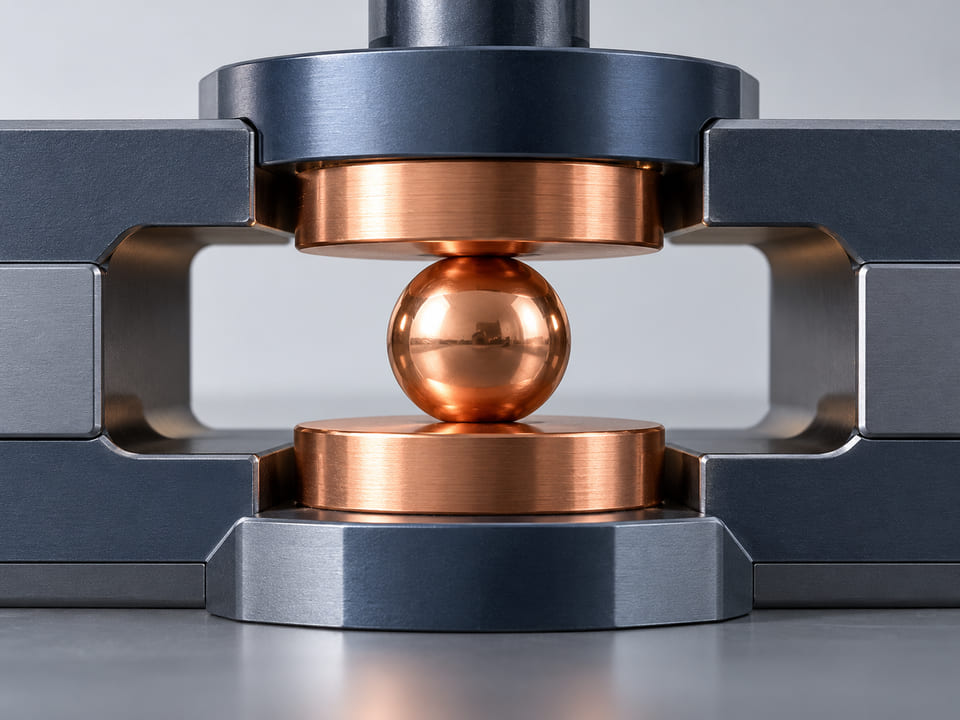
Review the contact surface and deformation
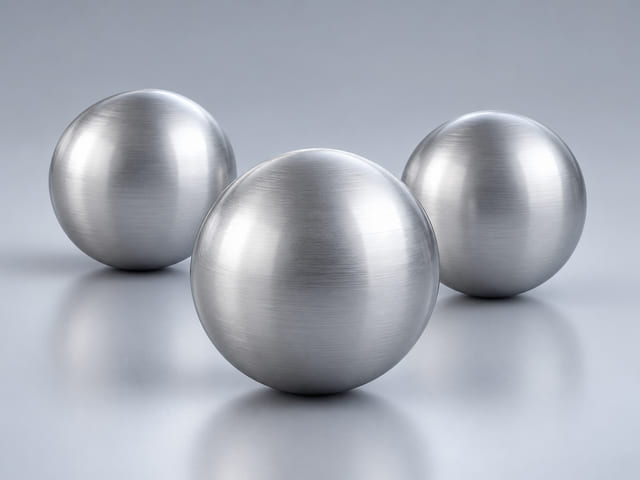
For electrical contact, include the mating material, contact force and the intended test arrangement. For a mechanical seat, describe the permissible indentation and wear. Copper's response to forming and contact load depends on its condition, so ask for an agreed hardness or temper requirement if it is critical. Specify any allowable oxide, oil or coating. A mirror-polished image cannot establish low contact resistance, purity or a controlled clean surface.
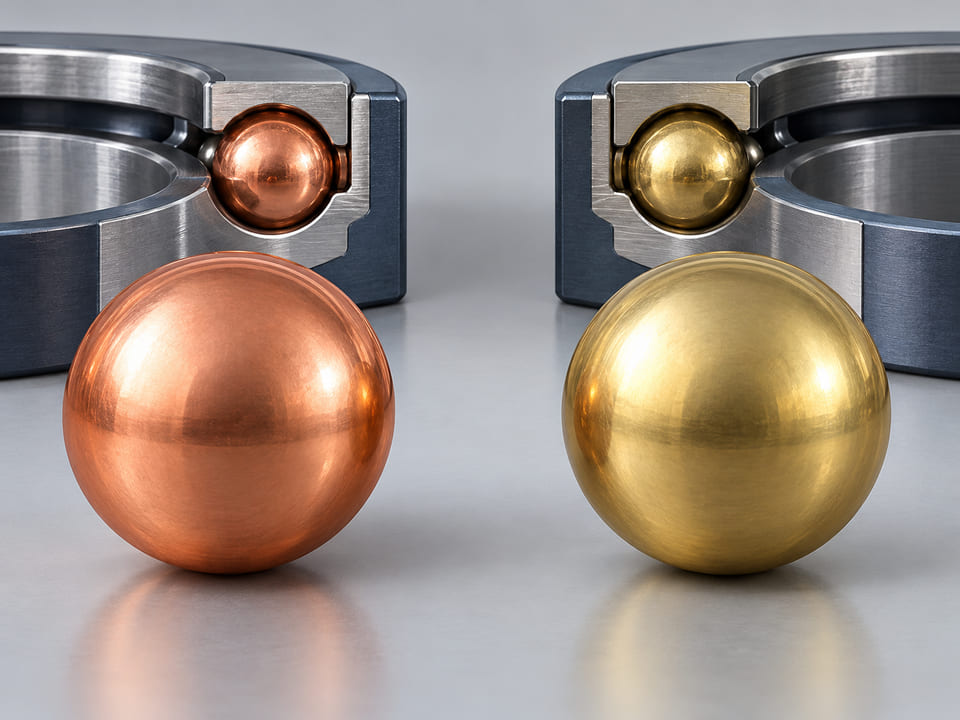
Pure Copper Balls specifications
Define the component using the requirements below. Include your target values and acceptance method; the quotation records the agreed material, geometry, inspection and supply scope.
| Requirement | What to specify | Why it matters |
|---|---|---|
| Copper designation | Name ETP, oxygen-free or another exact copper grade and standard. | Distinguishes materially different purity and processing requirements. |
| Electrical or thermal function | Identify the required test, temperature and contact arrangement. | Avoids transferring bulk reference data to an untested assembly. |
| Condition and geometry | Define temper or hardness where needed, diameter and form. | Controls deformation and fit at a soft-metal contact. |
| Surface chemistry | Specify oxide, oil, coating, cleanliness and packing acceptance. | Protects the interface function and any downstream process. |
Drawing and dimensional acceptance
Provide the drawing revision and nominal dimensions with units. Identify critical form, surface and fit requirements individually; a material designation alone does not define a finished component. Where an existing sample is the reference, describe wear and confirm the intended acceptance limits.
Order and inspection scope
Separate sample quantities from production demand. State the required inspection documents, lot identification, cleanliness and packaging. Any proposed substitute or change to the component specification should be reviewed before approval, with the quotation confirming the agreed scope.
Numeric performance values, when needed, must identify their material, conditions and evidence. Typical raw-material data should not be treated as guaranteed finished-component performance.
Pure Copper Balls applications
Start with the actual mechanism and exposure conditions. Each use below identifies the information needed for a useful technical review.
Conductive contact concepts
A copper sphere can be evaluated as part of a contact assembly where a rounded contact and conductive base metal are useful. The complete interface determines performance. Test against the intended contact force, mating surface and environment rather than assigning a current rating to the sphere alone.
Thermal and laboratory components
For a thermal contact or experimental component, material identity and surface preparation can matter as much as nominal diameter. Define the expected thermal cycle and mechanical preload. Experimental suitability needs to be established in the actual fixture and measurement arrangement.
Electroplating or process use
A copper ball used as process material has a different acceptance focus from a precision rolling component. Identify chemistry, cleanliness, consumption role and any anode-specific requirements. Do not replace a specified process grade with a decorative or general mechanical sphere.
Compare Pure Copper Balls alternatives
Compare the requirement that drives the decision. A matching nominal diameter or similar appearance does not establish material or functional equivalence.
| Alternative | When to review it | Tradeoff to assess |
|---|---|---|
| Brass | Compare a copper-zinc alloy when mechanical handling or component processing needs another balance and pure copper conductivity is not the deciding constraint. | Alloying changes electrical, thermal and corrosion behavior; a yellow brass sphere cannot substitute for a specified copper grade on appearance alone. |
| Phosphor bronze | Review a copper-tin-phosphorus alloy for a wear-oriented mechanical contact where the exact bronze condition suits the component. | Conductivity and deformation differ from pure copper; retain the actual mechanical and electrical acceptance criteria during the material comparison. |
| Aluminium | Consider a lighter metallic sphere when mass or the broader component design makes a non-copper conductor worth evaluating. | Oxide behavior, joining, contact resistance and stiffness differ, so test the full interface rather than comparing bulk conductivity in isolation. |
These links open the corresponding product pages in this collection. Final selection depends on your complete specification and the agreed validation.
Pure Copper Balls FAQs
Is pure copper the same as oxygen-free copper?
No. Pure copper is too broad a purchase description to resolve the required grade. Name the governing designation and impurity requirements. ETP and oxygen-free materials should be compared through their actual certificates and the application's process needs.
Can a copper ball carry a specified current?
The complete contact system must establish that. Bulk conductivity alone cannot define current capability because contact force, surface films, mating materials and temperature affect the interface. Provide the test arrangement and the electrical acceptance required by the design.
Are copper balls suitable for bearings?
Pure copper should not be selected as a hardened rolling element by default. Its deformation and wear behavior differ from bearing steel. If the application needs a copper contact for another reason, evaluate the complete load, geometry and wear requirement.
Will a polished copper ball remain bright?
Copper can develop surface films and colour changes depending on handling and environment. Define appearance, allowable oxide and packing requirements. If the surface has an electrical or chemical function, assess any protective treatment for compatibility with that function.
Are plating anode balls the same product?
They can require a different chemistry and process specification from a precision mechanical sphere. Identify whether the material is consumed in a bath or remains in an assembly. Size, surface and impurity acceptance should follow that role.
What should a copper-ball enquiry include?
Provide grade, diameter, dimensional limits, material condition, quantity and the actual electrical, thermal or process role. Add surface-film limits, cleanliness, downstream joining or plating requirements and the evidence needed for sample acceptance.
Request a quotation
Turn the Pure Copper Balls requirements into a clear enquiry for MEITUO Balls.
- Define the material and geometry.
- Describe the application and acceptance.
- Separate sample and production demand.
The quotation confirms feasibility, supply scope, inspection documents and commercial terms. Generated illustrations are not evidence of available stock or completed validation.
Continue your material review
Engineering references and illustration notes
Material-family references support screening. The exact grade, finished geometry and application acceptance govern an actual enquiry.
CGI illustrations explain product, application or structure concepts. They are not photographs, measured micrographs, assembly drawings or inspection results.