Brass Balls
Brass balls are copper-zinc alloy spheres considered for selected valves, hardware, mechanical contacts and visible components. Brass is a material family: identify the exact grade and required condition rather than accepting any yellow metal. Review the medium, load, surface finish and dimensional criteria together. If a regulated contact or a particular chemical environment is involved, specify the relevant composition and documentation requirements before quotation.
- Material / construction
- Specified copper-zinc brass grade; examples require exact standard and condition
- Specification basis
- Drawing, diameter & acceptance
- Order basis
- Sample & production quantities
Brass Balls: selection overview
The alloy designation matters more than the familiar yellow appearance. Different brass grades have different compositions, processing behavior and corrosion considerations. A sphere intended for a dry hardware contact may have a different specification from one immersed in a fluid or used in a regulated assembly. Brass is also mechanically different from hardened steel and chemically different from pure copper. Define whether its purpose is seating, locating, appearance or another function. This prevents an enquiry for a precision component from being answered as if it were only a decorative metal ball.
Choose the exact brass composition
State the grade required by the drawing, including any lead-content or other composition restriction. If C26000, C27000 or a regional designation is being discussed, identify the applicable standard rather than treating common brass names as exact equivalents. A material's suitability for one component program does not establish approval for all potable-water, food or other regulated contacts. Request only the documents relevant to the intended use and confirm their scope during quotation review.
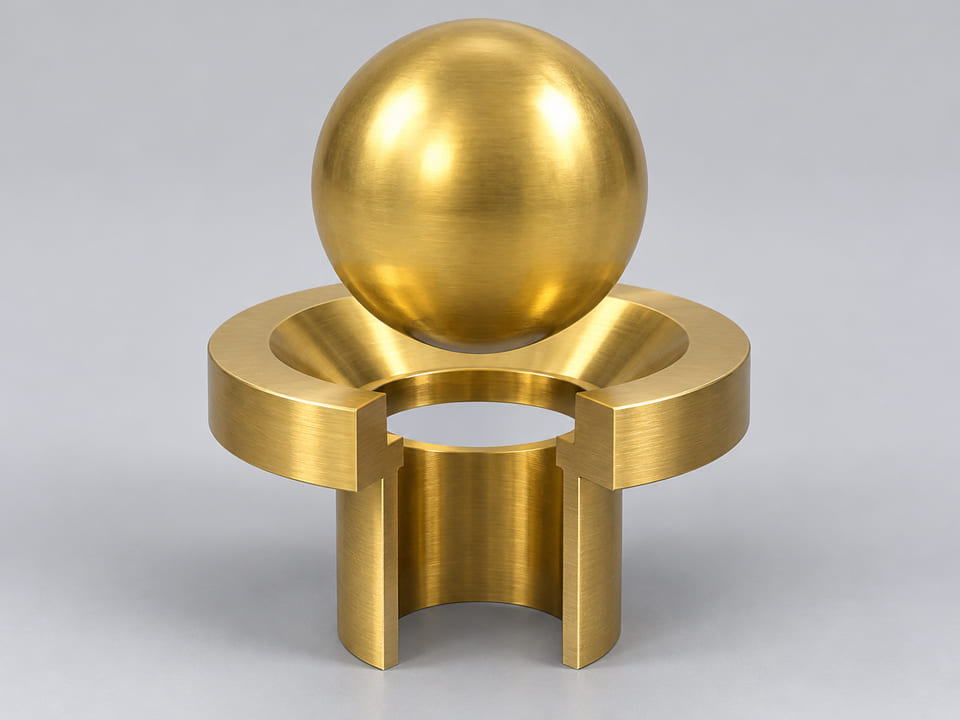
Match surface and condition to the function
For a valve, describe the fluid and the mating seat; for a detent or visible component, describe contact force and appearance acceptance. Brass can deform and mark differently from a hardened steel sphere. Where hardness or temper is important, specify it independently of colour. Any coating also changes the finished contact surface and may affect dimensions. Include the final coated or uncoated condition in the drawing and sample evaluation.
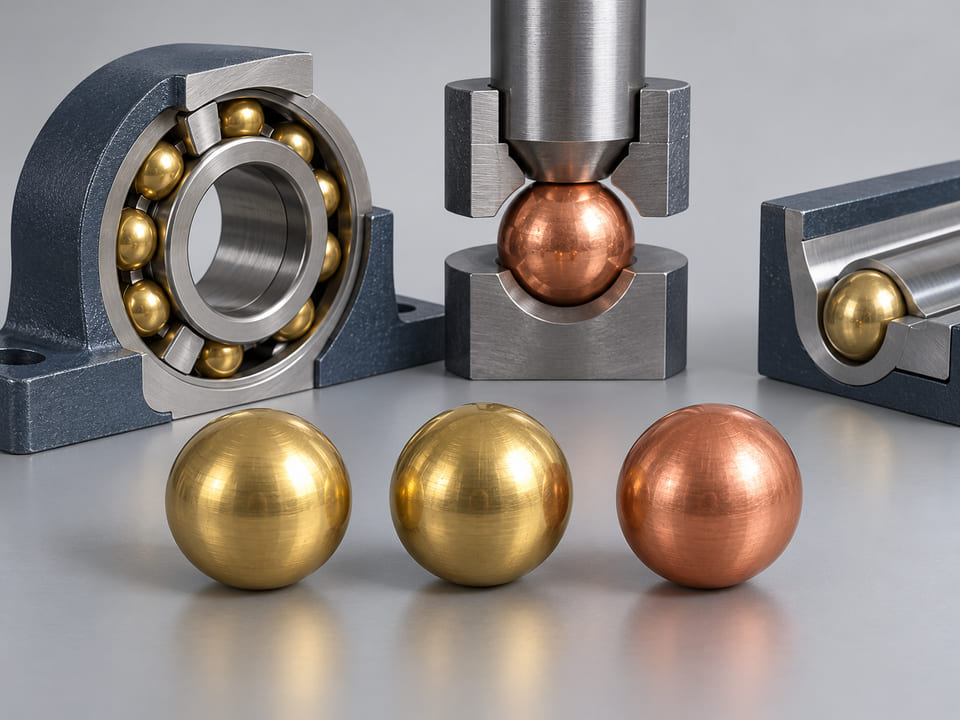
Brass Balls specifications
Define the component using the requirements below. Include your target values and acceptance method; the quotation records the agreed material, geometry, inspection and supply scope.
| Requirement | What to specify | Why it matters |
|---|---|---|
| Brass grade | Provide the exact copper-zinc designation and composition restrictions. | Distinguishes the requested alloy from a generic yellow-metal sphere. |
| Material condition | Specify temper or hardness where the contact needs it. | Controls indentation, forming and mechanical consistency. |
| Fluid and compliance | State the medium and applicable contact-document requirements. | Keeps chemical and regulatory acceptance specific to the actual use. |
| Final surface | Define polish or coating, size after finishing and visual criteria. | Makes the supplied surface match the functional and cosmetic requirements. |
Drawing and dimensional acceptance
Provide the drawing revision and nominal dimensions with units. Identify critical form, surface and fit requirements individually; a material designation alone does not define a finished component. Where an existing sample is the reference, describe wear and confirm the intended acceptance limits.
Order and inspection scope
Separate sample quantities from production demand. State the required inspection documents, lot identification, cleanliness and packaging. Any proposed substitute or change to the component specification should be reviewed before approval, with the quotation confirming the agreed scope.
Numeric performance values, when needed, must identify their material, conditions and evidence. Typical raw-material data should not be treated as guaranteed finished-component performance.
Brass Balls applications
Start with the actual mechanism and exposure conditions. Each use below identifies the information needed for a useful technical review.
Small valve and pump contacts
A brass sphere can be evaluated where the exact alloy is compatible with the medium and the required contact response. The ball and seat need a shared acceptance basis. Identify cleaning chemicals and stagnation, not only the name of the normal fluid.
Mechanical detents and hardware
Brass provides a non-ferrous candidate for selected locating or retaining contacts. Review wear and indentation against the mating material. If the component must preserve a consistent visible finish, include handling and packing protection along with mechanical acceptance.
Visible and decorative components
For a visible sphere, colour, polish and tarnish expectations should be stated through a sample and defined viewing criteria. Decorative acceptance does not establish the material's structural or fluid compatibility. If the sphere also performs a mechanical role, include that function separately.
Compare Brass Balls alternatives
Compare the requirement that drives the decision. A matching nominal diameter or similar appearance does not establish material or functional equivalence.
| Alternative | When to review it | Tradeoff to assess |
|---|---|---|
| Pure copper | Compare a specified copper grade when conductivity, thermal transfer or the process chemistry makes a high-copper material the relevant choice. | Brass and copper differ in composition and deformation; similar metal family terminology cannot establish electrical or process equivalence. |
| Phosphor bronze | Review a copper-tin-phosphorus grade when repeated mechanical contact or a particular bronze specification drives the component design. | Confirm actual alloy and condition; colour differences cannot identify composition, fatigue behavior or wear acceptance for the finished ball. |
| Aluminium bronze | Consider a specified copper-aluminium grade where strength and a particular environmental assessment justify another non-ferrous material system. | Chemical compatibility remains grade-specific, while hardness, finishing and contact behavior may change enough to require a new component evaluation. |
These links open the corresponding product pages in this collection. Final selection depends on your complete specification and the agreed validation.
Brass Balls FAQs
Are all brass balls the same alloy?
No. Brass covers a range of copper-zinc alloys. State the exact grade and standard, plus any restricted-element requirement. A matching yellow appearance does not prove composition, mechanical condition or suitability for a particular component.
Can brass balls be used in drinking-water equipment?
Only against the applicable jurisdiction and component specification. Composition, release limits and documentation may matter. Identify the actual requirement during enquiry; a brass designation alone is not universal potable-water approval for the finished product.
How do brass and bronze differ?
Brass is generally a copper-zinc family, while the bronze products here involve other principal alloy systems such as copper-tin or copper-aluminium. Choose by exact designation and application, rather than using the names as interchangeable colour descriptions.
Will brass balls tarnish?
They can change appearance depending on exposure and handling. Define allowable surface colour, finish and packing. If a coating is proposed, review its composition, dimensional effect and compatibility with the intended contact instead of assuming it is merely cosmetic.
Can brass replace hardened steel balls?
Only after reviewing load, wear, deformation and the environment. Brass has a different mechanical response. A successful size fit does not establish equivalent rolling or seating performance, so approve the complete contact pair and the appropriate sample test.
What information supports a brass-ball quote?
Send the grade, standard, diameter, condition, final finish, quantity and application. Add the medium, seat or mating material, visual reference and required composition documents. Identify approved alternatives explicitly if material comparison is part of the enquiry.
Request a quotation
Turn the Brass Balls requirements into a clear enquiry for MEITUO Balls.
- Define the material and geometry.
- Describe the application and acceptance.
- Separate sample and production demand.
The quotation confirms feasibility, supply scope, inspection documents and commercial terms. Generated illustrations are not evidence of available stock or completed validation.
Continue your material review
Engineering references and illustration notes
Material-family references support screening. The exact grade, finished geometry and application acceptance govern an actual enquiry.
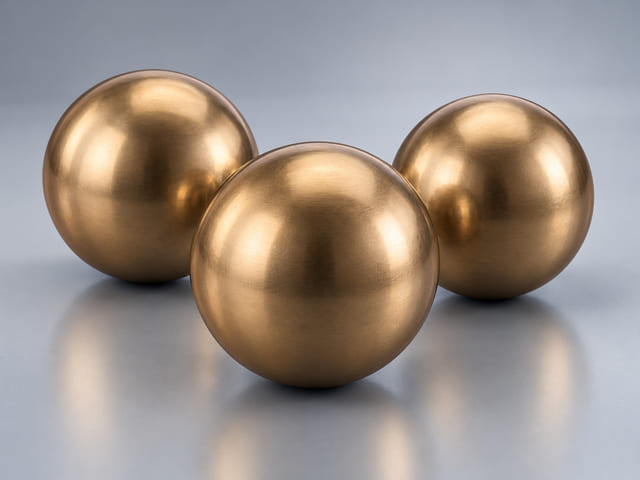
CGI illustrations explain product, application or structure concepts. They are not photographs, measured micrographs, assembly drawings or inspection results.