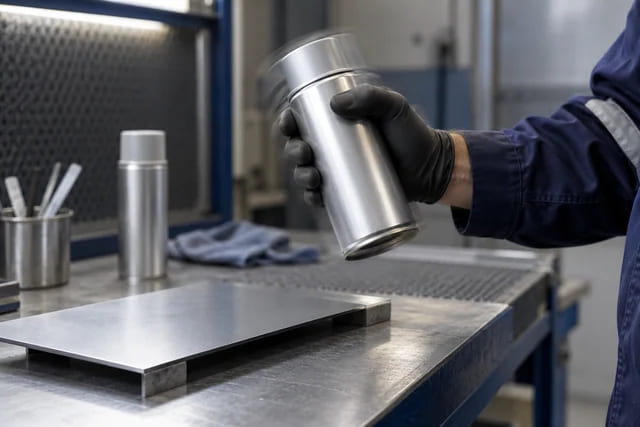
Packaging & consumer
Mixing Balls for Packaging & Aerosols
Agitation media, formulation contact and container interaction.
Seven families, connected to the application.
Explore all products →Share the drawing, contact conditions and acceptance criteria for your component.
Material selection guide →Explore the contact, medium and mechanism.
All applications →Share the drawing, contact conditions and acceptance criteria for your component.
Material selection guide →From an open material question to an agreed component requirement.
Explore services →Share the drawing, contact conditions and acceptance criteria for your component.
Material selection guide →Industry and sourcing guides for twelve target markets.
Explore all markets →Share the drawing, contact conditions and acceptance criteria for your component.
Material selection guide →Match the component programme, purchasing role and project responsibilities.
Explore partnerships →Share the drawing, contact conditions and acceptance criteria for your component.
Material selection guide →Corporate background, practical purchasing information and direct contact.
Explore company →Share the drawing, contact conditions and acceptance criteria for your component.
Material selection guide →Sprayer and dispenser check balls work inside a small pump or valve passage to control liquid movement during actuation. Ball size, seat contact and formulation compatibility must be assessed with the package. Specify the miniature component drawing and evaluate priming, repeated dispensing and storage behavior in the complete pump.
The check ball is only one part of a dispenser. The actuator, return mechanism, seals, seat and passage geometry together determine how the package dispenses. Identify the exact ball location and the approved pump design.
Household liquids, perfumes and cosmetic formulations can differ in exposure and residue behavior. Include the actual formulation and idle periods. A check ball selected for one liquid is not automatically suitable for a visually similar package containing another.
Use these inputs to move from an application name to a useful component and supply enquiry.
| Selection input | Describe your conditions | Why it belongs in the enquiry |
|---|---|---|
| Miniature geometry | Diameter and limits, seat details and retention. | Use the pump drawing; do not select from bottle size. |
| Formulation and storage | Liquid composition, temperature and idle conditions. | Identify drying, deposits or material interactions to investigate. |
| Dispensing acceptance | Priming, actuation cycle and storage leakage criteria. | Define the filled-package trial and required observations. |
Compare materials around the full wetted package. A change of ball material may require another check of movement, seat contact and formulation compatibility. The supplier’s general material description is not a pump-performance guarantee.
Keep miniature component identification practical. Specify packaging and handling requirements that preserve part identity and cleanliness during assembly, and agree the inspection basis rather than relying on a visual sample alone.
| Material or product candidate | Why review it here? | What must be confirmed? |
|---|---|---|
| 302 / 304 / 304L Stainless Steel Balls | A stainless ball family used in industrial sprayer applications. | Review the exact formulation, seat and dimensional requirements. |
| 316 / 316L Stainless Steel Balls | A stainless alternative for a suitable corrosion and contact review. | Do not assume a material change resolves package leakage. |
| Glass Balls | A glass candidate for an appropriate miniature valve design. | Confirm glass identity, surface condition and the intended seat contact. |
These are application-review candidates. The exact grade, finished specification, supply scope and documents are confirmed in the quotation.
Use the assembled pump and actual formulation, or a justified development medium, to assess priming, repeated actuation and storage behavior. Define acceptable output behavior and leakage before comparing samples.
Avoid this assumption. Changing only the ball may not correct a damaged seat or an unsuitable package design.
No. Bottle volume does not identify the pump check-ball geometry or material.
Not without the miniature component specification. A loose agitator and a sealing sphere have different requirements.
Storage can change deposits, wetting or restart behavior; assess the conditions relevant to the product’s use.
Use a related function to compare requirements without assuming the same ball specification applies.
Agitation media, formulation contact and container interaction.
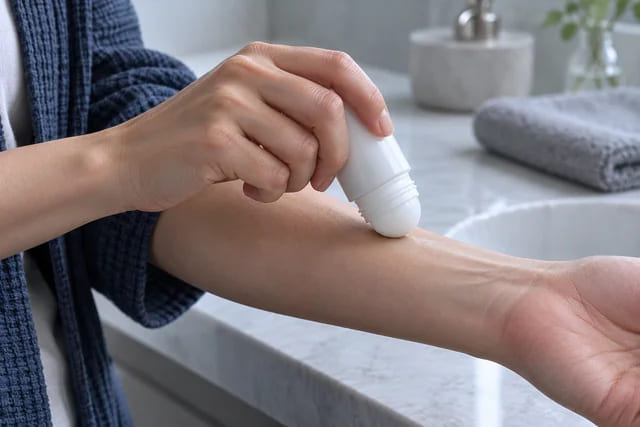
Applicator feel, fit, formulation contact and packaging validation.
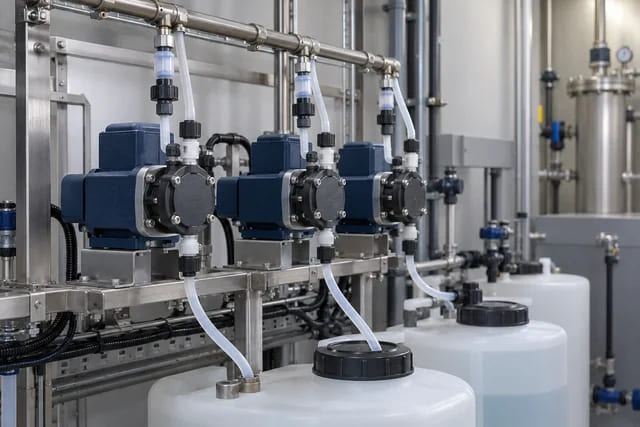
Inlet and discharge behavior, repeatability and the full dosing cycle.
Bring the material, size, operating conditions and quantity. Include the drawing and validation topics that matter to this project.
RGPBALLS 302/304 ball applications · RGPBALLS 316/316L ball applications
References describe industry practice and material-selection context. They do not establish MEITUO stock, equipment ownership, qualification or performance.