HDPE Balls
HDPE balls are polyethylene spheres considered for buoyant components, compatible fluid systems and low-load industrial assemblies. Their low mass and limited moisture uptake are useful when a metallic ball is unnecessary, but creep, heat and the liquid density remain important selection factors. Specify whether the ball must be solid or hollow, its resin grade, diameter, fluid conditions and required floating or closing behaviour before quotation.
- Material / construction
- High-density polyethylene; exact resin and construction specified
- Specification basis
- Drawing, diameter & acceptance
- Order basis
- Sample & production quantities
HDPE Balls: selection overview
HDPE is a practical starting point when fluid compatibility and buoyancy matter more than rigid contact or high-temperature capability. The distinction between solid and hollow construction is especially important: a sphere's outside diameter does not reveal its effective density, wall integrity or response to pressure. For a solid ball, colourants and additives still need identification. For outdoor duties, exposure history matters. A product described as polyethylene must not be assumed to be a validated tank-cover system, a precise valve element or a regulated-contact component without the corresponding design and material review.
Buoyancy depends on the complete fluid condition
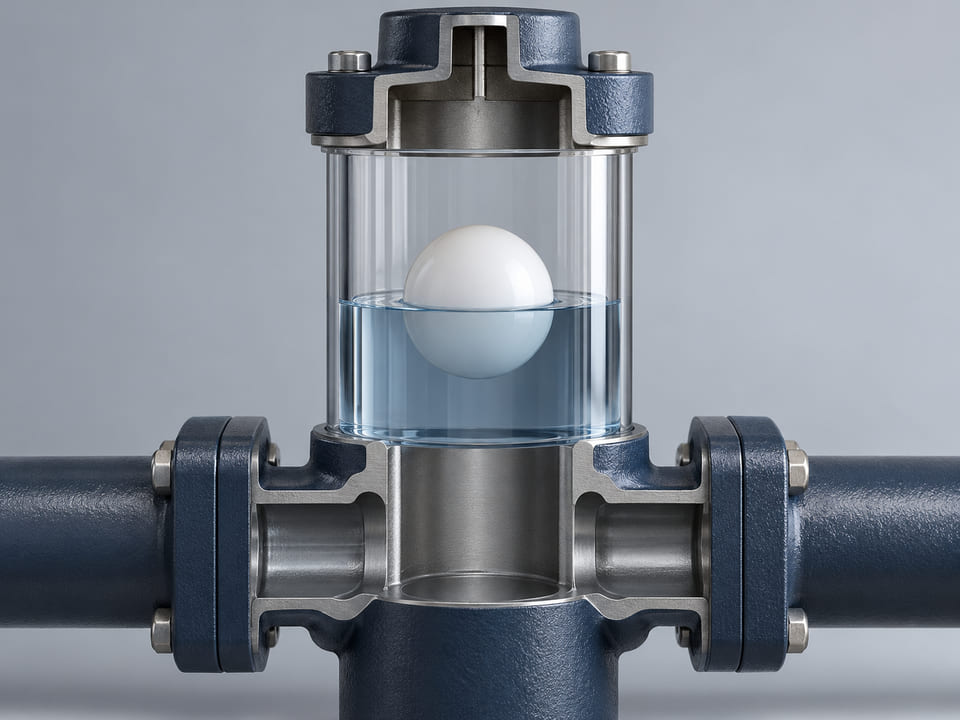
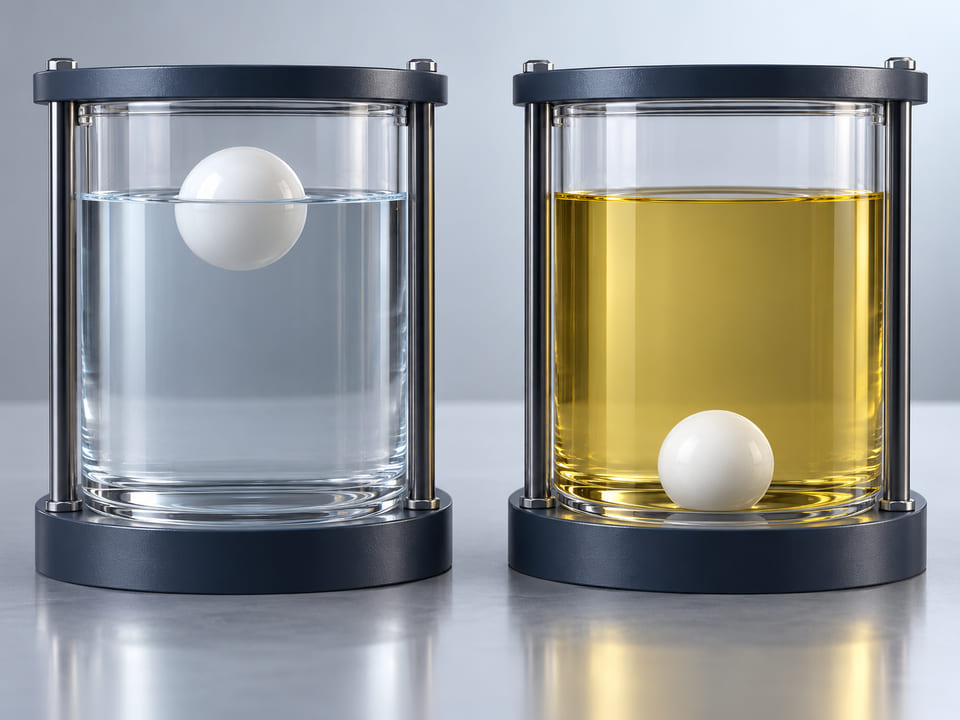
Determine the fluid density at operating temperature and include any dissolved solids, concentration changes or foam. A floating requirement should define the desired immersion and movement rather than rely on an illustrative photograph. A solid ball and a sealed hollow ball can have very different responses to pressure and leakage. Identify the construction explicitly, then approve a sample in the representative liquid and installation orientation before finalising the diameter or count.
Separate low-load contact from precision sealing
HDPE can deform under sustained contact, and the result depends on load, temperature and duration. If the ball rests on a seat, define whether the function is indication, non-critical closure or controlled leakage. Include the seat profile and surface condition. Tight diameter inspection does not remove long-term deformation, so a useful sample test combines the dimensional check with a dwell period in the assembled mechanism and a subsequent functional check.
HDPE Balls specifications
Define the component using the requirements below. Include your target values and acceptance method; the quotation records the agreed material, geometry, inspection and supply scope.
| Requirement | What to specify | Why it matters |
|---|---|---|
| Construction | Identify solid sphere or sealed hollow construction, with drawing where relevant. | Effective density and pressure behaviour cannot be inferred from the outside diameter. |
| Fluid condition | Provide density, composition, concentration and operating temperature. | Buoyancy and compatibility depend on the real liquid rather than its general name. |
| Functional movement | Define guide clearance, immersion target or closing criterion. | The ball must work with the surrounding mechanism, not merely meet an isolated size. |
| Resin and exposure | Specify resin identity, additive restrictions and sunlight exposure. | Outdoor and regulated-contact requirements need grade-specific evidence. |
Drawing and dimensional acceptance
Provide the drawing revision and nominal dimensions with units. Identify critical form, surface and fit requirements individually; a material designation alone does not define a finished component. Where an existing sample is the reference, describe wear and confirm the intended acceptance limits.
Order and inspection scope
Separate sample quantities from production demand. State the required inspection documents, lot identification, cleanliness and packaging. Any proposed substitute or change to the component specification should be reviewed before approval, with the quotation confirming the agreed scope.
Numeric performance values, when needed, must identify their material, conditions and evidence. Typical raw-material data should not be treated as guaranteed finished-component performance.
HDPE Balls applications
Start with the actual mechanism and exposure conditions. Each use below identifies the information needed for a useful technical review.
Liquid-level and float mechanisms
HDPE may be considered where a lightweight sphere must respond to a compatible liquid. Confirm the required floating state and allow for deposits or fluid changes that affect movement. Guides and retaining features should prevent sticking without applying an unintended load that changes the sphere's shape or free motion.
Low-pressure fluid-control components
In suitable low-load valves or indicators, a polyethylene ball can avoid metal corrosion and reduce moving mass. The design must account for creep and altered closing behaviour. Check the complete assembly with the specified seat and pressure cycle; a compatible resin does not by itself establish a sealing performance.
Surface-coverage projects
Polyethylene spheres are also considered for liquid-surface coverage, but the system needs separate assessment of construction, retention and operating conditions. Determine how the balls will be installed, retrieved and cleaned. A material choice alone cannot establish evaporation reduction, odour control or long outdoor service life.
Compare HDPE Balls alternatives
Compare the requirement that drives the decision. A matching nominal diameter or similar appearance does not establish material or functional equivalence.
| Alternative | When to review it | Tradeoff to assess |
|---|---|---|
| Polypropylene | Compare PP where the process requires a different thermal envelope while retaining a lightweight polyolefin option for a compatible liquid. | Confirm resin, temperature and sustained loading for the finished ball; a change in polymer can change both movement and deformation. |
| UHMWPE | Assess UHMWPE when repeated abrasion or impact is the reason standard polyethylene is being reconsidered in a low-load mechanism. | The molecular-weight family is not a dimensional grade, and wear claims require a comparable test using the actual mating surface. |
| POM / acetal | Consider acetal when a more rigid, dimensionally controlled contact is more important than the buoyancy behaviour of HDPE. | Recalculate the moving mass and fluid response; a direct diameter substitution can reverse or change the mechanism's operation. |
These links open the corresponding product pages in this collection. Final selection depends on your complete specification and the agreed validation.
HDPE Balls FAQs
Do solid HDPE balls float in water?
Many unfilled HDPE grades have a density below water, so buoyancy is a useful design consideration. Confirm the actual resin, construction and liquid condition. Additives, deposits and fluid-temperature changes can affect the result, and a photograph does not specify the required immersion or movement.
Are all HDPE balls hollow?
No. HDPE identifies the material family rather than the construction. Request solid or hollow explicitly, and define any wall, seam or leak-integrity requirement for a hollow sphere. The effective density and response to pressure can be very different between the two designs.
Can HDPE be used for hot liquid service?
Evaluate the exact temperature, contact load and exposure duration before selecting it. HDPE is not a general high-temperature substitute for an engineering polymer. A resin's material data and a finished valve's service rating answer different questions and should not be treated as interchangeable.
Is HDPE automatically food-contact compliant?
No. That requires the specific resin, additives, manufacturing route and intended contact conditions to meet the applicable documentation requirements. State the market, food or fluid, contact time and temperature in the enquiry so the required evidence can be reviewed before an order is agreed.
How can a floating application be validated?
Test the proposed sphere in the actual or representative liquid with the intended guides, temperature and contamination conditions. Record immersion, movement, sticking and durability. For hollow construction, add a relevant integrity check, because a leaking sphere can behave differently even when the outside diameter is unchanged.
What information is needed to quote HDPE balls?
Provide the diameter, construction, resin requirement, quantity and intended fluid function. Add the operating temperature, fluid density, exposure conditions and any drawing. If sunlight, cleanliness or regulated contact matters, identify the required documents and acceptance checks instead of using an unspecified general-purpose request.
Request a quotation
Turn the HDPE Balls requirements into a clear enquiry for MEITUO Balls.
- Define the material and geometry.
- Describe the application and acceptance.
- Separate sample and production demand.
The quotation confirms feasibility, supply scope, inspection documents and commercial terms. Generated illustrations are not evidence of available stock or completed validation.
Continue your material review
Engineering references and illustration notes
Material-family references support screening. The exact grade, finished geometry and application acceptance govern an actual enquiry.
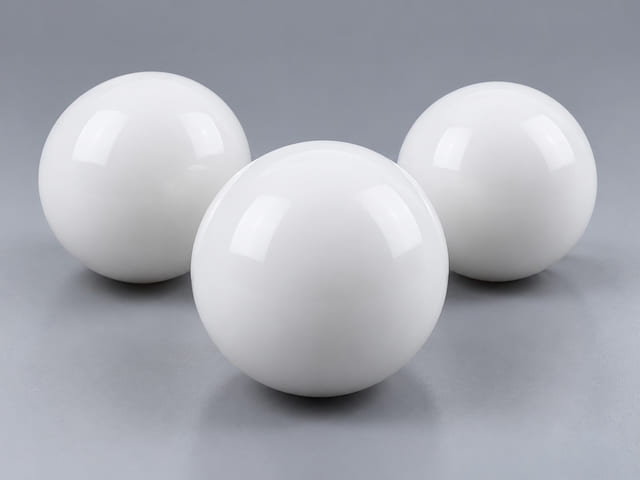
CGI illustrations explain product, application or structure concepts. They are not photographs, measured micrographs, assembly drawings or inspection results.