Precision interfaces
Balls for Detents, Indexing & Positioning
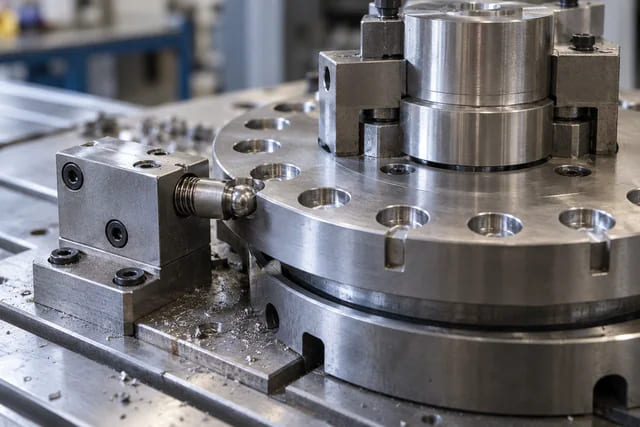
Spring contact, recess geometry, wear and repeatable mechanical feel.
Seven families, connected to the application.
Explore all products →Share the drawing, contact conditions and acceptance criteria for your component.
Material selection guide →Explore the contact, medium and mechanism.
All applications →Share the drawing, contact conditions and acceptance criteria for your component.
Material selection guide →From an open material question to an agreed component requirement.
Explore services →Share the drawing, contact conditions and acceptance criteria for your component.
Material selection guide →Industry and sourcing guides for twelve target markets.
Explore all markets →Share the drawing, contact conditions and acceptance criteria for your component.
Material selection guide →Match the component programme, purchasing role and project responsibilities.
Explore partnerships →Share the drawing, contact conditions and acceptance criteria for your component.
Material selection guide →Corporate background, practical purchasing information and direct contact.
Explore company →Share the drawing, contact conditions and acceptance criteria for your component.
Material selection guide →A trackball is a user-operated sphere that works with a module’s sensing and support system. Optical recognition, diameter, surface condition and movement feel must be matched to that system. Specify whether you need the ball alone or a complete input module; a visually similar sphere is not automatically sensor compatible.
A trackball is not simply a large bearing ball. Its surface may need to work with an optical recognition system or a particular mechanical arrangement, while supports and retention determine its movement. Start with the module and sensing method.
Control-panel use also introduces cleaning, user-contact and environmental requirements. Define these for the actual installation, including the ball’s visible condition and movement acceptance. Do not transfer a complete module’s rating to a loose replacement sphere.
Use these inputs to move from an application name to a useful component and supply enquiry.
| Selection input | Describe your conditions | Why it belongs in the enquiry |
|---|---|---|
| Module interface | Sensing method, ball diameter, retention and supports. | Identify the module drawing and any approved surface pattern. |
| Movement acceptance | Feel, starting resistance and consistent travel response. | Agree the test within the actual sensing and support arrangement. |
| Exposure | Cleaning, contact, moisture and environmental conditions. | Review the finished ball and complete module separately. |
Ask the module designer what the sensing surface needs to provide. Color, texture and pattern can be functional variables, but their requirements must come from the actual sensing technology. A generic patterned sphere is not proof of compatibility.
For a replacement programme, retain an approved module-and-ball combination and the relevant surface specification. Separate the ball’s dimensional inspection from the input response and enclosure tests of the finished control device.
| Material or product candidate | Why review it here? | What must be confirmed? |
|---|---|---|
| Optical & Mechanical Trackballs | A purpose-specified ball for an optical or mechanical interface. | Recognition surface and module compatibility require validation. |
| POM Balls | An engineering-polymer candidate for a supported design. | Resin, surface and geometry are not substitutes for sensor testing. |
| PMMA Balls | A polymer material option only where the interface design permits it. | Appearance alone does not establish optical tracking behavior. |
These are application-review candidates. The exact grade, finished specification, supply scope and documents are confirmed in the quotation.
Test the ball with the intended sensors, supports, retention and software configuration. Record movement response and post-cleaning condition, using the module owner’s acceptance criteria.
Avoid this assumption. A complete trackball module’s environmental rating does not apply automatically to a loose ball.
No. Sensor recognition, support contact, retention and surface condition must match the module.
No. State whether the enquiry is for a loose sphere, a subassembly or a complete input device.
The surface can affect recognition and feel. Retain the specification and test it in the actual module.
Use a related function to compare requirements without assuming the same ball specification applies.
Spring contact, recess geometry, wear and repeatable mechanical feel.
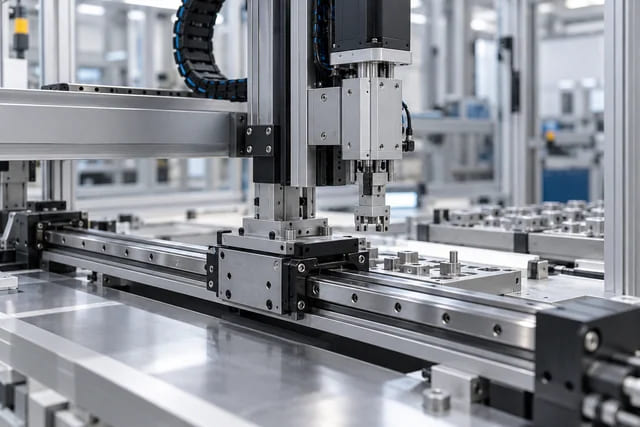
Ball recirculation, clearance and surface acceptance for guided motion.
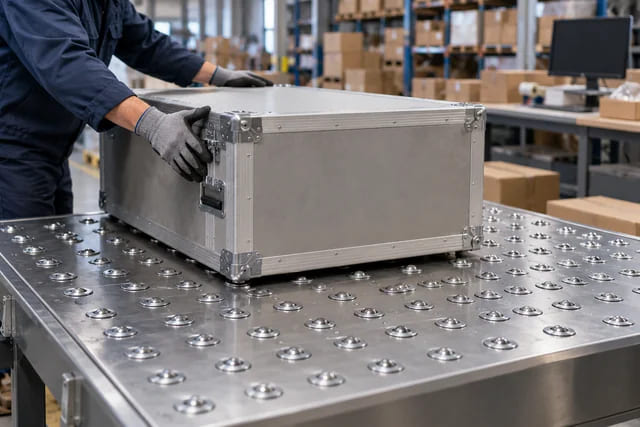
Main load balls, supporting balls and the surface being handled.
Bring the material, size, operating conditions and quantity. Include the drawing and validation topics that matter to this project.
Cursor Controls optical trackball module
References describe industry practice and material-selection context. They do not establish MEITUO stock, equipment ownership, qualification or performance.